
Blue Archive Review: Gameplay That Gets Boring, Characters You Can’t Quit

On April 28, 2026, Blue Archive dropped a new event story. For a game that first launched back in 2021, this kind of update is part of the rhythm by now.

What actually catches the eye is a comment near the top of a player forum. The person who wrote it had quit over a year ago. He said, “the art style and character designs are beyond reproach, opinions differ on the story, but it did move me. Even after leaving, I still check in.”
That’s the part worth sitting with—someone walked away more than a year ago, and still finds himself drifting back just to see what the new event looks like. That tells you more about Blue Archive than any review could.
What Is This Game?
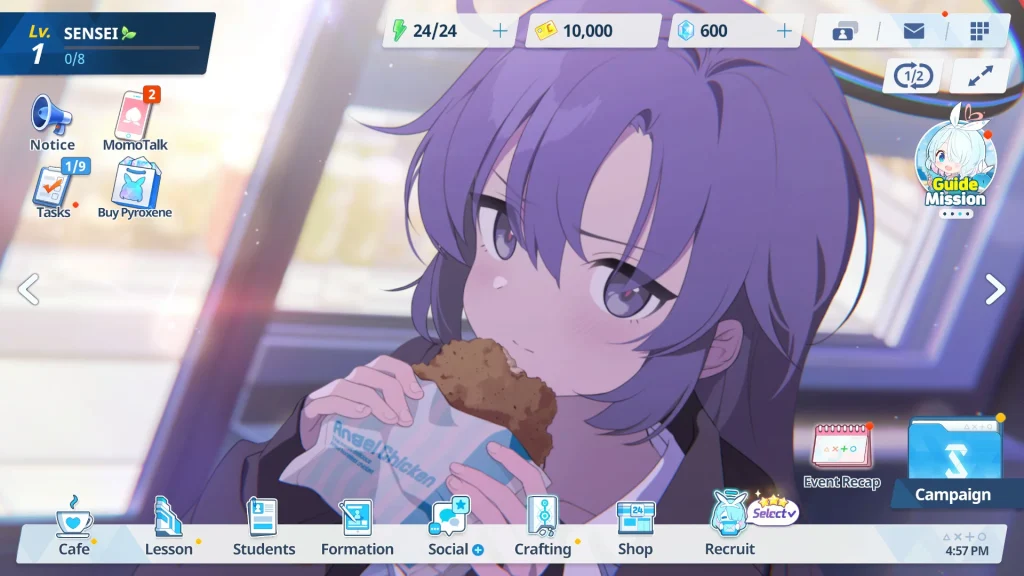
Blue Archive was developed by MX studio under South Korea’s NEXON Games, with Shanghai-based Yostar handling publishing. The JP server launched in February 2021, the global server that November, the CN server in August 2023, and the Steam version in July 2025.
The setting is Kivotos, a sprawling academy city formed from thousands of schools. After the General Student Council president vanishes, problems begin piling up—delinquent dropouts, private military contractors, the works. You step into the role of a newly arrived teacher, dispatched to the federal investigation club SCHALE, and find yourself responsible for guiding a cast of very different students through the chaos.
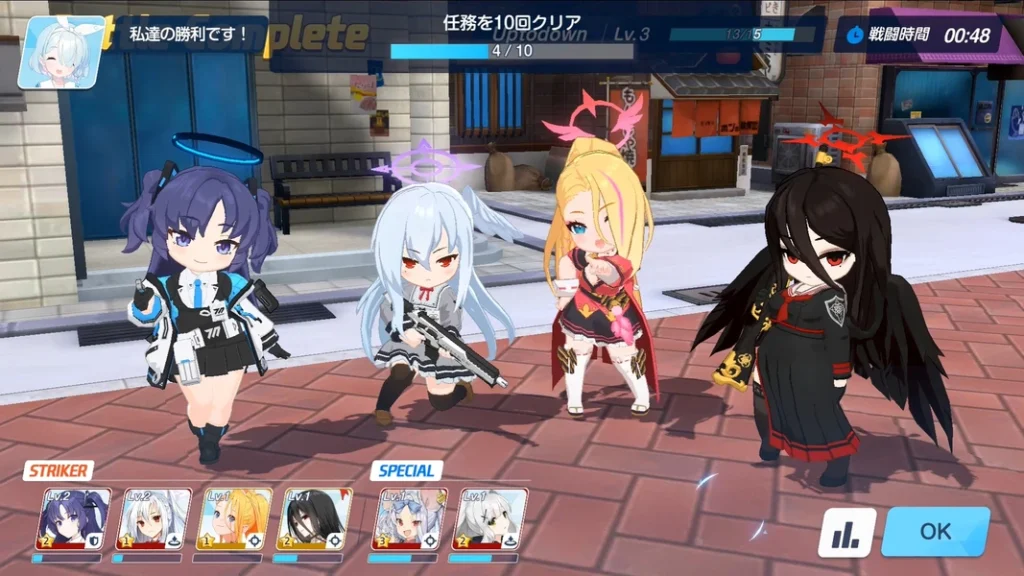
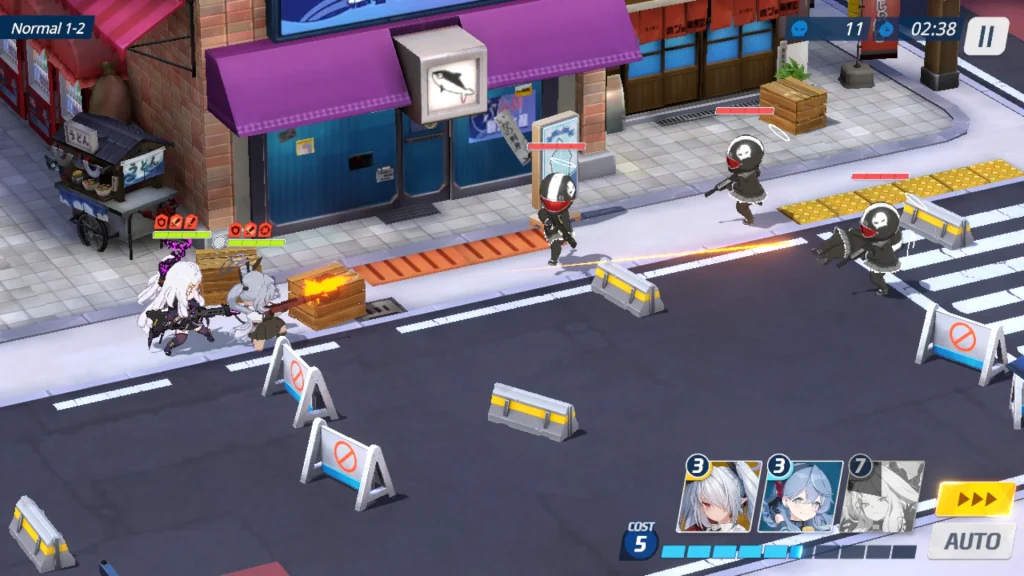
The core combat is auto-shooting chibi 3D characters, layered with skill activations, elemental matchups, and a cover system. Almost zero learning curve. But after the main story is over, most players hit the same feeling—they don’t really know what to do next.
A player on a major forum put it like this: “PvP, Total Assault, Joint Firepower Drill, the new Grand Assault—honestly, all of these are just there so players don’t feel like they have nothing to do.” Some players do invest serious effort into Total Assault and PvP. But the broader community conversation tells a different story. Across social media and fan spaces, players spend far more time discussing character lore, sharing fan art, and trading memes than talking about combat strategies or raid clears. The game’s presence on platforms like Twitter and Pixiv is built almost entirely around its cast, not its mechanics. The most widely echoed sentiment among casual players is: “BA makes it easy to slack off. You can slack off really, really hard. Barely takes any time, and it’s easy to stockpile free currency.”
So What Keeps People Around?
Blue Archive went in a visual direction that stands apart from most of the market. No cluttered portrait backgrounds. No screen-filling special effects. The character is the center of the image, with outfit colors tightly unified under each design. In a market where gacha titles stuff every pixel with detail and particle effects, it chose to hold back.
Technically, it uses the cel-shaded look common in Japanese animation—flat color blocks, no gradients between tones. Against the current wave of heavily rendered and 3D-modeled gacha titles, it comes across as unusually clean.
But the art is only the first layer. What matters more is how it tells stories.

Lead writer isakusan has described the game’s tone as “an academy drama built around being entertaining.” It doesn’t chase a grand world narrative. It focuses on the daily lives of the teacher and the students. In a genre where titles keep trying to out-dark each other, this makes it an outlier.
That doesn’t mean it lacks weight. One Bangumi user summarized what makes the game hit hard: “youthful campus, gentle everyday life, pure ideals, bonds of friendship, passionate redemption, defiance of fate.” Another pointed to a specific arc: “Chapter 3, the Eden Treaty arc, is where it really starts getting good… anyone who’s followed the story would be hard-pressed to forget it.”
The core of this storytelling isn’t twist after twist. It’s the feeling of having someone beside you.
Then look at the systems. Characters have their own routines and dialogues in the café. Special voice lines on your birthday. Personal stories unlocked through bond levels. None of these are combat systems, but this is where Blue Archive actually sinks its development time. Pulling a character isn’t just acquiring a new unit. It’s unlocking a bond that still needs to be built.
The commercial side backs this up. According to data from Sensor Tower, Blue Archive‘s overseas revenue once exceeded $240 million. It has been adapted into a TV anime, with IP collaborations spanning major platforms. After landing on Steam in 2025, it racked up over 20,000 reviews at a 92% positive rate, earning a “Very Positive” rating.
The Drawbacks, No Sugarcoating
The cost of building characters—this is one of the loudest complaints in the community. “Short on BD, short on notes. You pull a character but can’t actually build them until the right situation comes along. You can’t just take them out and enjoy them right away.”
On the gacha side, pity sits at 200 pulls, and on certain limited banners, pity progress doesn’t carry over. With the JP, global, and CN servers all running on different schedules, new players staring down a dense calendar of banners can easily get overwhelmed trying to plan their pulls. On the global server, some rerun events have even been compressed from fourteen days down to seven, tightening the pressure further.
As for the gameplay debate, that was covered above. The problem isn’t the combat itself. It’s what you can do after the main story ends. For the vast majority of players, Blue Archive is a game you log into for ten minutes, then spend the rest of your time browsing community fan creations.
But here’s the real question—after five years of these exact complaints, why are people still here?
This Game Doesn’t Sell Gameplay
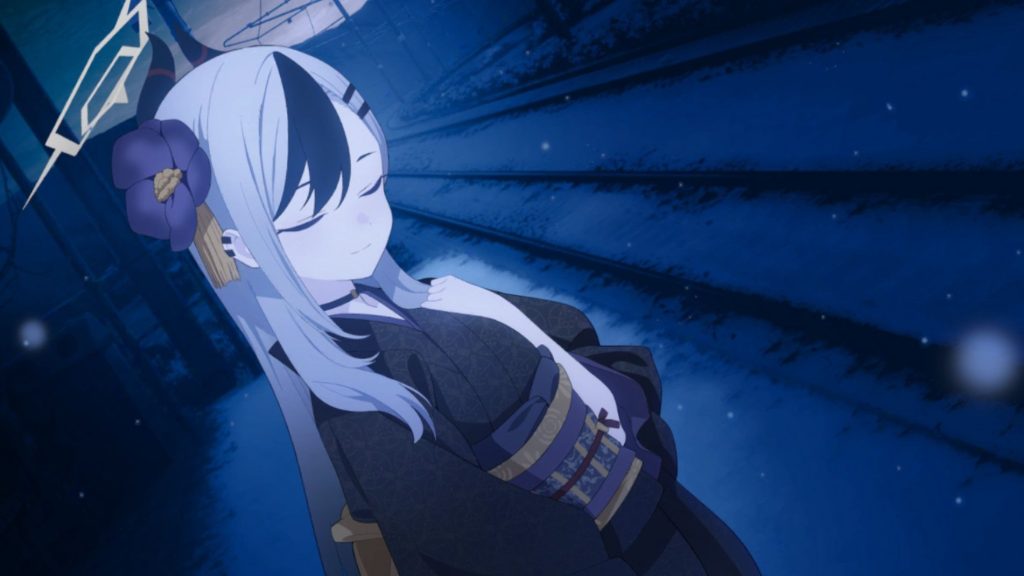
Here’s the thing: this game never tried to keep you around by making the combat addictive.
What it offers instead is simpler—a place you can return to, outside your daily life. Students who remember your birthday. Club activities at fixed times. A group of characters who stick with you.
This isn’t a game that wins through gameplay. It’s a product that wins through emotional attachment. You might not play it forever, but walking away completely is harder than it looks. That player who quit over a year ago and still posts in the community—he’s the clearest evidence of what this game actually sells.
All game screenshots, character designs, and related assets referenced in this article are the property of NEXON Games and Shanghai Yostar Network Technology Co., Ltd. The article itself is an original work of commentary and curation. Please credit the source if reposting. For copyright concerns, contact [email protected].
Comments (1)