
Luan Tu! Cai Shijie (乱涂!彩世界) Review: A “Side Game” Built for Zero-Stress Play

On April 28, Luan Tu! Cai Shijie, developed and self-published by BAIOO Family Interactive, officially launched across all platforms. On its first day, it took the top spot on both the TapTap trending chart and the Bilibili popularity chart, reached No. 1 on the App Store free chart that evening, and entered the top 20 of the bestseller chart the following day. The game had already surpassed six million pre-registrations across all channels before launch, and every key metric during pre-launch testing outperformed the industry average for comparable titles. Yet the development team itself has called it a “side-side-side game”—a rare case of self-awareness in a fiercely competitive gacha market.

The Earth lost its color. You paint it back.
The core premise of Luan Tu! Cai Shijie can be summed up in a single sentence: aliens turned the world black and white. Together with a group of street-style goddesses, you use paint to bring color back to Earth. There is no brooding narrative or grand character arc here. Instead, the game cranks the humor to eleven and stuffs itself full of internet memes, making it the kind of title where you “discover a tiny amount of game hidden inside a mountain of gags.” All the character designs carry a distinct sense of “no need to take this too seriously”—blowing, plucking, singing, juggling, dancing, these girls who bear the title of “goddess” could hardly be further from the elegant deities of myth. Absurdist hell-jokes fly around every corner.
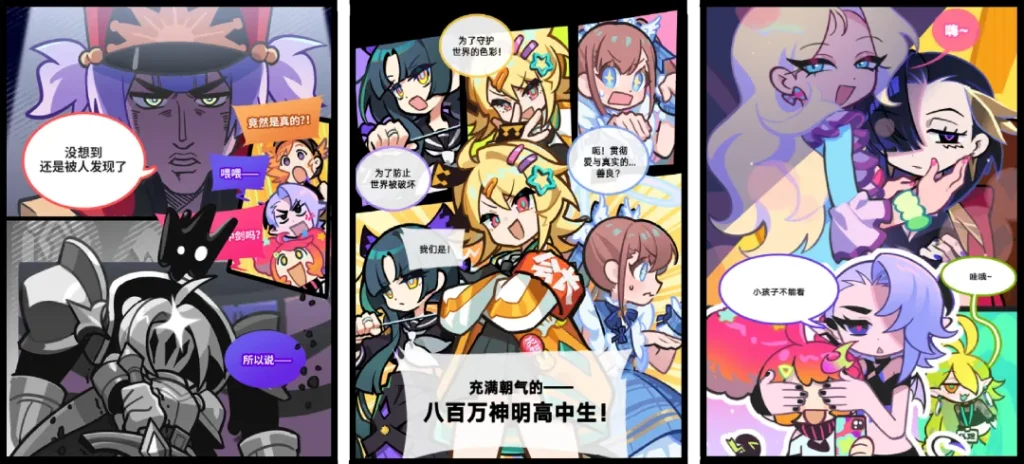
Gameplay: auto-aim, dodge, just the right amount of time
The game uses portrait mode with single-finger controls. Characters auto-aim and shoot, so players only need to focus on dodging bullets. The core mechanic revolves around color spreading—applying paint across a stage and attacking enemies builds up your Color Chaos level. When it peaks, the entire team enters burst mode, with attack speed and energy recharge rate skyrocketing—that is your critical window for wiping the screen clean. Different color attacks stack marks on enemies, and triggering a color reaction deals heavy damage while lowering enemy resistance. Every boss and elite enemy has a color weakness; hitting them with the right element can fill the color gauge and lock them in a vulnerable, staggered state. You can also freely mix and match pigment combinations—the right color synergy effects push the team’s damage ceiling even higher.


Three things matter when clearing stages: first, prioritize spreading paint to rapidly build up your Color Chaos level; second, when facing a boss, switch to characters with the corresponding elemental advantage; third, before triggering a color reaction, set up multiple mark layers on enemies first, then unleash your concentrated burst.
A single round lasts about ninety seconds, and daily tasks can be cleared in three minutes. The game features an idle mode where your goddesses automatically push stages and climb towers around the clock, and resources accumulate automatically overnight while you’re offline. No manual material farming, no ranking pressure, no endless optimization—play whenever, pause whenever. Beyond the main story, the game features a roguelike “Infinite Arcade” with random buffs and stage variations, 3v3 “Splash Showdown” supporting real-time team battles, and a paint tower defense mode. In multiplayer, teams need to split roles—DPS, crowd control, support—using paint splash mechanics to disrupt opponents in fast-paced, high-feedback matches.
On the progression side, the game uses a full squad level-syncing system: all goddesses share the same level and skill upgrade resources. Pull a new character and they’re ready to fight immediately—no grinding from scratch. Play whoever you want, whenever you want.
Gacha: fifty-pull guarantee, no off-banner spooks, 1,000 free pulls in the first month, and a Luo Tianyi collab
Luan Tu! Cai Shijie made a genuinely unusual choice with its gacha system: the rate-up banner guarantees the featured character in fifty pulls, and it is a designated guarantee—you cannot get spooked. No warehouse detection, no hidden rate manipulation. The character you pull from the rate-up banner is the rate-up character, period. Compared to the double-pity systems dominating the current gacha landscape, this design dramatically lowers the barrier to pulling.
In terms of rewards, players can earn up to four hundred pulls during the first week and one thousand pulls total over the first month. New players also get to choose one from among five epic-tier goddesses just for logging in, so even a completely free-to-play account can assemble a comfortable starter team right out of the gate.
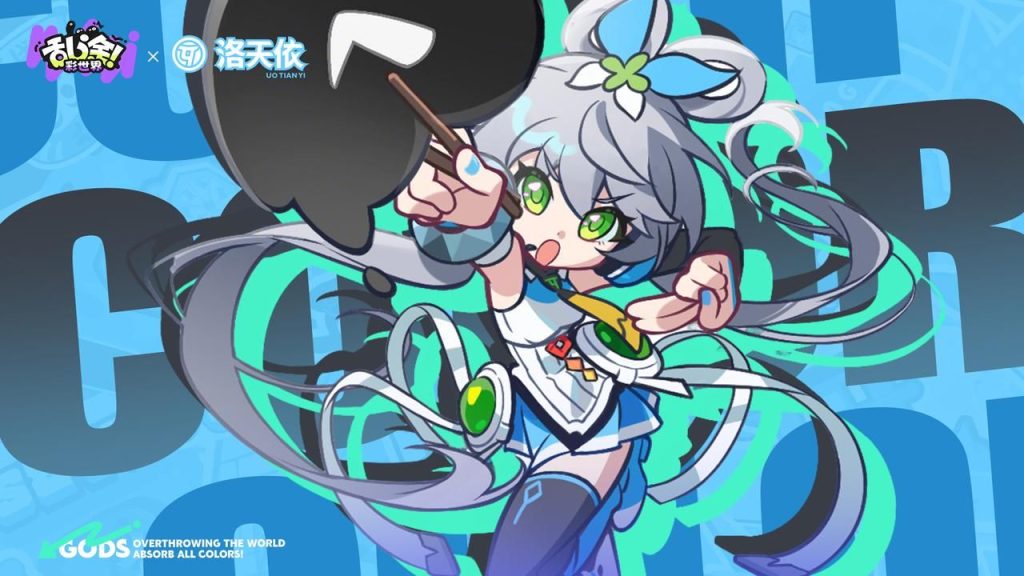
A limited-time collaboration with the virtual singer Luo Tianyi launched alongside the game. Players can claim her for free just by signing in. The collaboration theme song, “Give the World Some Color!”, tells the story of Luo Tianyi and the Trash Girl Squad traveling the world to bring color back. The exclusive story can be watched directly from the login screen.
What players are saying so far
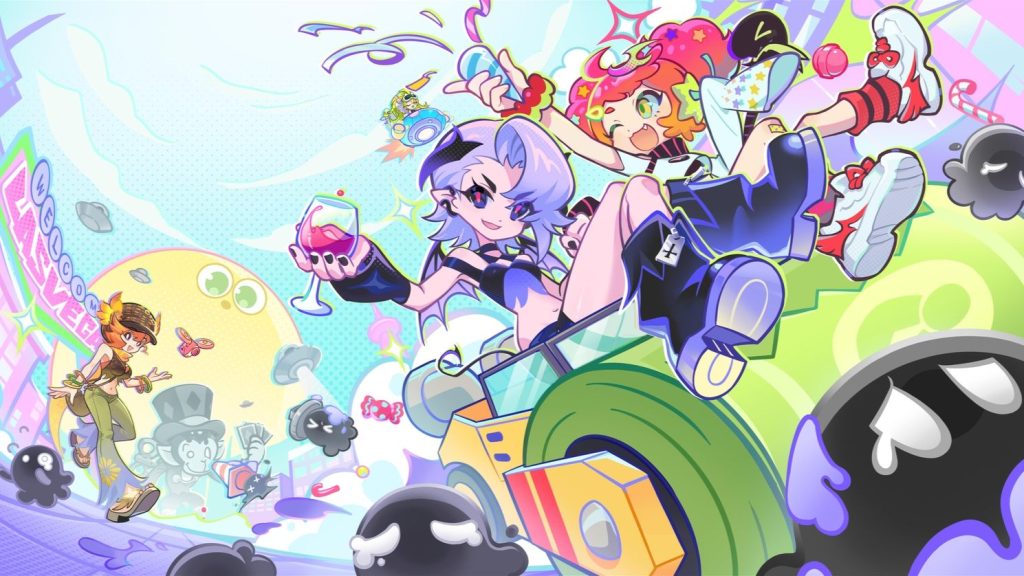
After a week online, community feedback has started to form a clearer picture.
On the positive side, a TapTap player who had spent four or five days with the game wrote: “Had to leave a review. Incredibly detoxing and satisfying. The art style gives me a warm, cozy feeling. After getting used to two- or three-hundred-pull pity systems, seeing this forty- to fifty-pull banner is just so refreshing. This one is staying on my phone.” An App Store user echoed a similar sentiment: “Didn’t have high expectations—just planned to check out the art for some inspiration—and then found it surprisingly clean and light.”
But several issues have also been raised repeatedly. Another TapTap player noted: “The gameplay depth does feel somewhat limited. The overall loop leans on the simpler side, and after extended play, it can start to feel repetitive. Later stages start to blend together in terms of design.” Some players have flagged technical rough edges—for example, in the “Color Chaos Challenge” mode, clearing a stage automatically advances you to the next one without bringing up the character selection screen, so you cannot adjust your squad for the upcoming boss. You have to manually exit and reselect, which breaks the flow. Other players pointed out that the main banner’s pull cost is relatively high and that obtaining pull tickets can feel difficult.
That said, it is worth remembering that this game was positioned from day one as a “side-side-side game”—not your main game, not even your side game. These complaints about gameplay depth are, to some extent, the natural result of that deliberate design choice.
Final thoughts: how an “anti-trend” product broke through
Before launch, Luan Tu! Cai Shijie was never on anyone’s list of most anticipated titles. One week into its launch, it carved a path through April’s ultra-competitive release window through sheer positioning. The development team put it plainly in an interview: “Big open-world gacha games require long development cycles and massive investment, and the competition is extremely fierce. We wanted to go the opposite way. Most players only have so much time and energy—they cannot possibly do deep dives into multiple heavy titles at once.”
Not every player has the bandwidth to juggle three or four major live-service games simultaneously. Sometimes, a fun, brain-off title you can pull out and mess around with for a few minutes at a time is exactly what people genuinely need.
All game screenshots, character designs, and related assets referenced in this article are the property of BAIOO Family Interactive. The article itself is an original work of commentary and curation. Please credit the source if reposting. For copyright concerns, contact [email protected].
Comments (1)