
Limbus Company Review: No Pity, No Official Localization — The Indie Korean Gacha That China Wouldn’t Let Die

In a mobile market where “10-pull pity counters,” “soft pity thresholds,” and “guaranteed rate-up characters” are practically industry defaults, any game that dares to skip these features usually gets branded as a predatory cash grab. Yet one Korean indie title somehow went the other way entirely — no traditional soft pity system and still no official Chinese localization after three years — and still managed to shoot to the very top of Steam’s bestseller charts in China on December 31, 2025, momentarily outpacing heavyweight staples like CS2, Apex Legends, and Naraka: Bladepoint.
Even more remarkably, the Chinese player community behind this game has been voluntarily maintaining a fan-made localization patch for nearly three years.
That game is Limbus Company, developed by the South Korean studio Project Moon and officially launched on February 27, 2023. It is a turn-based RPG that continues the universe established by Lobotomy Corporation and Library of Ruina, available on Steam, Google Play, and the App Store — and entirely free to download and play.
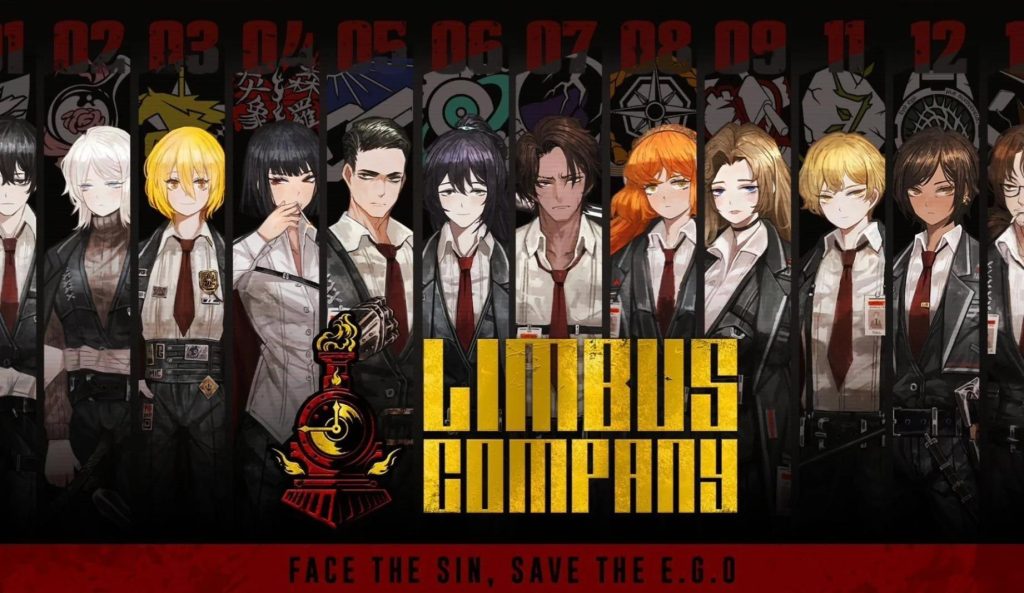
A World Built on Project Moon’s Dark Aesthetic
Limbus Company inherits the worldbuilding of its two predecessors. The story takes place in “The City,” a sprawling dystopian metropolis. You assume the role of the Manager, tasked with commanding a group of 12 Sinners aboard a bus called Mephistopheles as they travel across the City, infiltrating former Lobotomy Corporation branches in search of mysterious artifacts known as Golden Boughs.
The narrative unfolds chapter by chapter, each one zeroing in on a specific Sinner and peeling back the layers of their trauma and deeply held obsessions. Building on the extensive lore Project Moon has been refining since its first release, every major story segment is delivered with full Korean voice acting. For long-time fans of the previous titles, this is a narrative goldmine. For newcomers, however, the barrier to entry in understanding the setting is undeniably steep.
What It Gets Right: A Literary-Level Story
Limbus Company‘s core selling point is deceptively simple: its story is an absolute lifeline. Across player reviews and media assessments, it is consistently labeled a narrative-driven experience. Within its grim worldview, the 12 Sinners each carry the heavy weight of their own fates, and it is the Manager’s job — your job — to guide them through their inner darkness.
A Combat System Built Around the Clash
The battle system revolves around a distinctive turn-based mechanic known as the Clash. Once you’ve formed your party, the system randomly assigns a skill to each member, and the fight unfolds from there. Combat takes place in real-time — actions happen simultaneously. Your characters won’t wait for you to micro-manage every order, and neither will your enemies idly bide their time. You can customize a preset chain of commands for each turn, with each character deploying skills almost like a hand of cards.
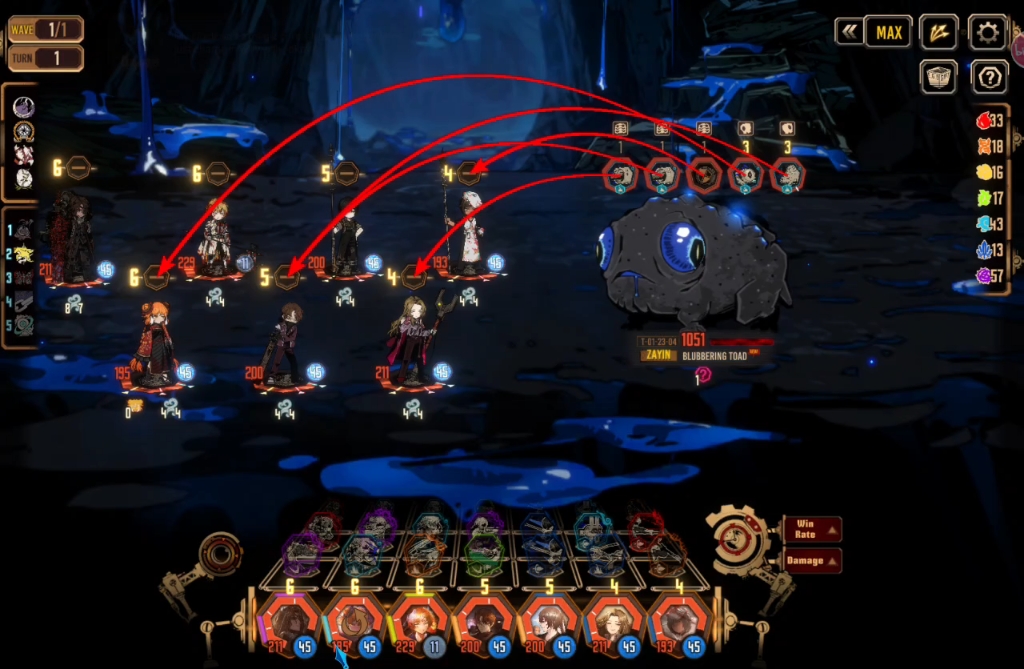
At the center of it all is the Clash. When both sides commit their actions for the turn, their skills are pitted against each other — akin to flipping a coin. Win the Clash, and you can perform a perfect block, dodge an incoming attack entirely, or strike first before the enemy can land a hit. Lose, and you eat the damage. The system is deeply strategic, arguably overly complex, with multiple factors determining a Sinner’s final damage output, and the coin-flip RNG element means no two fights ever feel entirely predictable.
The Core Loop: Dungeon Diving and Tower Climbing
Much like a single-player strategy title, the bulk of your time in Limbus Company is spent between two core modes: the Mirror Dungeon and the Refraction Railway.
- Mirror Dungeon is a highly replayable Roguelike mode. As you progress, you continuously acquire various trinkets, combining different sets to buff your team and push through higher floors to challenge hidden bosses. Grinding the Mirror Dungeon is the primary method for accumulating daily resources — particularly Battle Pass experience. Mastering how to clear the Mirror Dungeon efficiently is arguably the most important skill for any mid-to-late-game player.
- Refraction Railway serves as the endgame gauntlet: a fixed Boss Rush that demands a far more complete team roster and a deep understanding of team-building synergies.
Beyond the daily resource grind, the game also features content like the Refraction Railway and time-limited events to fill the gaps between seasons. During the downtime before a new season drops, these events are the main source of fresh objectives.
Identities and EGO: Two Layers of Build Depth

Character progression in Limbus Company revolves around two core systems: Identities and EGO.
- Identities function as alternate character variants pulled from different parallel timelines within the game’s multiverse. Each Identity completely replaces a Sinner’s skillset, stats, and combat role — one day Sinclair might be a straightforward DPS, and the next, after swapping his Identity, he could become the core enabler of an entire team archetype. For new players, it is advisable to prioritize versatile generalist “beatstick” Identities first rather than chasing niche synergy compositions, since building a deep understanding of status interactions and meta team-building demands significant time and resource investment.
- EGO are advanced armament techniques born from Abnormalities. While most EGO equipment was destroyed during the Lobotomy Corporation headquarters incident, some can still be recovered within branch facilities. Every piece of EGO grants the equipped character a unique passive ability and a devastating ultimate — such as Sinclair’s “Ardor Blossom” EGO or Rodion’s “Crimson Moth Swarm” — capable of turning the tide of battle in an instant.
Crucially, Identities can be directly purchased with in-game currency. This is the backbone of what makes the game’s unusually player-friendly model possible — a point we’ll return to in a moment.
A Business Model That Sells Stories, Not Anxiety
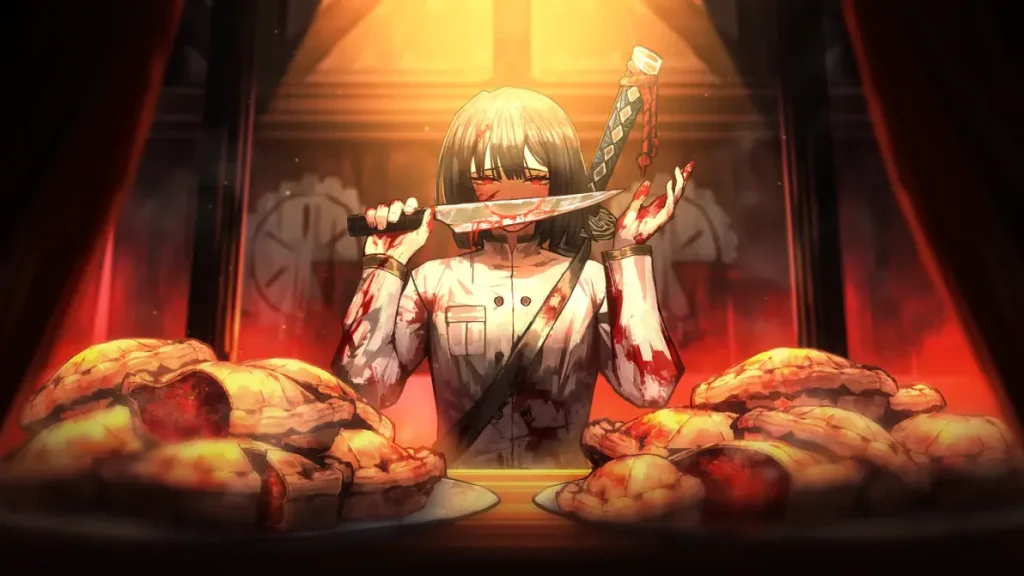
What truly set Limbus Company apart from its peers was not only its writing but a monetization philosophy that feels almost rebellious within the gacha industry. In an era where most mobile games weaponize FOMO through limited-time banners, permanently missable characters, and daily engagement traps, this game chose a different path: no FOMO, no forced daily grind, and nearly all units obtainable without pulling.
- Gacha: no soft pity, but a hard safety net. The extraction banner may lack a traditional soft pity system, but it includes a hard safety net at 200 pulls, where you can directly exchange for the featured character. More importantly, the vast majority of Identities and EGO can be acquired through the game’s “shard” system using freely earned currency. Season-limited units will eventually return in future seasons and never become permanently unobtainable. This means you don’t need to pull a specific character to stay competitive — you simply need to play long enough.
- Battle Pass: buy once, lasts six months. The game’s primary monetization relies on a roughly $10 USD Battle Pass that lasts an entire six-month season. It doesn’t pressure you to log in every day; stamina can be stockpiled indefinitely, and anything you miss can be obtained later. One community inside joke describes the Battle Pass as “paid employment,” but given the price and duration, the value proposition is hard to argue against.
- Three years of fan-driven localization. With no official Chinese language support, dedicated players formed the Zero Council translation group and have been maintaining a comprehensive fan-made localization patch for nearly three years. A Korean indie game with no official localization reaching the top of Steam in China purely through the voluntary efforts of its community is a story that deserves to be shared and remembered.
Where It Stumbles
Limbus Company is not a game for everyone. Its flaws are as glaring as its strengths.
- Gameplay criticized as repetitively grindy. Despite its critically acclaimed story, the moment-to-moment gameplay has been called out by many players for its repetitive grind. The daily Mirror Dungeon, in particular, turns into a pure labor loop once the novelty wears off. The community’s go-to advice — “just watch YouTube while you grind the Mirror Dungeon” — is pragmatic, but it also points to a fundamental design flaw.
- No official Chinese localization. For Chinese-speaking players, the baseline requirement is installing a fan-made patch. Even with the patch applied, some UI elements and text may remain untranslated.
- An extraordinarily steep onboarding cost. The game operates on the assumption that you are already familiar with the world-building of the two preceding titles. Coupled with the sheer depth of its progression systems and the complexity of its combat mechanics, newcomers who have never touched a Project Moon game often describe the first ten hours as feeling like they have opened a novel from the middle and started reading.
- Drawn-out seasons and lengthy content droughts. Each season can drag on for four to seven months, with major content drops arriving only once every half-year. This inevitably leads to severe content drought periods, pushing some players into a cycle of quitting and returning. During stretches where no events are running to bridge the gap between the main story chapters and the next season, player engagement can drop off noticeably.
So, Is It Worth Playing?
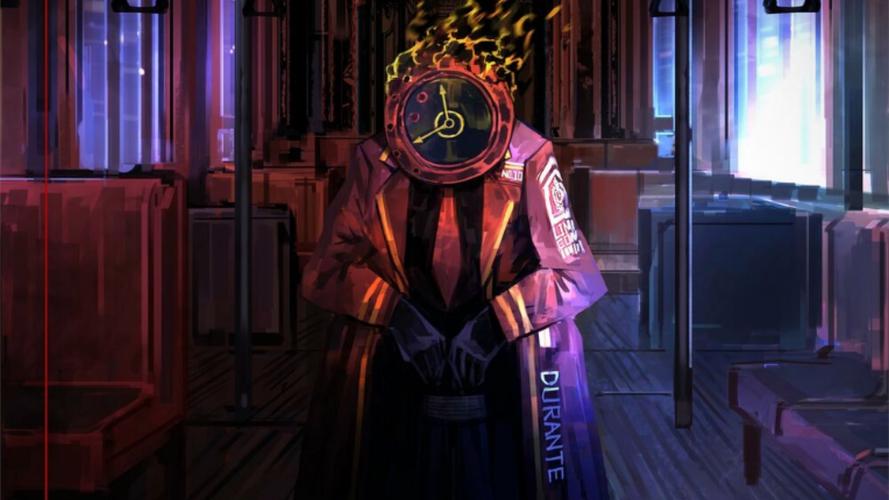
If you are in it for the narrative and the world-building, this game has virtually no rivals when it comes to raw textual quality and storytelling depth.
However, if you need a pick-up-and-play title that you can casually dip into during fragmented free time, the sheer density and complexity of Limbus Company may wear you down. You will likely need to invest several hours poring over beginner guides, deciphering community shorthand for Identities, and researching the optimal Mirror Dungeon speedrun comps before you can truly grasp the full scope of what makes this game tick.
It is not fast food. It is a potent spirit that demands time and patience to appreciate. As one player put it — after a staggering 1,000 hours of playtime, it remains “the best game I have ever played.”
Whether to climb aboard the Mephistopheles comes down to a single question: are you willing to trade your time for something genuinely rewarding, or are you simply looking for a quick dopamine hit?
All game screenshots, character designs, and related assets referenced in this article are the property of Project Moon. The article itself is an original work of commentary and curation. Please credit the source if reposting. For copyright concerns, contact [email protected].
Comments (1)