
Sabbat of the Witch — The Moege Classic That Took Eight Years to Get an Official Chinese Edition

On February 27, 2015, Yuzusoft released Sabbat of the Witch (サノバウィッチ) in Japan. Eight years later, on July 21, 2023, an FHD Edition with official Simplified and Traditional Chinese support was released on Steam.
On August 7, 2026, Yuzusoft announced that Sabbat of the Witch had surpassed 500,000 copies sold worldwide. It had crossed 300,000 in December 2024, meaning it added roughly 200,000 more copies in under two years.
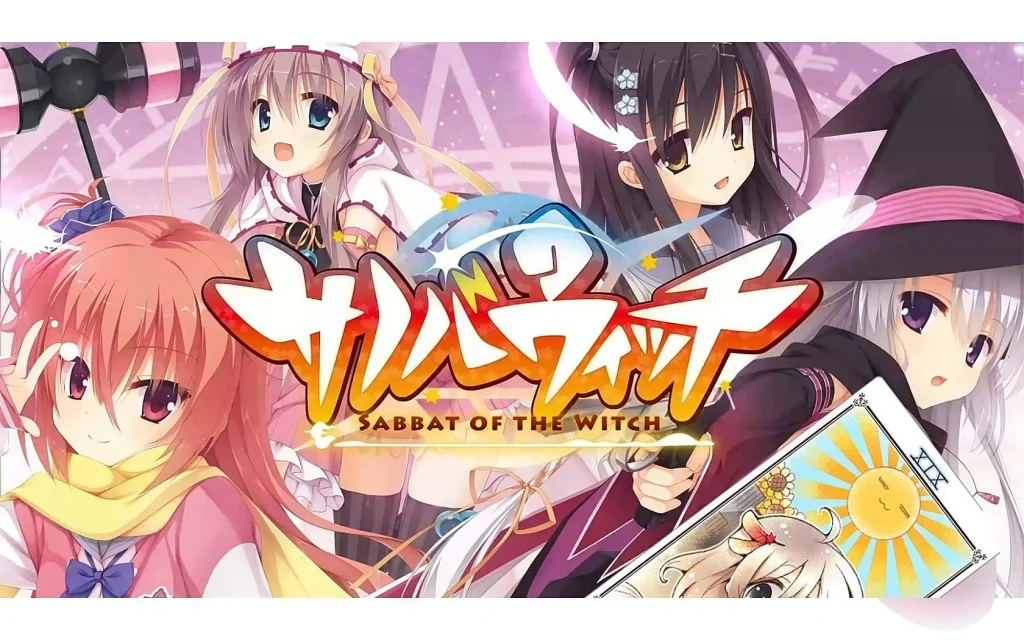
And looking at the language breakdown of Steam reviews for the FHD Edition, Chinese-language reviews make up an overwhelming majority. According to Steam Scout, Simplified Chinese reviews account for 95.4% of the total, with Traditional Chinese at 3.6% and Japanese at just 0.4%.
The localization and the “0721” meme clearly helped put the game in front of a much larger Chinese-speaking audience. But the characters and story are what keep people playing after the joke wears off.
A Witch Who Gets Horny at the Worst Possible Times, and a Boy Who Can Sense Emotions
Sabbat of the Witch opens like a standard school fantasy romantic comedy. Hoshina Shuuji has the ability to sense other people’s emotions, and it has left him exhausted and hollow. One day, he walks into the library and catches a classmate—Ayachi Nene, the most admired girl in school—doing something quite shocking. He then accidentally absorbs the “Fragments of the Heart” that Nene had been collecting, breaking her witch’s contract.
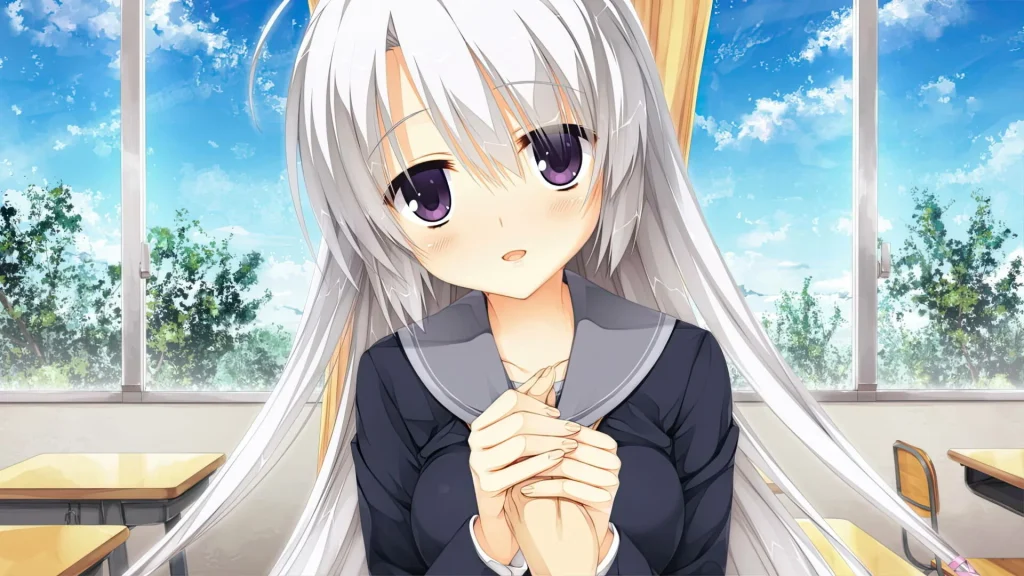
In this world, witches aren’t born with magic. They’re ordinary people who form contracts with animal spirits known as Alps. They collect “Fragments of the Heart” to grant their own wishes, and each witch pays a different price. Nene’s price is that she will suddenly and uncontrollably get aroused—leading to the “0721” scene early in the game that became a beloved meme in Chinese-speaking communities.
The clever part is that the witch concept isn’t just fantasy flavor. It becomes a narrative device for exploring human emotions and relationships. “Fragments of the Heart” are born from intense human emotions. Nene collects them by helping others resolve their troubles. The Occult Club she runs ostensibly exists to collect fragments, but in practice, it becomes a place where a group of girls with their own problems can gather, help each other, and slowly form genuine connections.
Why Sabbat of the Witch Still Holds Up
Sabbat of the Witch has five main heroines with individual routes: Ayachi Nene, Inaba Meguru, Shiiba Tsumugi, Togakushi Touko, and Kariya Wakana. Common walkthroughs suggest saving Nene’s route for last. The order of Meguru, Wakana, Tsumugi, and Touko is more flexible, and Wakana only unlocks after completing one other heroine’s route.
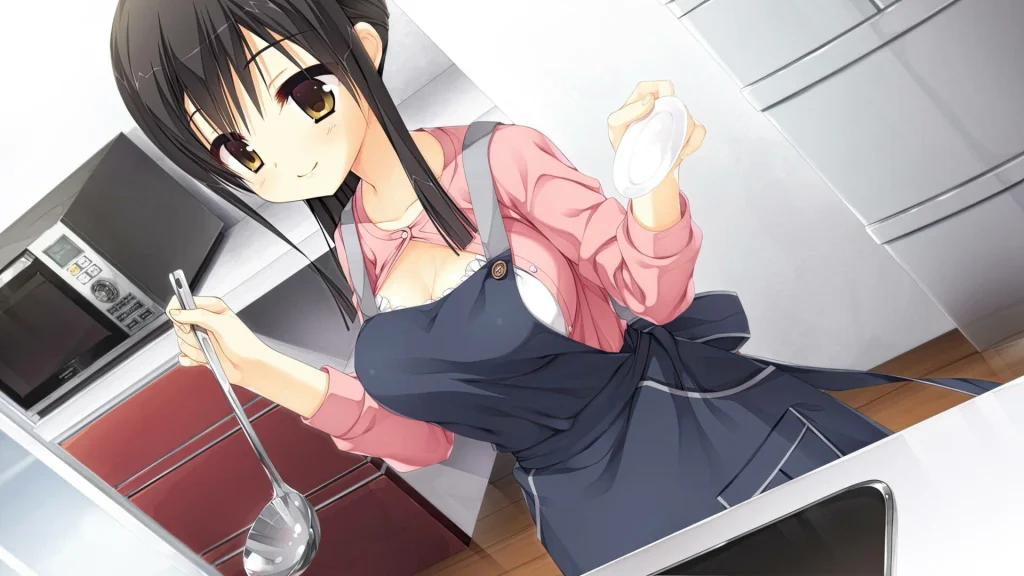
The reason is simple: Nene’s route is the longest and most story-heavy, and it also reveals more of the game’s central lore than the others. Nene’s past, why she became a witch, and the game’s most essential lore are all developed at length here. Shuuji’s own ability and his mother’s past, meanwhile, require other routes to fully understand.
The other routes have their own strengths. Meguru’s route has the most consistent comedic pacing. Tsumugi’s cross-dressing setup delivers plenty of gap moe. Touko’s route takes the classic mature-senpai approach. And Wakana’s route—unlocked only after completing one other heroine’s story—stands out because the protagonist’s relationship with her is the most equal from the start, presenting a romance that starts from a more equal footing.
The script was written by Ritsu Amamiya, Kei Hozumi, and Tōta. Shuuji’s ability could have been nothing more than a convenient plot device. Instead, the game uses it to explore how he understands—and misunderstands—other people. He can tell when people are only being polite, when they’re annoyed with him, when they’re disappointed. This ability didn’t make him socially adept. It turned him into a pushover who can’t refuse anyone, because refusing would cause negative emotions in others, and he can’t bear that. From this angle, the emotional arc of the game is Shuuji learning that protecting his own feelings sometimes matters too.
When Moege Becomes a Design Philosophy
In Chinese galgame circles, the term “moege” often carries a negative connotation, usually referring to games built around cute characters and slice-of-life scenes with little substantial story. But Sabbat of the Witch proves that moege isn’t a content flaw—it’s a design philosophy.
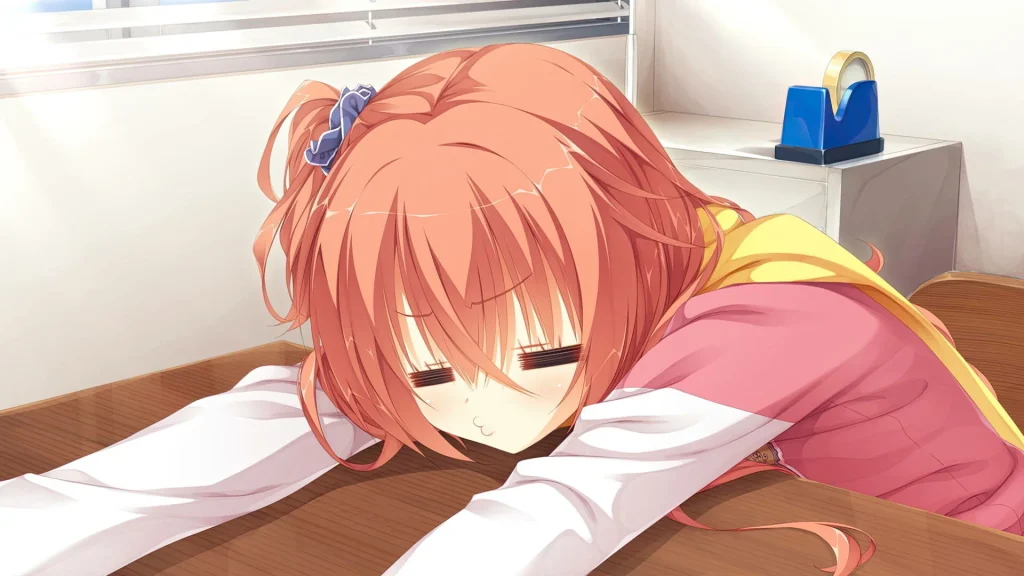
Its slice-of-life segments are incredibly relaxed. Nene is the school idol but secretly a walking disaster. Meguru is hilariously foul-mouthed when playing games. Tsumugi says deeply confusing things about gender roles with a completely straight face. These daily scenes aren’t there to pad time. They’re there to establish the characters’ emotional logic. When Nene’s route reaches its real conflict in the second half, the emotional payoff works because all those seemingly trivial scenes have already taught you how this character thinks and lives.
Yuzusoft’s signature art style is also at a mature point here. The original artwork by Muririn and Kobuichi had already developed that “looks like watercolor but with incredibly clean lines” visual language by 2015. The FHD Edition bumps the resolution to 1920×1080, making the original art noticeably sharper, especially in facial expressions and character illustrations.
What Comes After the 0721 Meme?
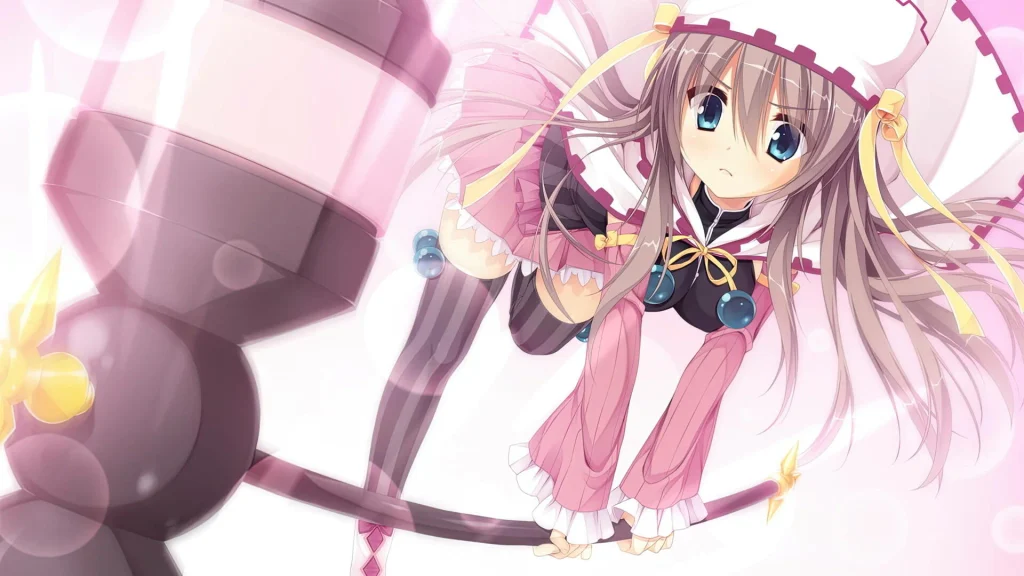
If you’re a galgame player who hasn’t tried Yuzusoft—this is a great entry point. Its system design was “almost too good” back in 2015: voice collection, scene selection, and easy scene navigation were all incredibly smooth. While Sabbat of the Witch doesn’t have the flowchart feature that later Yuzusoft titles would add, the multi-route experience is still very convenient. The FHD Edition further updates the presentation for modern displays and adds Chinese language support and Steam features. It strikes a comfortable balance between lighthearted moe and a story with genuine emotional weight.
If you’re a Chinese-speaking player whose first impression of this game came from the “0721” meme—the meme may be the first entry point for many Chinese players, but what keeps them playing is the characters and story. The shocking opening scene is just the hook, and Chinese-language Steam reviews repeatedly praise the story that follows, about how one person learns to trust another again. As of this writing, 98% of Simplified Chinese reviews for the FHD Edition on Steam are positive.
If you’re looking for adult content—the FHD Edition is all-ages, but a free 18+ patch is available separately to restore the original content. Whether to install it is entirely up to you.
If you’ve already experienced the 0721 meme, what’s left? The answer is the characters and story that follow. The FHD Edition is listed at $34.99 on Steam, with regional pricing varying by market. According to HowLongToBeat and similar player-time statistics, the main story runs about 14 hours, main plus side content about 31 hours, and full completion close to 60 hours. For players who want to complete all five heroine routes, actual playtime will reach dozens of hours. But these numbers aren’t what makes the game memorable. What keeps Sabbat of the Witch in the conversation more than a decade later is how those seemingly insignificant daily scenes ultimately become part of the characters’ growth.
Copyright Notice: All game screenshots, character images, and related assets used in this article are the property of YUZUSOFT and HIKARI FIELD and their respective rights holders. This article is intended solely for informational, review, and commentary purposes.
Comments (0)
No comments yet