
Sandcastle — A “Physics Sandbox” Where the Only Thing You Need to Do Is Take Playing in the Sand Seriously

On August 6, 2026, a free demo for a game called Sandcastle launched on Steam. It comes from indie studio Bubblebird Studio—the team behind Haven Park—and is published by Future Friends Games. After the demo went live, a Polygon editor wrote a hands-on piece with a very direct headline: “Steam’s Best New Game Demo Is So Good I Spent 5 Hours Shoveling Sand.”
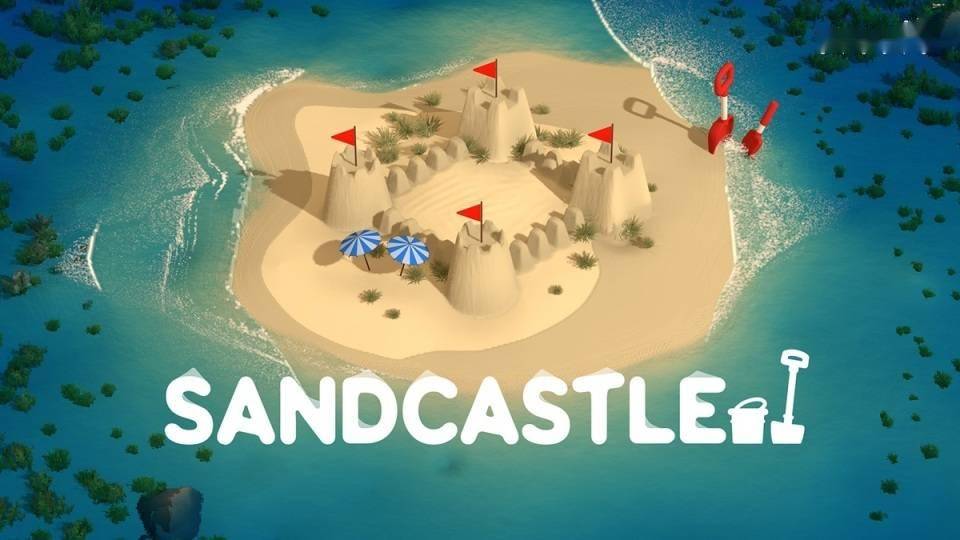
That’s probably the most accurate way to describe Sandcastle: it’s a game that makes you take playing in the sand seriously.
All You Have Is a Beach, a Shovel, and Infinite Time
Sandcastle‘s core is extremely simple. You’re dropped onto a tropical beach with no quest log, no countdown, and no fail state. You have only a few basic tools—a shovel, a rake, and a bucket—and you’re facing a stretch of sand, the sea, and waves rolling in one after another.
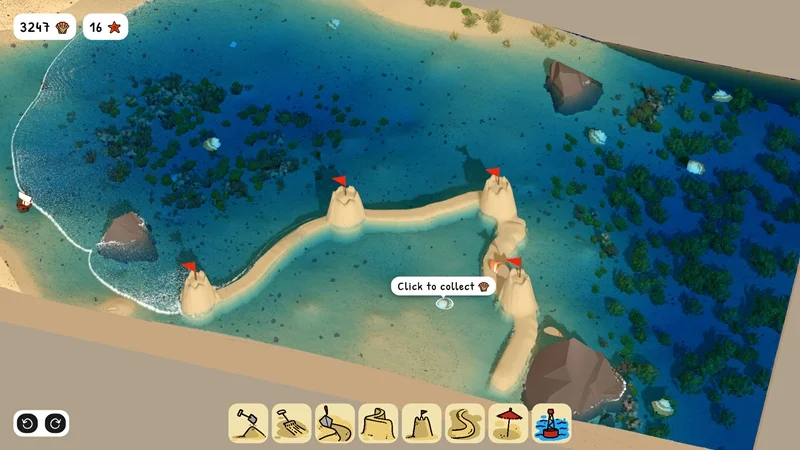
The Steam page states it clearly: there are no time limits here, only gentle tides and warm sunshine.
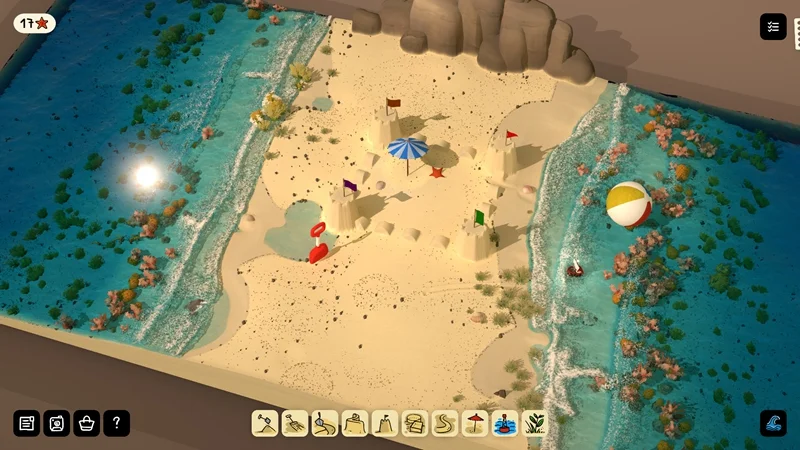
Things you can do include: using the shovel to collect wet sand and build walls; using tools to sculpt the details of battlements; digging moats around your sandcastle to block or redirect waves. You can also pick up driftwood, pebbles, shells, and seaweed washed ashore, using them as decorations placed anywhere on your sandcastle.
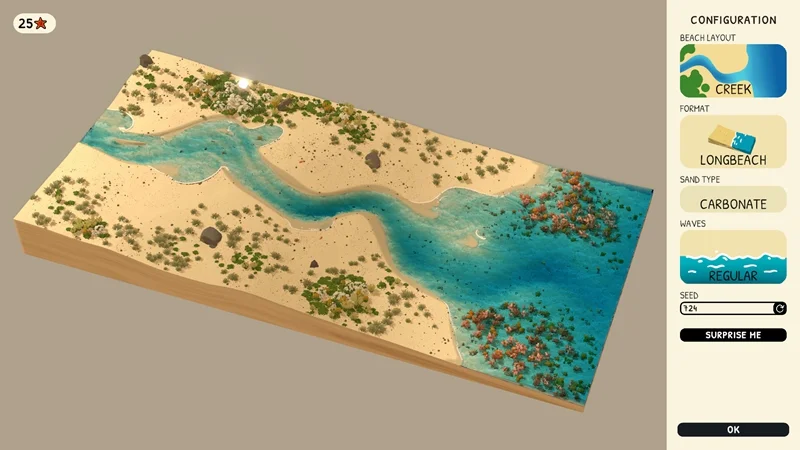
The full game is planned to include multiple tools, 10 unlockable beach layouts (lagoon, island, sandbar, delta, and more), and hidden items to find and collect. These are things you can do—not things you have to do.
Sand and Water Are the Real Stars of This Game
If Sandcastle were just “piling up sand with a shovel,” it wouldn’t have kept the Polygon editor shoveling for five hours.
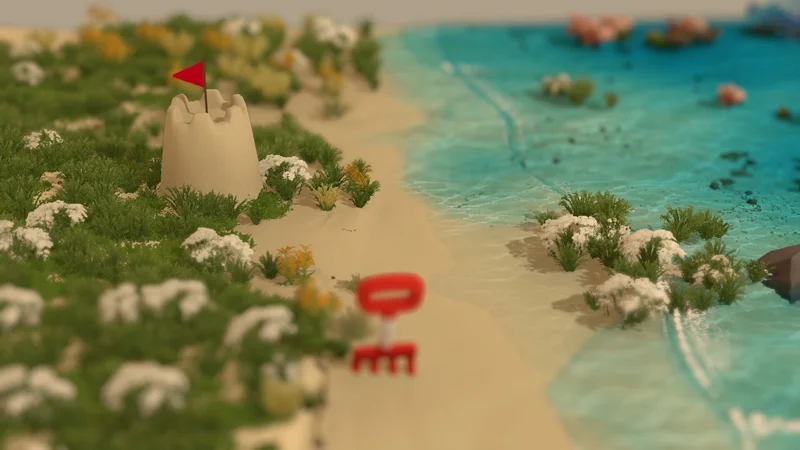
What truly sets this game apart from other sandbox building games is its built-in water-and-sand physics system.
The state of the sand depends on moisture and pressure. Dry sand is loose and collapses easily; wet sand can be compacted and shaped to reinforce walls. If you sculpt a tower too thin, it will collapse. If you thicken the walls with wet sand, they can withstand the waves.
The waves aren’t just decoration either. They flow, pool, and gradually erode your sandcastle, just like in real life. The moats you dig can be used to block waves or redirect water elsewhere. Rock Paper Shotgun specifically highlighted this in its preview, saying that this attitude of “taking sand and water seriously” turns the game “from pure playfulness into something that feels more alive.”
This physics simulation is already noticeable in the demo. Some players on Steam have complained about “why does my sandcastle leak water,” while others have joked about “fish flying through the sky—is that a cheat?” For some players, these “physics bugs” have become part of the demo’s charm—you never know how water and sand will interact next.
Your Tools Are Hidden in Bottles Washed Up by the Waves
Sandcastle‘s unlock system is hidden in the details of the beach.
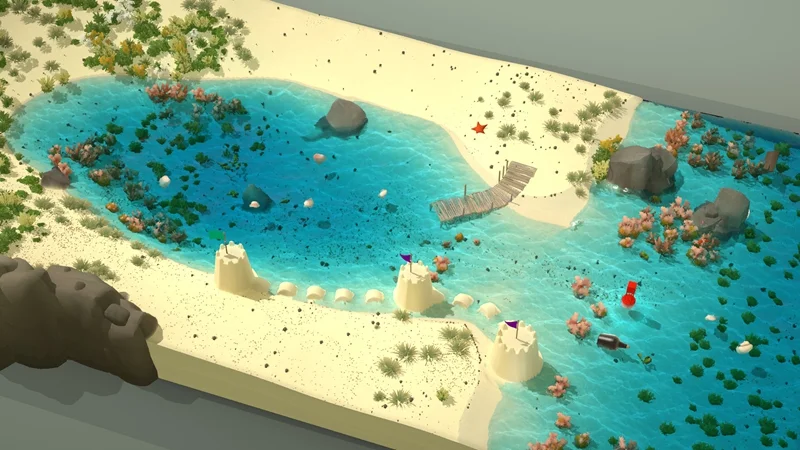
You can find starfish on the sand, and collecting them unlocks new sand types, beach layouts, and customization options. New tools are hidden in bottles washed ashore by the waves. The Polygon editor described how he discovered them: at first he didn’t notice the debris floating in the sea at all, until he picked up a bucket to scoop water, turned the camera toward the ocean, and realized there was “a whole pile of junk floating out there”—bottles, branches, shell fragments, all things you can pick up. Click on a bottle, and it might contain a new tool, a toy, or a new landscaping method.
One tool lets you “place a big circle of sand anywhere,” which the editor used to build an outpost on a remote island. Another tool builds bridges. These tools aren’t essential, but they expand what you can do from “building a sandcastle” to “reshaping the entire beach.”
However, KeenGamer’s preview also pointed out one issue: the demo’s tutorial isn’t very clear. The reviewer took a long time to realize that bottles could unlock new items, because he assumed the tools available in the demo were all there was. It’s not a major problem, but if you’re planning to try the demo, it’s worth knowing beforehand.
It’s Not in a Hurry, and Neither Should You Be
What’s most special about Sandcastle might not be its physics system, but its attitude.
The Polygon editor wrote a passage that captures the game’s vibe well. He said his usual methods for escaping reality—reading books, playing story-heavy games—had “stopped working for ‘temporarily forgetting about things.'” Then he found the Sandcastle demo. “Now I play it for a little while every night.”
He described one thing he did: he spent about ten minutes using tools to stack high walls and dig out a lake, just so he could place a toy sailboat he’d found in a bottle into it. That lake was only inches from the ocean. Why dig a lake? His answer: “I just wanted to.”
That’s what Sandcastle conveys even at the demo stage: it doesn’t judge whether what you’re doing has meaning. You build your sandcastle, dig your lake, place your sailboat. The waves will come, erode your work, and you’ll watch it happen, then keep building.
Its visuals are bright and warm, its sound soft and close to ASMR. Bubblebird Studio’s previous game, Haven Park, was also known for its “gentleness” and holds an “Overwhelmingly Positive” rating on Steam. Sandcastle continues that spirit but shifts the “gentleness” from the narrative level to the physical interaction level.
Where the Demo Stands, and What to Expect From the Full Version
As of this writing, the Sandcastle Steam demo still holds a “Very Positive” rating, with around 94% of player reviews being positive. When the demo launched, the wishlist count had already surpassed 180,000.
The full version’s release date is currently unannounced. When the demo launched, the publisher said it planned to release the full version sometime in 2026, but the Steam page still hasn’t listed a specific date. The game will launch on PC (Windows and macOS) with Simplified and Traditional Chinese support.
KeenGamer’s preview summed it up well: this is a “promising, relaxing sandbox game” with simple controls and believable sand physics, but in the demo, your creations disappear too quickly—the sandcastle you build gets eroded by the waves, and water is hard to remove. It’s not a bug, it’s a design trade-off. But if you’re expecting to “build a sandcastle and take a screenshot to remember it,” you may need to adjust your expectations.
You’re Not Here to Beat the Game—You’re Here to Play in the Sand
If you enjoy the “no goals, just building” experience of Tiny Glade—Sandcastle is essentially a beach version of Tiny Glade. Rock Paper Shotgun’s preview directly compared the two, saying it “might be simpler in some ways,” but the physics system gives it more interactivity.
If you need a game that applies zero pressure—Sandcastle has no fail state, no timer, no resource management. The only thing you need to face is the waves that keep eroding your sandcastle, and that erosion is part of the experience, not a punishment for “doing it wrong.”
If you’re expecting a “sandcastle building simulator” with clear goals and progression systems—Sandcastle may not meet your expectations. It’s more like a physics sandbox toy, where the “meaning” of what you do is entirely up to you. Unlocking tools and beach layouts provides some sense of direction, but this isn’t a game you need to “beat.”
If you’re interested in physics simulation itself—the water-and-sand interaction is the most notable technical highlight of this game. The wet/dry states of sand, the erosion logic of waves, the effects of digging moats to redirect water—all of these are already noticeable in the demo.
The Sandcastle Steam page sums it up well: “Make every build a moment of calm and relaxation.” If you happen to need such a moment, the demo is already there.
Copyright Notice: All game screenshots, character images, and related assets used in this article are the property of Bubblebird Studio and Future Friends Games and their respective rights holders. This article is intended solely for informational, review, and commentary purposes.
Comments (0)
No comments yet