
The Blood of Dawnwalker Review – A Strong Debut from the Former Witcher 3 Director

Developer: Rebel Wolves | Publisher: Bandai Namco Entertainment | Platforms: PS5, Xbox Series X|S, PC (Steam) | Genre: Open-World Dark Fantasy Action RPG | Languages: English, Japanese, Simplified Chinese, Traditional Chinese, Korean, French, Italian, German, Spanish, and more
On September 3, 2026, The Blood of Dawnwalker officially launched worldwide. Two days after release, the publisher and developer announced that the game had sold over 1 million copies globally. Led by Konrad Tomaszkiewicz, former game director of The Witcher 3: Wild Hunt, and developed by Rebel Wolves in partnership with Bandai Namco Entertainment, this open-world dark fantasy action RPG has made a strong first impression.
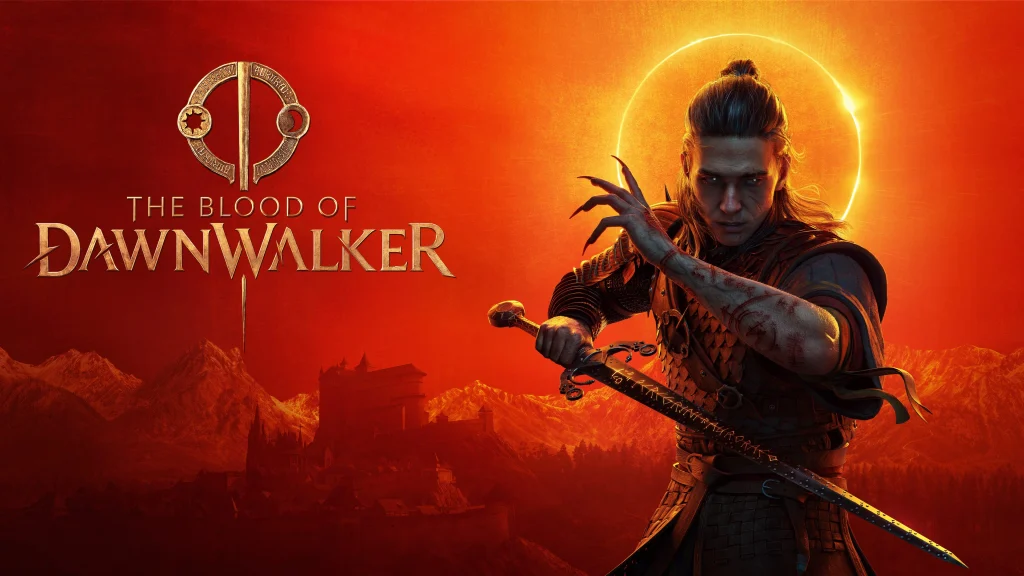
IGN awarded it a 9/10, calling it “one of the best open-world action RPGs” in recent memory. Famitsu gave it a 34/40 (9/8/8/9). As of this writing, OpenCritic sits at an 85 average, while Metacritic scores range from 83 to 86 across platforms (84 on PC, 83 on PS5, 86 on Xbox Series X). Often compared by players to a “medieval vampire Witcher 3,” what makes The Blood of Dawnwalker stand out from the crowd?
If there’s one thing that makes this game most reminiscent of The Witcher 3, it’s not the medieval setting or the swordplay — it’s the way it places character relationships, quest choices, and branching narratives at the very heart of the open-world experience.
Story: Human by Day, Vampire by Night — 30 Days to Save Your Family
The Blood of Dawnwalker is set in 14th-century Europe — a land ravaged by bloody conflicts and the Black Death. Vampires emerge from the darkness, exploiting humanity’s weakness to reclaim freedoms and power lost for centuries.
You play as Coen, a young man transformed into a “Dawnwalker” — human by day, vampire by night. The story revolves around saving his family, and Coen must find and rescue them within a limited time frame.
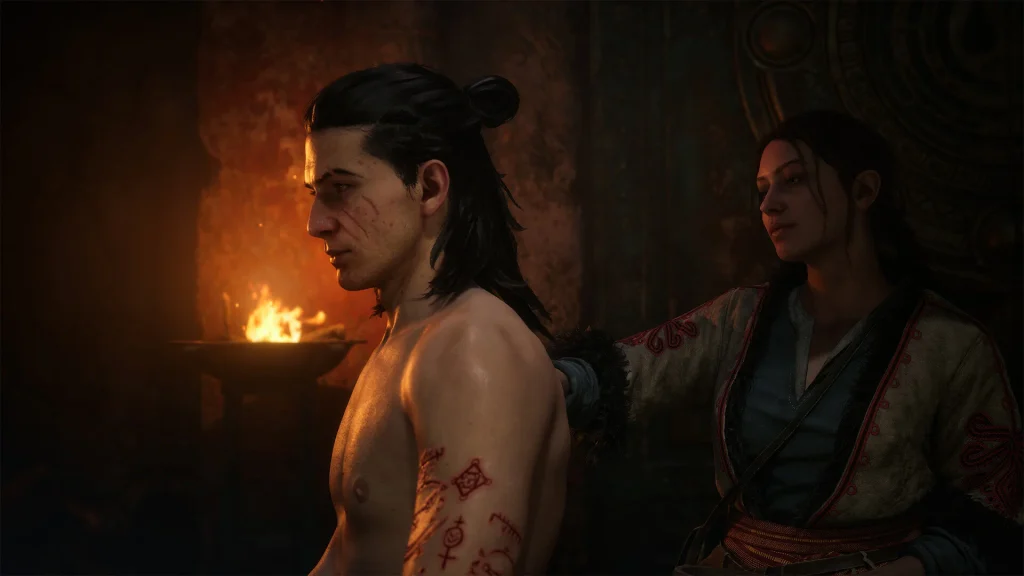
The game introduces a tense “30-day countdown” mechanic. Completing quests, scouting, and other actions all consume time, bringing you closer to the deadline. You can’t save everyone — every choice carries weight, and time is your enemy. This design attempts to break away from the familiar open-world routine of simply checking off map markers, giving your choices more weight than they would have in a conventional open world. The concept is undeniably elegant, but in practice, the 30-day countdown feels more like a framework that applies constant pressure rather than a system that makes you feel time is “spiraling out of control” at every moment. PC Gamer praised the system for providing real urgency, though other outlets felt that while the idea was strong, the actual world changes and sense of urgency didn’t fully deliver.
The game’s character writing is another one of its strengths — the relationships between characters, the choices you make, and their consequences are key drivers of the narrative.
Gameplay: Day and Night, Two Forms with Two Approaches
The game’s core mechanics are built around its day-and-night cycle.
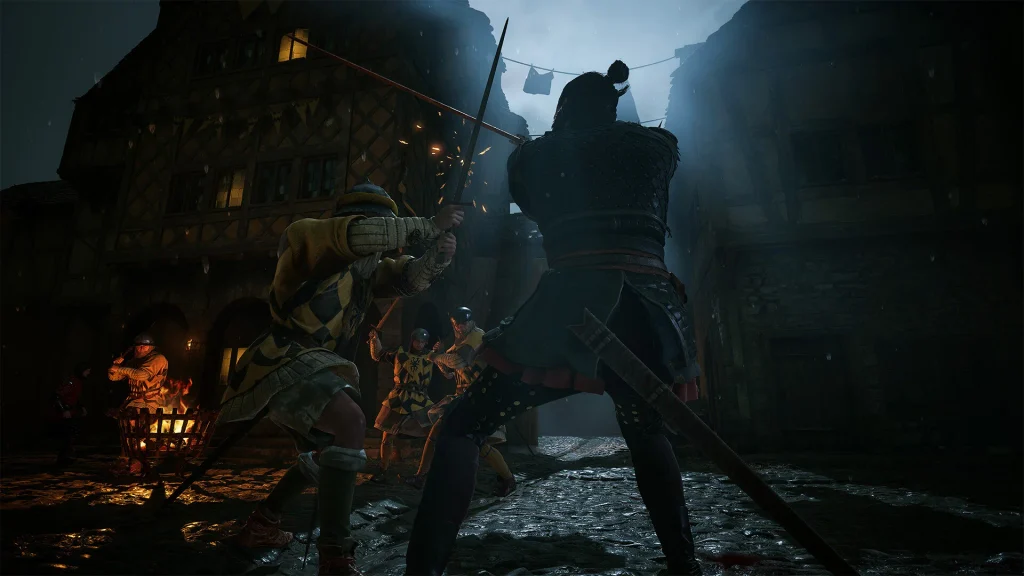
By day, Coen remains human — wielding a sword, using magic, talking to NPCs, and exploring the world. By night, he becomes a vampire, gaining supernatural abilities — speed and strength far beyond any human. The two forms come with distinct abilities and approaches to exploration, while also opening up different ways to tackle certain quests. What makes this system truly meaningful is that day and night don’t just swap out a skill set — they change how you approach combat, exploration, and even certain missions. You can charge head-on or take time to plan. You can go it alone or seek allies.
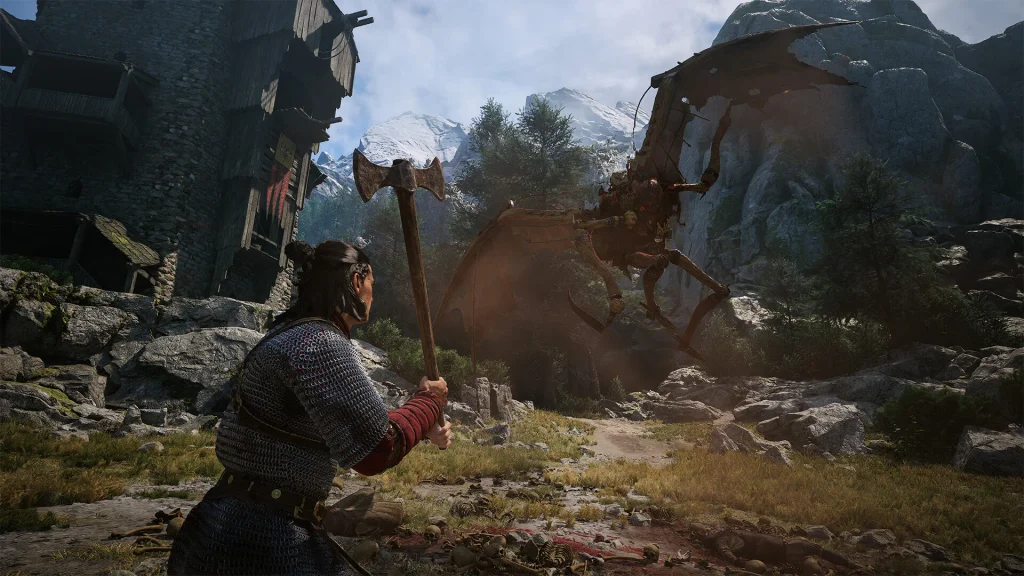
The game is built on Unreal Engine 5 and delivers strong visual quality. The open world is handcrafted, featuring forests, plains, swamps, mountains, and medieval settlements. Players can also explore forgotten ruins and uncover remnants of ancient civilizations.
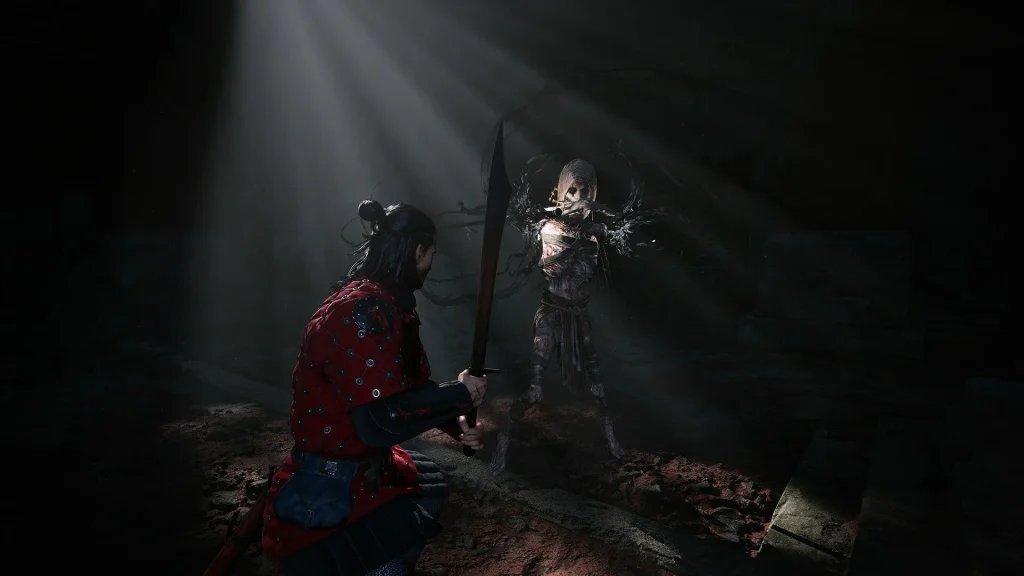
Combat uses directional blocking and parrying mechanics that offer some tactical depth, but the limited enemy variety and limited combat variety mean it’s unlikely to be remembered as an action RPG defined by its combat depth.
Critical and Player Reception: High Praise Meets Optimization Concerns
Critical reception has been strong:
- IGN: 9/10
- PlayStation Universe: 10/10
- Destructoid: 9.5/10
- Famitsu: 34/40 (9/8/8/9)
- OpenCritic: 85 average
- Metacritic: 83–86 across platforms
Most critics have praised the game’s story, character writing, and world-building, noting its rich atmosphere and strong narrative drive. Commonly cited shortcomings include limited enemy variety, sparse open areas, stiff facial animations, and occasional performance hiccups.
Player reception has followed an interesting trajectory. In the first hours after launch, Steam reviews dipped to around 62% positive. Since then, the rating has steadily climbed as more reviews have come in, while the developer has also rolled out patches 1.0.2 and 1.0.3. As of this writing, Steam English user reviews are sitting at “Very Positive,” with a positive rating of around 82%.
Common positive feedback from players highlights the story, characters, and atmosphere — some have even described it as a “Kingdom Come: Deliverance + The Witcher 3” experience. Negative feedback tends to focus on overly dark scenes in certain areas, performance fluctuations at launch, and controller prompt issues. While the developer has pushed out several fixes, the performance and visual issues that surfaced at launch are still worth keeping an eye on.
Editions and Buying Advice
Edition breakdown:
| Edition | Content |
|---|---|
| Standard | Base game |
| Eclipse Edition | Base game + digital world compendium + digital soundtrack + digital comic |
Pre-ordering either edition granted the “Sangra Traveler Armor Set,” which is also obtainable through in-game progression.
Buying advice:
If you’re a fan of The Witcher 3, or you enjoy story-driven open-world RPGs — it’s worth picking up. The narrative pedigree from the former Witcher 3 director, the day/night dual-form mechanic, and the pressure of the 30-day countdown make it distinctive within the genre. It’s not the cheapest game on the market, but if you genuinely enjoy Witcher 3-style story-driven open-world RPGs, the price is still justifiable. If you have higher expectations for combat depth or technical polish, it’s better to wait for a discount.
If you’re sensitive to technical issues — it’s worth holding off for now. While the developer has pushed multiple patches, the performance and visual problems that surfaced at launch are still worth monitoring.
If you’re just looking for an open-world game to grind through, and story-driven experiences aren’t your thing — this probably isn’t for you. Its core appeal lies in its focus on story-driven RPG design. Without that connection, the pressure and choice-driven tension of the 30-day countdown may feel more constraining than exciting.
Final notes: The PC version currently does not use Denuvo encryption. The Steam version unlocked on September 3, and topped the Steam global top sellers chart shortly after launch.
Copyright Notice: All game screenshots, character images, and related assets used in this article are the property of their respective rights holders. This article is intended solely for game introduction, review, and informational purposes.
Comments (0)
No comments yet