
Cities: Skylines II: The 159-Square-Kilometer Digital Sandbox – Is It Worth Revisiting?

Release Date: October 24, 2023|Developer: Colossal Order (original), Iceflake Studios (ongoing optimization)|Publisher: Paradox Interactive|Platforms: PC (Steam), PS5, Xbox Series X|S|Genre: City-building simulation
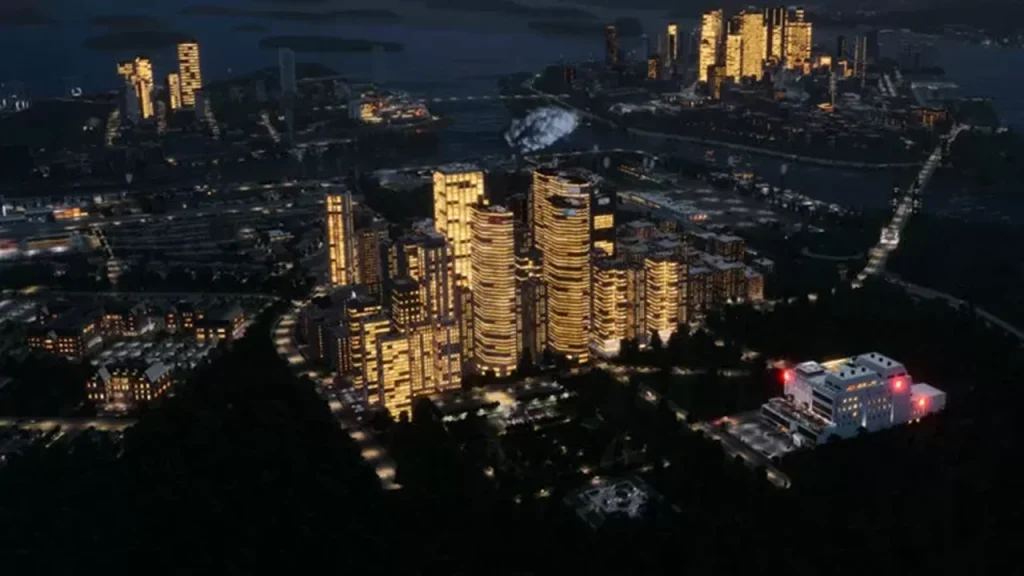
In 2015, Cities: Skylines redefined the city-building genre with a city so famous for its traffic jams that it became a meme. Eight years later, the sequel arrived with a map five times larger, citizens living out full AI-driven lives, and an economy system deep enough to make you stress over garbage disposal. Then the launch happened — poor optimization, missing mod support, and a 50% user rating on Steam.
In 2026, a new development team — Iceflake Studios — took over, and after nearly a year of fixes and updates, the game is slowly getting back on track. Is it worth a second look?
Cities: Skylines II is still a city-building simulation, but it functions more like a city-running simulator than just a “build houses” game. The real appeal lies in spotting problems, tracing their roots, and fixing them — those moments when you realize traffic is backed up simply because an industrial zone entrance is missing one turn lane. That’s what makes it so addictive.
If you’re new to the series, here’s the gist: you get a plot of land and build a city from scratch — laying roads, zoning areas, setting up water and power, and placing schools, hospitals, and police stations. Step by step, you turn empty land into a thriving metropolis.
Compared to the original, the sequel’s upgrades are substantial: the map has expanded from 9 square kilometers to a staggering 159, letting you build a true metropolis from the ground up. The economy goes deep enough to require sorting garbage, and the citizen AI is detailed enough that every resident has their own job, home, and commute routine.
Veteran players of the original won’t feel lost, but the depth and complexity are on a whole other level.
The Question Every Original Player Asks: What’s Actually Changed?
Five times the map size — finally, enough room to breathe.
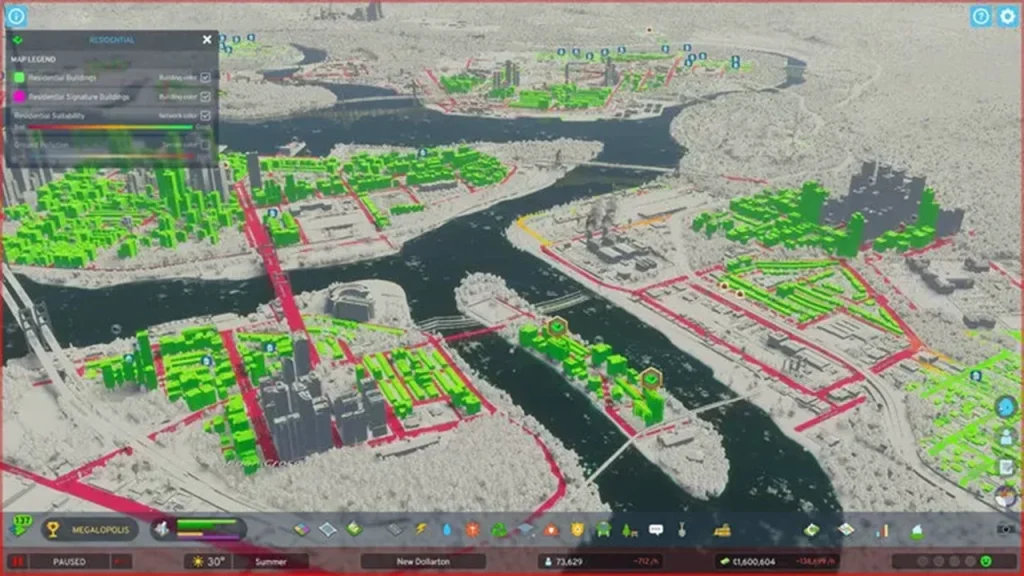
The original’s 9-square-kilometer map always felt a bit cramped in the late game. The sequel pushes that cap to 159 square kilometers, letting you place a massive industrial zone on the city’s edge, connect it with highways, and spread out low-density suburbs in between. The sense of spatial planning is completely transformed.
Traffic AI is finally smarter.
The most frustrating thing about the original was watching every single car pile onto one road, preferring gridlock over taking an empty parallel street. In the sequel, citizens choose routes based on trip type — work, school, shopping, or leisure — and merge into the correct lane ahead of time. You no longer have to demolish half your city just to fix traffic jams.
Citizens actually feel alive.
Every resident has a full daily routine — when they leave home, which route they take, where they work, and where they shop after work. Build a school, and nearby kids will actually attend it. Raise commercial taxes, and shop owners will complain — and maybe even close up and move out. Every decision you make has a visible impact on your citizens’ lives.
Why Do So Many Players Still Love It?
For city-building enthusiasts, the experience this game offers is nearly one of a kind.
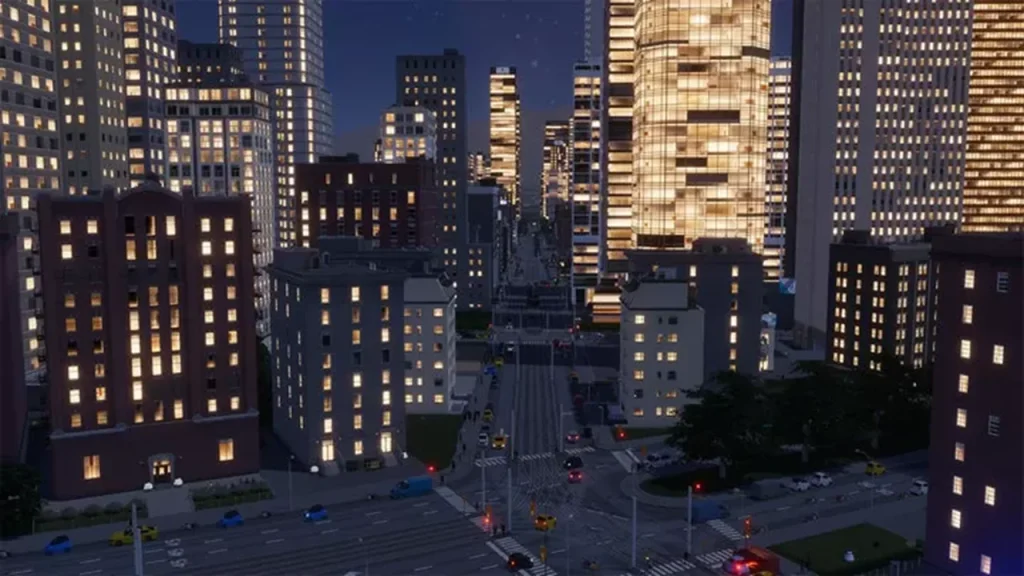
You might spend two hours planning a highway, only to realize that the real cause of the traffic jam is a single missing right-turn lane at an industrial zone entrance. The process of identifying problems, tracing causes, and fixing them is satisfying in itself.
You can also spend dozens of hours watching a city grow from desolate wasteland to a thriving metropolis of millions. That sense of “I built this” is something few games can deliver.
What’s more, the modding ecosystem is still thriving. Whether you want to import a real-world landmark, add an election system, or replace the default building styles with Chinese-themed architecture, the community has mods for all of it. That also means that years from now, the game could look completely different than it does today. This openness gives it a longevity that few other games in the genre can match.
But It Remains a Divisive Title
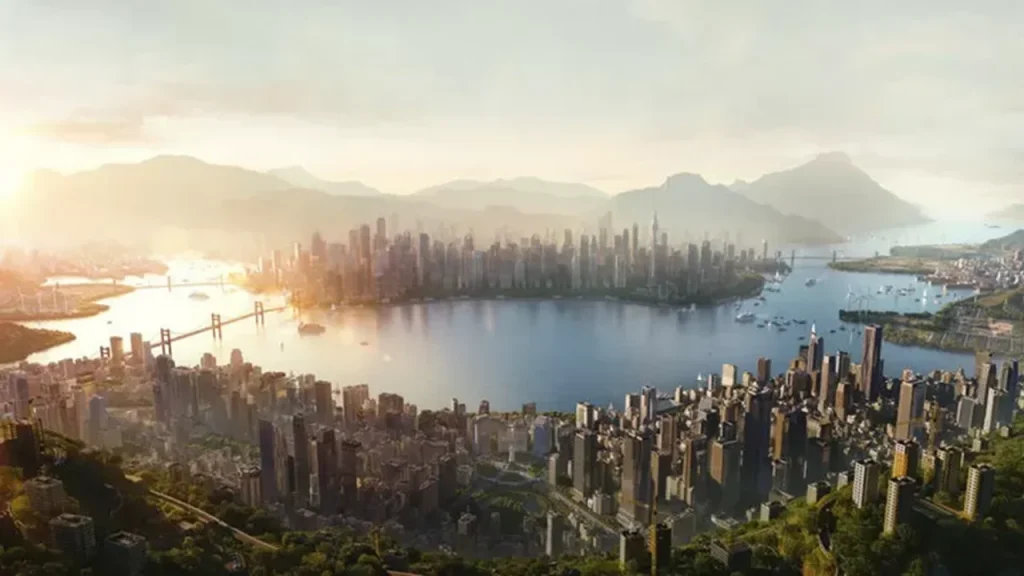
If you bought the game at launch in late 2023, you probably understand why many players are still on the fence.
The biggest issue remains performance.
That’s still the game’s biggest flaw. Some players have tested it on high-end hardware and found that even then, large cities in the late game struggle to maintain a stable 60 FPS. For most, the actual experience hovers around 30 FPS. A smooth experience demands a powerful PC — especially once your city’s population climbs into the hundreds of thousands.
Even when it runs well, some systems still feel unfinished.
Problems with the homeless system, residential demand bugs, and imbalances in office and commercial demand still appear in some players’ games. The developers are working on them, but the game is far from polished. Its troubled launch still affects how many players view the game today.
Is It Worth Buying in 2026?
If you’re looking for a relaxed, easygoing city-builder, Cities: Skylines II probably still isn’t the best fit — it demands patience, a learning curve, and a reasonably powerful PC.
But if you’re willing to spend dozens of hours planning roads, fine-tuning your economy, and watching a city grow from nothing, it remains the closest thing to a “digital urban sandbox” currently available. The 159-square-kilometer map, the deeply simulated citizen AI, and the ever-growing mod ecosystem all add up to something that has no true rival.
The launch was a disaster — that’s a fact. But Cities: Skylines II in 2026 is not the same game it was in 2023. If you wrote it off back then, it might be worth taking another look.
Copyright Notice:
All game screenshots, character designs, and related materials referenced in this article are the property of Colossal Order, Iceflake Studios, Paradox Interactive, and their respective rights holders.
Comments (0)
No comments yet