
Code Vein — The Soulslike Ambition Beneath the Anime Aesthetic

In late September 2019, Code Vein officially launched.
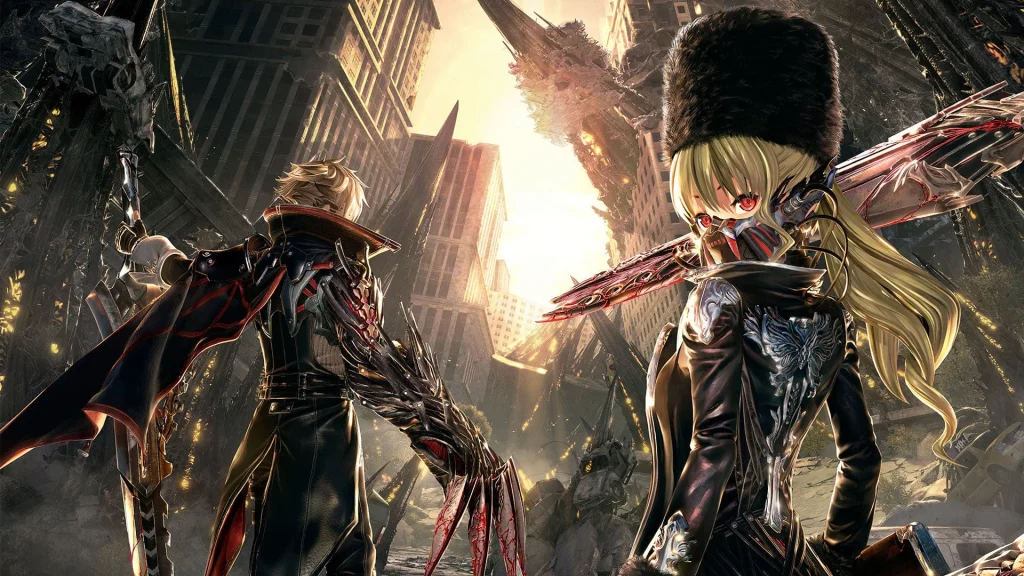
Back when Soulslikes were still a relatively niche genre, Bandai Namco did something fairly bold for its time: it took the punishing combat framework of a Soulslike and built it around an anime vampire aesthetic.
Director Hiroshi Yoshimura, previously known for the God Eater series, brought together a post-apocalyptic setting, vampire lore, and anime-inspired character designs within a genre defined by high difficulty and steep penalties. At the time, the combination looked ambitious, but far from guaranteed to work.
So how did it turn out?
IGN gave it a 7/10, calling it “an interesting twist on the Soulslike formula”. In September 2021, worldwide shipments and digital sales surpassed 2 million units. By March 2023, that number had reached 3 million.
Seven years later — as the 2026 sequel began drawing criticism over its open-world design and optimization issues — the original’s “solid but unspectacular” reputation starts to look more like a compliment.
Anime Souls — Does It Actually Work?
The first thing that strikes you about Code Vein is how good it looks.
Character customization is remarkably detailed. The anime-style faces, flamboyant outfits, and oversized weapons made it stand out among the muted, gray-toned Soulslikes of its era.
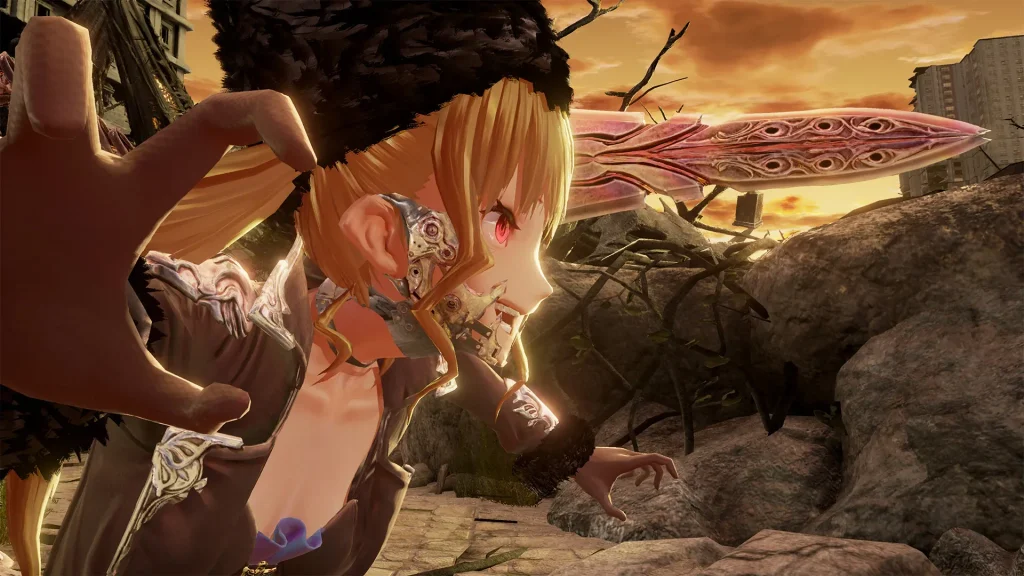
But beneath that surface, it’s anything but lightweight.
The combat system revolves around Ichor — attacking enemies builds Ichor, which is then spent to activate skills (Gifts), and replenished through drain attacks. This loop encourages aggressive play, rather than simply waiting for enemy openings.
More crucial is the Blood Code system. Think of Blood Codes as character classes — each comes with its own stat growth and equippable Gifts. Players can swap Blood Codes mid-combat, adjusting their build on the fly depending on the enemy or boss ahead. This level of build flexibility gives Code Vein a combat system that feels unusually adaptable.
But feel is another matter. Many reviews noted that the game’s animation feedback and hit weight still lag behind FromSoftware’s flagship titles. It sits somewhere between God Eater‘s fast-paced hunting and Dark Souls‘ deliberate, methodical combat — borrowing from both, but mastering neither.
Companions and Memories: Where It Truly Stands Apart
If the Blood Code system is the gameplay innovation, the AI companion may be Code Vein‘s most distinctive feature among Soulslikes.
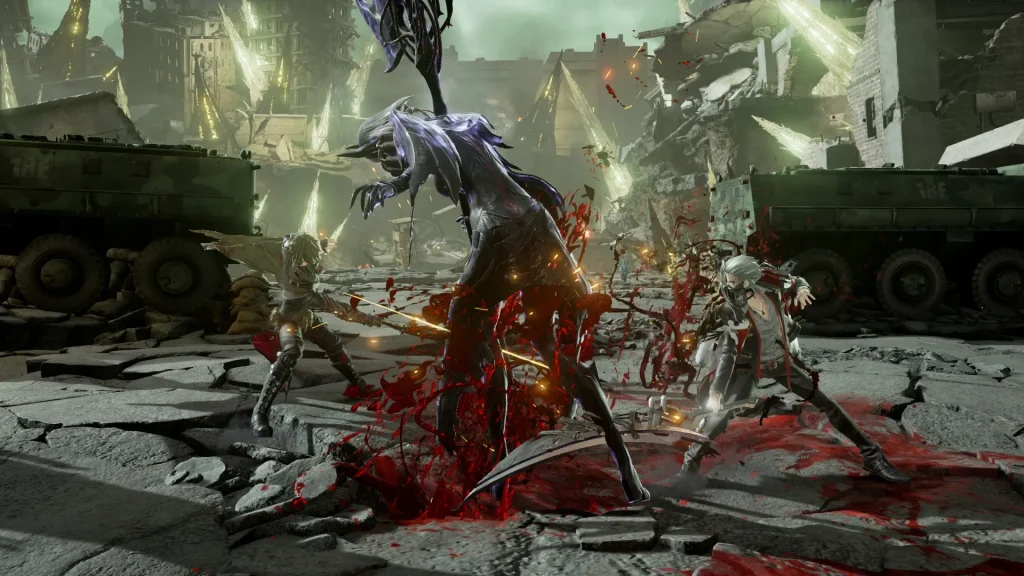
For most of the game, players can bring an AI partner along. They’re not just there for show — they actively engage enemies, can revive you when you fall, and draw aggro to create openings. In a genre so often associated with solitary struggle, this was a notable departure.
Some felt this lowered the difficulty, making the game less “hardcore.” But from another angle, this is Code Vein trying to answer a question: if suffering is no longer the only source of fun, how else can a Soulslike attract players?
One answer: story and characters.
The game is set in a near-future world. The so-called “Great Collapse” destroyed civilization — “Thorns of Judgment” tore through the land, and survivors became immortal “Revenants” through transplanted “BOR parasites.” They gained immense power, but at a cost: they must constantly consume blood to maintain their sanity, or risk degenerating into mindless “Lost” — creatures driven only by the hunger for blood. And “resurrection” is not free — death costs them fragments of their memory.
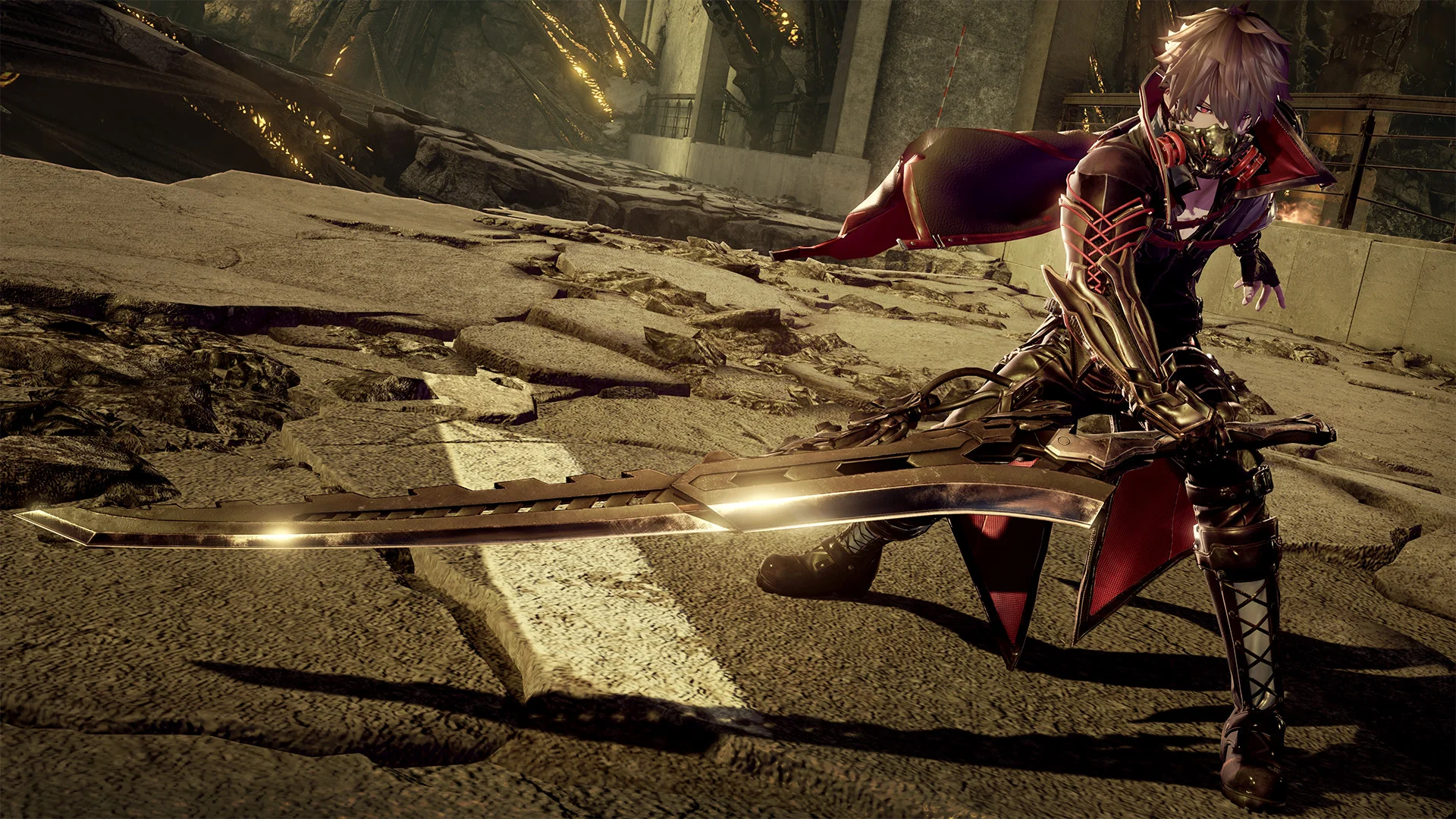
The player character is one such Revenant — awakening from a long slumber with most of their memory gone, accompanied only by a mysterious girl named Io. To uncover their past and the truth of this world, they journey through the VEIN region — a sealed-off land surrounded by a massive “Red Mist,” where blood is the most precious resource, and the secrets of the ruling powers unfold with every step.
The way the game tells its story is distinctive, too. It uses Vestiges to reconstruct fragmented memories, allowing players to enter memory sequences that reveal the pasts of key characters. Compared to Dark Souls‘ environmental and item-description storytelling, Code Vein tells its character stories more directly. The Inheritors, scientists, and survivors you meet along the way each have their own tales, and the protagonist’s choices can shape character fates and influence which ending the player reaches.
That said, while the premise is compelling, IGN noted that the story occasionally gets buried under too many cutscenes, and pacing can feel sluggish. The narrative itself is dark enough — it’s the delivery that makes it feel overlong at times.
Level Design: Linear — For Better and Worse
Code Vein‘s level design is another point of contention.
The game uses a largely linear structure, with many areas designed as maze-like spaces to explore. Players navigate tangled paths to find mistles (checkpoints), unlock shortcuts, and push forward. This design was criticized at the time for being “too linear,” lacking the interconnected, looping, vertical intricacy of Dark Souls‘ signature world design.
But linearity has its upsides: it’s harder to get lost, and objectives are clear. For newcomers to the Soulslike genre, this can actually be a helpful form of guidance. Each area has a clear beginning and end, and exploration pressure is kept within manageable bounds.
And some areas are actually quite cleverly designed — especially the infamous Cathedral of the Sacred Blood. Overall, though, it never quite reaches the “and then it all connects” revelation that Dark Souls is known for.
Seven Years Later: What Does It Leave Behind?
As of this writing, the original Code Vein has more than 62,000 user reviews on Steam and remains Very Positive overall.
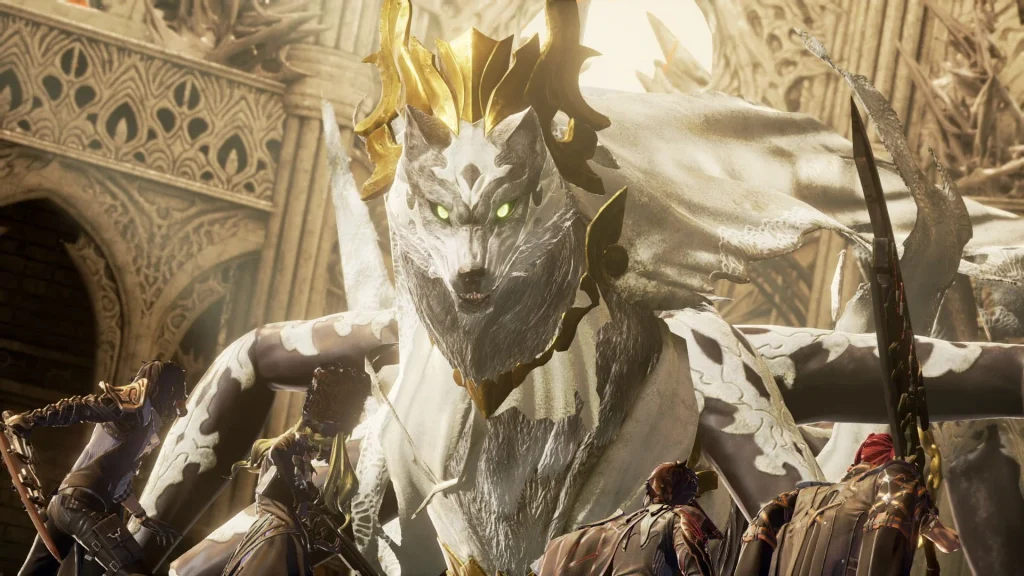
By contrast, the 2026 sequel, Code Vein II, has had a rockier reception. English Steam reviews currently sit at “Mixed,” with around 65% positive; as of this writing, its Metacritic score sits at 70. Criticism has centered on optimization issues, open-world design, and combat feel. IGN gave it a 6/10, criticizing its middling open-world execution and inconsistent overall experience, and arguing that it did little to move the series meaningfully beyond the original.
The original’s “solid but unspectacular” reputation, in hindsight, has become something of a compliment. It didn’t try to do too much beyond its means — linear levels, mid-scale bosses, clear class builds. It stayed within its lane and carved out its own niche within the anime Soulslike subgenre.
Code Vein is not Dark Souls. It’s not the kind of masterpiece players will be dissecting a decade from now. But it did prove one thing: the Soulslike formula doesn’t have to be written exclusively by FromSoftware.
Copyright Notice: All game screenshots, character images, and related assets used in this article are the property of their respective rights holders. This article is intended solely for game introduction, review, and informational purposes.
Comments (0)
No comments yet