
Rune Factory: Guardians of Azuma: The Series‘ Boldest Change, Now with Japanese-Style Farming and Combat

What comes to mind when you think of Rune Factory? Maybe it’s the medieval European charm of Selphia in Rune Factory 4, with its stone buildings, church bell tower, wheat fields and pastures. Or perhaps it‘s the days of tilling soil and delving into dungeons with sword in hand in Rune Factory 5.
But when you first launch Rune Factory: Guardians of Azuma, you might do a double‑take: is this really Rune Factory? The characters have huge, expressive eyes, they wear shrine maiden and hunting garments, they farm with paper umbrellas — and the crops have shifted from familiar Western vegetables to rice and other distinctly Eastern produce.
The drastic art change is only the most obvious layer. Beneath that Eastern setting lies a complete redesign of the core gameplay loop. Some players see it as a genuine reinvention of the series; others feel the familiar spirit has been lost. Either way, this sixth mainline entry from Marvelous — a bold gamble — is worth a serious look, even a year after its release.

I. Basic Information
- Japanese Title: ルーンファクトリー 龍の天地
- English Title: Rune Factory: Guardians of Azuma
- Developer / Publisher: Marvelous Inc.
- Genre: Fantasy Life Game (Action RPG + Life Simulation + Romance)
- Release Date: June 5, 2025 (Switch/Switch 2/Steam); PS5/Xbox Series X|S versions released on February 13, 2026
- Price: Switch/Steam standard edition approx. NT$1,000–1,100 (around US$30–35); PS5/Xbox edition approx. NT$1,690 (around US$50–55)
- Platforms: Nintendo Switch / Switch 2 / Steam / PS5 / Xbox Series X|S
- Series Positioning: As a new mainline entry after Rune Factory 5, this game does not use a number but adopts the subtitle Guardians of Azuma as its official name.
- Key Creatives: General Producer Kenichiro Tsukuda, Producer Hisashi Fujii, Director Shinjiro Maekawa, Composer Noriyuki Asakura (known for Rurouni Kenshin anime score).
Sales & Reception Snapshot:
- Global shipments have surpassed 500,000 units.
- Marvelous‘ financial reports show solid performance, a key sales driver alongside the latest Story of Seasons title.
- PS Store user ratings have consistently stayed above 4.5/5.
- Metacritic (PC) average: 79/100.
II. Story & Setting: Rebuilding a Wasteland in the Eastern Land of Azuma
2.1 The Fall of the Dragon Star
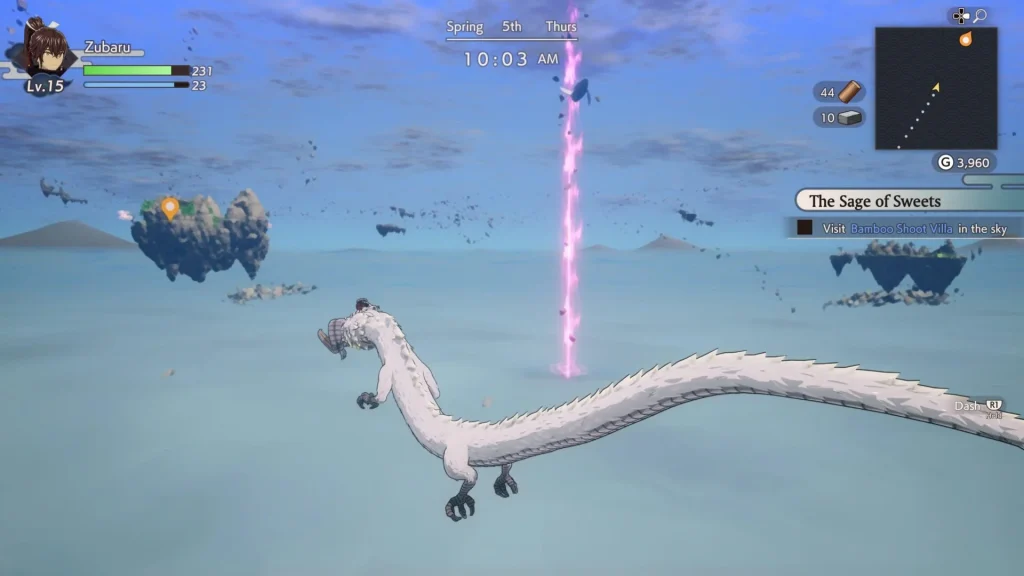
The story takes place in a land called “Azuma” – an Eastern realm. Azuma suffered a great calamity known as the “Fall of the Dragon Star,” leaving the earth scarred, its runes (the vitality of the land) dried up, and the nature‑governing gods vanished. The amnesiac protagonist is drawn into this catastrophe, forms a contract with a white dragon, and gains the special ability of the Earth Dancer.
2.2 Starting from the Village of Spring
The game doesn’t give you a fully intact world from the start. You begin in the desolate “Village of Spring” – where the villagers are even planning to cut down the legendary cherry tree that once housed the Spring God, afraid it might fall on someone someday. As you progress through the main story, you revive the four seasonal villages one by one and awaken the gods who govern nature. Riding the white dragon toward the next village or floating island gives you a tangible sense of actually pulling this land back from ruin.
III. Core Systems: The Dual Reinvention of “Dance” and “Development”
The biggest change in Rune Factory: Guardians of Azuma is that it has completely rewritten the interaction logic of traditional Western‑fantasy farming life using the “Dance” mechanic.
3.1 The “Dance” System: A Multi‑Purpose Tool Driven by Sacred Relics
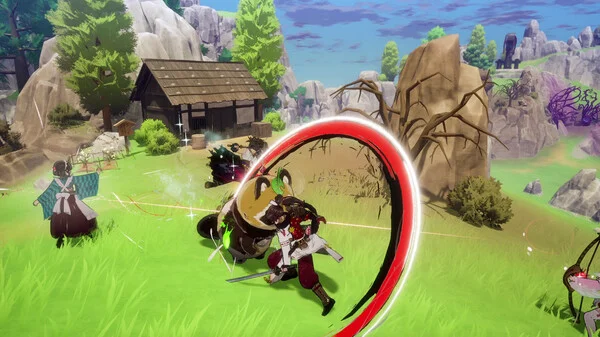
The signature new system is “Dance.” As the Earth Dancer, you can perform different dances via various sacred relics to trigger various effects.

| Relic | Dance Effect | Usage Scenario |
|---|---|---|
| Drum | Speeds up crop growth, revives withered plants | Farming acceleration, resource gathering |
| Umbrella | Waters crops, summons a wind wall for gliding | Farming irrigation, terrain traversal |
| Sword | Deals damage to monsters | Combat offense |
| Staff | Heals allies | Combat support |
Each relic has its own skill tree, unlocking new abilities as the main story advances and villages are rebuilt. The Dance system fundamentally changes how farming works. Playing the drum significantly boosts crop growth, and the interplay between relic skills and basic attacks becomes a key part of battle.
3.2 Developing Your Village: From Farmer to “Mayor”
Farming has been heavily streamlined. Traditional tools no longer need to be crafted separately from the beginning, and you don‘t have to constantly switch between them. Tilling is no longer “one square at a time.” Instead, you enter a construction mode, call upon your allies to combine fields, and freely lay them out. You can build waterwheels, place buildings and decorations at specific spots – you feel more like a “mayor” than a mere farmer.

The maps are filled with exploration elements – trees, ore deposits, treasure chests, frog stones, Jizo statues – providing resources and recipes. Most exploration content can be collected just by following the main story, with occasional return trips after obtaining new relics.
3.3 Romance & Marriage: The Largest Roster in the Series
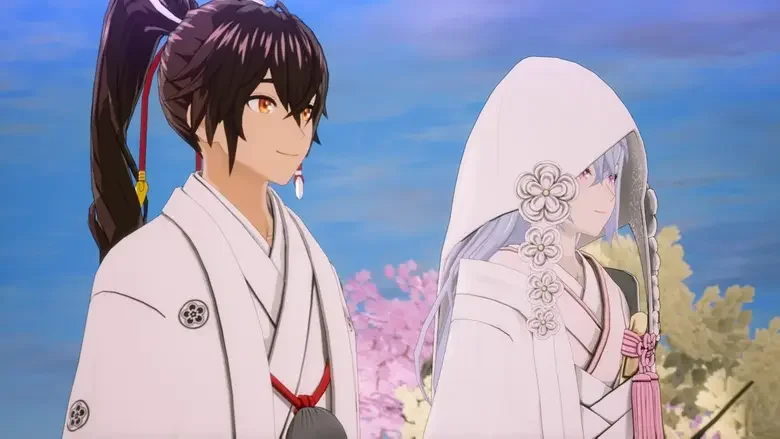
The romance and marriage system is a long‑standing highlight of Rune Factory. This entry offers one of the largest dating rosters in the series – 16 marriage candidates. You can brew tea, give flowers, watch fireworks at the shrine, and once affection is high enough, get married and have children. Romance and relationship scenes are fully voiced. The system allows same‑sex marriage (dating, romance, marriage, children), and through a world‑line mechanism, you can collect multiple marriage relationships in the same save file.
IV. Development Team & Costs: A High‑Stakes Self‑Proof
The publisher Marvelous has been in a delicate position recently. Earnings reports show a clear year‑on‑year increase in game sales, but due to high development costs, they still recorded operating losses. The cost surge is directly tied to intensive R&D on new titles. Marvelous emphasized that the project remains in the hands of the series‘ core development team. Piling resources into a key title is both a statement of intent and a risk.
V. Critical Reception & Market Response: Divisive but Worthwhile
5.1 Media Scores Summary
| Outlet | Score | Verdict |
|---|---|---|
| Metacritic (PC) | 79 | Average media score |
| IGN France | 9/10 | “The best game in the series so far” |
| IGN China | 8/10 | “The lighter management, heavier action approach pays off; overall polish and playability have clearly improved” |
| The Gamer | 8/10 | “A great action‑adventure game” |
Critics generally praised the innovation of the Dance system and the heavily enhanced ARPG portion, with the world exploration and map design receiving multiple shout‑outs. Points of criticism included the initial learning curve of the new system (getting used to triggering dances with different relics), the shallow village management, and some cheap visual and lighting effects. IGN China summed it up accurately: “You can see the determination and courage to change, but it’s still a breath away from greatness.”
5.2 Polarized Player Reactions
The player community is deeply split. Some consider it the best in the series, saying the freedom of the Dance system overturns genre conventions, and the three pillars – farming, fighting, and romance – have never been better integrated. Others are disappointed – too much standing‑around dialogue, some story beats feel like shallow anime tropes, awkward camera controls, cheap visuals. The vast majority of positive reviews focus on keywords like “genuine effort,” “meaty content,” “biggest series evolution.”
VI. Experience on Switch 2
For those who own or plan to get a Switch 2, Guardians of Azuma is one of the few titles already optimized for the new hardware. The Switch 2 version improves resolution, loading times, and overall smoothness. Performance in large scenes and complex battles is noticeably more stable than on the original Switch. For players planning to buy a Switch 2, this is one of the better platforms to experience the game.
VII. Is It Worth Playing Now?
Reasons to Play
- Unique gameplay, still unmatched. The Dance system weaves farming, exploration, combat, and story into a self‑sustaining loop – you farm to restore nature, explore to find new relics, fight to advance the story, and romance to give yourself an emotional anchor to keep farming. Among recent farming RPGs, this remains a highly distinctive implementation.
- The ARPG side offers substantial content and depth. Streamlining farming hasn’t meant simplifying combat; on the contrary, the dungeon‑crawling volume and action variety are among the richest in the series. Dozens of hours of playtime come from the vast explorable areas and collectibles, plus puzzles that require skilled use of different dances.
- Solid amount of content. The main story takes about 30‑40 hours, completing most side content around 50‑60 hours, and 100% completion can exceed 80 hours. With 16 romanceable characters, fans of dating sims will have plenty to keep them busy.
- Good price window now. Over a year after release, the game regularly goes on discount across platforms. Steam and PSN have seen multiple sales, and physical used copies have stabilized at a lower price. If you want to experience the farthest an “action‑focused farming game” has gone, now is a much better value than at launch.
Points to Watch
- Can clash with longtime fans‘ nostalgia. The Japanese aesthetic, the huge‑eyed cute characters, the amnesia‑plus‑search‑for‑gods story – if you’ve come all the way from Rune Factory 4, you might need some time to accept this new skin. The “hardcore farming” feel has been softened; more of the work is done by a single dance. Players who loved the granular, hands‑on farming may find it less “farmer‑like.”
- Village management lacks depth. If you expect Animal Crossing levels of building freedom, you‘ll be disappointed – placement of buildings and decorations has certain restrictions, and the overall depth is far from a dedicated management sim.
- Slow initial pace. You’ll need to get used to triggering dances with different relics; the early guidance is present but not intuitive. Some players spend the first few hours wondering, “What am I even doing?”
- Visual compromises are real. The original Switch version is especially noticeable. If possible, play on PS5, Xbox, or Switch 2.
One Sentence Summary
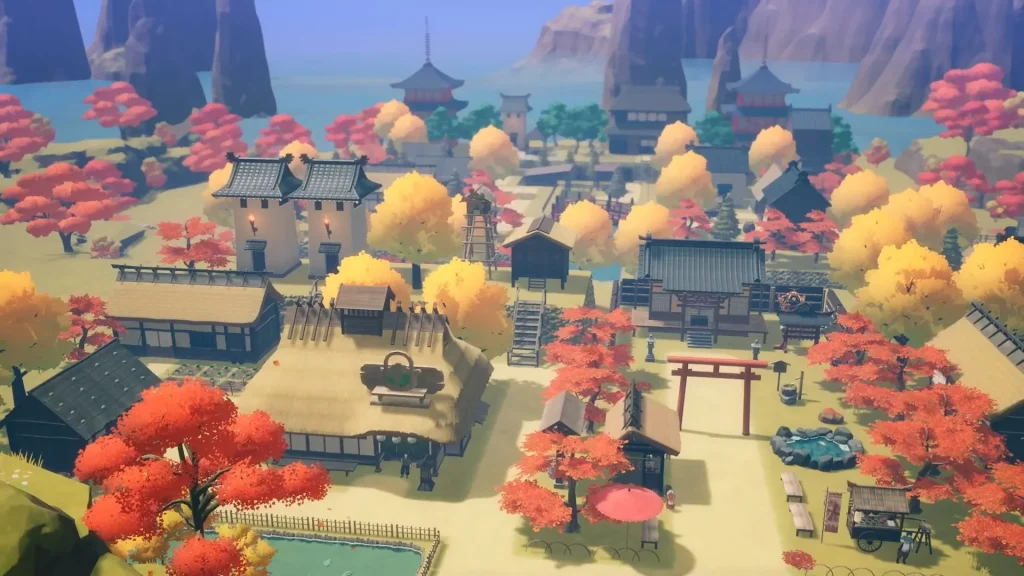
Rune Factory: Guardians of Azuma is not a perfect game. It has parts that shine (the Dance system, combat feel, one of the largest dating rosters in the series) and parts that are mediocre (village management depth, initial pacing). But it is undeniably a bold game. In an era where Story of Seasons and Stardew Valley have defined what a “farming game should look like,” Marvelous chose to tear it all down and try to integrate farming, exploration, combat, and romance into a single “Dance” experience. The result may not be perfect, but the direction deserves respect.
If you like the Rune Factory series and are willing to try something new, or if you‘re a hybrid ARPG‑farming fan looking for a game that balances action and emotional investment on Switch/PC/PS5, or you’re just curious what “dancing to farm” actually looks like – then Guardians of Azuma is worth spending dozens of hours to become an Earth Dancer in Azuma.
Copyright Notice:
All game screenshots, character designs, and related materials referenced in this article are the property of Marvelous Inc. and their respective rights holders.
Comments (0)
No comments yet