
Sword of Convallaria: An Excellent SRPG Held Back by a Controversial Gacha System

Sword of Convallaria: For This World of Peace is a free-to-play tactical role-playing game (SRPG) developed and published by XD Inc. It launched on July 31, 2024, on Steam, iOS, and Android.
I. Game Basics

| Category | Details |
|---|---|
| Chinese Title | 铃兰之剑:为这和平的世界 |
| English Title | Sword of Convallaria: For This World of Peace |
| Developer / Publisher | XD Inc. |
| Genre | Tactical RPG / SRPG |
| Release Date | July 31, 2024 (Steam) / August 1, 2024 (Mobile) |
| Platforms | PC (Steam), iOS, Android |
| Business Model | Free-to-Play |
| Supported Languages | English, Japanese, Korean, Simplified Chinese, Traditional Chinese |
| Composer | Hitoshi Sakimoto (known for Final Fantasy Tactics, Valkyria Chronicles) |
II. Story & Worldbuilding
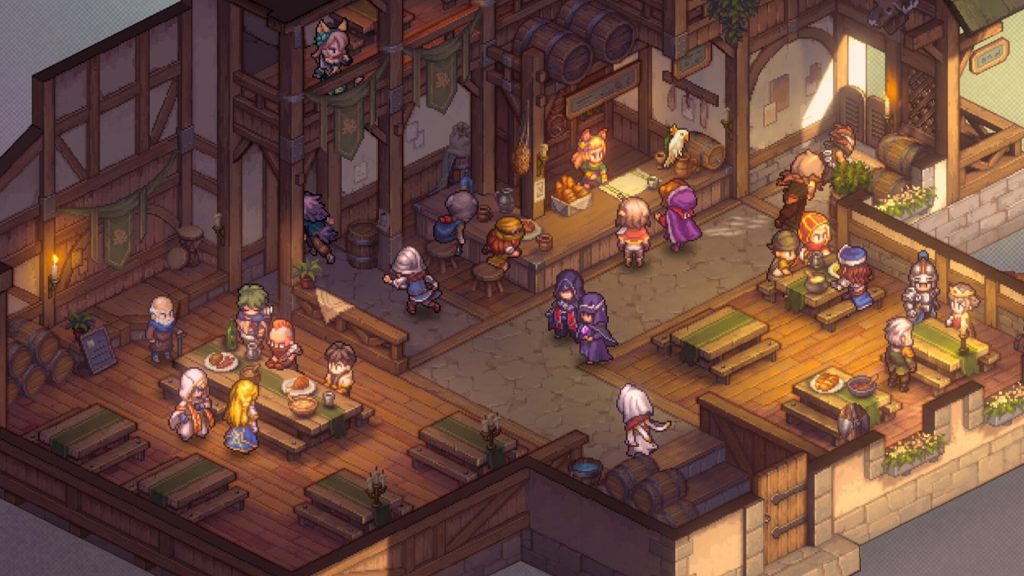
The game takes place in the small nation of Iria, located on the continent of Rodinia. Iria is rich in a valuable resource called Saint Crystals, making it a focal point of conflict between rival powers.
The story is set seven years after the end of Iria’s War of Independence. A mysterious uprising plunges the country back into civil war. The player takes on the role of a mercenary captain who has somehow been transported to Iria, navigating between factions—the Knights’ Alliance, the Irian Royal Army, the Papal State—in search of a path forward for the war-torn people.
The game’s biggest narrative hook is its branching, multi-ending structure. Every player choice—who to help, who to refuse, what missions to accept—shapes the story. Developer marketing positions the single-player campaign at over 100 hours of content with 10 different endings. The design team’s stated goal was to keep the story open-ended, with no single “canon” conclusion.
III. Core Gameplay
3.1 Two Modes: One Game, Two Experiences
What makes Sword of Convallaria unusual is that it offers two entirely different gameplay modes.
The “Spiral of Destinies” mode is a fully self-contained single-player campaign that operates independently of the gacha system. Players use “Keys of Destiny” to start a new run; the game gives you plenty to begin with, and you can experience all story branches without spending anything. The mode progresses in weekly turns and includes combat, dispatch missions, and facility management. All character progression happens within the mode itself, separate from the gacha side.
The online mode is a standard gacha game loop: pull for characters, farm materials, clear stages, wait for stamina to refill. Characters fall into five class roles—Defender, Destroyer, Seeker, Watcher, and Annihilator—and belong to one of over 10 factions, including the Convallaria mercenaries, Iria, Wilds, the Knights’ Alliance, and the Papal State.
3.2 Combat System
Combat follows a classic turn-based, grid-based SRPG framework:
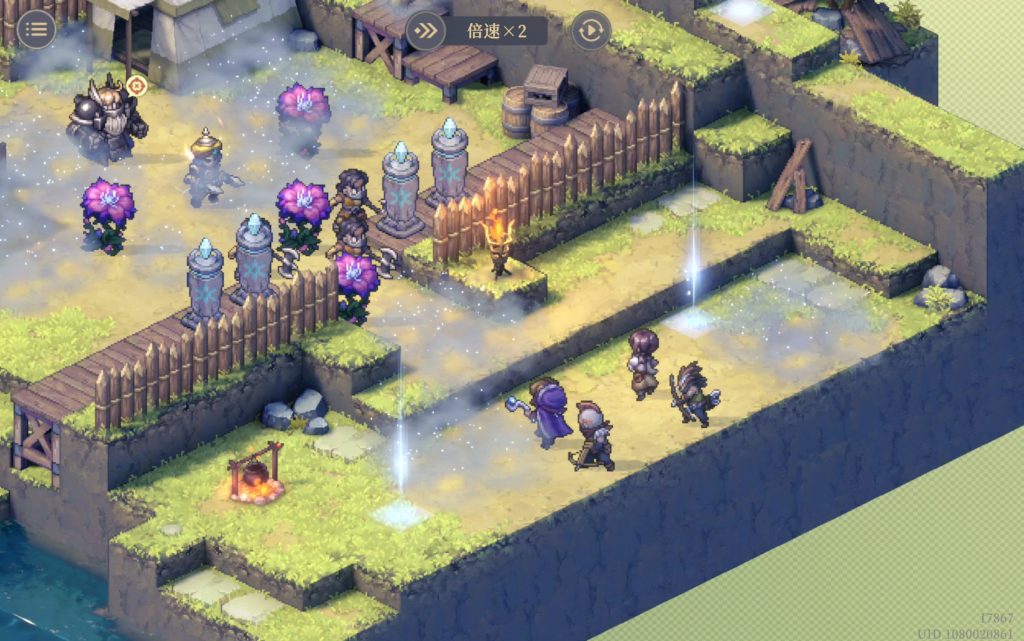
- Perspective: Isometric (45° angle)
- Terrain: Positioning around height differences, obstacles, unit facing direction, and attack range. Environmental elements like cliffs, fire, and water can all be used tactically.
- Special mechanics: Knockback can push enemies off cliffs or into explosive objects. You can also lure enemies into rolling boulder traps, or even knock powerful foes entirely off the map.
- Pacing: Tight and low-tolerance—you need to read advantages and disadvantages carefully and choose the right strategy.
IV. Audio & Visual Presentation
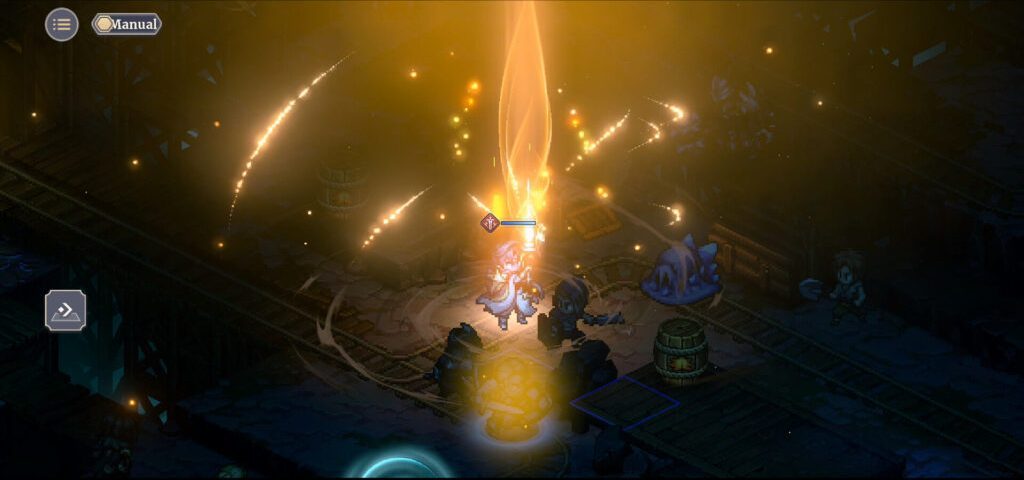
The game uses a unique visual style called “NeoPixel”—modern 3D rendering applied to classic 2D pixel art. The look combines real-time shading, bloom, dynamic depth of field, and HDR. GameSpot called it a “charming blend of retro pixel art and modern HD 3D graphics.”
The soundtrack was composed by Hitoshi Sakimoto, whose credits include Final Fantasy Tactics, Valkyria Chronicles, and Dragon’s Dogma. The score’s theme is “a ray of hope in despair,” closely tied to the game’s narrative beats.
The game features more than 40 well-known Japanese voice cast members, including Kazuhiko Inoue (Kakashi in Naruto), Aoi Yūki (Pokémon, Xenoblade), and Takuya Eguchi (Loid Forger in SPY×FAMILY).
V. Critical Reception & Player Feedback
Metacritic sits at around 70/100. Steam overall rating is “Mostly Positive.”
What players liked: The presentation—visuals and music—is frequently praised. The story and combat are considered engaging. The free-to-play model is seen as fair, with enough free characters and accessible legendary units. Many players consider the Spiral of Destinies mode the real meat of the game, and that complaints about “no story” often come from people who skipped it entirely. The overall experience feels like a “regular console game,” with relatively lower gacha pressure compared to other titles.
Common criticisms include: The gacha system has drawn significant criticism. Some find the UI/UX bloated and feel the game leans too heavily on nostalgia at the expense of polish.
VI. Who Is This Game For?

Sword of Convallaria is a hard game to judge in simple terms. It shoves two fundamentally different business models—a single-player SRPG and a gacha-driven mobile game—into the same package. The result is that the single-player side is genuinely solid, while the gacha side remains deeply polarizing.
If you stick to Spiral of Destinies—the sprawling branching campaign, Sakimoto’s score, the polished pixel art—you’ll likely find a generous free game. But if you’re coming for the gacha progression, your expectations may not align with what it delivers.
In a sense, Sword of Convallaria feels more like a single-player SRPG that happens to have a gacha system attached, rather than a traditional gacha game with a single-player mode on the side.
Copyright Notice:
All game screenshots, character designs, and related materials referenced in this article are the property of XD Inc. and their respective rights holders.
Comments (0)
No comments yet