CounterSide Ends Content Development After Six Years of Service: A Product Lifecycle Analysis
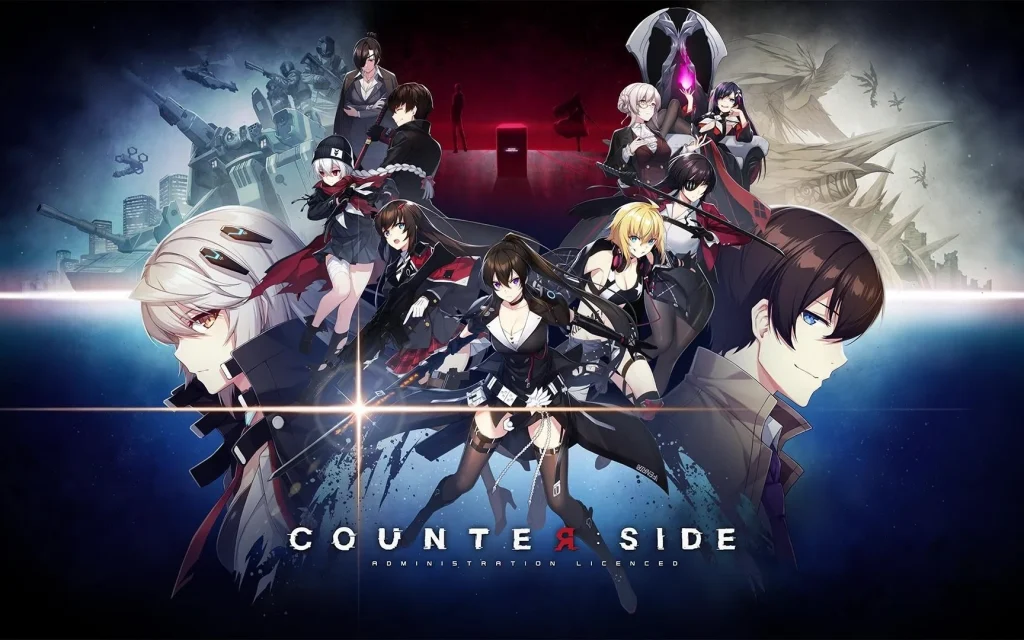
After six years of service, CounterSide is officially ending active development and moving into a maintenance-focused phase.
On April 24, 2026, Studio Bside released a developer note. PD Kim Hyun-soo announced he would step down at the end of April, and following the release of one final free Awakened character on April 29, the game would stop producing new characters, main story chapters, and major feature updates. Going forward, CounterSide will rotate existing content without adding anything new.

The urban sci-fi strategy gacha game, which launched in February 2020, has now completed its transition from active development to long-term maintenance. From an industry perspective, this isn’t a story about a “good game that got buried.” It’s a case of a product that, after going through growth, stagnation, and reform attempts, eventually entered a long-term operational maintenance phase.
I. The Shutdown Wasn’t Sudden
The 2026 shutdown wasn’t a sudden event. Signs had been emerging throughout 2024 and 2025.
Declining Revenue
From changes in update frequency, event scale, and community feedback, it was clear that the product’s commercial performance was under increasing pressure. The appeal of monetization points was diminishing, and players’ willingness to pull for new characters was weakening.
Shrinking User Base
Looking at community activity, leaderboard participation, and trends from third-party tracking platforms, the game’s overall user base steadily contracted between 2024 and 2025. New user acquisition became increasingly difficult, and conversion rates dropped — when both of these metrics worsen simultaneously, it’s fatal for any F2P product.
Slower Development Cadence
Before 2024, the game maintained a rhythm of one to two new characters per month and one major update per quarter. By the second half of 2025, the frequency of new content releases had noticeably decreased, with longer gaps between updates. This change in cadence was a direct signal that development resources were being reallocated.
The shutdown wasn’t the game “suddenly dying.” It was a rational decision made by the operator after evaluating the return on continued investment.
II. When Growth Begins to Stall
From an industry perspective, the most fundamental reason a product stops new content development is always the same: it can no longer acquire enough new users at an acceptable cost to justify the continued development of new content.
CounterSide was never a low-quality product. Its Live2D quality ranked among the best in its category, and its world-building and story had real identity. But product quality doesn’t automatically translate into commercial success. For F2P games, content quality is just table stakes — the ability to continuously acquire users and maintain retention is what determines whether a product can keep growing.
Why Was CounterSide Not Attracting New Players?
By 2025, the tactical RPG gacha space was already overcrowded. Competitors such as NIKKE, Blue Archive, and Arknights continued to dominate player attention and market visibility. Compared to new releases, older products generally lack fresh creative assets and novelty in the user acquisition market, making them less efficient at attracting new players.
At the same time, the game’s core loop — PvE progression plus PvP team-building — had become increasingly complex and demanding after five years of iteration. For new players, the amount of content they needed to catch up on was overwhelming, and frustration outweighed satisfaction.
Why Did Existing Players Leave?
Even more critical was the loss of existing players. For a game in its fifth year, the ideal user structure is “new players continuously flowing in + existing players steadily retained.” CounterSide’s reality was the opposite: new player inflow slowed, while existing players’ willingness to spend and their overall activity both declined.
As the player base shrank, revenue declined. Reduced revenue led to fewer development resources, which in turn slowed content updates and accelerated player churn. Once this negative cycle begins, it’s almost impossible to reverse. By late 2025, CounterSide was already deep in it.
III. The Origin System Overhaul: An Attempt to Reverse the Cycle
The Origin system overhaul is the most critical piece of this case study.
What Was the Origin Overhaul Trying to Solve?
In the pre-update announcements, the stated goals included: simplifying the gear system, lowering the barrier for new players, reorganizing the user interface, and rebalancing combat values. From a product design perspective, these goals themselves were reasonable — a game in its fifth year with high system complexity and a steep learning curve for new players could benefit from a “system streamlining” effort.
What Actually Went Wrong?
The core change of the Origin overhaul was a complete restructuring of the gear system. Equipment that players had spent months or even a year building up was forcibly downgraded or had its stats reset under the new system.
For core users who had invested significant time and money, this change essentially invalidated part of their past investment. This was also why the Origin update sparked such intense backlash — the level of negative feedback far exceeded what the development team had anticipated.
Why Didn’t Rolling It Back Help?
After the Origin update launched, the developer attempted to roll back some changes, offered compensation, and issued multiple apologies. But trust had already been broken. The core players who left didn’t come back — not because the game was “no longer fun,” but because they felt the game could arbitrarily reset the value of their past investment.
The biggest problem with the Origin overhaul wasn’t player dissatisfaction with the changes themselves. It was that, after taking on the risk of losing existing users, the update failed to deliver the expected new user growth.
For products in the later stages of their maturity phase, system-level overhauls are essentially high-risk investments. If they don’t bring in new users or improve retention, the user loss generated by the reform itself gets amplified.
There are precedents in the industry for similar system reforms failing and accelerating user attrition. The gear system adjustments in Epic Seven and the weapon grid changes in Granblue Fantasy both triggered user backlash. The difference is that those games had enough new user inflow to offset the losses. By 2025, CounterSide no longer had that safety net.
IV. Studio Bside’s Capacity Constraints
Behind CounterSide’s shutdown lies the question of Studio Bside’s own capacity.
Studio Bside is a mid-sized Korean developer that, alongside CounterSide, was also operating a newer title, Star Savior (launched in 2025). For a mid-sized team with limited resources, maintaining two live games at different stages of their lifecycles inevitably requires prioritization.
Looking at the changes in update frequency and Studio Bside’s subsequent product roadmap, it’s widely believed externally that the company’s resource allocation had shifted. By early 2026, when lead PD Kim Hyun-soo stepped down, CounterSide no longer had its strongest internal advocate.
When a product no longer has internal “voice,” when its ongoing maintenance costs exceed expected returns, and when the team needs to allocate personnel to projects with more growth potential, ceasing new content development and entering long-term maintenance mode becomes a rational business decision.
V. Long-Term Maintenance Isn’t the End
The operational phase CounterSide entered is fundamentally different from a “shutdown”: servers remain open, existing content continues to rotate, and user data is preserved. For a product that can no longer support the cost of new content development, long-term maintenance is the lowest-cost, lowest-risk exit path.
From an industry perspective, long-term maintenance is a standard arrangement for products at the end of their lifecycle. It means:
- Development costs shift from “ongoing investment” to “fixed operations”
- Revenue shifts from “new content-driven” to “existing users’ natural consumption”
- Team focus shifts from “creation” to “sustainment”
In the Japanese and Korean mobile game markets, long-term maintenance is a common end-of-lifecycle operations strategy. Compared to continuing to invest in development, maintaining server operations and rotating existing events can extend the product’s remaining value at a much lower cost.
Long-term maintenance itself isn’t a failure — it’s more of a resource allocation choice at the end of a product’s lifecycle.
VI. A Product Lifecycle
CounterSide, from its 2020 launch to its 2026 content development halt, completed a standard F2P game lifecycle:
| Phase | Period | Key Characteristics |
|---|---|---|
| Launch | 2020-2021 | Rapid user growth |
| Maturity | 2022-2023 | Revenue and user base stabilize |
| Decline | 2024-2025 | User loss and growth stagnation |
| Maintenance | 2026- | Content development ceases, only operational maintenance remains |
(The community often refers to this maintenance phase colloquially as “retirement mode.”)
This cycle itself isn’t unique. Nearly every F2P game goes through a similar lifecycle. The differences lie in the length of each phase and how the transition between them is managed. There’s no universal standard for lifecycle division — different products may vary significantly based on their operations strategy and market conditions.
What makes CounterSide distinctive is that it attempted a major system-level overhaul (the Origin reform) during its decline phase in an effort to reverse the cycle’s direction. The reform failed, accelerating the decline.
VII. A More Fundamental Question
From a product management perspective, CounterSide didn’t die because of a single update or a single operational decision. It was a product that had already entered its decline phase, lost its growth capacity, and then attempted a system-level overhaul to find a second growth curve. Unfortunately, that overhaul didn’t succeed.
CounterSide never managed to reignite growth. But the questions it leaves behind don’t belong to CounterSide alone. For any long-term live-service product entering the later stages of its maturity phase, balancing the stability of core users against the pursuit of new growth is always one of the most difficult challenges. The Origin overhaul simply made this problem visible in a more dramatic way.
Studio Bside’s future projects may ultimately provide more context for why the company chose to move CounterSide into maintenance mode.
Copyright Notice:
All game screenshots, character designs, and related materials referenced in this article are the property of Studio Bside Co., Ltd. and their respective rights holders.
Comments (0)
No comments yet