
The Isle — Nearly 11 Years in Early Access, You’re Not the Hunter, You’re the Prey

On December 1, 2015, a dinosaur survival game launched on Steam. Nearly 11 years later, it’s still in Early Access, yet it has accumulated over 110,000 user reviews. It’s called The Isle.
Most dinosaur games cast you as the hunter, armed with weapons to take down giant beasts. The Isle flips that premise—you are the dinosaur. But “playing as a dinosaur” doesn’t begin to capture what this game is. What truly sets The Isle apart is that it does something most survival games wouldn’t dare: it turns growth itself into a risk.
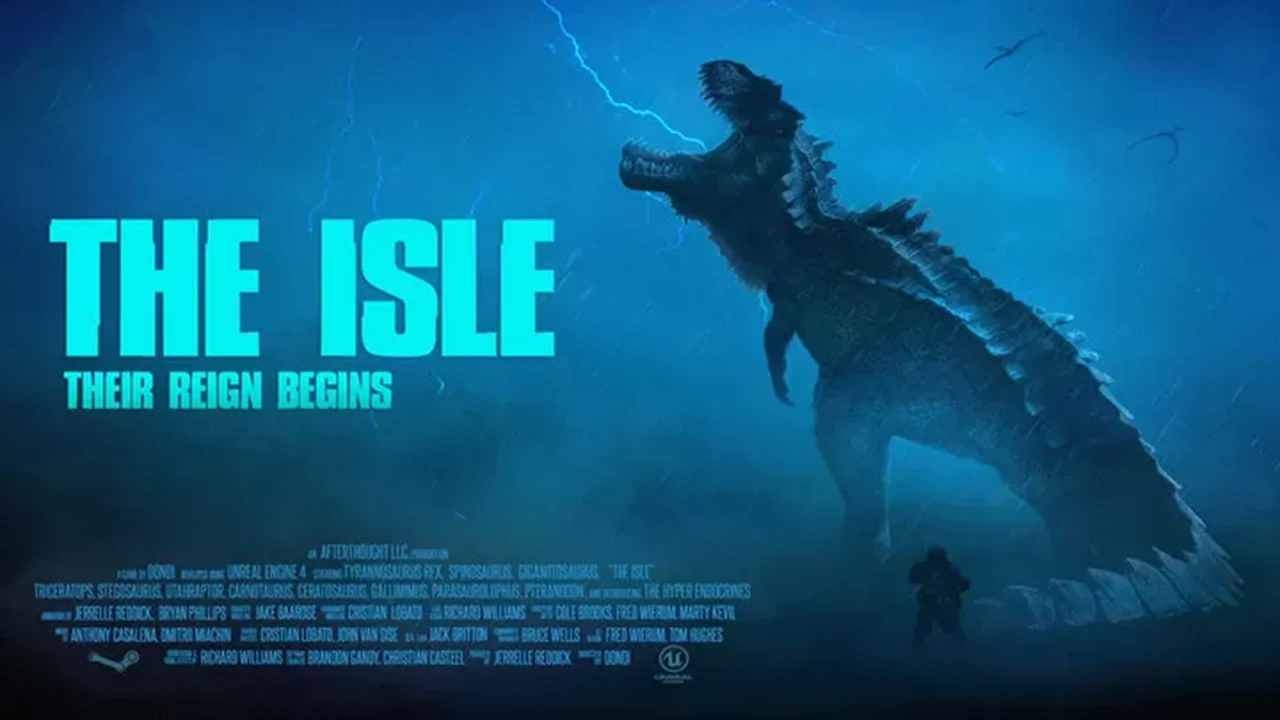
You hatch from an egg, but your real enemy is time
The Isle’s core loop can be summed up in three words: Hunt. Grow. Survive. You hatch from an egg as a fragile juvenile, and you must forage, drink, avoid predators, and compete with others on a hostile island. You pass through multiple life stages—juvenile, adolescent, sub-adult, adult—gradually gaining stronger survival capabilities and a larger body.
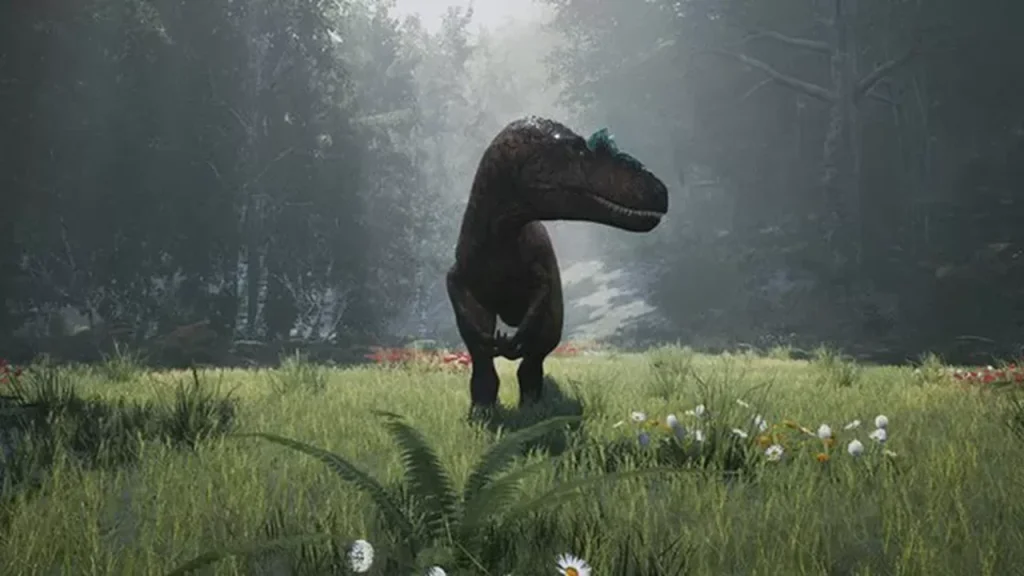
That premise isn’t new. What makes The Isle different from other dinosaur survival games is how it handles time.
Growth isn’t progress—it’s an investment that can be wiped out
In most character progression systems, levels, gear, and skills are assets that stick with you. Death might cost you some XP or drop a piece of equipment, but your character doesn’t disappear. You respawn and keep getting stronger.
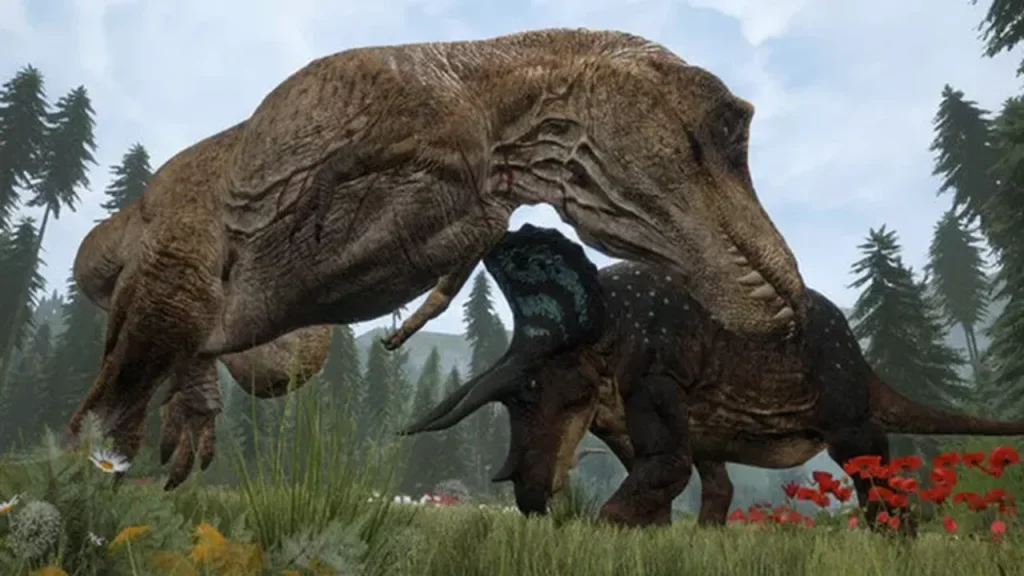
The Isle is completely different. If your two-hour-old dinosaur dies, those two hours don’t come back. This isn’t “losing gear”—it’s your entire character being deleted.
The developers state plainly on the Steam store page: “The game will gradually become more brutal, and your chances of surviving long-term on the island will grow increasingly slim.” That means a large carnivore might take hours or more to reach full adulthood, and a single misstep—trusting the wrong player, heading the wrong way, drinking at the wrong time—can reset all of it to zero.
The longer you grow, the more it hurts to die. That is the real core mechanic of The Isle.
Why juveniles are more interesting than adults
Once you understand that growth equals investment, you can see why the most interesting phase in The Isle is actually the juvenile stage.
As a juvenile, your combat ability and mobility are far inferior to an adult’s. Against most predators, your best survival strategy is simply not being seen. Crouching in the grass, hearing heavy footsteps approach from a distance, watching an adult T. rex walk past you—that primal fear is something no “dinosaur hunting” game can replicate.
And that fear works precisely because you’ve already invested time. If you were playing a character you could just pick, play, die, and re-pick, the fear would vanish. The fear comes from knowing you’re protecting a real investment.
Dinosaurs aren’t a character roster—they’re different ways of surviving
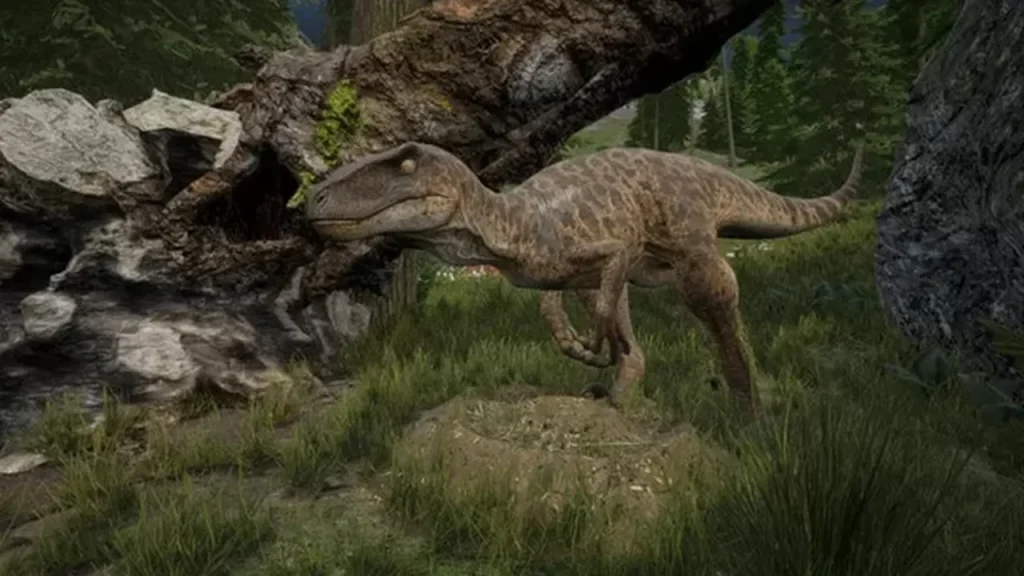
Currently, the Evrima public branch has a solid roster of playable creatures. But you don’t need a dinosaur encyclopedia in a review—what players want to know is: what does each dinosaur actually mean?
The answer isn’t “which one is stronger.” It’s different survival logic.
Herbivores revolve around defense and collective action. Take the Triceratops: its survival doesn’t depend on solo combat power but on herd formation. Herbivore players must constantly adjust their routes based on migration zones, water sources, and food availability, while staying alert to their surroundings. Their experience is one of waiting and judgment—when to move, when to stop, when to trust the herd.
Medium carnivores represent ambush and pursuit. Take the Dilophosaurus: it has night vision and hallucinogenic venom, making it more effective at night, while daytime requires avoiding direct confrontation. Its experience is one of timing and cost—when to strike, when to give up, and how a failed hunt can mean hours of hunger.
Large predators are more about territory and resources. Take the Deinosuchus: a semi-aquatic ambusher, it owns the water’s edge but must recalculate the cost of every move once it leaves the water. Its experience is one of positioning and patience—waiting for the right moment in the right place.
Choosing a dinosaur means choosing a survival strategy—and the death risk that comes with it.
Gateway isn’t just a backdrop—it decides whether you live or die
Gateway is the only official map currently in the Evrima branch. It was added in version 0.12.51.02 in 2023, replacing Isla Spiro as the default map. It includes different biomes, sanctuaries, migration zones, water sources, and nesting grounds.
But Gateway is about far more than being “a big map.”
The map itself is a survival system. When Gateway launched, the developers also introduced the Migration and Sanctuary systems. Migration zones force herbivores to adjust their routes based on resource distribution, while sanctuaries give juveniles a relatively safe place to grow.
This means what you do on the map isn’t about finding quest objectives—it’s about finding the conditions to stay alive. Where is the water? Where is the migration zone now? Where will prey appear? Where do adult predators claim territory? Where is safe for a juvenile? There are no UI markers, no quest icons. You figure it out through scent, terrain memory, map knowledge, and community tools.
For carnivore players, failing to find prey on a vast Gateway can mean starvation. For herbivores, taking the wrong migration route can directly impact nutrition. The map’s scale isn’t a measure of “content”—it’s a source of survival pressure.
The Isle’s cruelest twist: other players are part of the environment
You don’t just need to watch out for T. rex and Deinosuchus. People are the most unpredictable variable in this game.
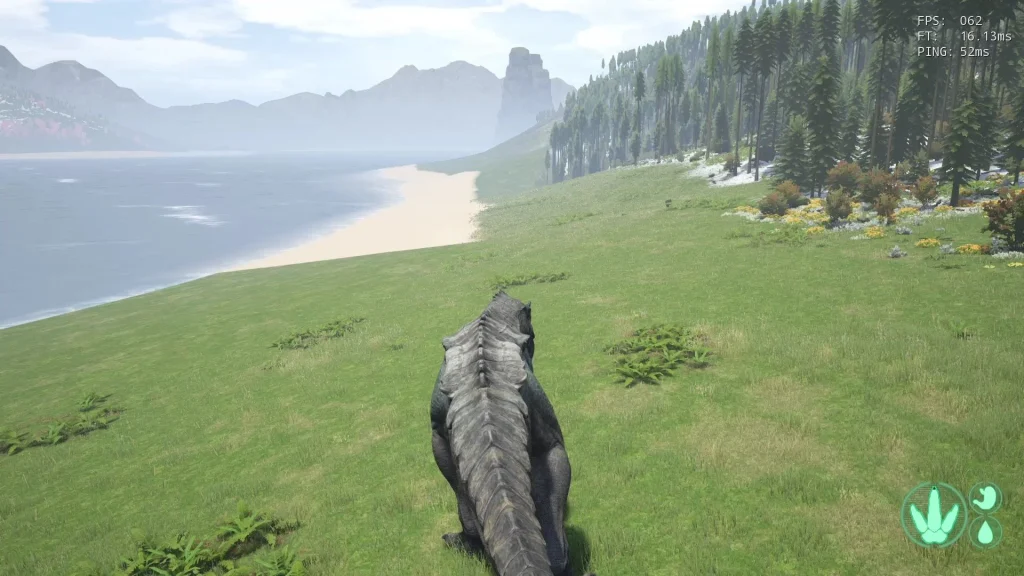
On no-rules servers, it’s common to meet a stranger who acts friendly, gets you to lower your guard, then ambushes you the moment you get close. This “trust trap” hurts so much not because PvP is particularly vicious, but because you’ve already invested your time into this dinosaur.
You don’t lose 20 gold coins—you lose two hours of your life.
This design gives The Isle’s multiplayer a unique tension. You can choose to trust strangers and try to cooperate—herbivore herd defense and carnivore pack hunting both require some level of cooperation. But every act of trust is a bet with a time cost. Lose the bet, and your dinosaur is gone.
That’s why The Isle’s community includes both extreme opportunists and highly organized tribes. The system can give you limited safe zones, but it won’t solve the problem of trust between players. In that sense, The Isle simulates not just how dinosaurs survive, but how players build, test, and lose trust with one another.
Nearly 11 years in Early Access: what is it still finishing?
The Isle entered Early Access in December 2015 and still hasn’t reached 1.0. The developers state on Steam: “The game will leave Early Access once the core experience is polished to the high standard we’re satisfied with. Game development isn’t an exact science, so we can’t say how long that will take.”
In 2026, development is definitely moving forward.
Version 0.21.720 (July 2026) added Kentrosaurus—a herbivore with reflective spikes—along with the Redwood region. Version 0.21.772 (August 2026) added Austroraptor, a semi-aquatic carnivore with a lunging pounce from the water and a daytime fishing pose.
Developer blogs show the team is working on: a Migration rework (future players will receive personalized migration routes instead of whole-species movement, tied more deeply into diet and nutrition, entering Master branch QA in late August 2026), Entomb Save (allowing players to “entomb” a dinosaur and store it in a special save slot so they can play other species later—but note, entombing means the current dinosaur’s life ends; it’s not a traditional character switch), plus Oviraptor approaching Horde Test and Baryonyx’s underwater movement system.
But nearly 11 years without a 1.0 is itself a signal that needs to be taken seriously. Development continues, updates keep coming, and the player community is still active. But “development is still ongoing” and “close to finished” are two different things.
It has a grand vision, but the speed at which that vision is being realized remains the hardest question this project has yet to answer.
What makes The Isle truly unique isn’t that it lets you become a dinosaur—it’s that it lets you own a dinosaur.
“Playing as a dinosaur” means: enter the game, pick one, play a round, die, pick another. “Owning a dinosaur” means: hatch, eat, find water, hide, grow, learn the map, form habits, gradually feel that this dinosaur is yours—and then die.
It doesn’t sell a dinosaur simulation. It sells the weight of losing a life.
Copyright Notice: All game screenshots, character images, and related assets referenced in this article are the property of their respective rights holders, including Afterthought LLC. This article is intended for game introduction, review, and informational purposes only.
Comments (0)
No comments yet