
The Caligula Effect: Overdose – A Virtual World So Perfect, You Want to Escape

Original Release: June 23, 2016 (PS Vita) | Enhanced Edition: May 2018 (PS4) / March 2019 (PC/Switch) | Developer: Aquria (original) / FURYU Corporation, Engine Software BV (enhanced) | Publisher: FuRyu (original) / NIS America (enhanced, overseas) | Platforms: PS Vita, PS4, PC, Switch (PS5 via backward compatibility) | Genre: JRPG | Price: ~$20 USD on Steam (all-time low ~$4 USD) | Languages: English, Japanese, Simplified Chinese, Traditional Chinese, and Korean; Chinese and Korean are supported for subtitles only
The Caligula Effect: Overdose is one of those games that defies a simple “good” or “bad” label. It carries a long list of contradictory tags: a script by the writer behind the first two Persona games, a soundtrack that reads like a VOCALOID all-star lineup, dungeon design that players have been trashing for years, and visuals where character art and 3D models feel like they’re from different generations.
Some call it an underappreciated gem. Others quit after the very first dungeon.

Neither reaction is surprising. Because The Caligula Effect: Overdose is ultimately a trade-off — you put up with painfully tedious dungeons and dated technical execution in exchange for a bold premise, a cast carrying deep psychological wounds, and music that almost makes you forget the game’s other flaws. Whether that trade works for you depends entirely on how much tolerance you have for the gap between ambition and execution.
A Story More Complex Than “Escaping a Virtual World”
The setup sounds like a high-school take on The Matrix: a virtual idol named μ (voiced by Rina Ueda) creates an idealized world called “Mobius,” trapping people inside an endless three-year high school cycle where they never have to face the pain of reality. The protagonist senses something is wrong and decides to escape.
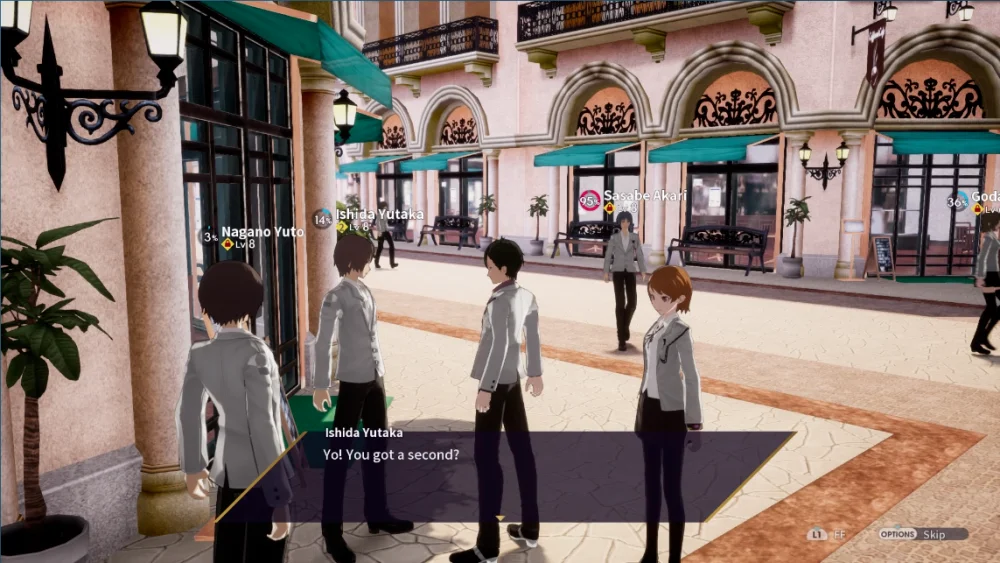
What sets The Caligula Effect apart is its willingness to ask: why would anyone choose not to wake up?
The Ostinato faction aren’t simple villains. They know the world is fake. They also know what awaits outside — bullying, domestic abuse, social anxiety, identity crises. For them, a painless illusion is more valuable than a broken reality. You’re not fighting “bad guys.” You’re fighting people who have made a conscious choice to stay in a lie.
The game’s title itself hints at its core theme. The “Caligula effect” refers to the psychological tendency to desire something more the more it’s forbidden. Director Takuya Yamanaka described it as “the guilt and excitement that comes with doing something you shouldn’t.” For those trapped in Mobius, “leaving” is precisely that forbidden act — and the protagonist’s journey is a direct exploration of that guilt-ridden exhilaration.
500 NPCs and a Web of Relationships
The script is handled by Tadashi Satomi, known for his work on the first two Persona games, with character designs by Oguchi, who previously illustrated antagonists for Kantai Collection. That pedigree alone signals this isn’t your average school RPG.

Every recruit comes with a clear psychological wound — bullying, family issues, social withdrawal, identity struggles. Mobius appeals to them precisely because it erases the root of their pain. Each party member essentially faces the same choice: stay in a painless illusion, or return to a flawed but real world.
The game also packs a massive NPC system — over 500 interactive characters, all woven into a complex relationship network. Side quests branch out through these NPCs, with enough content that you’ll struggle to see everything in a single playthrough. That said, the quality is uneven; some quests feel more like filler than meaningful expansions of the game’s themes or characters.
Combat Is Decent, but Dungeons Are the Real Test
The battle system is called the “Imagination Chain” — a turn-based system where you can see the action order of both allies and enemies, predict who will attack whom and with what skill, then plan your responses accordingly. String together successful predictions and combos, and damage stacks up. Some players describe it as “similar to Persona 5, but with its own twist.”
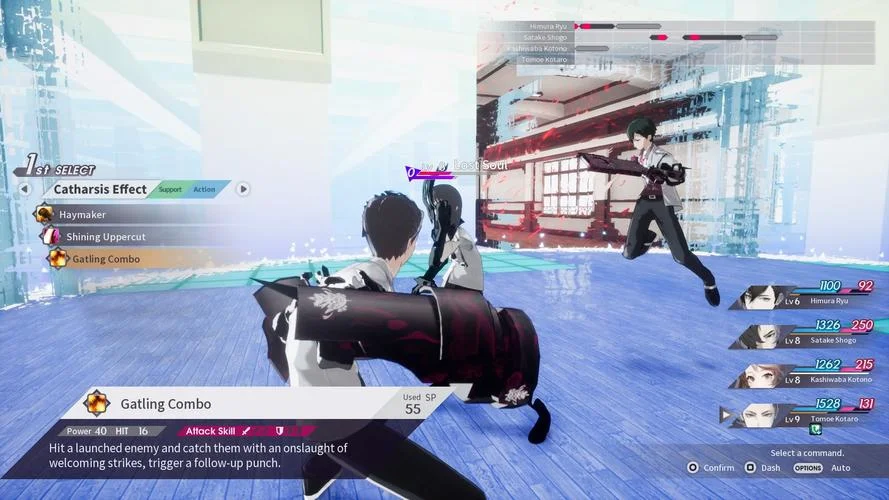
But the aspect that leaves the deepest impression isn’t combat — it’s the dungeons.
You’ll see the same complaints everywhere: “too long,” “too repetitive,” “the same BGM on loop.” Dungeon design is actually thematically tied to the narrative — they’re constructed from the memories of the trapped, so repetition and confusion mirror the feeling of being unable to escape — but the game doesn’t give you enough visual cues or guidance. In practice, you spend ages running through identical hallways, losing your sense of direction, with the same track playing on repeat until you’re ready to scream.
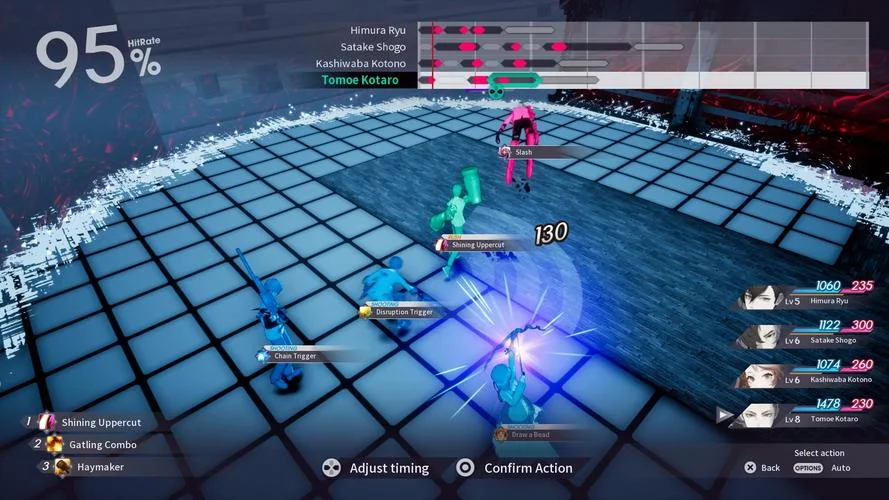
One player noted that their first dungeon took over two hours — and the same BGM played throughout. Complaints like this come up repeatedly in player discussions. “Tedious, repetitive, music loops endlessly” is practically the game’s most common criticism.
Music: Almost Every Review Mentions It as a Highlight
If there’s one aspect almost every review praises, it’s the music.
Composers include cyoucyo-P, 164, cosMo@Bousou-P, DECO*27, and PinocchioP — names that alone constitute a VOCALOID dream team. The tracks range from high-energy anthems to quiet ballads, and they match the boss fights and key scenes beautifully.
The problem: even great music wears thin after two hours of the same loop in a monotonous dungeon. Many players follow their praise with a “but the dungeons are just too long.”
Overdose vs. the Original: Why the Enhanced Edition Is the One to Get
If you’re planning to play Caligula Effect, go straight for Overdose.
Compared to the original PS Vita version, Overdose adds: a female protagonist option; the “Musician Route,” letting you experience the story from the opposing side; additional tracks and expanded content for the Musician Route and character arcs; and an engine upgrade to Unreal Engine 4.
That said, Overdose improves the visuals and overall system experience, but it doesn’t fundamentally overhaul the dungeon design or the game’s overall narrative structure. If the first dungeon frustrates you, chances are it will frustrate you in Overdose too.
Is It Worth Your Time?
The Caligula Effect: Overdose is a game for players willing to trade patience for payoff.

If you have a soft spot for the morally grey storytelling of the early Persona games, if you enjoy digging into each character’s psychological baggage, and if you can let VOCALOID music carry you through the rough patches — then Caligula might become one of those “underrated” titles you defend.
But if you have zero tolerance for tedious dungeon crawling, if you expect polished visuals and smooth pacing, or if you want a tightly focused story rather than one scattered across hundreds of NPC dialogues — you’ll likely drop it before finishing the first dungeon.
On Steam, the standard edition is about $20, with all-time lows around $4. Waiting for a sale is what most players do — and it’s probably the smart play here.
Copyright Notice: All game screenshots, character images, and related materials referenced in this article are the property of Aquria, FURYU Corporation, and NIS America, and are used for game introduction, review, and informational display purposes.
Comments (0)
No comments yet