
Final Fantasy Tactics: The Ivalice Chronicles — When a Nearly 30-Year-Old Game Refuses to Apologize

On September 30, 2025, Square Enix released Final Fantasy Tactics: The Ivalice Chronicles. This isn’t a new game — it’s a modern remaster of the 1997 PS1 classic tactical RPG. It holds an 88 on Metacritic and a “Very Positive” rating on Steam. IGN gave it a 9, writing: “It reminded me of what was so striking about the game in the first place, and it lets me recommend it to newcomers without having to apologize for the technical limitations of the original 1990s release.”
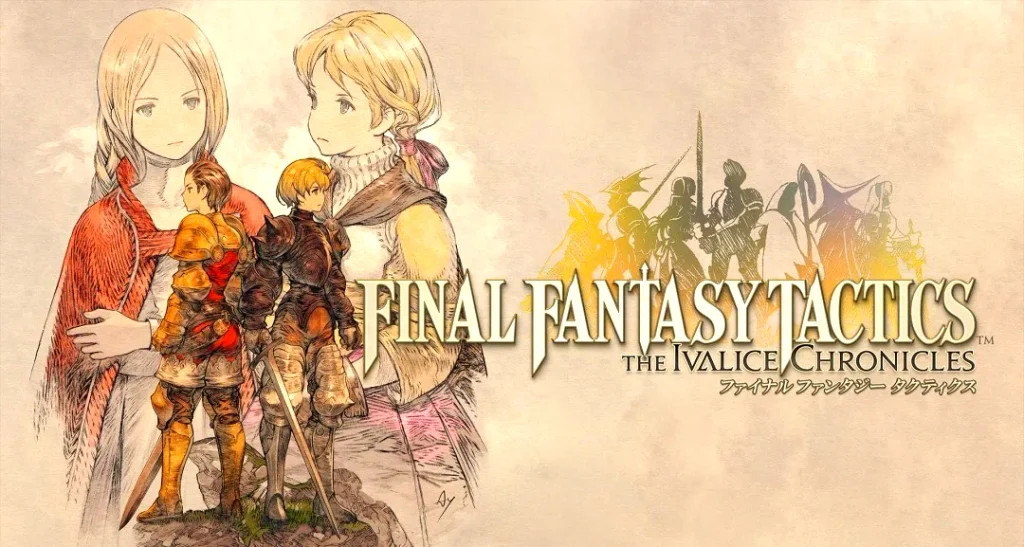
But the real question isn’t how good this game is. It’s this: what should a game from 1997 look like when it returns today?
Its answer may be one of the boldest approaches to remastering a classic in recent years.
Two Versions, Two Attitudes
The game offers two ways to play: Enhanced and Classic.
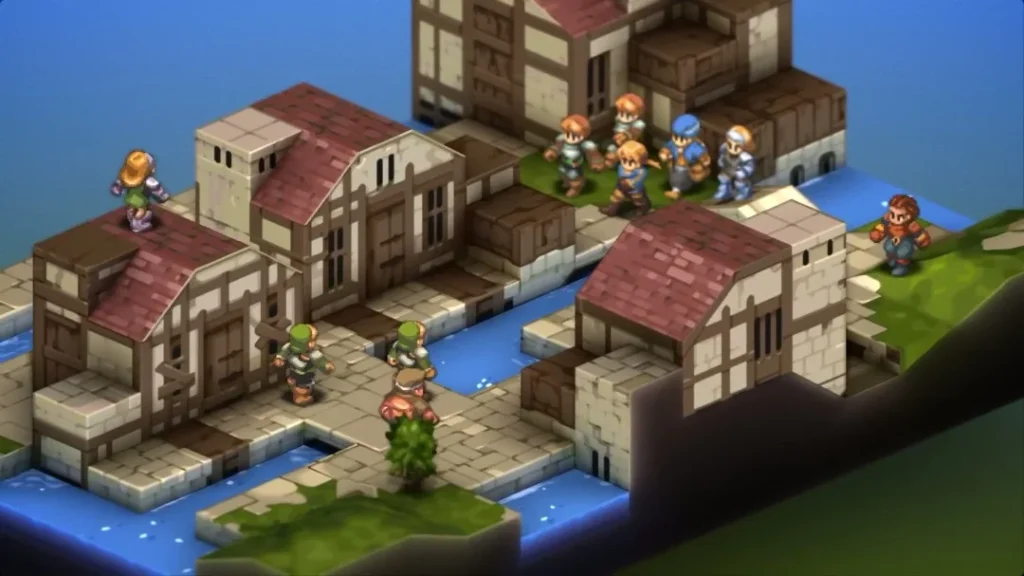
Enhanced features full voice acting, a redrawn UI, updated visuals, and a suite of quality-of-life options — auto-save, battle fast-forward, dialogue skip, and a tactical camera. Classic faithfully preserves the 1997 original’s pixel art and core systems, using the translation from the 2007 PSP version, The War of the Lions.
This dual-version design is itself a statement. It admits one thing: the original Final Fantasy Tactics‘ pixel aesthetic isn’t a flaw — it’s an artistic choice. You don’t have to “put up with” it. You can choose to experience it as it was.
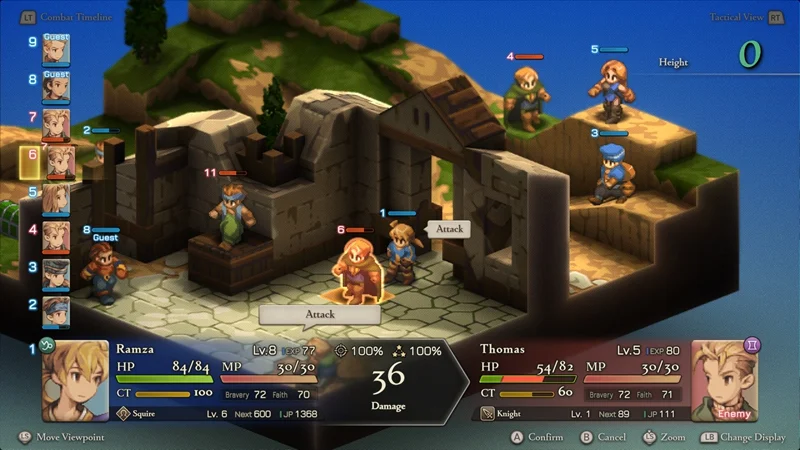
The problem is that Enhanced, while offering a modern experience, also makes sacrifices.
The Cost of Visual Upgrades: When Pixels Get “Smoothed”
TheGamer’s reviewer wrote: “When The Ivalice Chronicles was announced, my heart sank at the smoother visuals. At first I worried it was using an AI upscaling solution similar to Chrono Cross: The Radical Dreamers Edition.”
ScreenRant put it more bluntly: the Enhanced visuals look “like they were tossed into a bad AI upscaler and left there. They exist in a strange middle ground between pixel art and cartoon.”
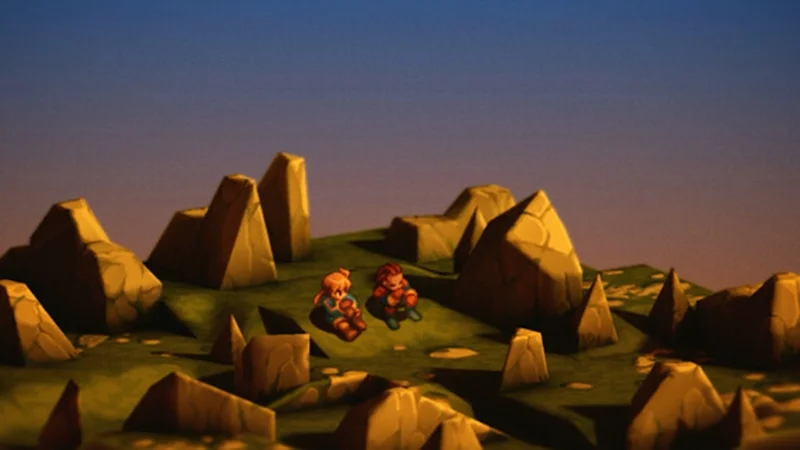
This is the most contested part of the entire package. The original pixel sprites had a distinct sharpness and expressiveness — every character conveyed personality through pose and color on a tiny pixel canvas. After Enhanced “smooths” those pixels, characters lose that decisive silhouette, and backgrounds lose their original layer of detail.
This isn’t a question of technical capability. It’s a question of artistic judgment. Square Enix clearly believed modern players would prefer smoother visuals over sharp-edged pixels. But whether that judgment holds depends on where you think Final Fantasy Tactics‘ visual appeal comes from.
If you think it comes from “information clarity on the tactical map,” then smoothing does make characters easier to identify. If you think it comes from “the unique vitality of pixel sprites on a CRT screen,” then the Enhanced visuals do sacrifice some of the original’s most distinctive visual character.
What It Actually Changes Is How You Play It
Setting aside the visual controversy, Enhanced’s changes at the gameplay level are almost indisputably improvements.
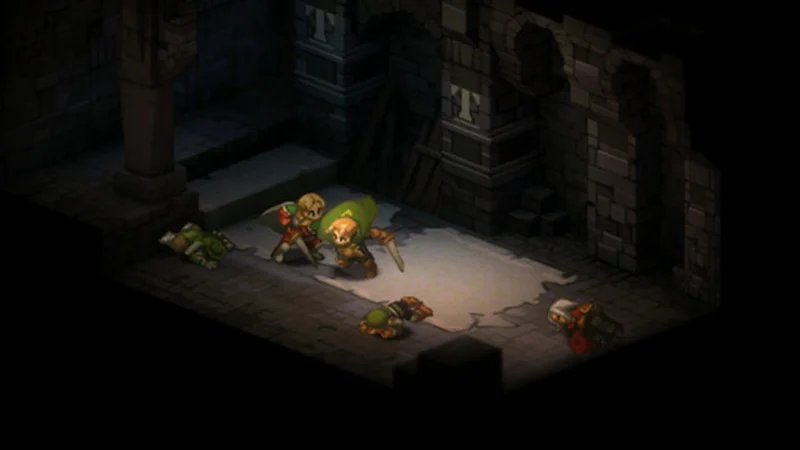
The original Final Fantasy Tactics had one notorious problem: it was slow. Battle animations dragged, dialogue couldn’t be skipped, menu navigation was cumbersome, and you could only save between battles. These were acceptable in 1997, but today they form a real barrier.
Enhanced solves most of them. Auto-save means one wipe doesn’t force you to replay an entire battle. Fast-forward dramatically shortens those lengthy battle animations. The tactical camera lets you view the whole battlefield from above without constantly rotating to find units hidden behind buildings. The official release also adds a Squire difficulty aimed at newcomers.
GameRant’s reviewer wrote: “Going back to the original Final Fantasy Tactics now feels like absolute torture — you can’t fast-forward or skip any dialogue, and there’s a ton of it.”
These changes matter not because they make the game “easier.” They matter because they remove the obstacles that get in the way of the game’s core joy. The joy of a tactical RPG is in decisions — job combinations, positioning, timing. The original’s lengthy animations and clunky menus didn’t add decision depth. They just drained your patience.
What Wasn’t Rewritten
But some things Enhanced did not rewrite.
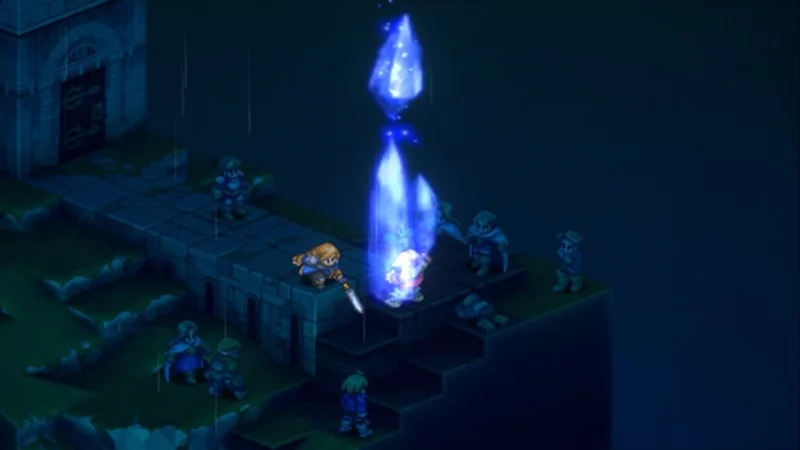
The difficulty curve. The original Final Fantasy Tactics is uncompromising. From the mid-to-late game onward, clear difficulty walls appear; some boss fights even require you to rebuild your characters specifically for that battle, or they’re nearly impossible. One of the most famous examples is Wiegraf. Engadget’s reviewer described dying to Wiegraf roughly 20 times before finally having to “create a specialized version of the protagonist who could fight, heal, and survive into the second phase of the battle.”
Randomness. Revival spells can fail. Your turn order can be disrupted by enemy turns. A carefully planned strategy can collapse because of one bad roll. Engadget’s reviewer wrote: “The first time a revive spell failed, I cursed at my Switch 2 out loud.”
These designs are now relatively rare in mainstream tactical RPGs. Modern games tend to make the sources of randomness clearer and give players more ways to control risk. Final Fantasy Tactics doesn’t do that. It preserves the uncertainty of “your plan might fall apart because of luck.”
This isn’t a flaw — it’s a personality. But you should know that even with a more forgiving difficulty option added, it hasn’t rewritten the core rules that make the original’s battles feel harsh.
The Question Left Unanswered
Enhanced does not include The War of the Lions‘ added content, nor does it add the new characters and jobs that later appeared in the PSP version. In other words, it chooses to return to the 1997 original rather than build further on the 2007 War of the Lions.
Director Kazutoyo Maehiro stated clearly that the team considered The War of the Lions additions like Balthier, Luso, the Onion Knight, and the Dark Knight, but ultimately felt the 1997 original was already complete in both game design and story, and that major changes risked losing the original experience. So they chose to stay faithful to the original.
For veteran players, this is a genuine disappointment. The War of the Lions‘ extra content wasn’t trivial — it expanded Ivalice’s world and added worthwhile characters and storylines. Excluding it means The Ivalice Chronicles is not the “most complete version” in terms of content.
IGN’s take was: “Sometimes less is more.” Whether that holds depends on where you think Final Fantasy Tactics‘ core value lies. If you want “the most complete Ivalice story,” this remaster is missing something. If you want “the core Final Fantasy Tactics at its best,” those omissions aren’t fatal.
What It Gets Right Is Knowing What Not to Change
What’s most commendable about The Ivalice Chronicles isn’t what it adds — it’s what it doesn’t change.
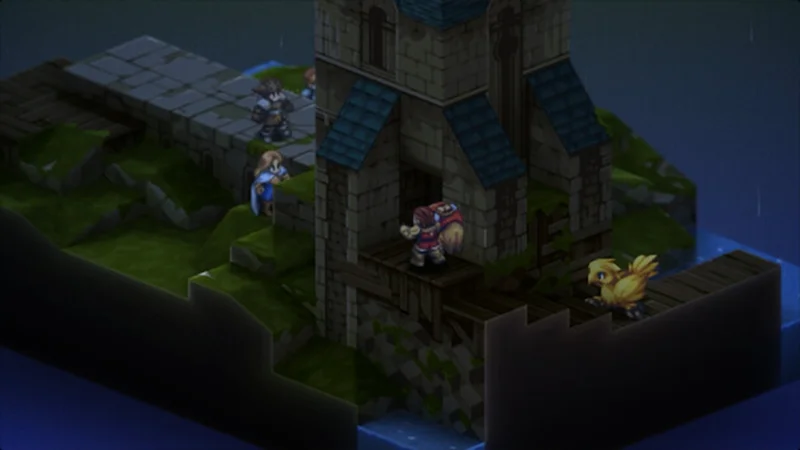
It doesn’t remake the combat system. It doesn’t simplify the job system. It doesn’t soften the story’s tone to make it “easier for newcomers.” Final Fantasy Tactics‘ story — political intrigue, class conflict, brotherly betrayal, and collapsing faith — is preserved intact. Its weight, its opacity, its pessimistic view of human nature — none of it has been “modernized.”
In an era when remasters increasingly lean toward “reimagining” rather than “faithfully preserving,” The Ivalice Chronicles chooses a more conservative path. It acknowledges the original’s flaws but refuses to deny the original’s core because of them.
That’s a respectable choice. But it’s also a choice with a cost.
The designs that frustrated people in 1997 — difficulty walls, randomness, opaque information — still frustrate people today. Enhanced removes some operational barriers, but not the design-level threshold. It trusts that you’re willing to accept a game that won’t apologize for its difficulty in order to experience its tactical system.
It might be right. Or it might just be repeating a line on behalf of a 29-year-old game: this is just how I am.
Copyright Notice: All game screenshots, character images, and related assets referenced in this article are the property of their respective rights holders, including Square Enix. This article is intended for game introduction, review, and informational purposes only.
Comments (0)
No comments yet