
Marvel’s Spider-Man — When a Superhero Game Takes the Human Behind the Mask Seriously

On September 7, 2018, Insomniac Games released a Spider-Man game on PS4. It wasn’t based on any movie, didn’t use any actor’s likeness, and didn’t even start with Spider-Man’s origin story. It did something fairly bold for a superhero game: Peter Parker has been Spider-Man for eight years, and the person you meet is barely holding it together.
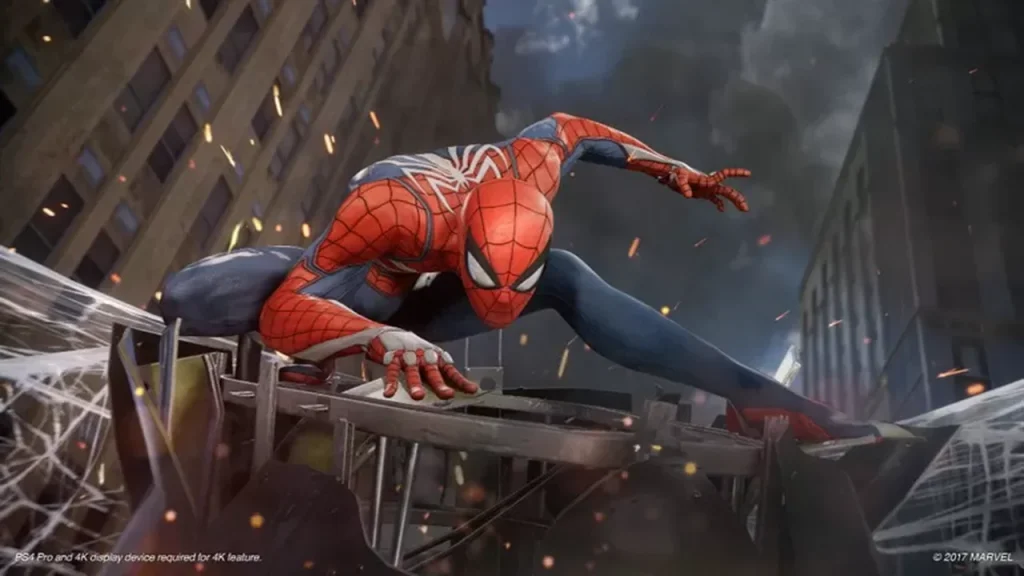
On August 12, 2022, the game came to PC as Marvel’s Spider-Man Remastered.
New York Isn’t a Backdrop for Spider-Man — It’s Built for Him to Use
Before discussing any story, combat, or open-world design, one thing needs to be said: the web-swinging in Marvel’s Spider-Man is still one of the purest joys in any superhero game.
That feeling is hard to put into words. It’s not just “moving through the air” — it’s a complete physical feedback system. Webs have to attach to real building surfaces, the arc of your swing depends on when and at what angle you press the button, and the faster you go, the more distance the next swing covers.
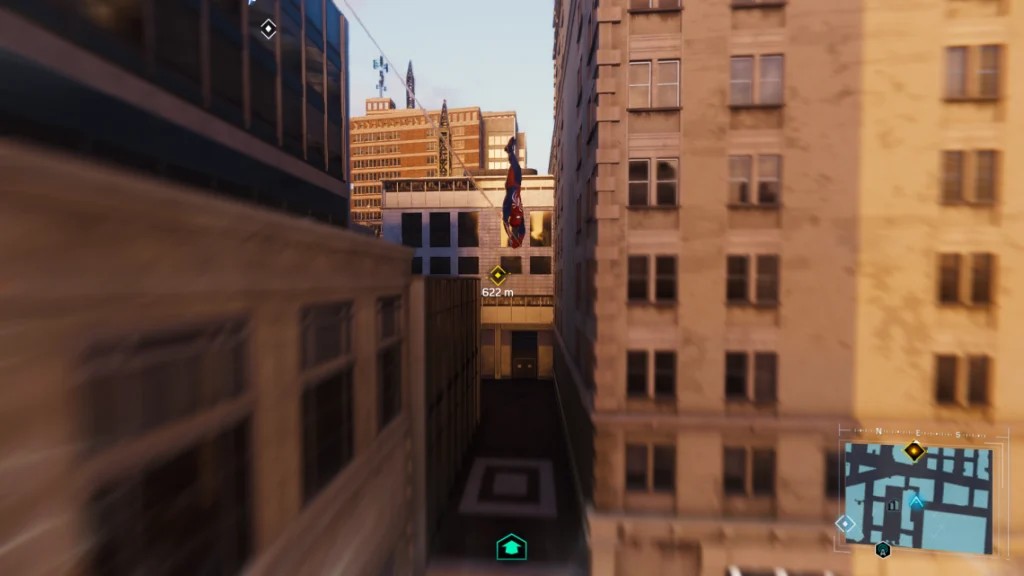
But what really makes this system work isn’t how precise the physics engine is — it’s that New York City itself is designed for Spider-Man. The density of buildings as swing points hits a sweet spot between speed and control. You rarely find yourself stuck with nothing to swing from, and you rarely feel the movement is too easy. The city and the character’s abilities form a kind of unspoken understanding that you almost never see in other open-world games.
Insomniac didn’t treat Spider-Man’s abilities as “a skill tree unlock.” They made them the foundation of the game itself.
Combat Is a Beautifully Choreographed Dance, But the Steps Repeat
Spider-Man’s combat system is elegant in design.
The basic logic is simple: melee, webs, dodges, and gadgets — four basic tools that can be combined in all kinds of ways. You can pull enemies toward you with webs, stick two enemies together, or use objects in the environment to attack. Aerial combat is especially fluid; the animation transitions as Spider-Man moves between enemies are almost seamless.
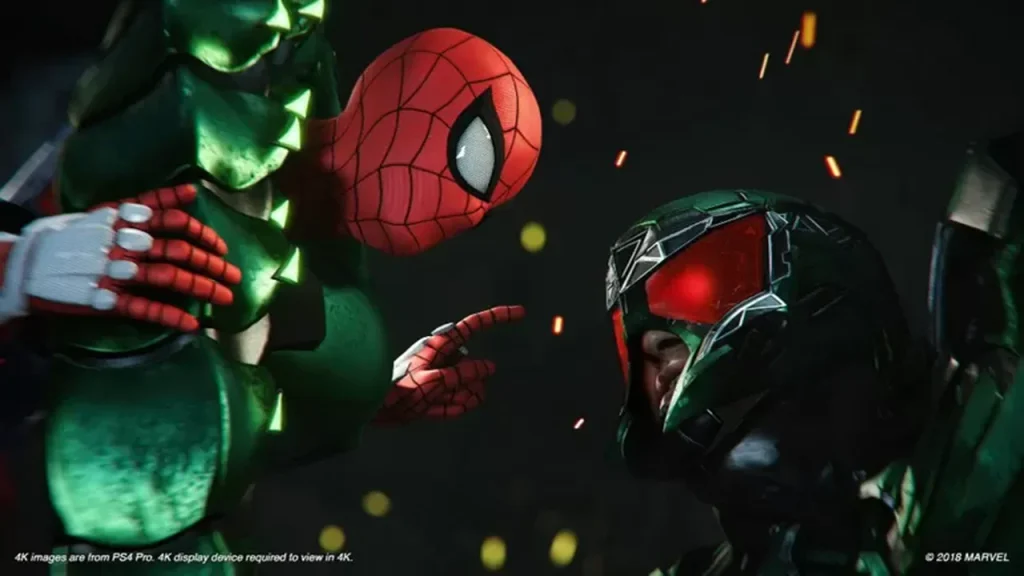
For the first few hours, the system is a joy. You feel like you’re performing a choreographed dance, where every dodge, every counter, every aerial combo lands just right. But after a dozen or so hours, you realize you’re still using the same steps. Enemy types increase, but the changes don’t alter the basic grammar of combat. New skills and gadgets do unlock, but they don’t really change the rhythm — you’re still using the same basic approach against increasingly durable enemies.
Insomniac designed a beautiful combat system, then repeated it enough times that players start noticing the repetition.
Stealth Isn’t a Design Mistake — It’s a Half-Finished Idea
The part of the game that truly didn’t win me over is stealth.
Spider-Man’s own high-ground stealth is actually a very “Spider-Man” style of play — observe from above, string up isolated enemies with webs, take them down one by one. In theory, this is a mechanic that suits Spider-Man. But in practice, enemy AI reacts slowly to anything happening overhead. You can yank an enemy away from directly above them, and they’ll at most glance up before continuing their patrol.
The real problem isn’t how dumb the AI is. It’s that this stealth system never really tried to be a complete stealth system.
Once the game has MJ or Miles perform traditional stealth without the same abilities, the problem becomes even more obvious. Peter’s stealth relies on Spider-Man’s powers, while MJ and Miles are stripped of those powers — so the logic built around Spider-Man’s movement suddenly falls apart. These sections feel especially out of place, not because they’re “hard,” but because they force the player into a completely different style of play that is far less polished than the Spider-Man sections.
Stealth is neither smart enough nor flexible enough. It exists, but it didn’t convince me.
The Story: About a Person, Not a Hero
This is the part that deserves the most serious discussion.
The story takes place in Peter’s eighth year as Spider-Man. That means the game skips every origin story — the radioactive spider bite, Uncle Ben’s death, “with great power comes great responsibility” — all the origin beats audiences have seen countless times. The Peter you meet is someone who has already spent eight years being Spider-Man.
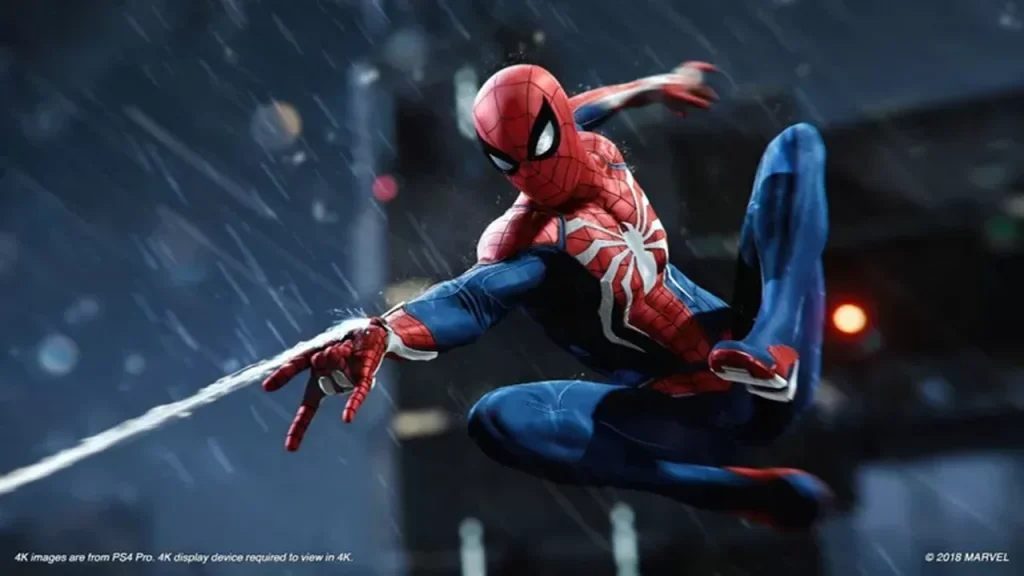
He’s lost his job, can barely make rent, and his relationship with MJ is on the rocks. He’s not “learning how to be a hero.” He’s learning how to keep being Peter Parker while carrying the weight of being Spider-Man.
Otto Octavius is probably the game’s strongest piece of storytelling. The game spends a lot of time building the mentor-student relationship between Peter and Otto, making you genuinely believe this is a man worth respecting. When Otto gradually descends into madness, the sense of loss doesn’t come from “another villain has appeared” — it comes from “the person I knew is gone.”
Why does Peter keep trying to save Otto? Why do his responsibilities toward May, MJ, and Otto all converge on the question of “what should Spider-Man sacrifice”? This version of Peter is different from the “teenage growth” of traditional origin stories — he’s not becoming a hero, he’s trying to hold together a normal life under the weight of being a hero.
The City Is Designed for Spider-Man, But Not Entirely for Peter Parker
The scale of New York City is astonishing. From the Empire State Building to Central Park, from Hell’s Kitchen to Harlem, the landmarks are recreated with enough fidelity that locals could recognize their own neighborhoods. Swinging through the neon lights of Times Square or landing on top of Avengers Tower really does create the illusion that “I am Spider-Man.”
But once you land, the problems begin.
The open-world content follows the most conservative template: the map is covered in icons, each corresponding to a repetitive activity — chase drones, take photos, clear outposts, collect backpacks. These activities aren’t badly designed on their own, but their presence is so strong that the freedom of web-swinging is constantly interrupted by checklist-style task guidance.
Even more disappointing is that the open world has almost no enterable buildings. You can see thousands of windows, but almost none of them open. NPC interaction is extremely limited — pedestrians react to Spider-Man, but that’s about it.
The city is designed for Spider-Man, but not entirely for Peter Parker. When you’re web-swinging, New York is Spider-Man’s playground; once you land, New York is just a collection of mission icons. The game makes you feel like Spider-Man, but it doesn’t let the city truly become Peter’s living space.
It Gets One Thing Right — and That’s Enough
Back to the original question: what did Marvel’s Spider-Man actually get right?

The answer is simple: it gets the most important thing right — it makes the person behind Spider-Man feel human.
The physical feedback of web-swinging, the fluid rhythm of combat, and Peter Parker’s struggle as a “person” — together, these three things create an experience few other superhero games can offer. You’re not “controlling a character with Spider-Man’s powers.” You’re experiencing someone who has spent eight years being Spider-Man and is barely keeping his heroic identity from swallowing his ordinary life.
What truly makes Marvel’s Spider-Man work isn’t just that it lets you become Spider-Man. It’s that it makes you realize: Spider-Man is also someone who has to pay rent, work, face family and friends, get exhausted, and mess up his life.
Those problems are real. But they’re overshadowed by a game that understands something many superhero games forget: behind the mask is still a person.
Copyright Notice: All game screenshots, character images, and related assets referenced in this article are the property of their respective rights holders, including Insomniac Games, PlayStation Studios, and Marvel. This article is intended for game introduction, review, and informational purposes only.
Comments (0)
No comments yet