
Gravity Rush: Defy Gravity and Plunge Headfirst Into a Floating City

Release Date: February 9, 2012 (PSV Japan) / December 10, 2015 (PS4 Remastered Japan) / February 2, 2016 (PS4 Remastered US) | Developer: SCE Japan Studio (Project Siren) | Platforms: PS Vita, PS4 | Genre: Action Adventure | Price: PS4 Remastered Digital Edition around $20 USD (regional pricing may vary) | Languages: Traditional Chinese, English, Japanese
What Is Gravity Rush?
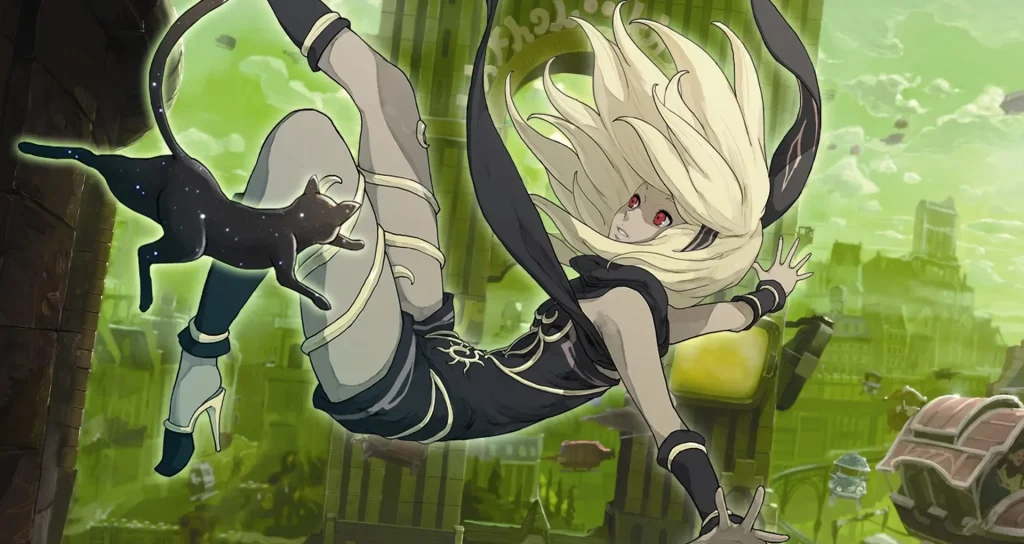
During the PS Vita’s short lifespan, very few games could genuinely convince players to buy the handheld just to play them. Gravity Rush (known in Japan as Gravity Daze) is one of the most distinctive titles of the handheld’s entire lifespan — it’s not a watered-down port that’s “fine for a handheld.” It’s a game built from the ground up for the PS Vita, squeezing every last drop of performance out of that small screen.
When it launched in 2012, the PSV version scored around 83 on Metacritic, with players also responding positively. In 2016, the PS4 Remastered edition brought it back at 1080P/60fps, earning a Metacritic score of 84. Over a decade later, it still stands as one of the most iconic examples of gravity-based movement in gaming.
Core Mechanics: What Makes Gravity Manipulation So Unique?
Before Gravity Rush, no one had imagined that “changing gravity’s direction” could be the foundation of an entire game.
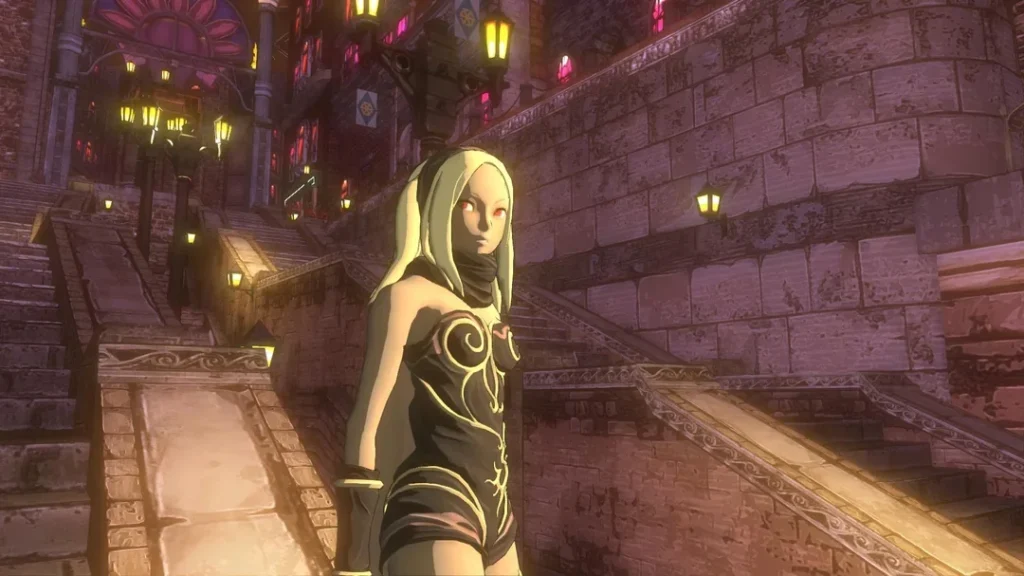
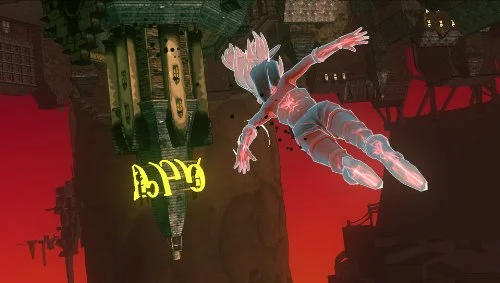
You play as Kat, an amnesiac girl who gains the power to control gravity after meeting a mysterious black cat named Dusty. Hit the R button, and the entire world flips — you’re no longer “standing on the ground” but “falling toward the ceiling.” You can fall in any direction, fly freely through the air, run along walls, and turn gravity itself into a weapon.
The PS Vita version made full use of the handheld’s gyroscope and touchscreen: tilting the console to fine-tune the camera, swiping the screen to dodge attacks. This unique motion-based control scheme delivered an immersive flying experience that was among the best the handheld ever offered.
When the remaster moved to PS4, controls were redesigned: Gravity Slide shifted from “touchscreen + motion controls” to “L2+R2+right stick,” and dodging was mapped to physical buttons. Visuals jumped from the PSV’s 960×544 at 30fps to a smooth 1080P at 60fps — hair detail, facial expressions, and the fluidity of falling all received a massive upgrade.
But the core gameplay stayed exactly the same. You’re still a girl hurtling through the city using gravity.
Art Style: A Steampunk Comic Book You Can’t Put Down
If gameplay is Gravity Rush‘s skeleton, its art style is the soul of the experience.
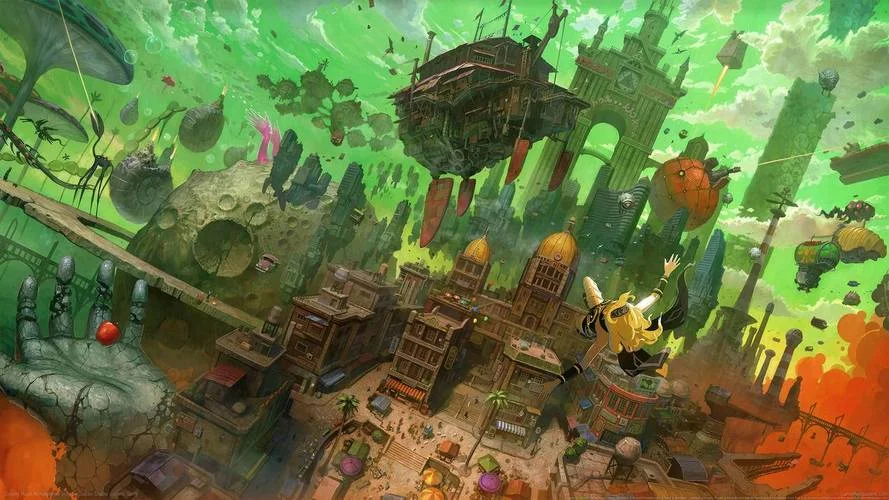
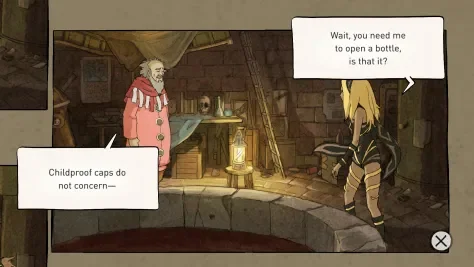
The game tells its story through motion-comic-style panels. Cutscenes aren’t 3D cinematic sequences — they’re hand-drawn comic pages, complete with paneling, speech bubbles, and onomatopoeia, all rendered in a unique illustrated style. The floating city of Hekseville blends steampunk, medieval European, and East Asian influences, with buildings stacked layer upon layer, suspended in a sea of clouds.
Composer Kohei Tanaka’s score brings this world to life. The Pleasure Quarter’s music pulses with neon-lit energy, while the Industrial District’s melodies carry weight and mystery. When Kat plummets from the sky, wind howling and music swelling — if you’ve played it, you know exactly what that feels like.
Some players have compared it to “a Pixar film.” That’s apt — bright, imaginative, and full of wonder, but with a quiet melancholy underneath.
Combat System: Great Ideas, So-So Execution
Now for the downsides.
Gravity Rush‘s combat is the aspect most criticized in every review. The core combat mechanic is the “Gravity Kick” — lock onto an enemy and fly-kick it in mid-air. You’ll use this from the first fight to the last, with almost no variation. Enemy types are limited, attack patterns are repetitive, and the camera can easily spin out of control during high-speed movement.
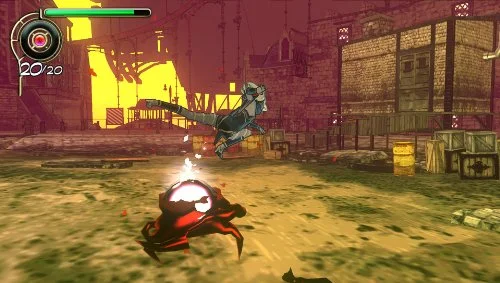
“Can’t find the enemy after a missed kick,” “combat sections are frustrating” — these are real player comments.
But combat was never the point. The point was flying. The real joy lives in the weightless roaming high above the city.
Story: More Questions Than Answers
Gravity Rush tells its story through deliberate ambiguity. Players follow Kat as she explores the floating city, gradually piecing together the world around her. The game communicates emotion through comic-book-style paneling and a fictional language voice track, rather than drowning you in exposition.
That said, the first game doesn’t tie up all its loose ends — players who prefer every mystery to be fully resolved may find this approach unsatisfying. But it’s precisely this openness that preserves the world’s atmospheric tension from start to finish.
Why It Was a Cult Classic, Not a Blockbuster
Gravity Rush almost never lost on critical reception. Critical acclaim never translated into strong sales.
The PS Vita original moved around 100,000 units in Japan and failed to crack a million worldwide — disappointing numbers for a Sony first-party IP (according to publicly available sales data).
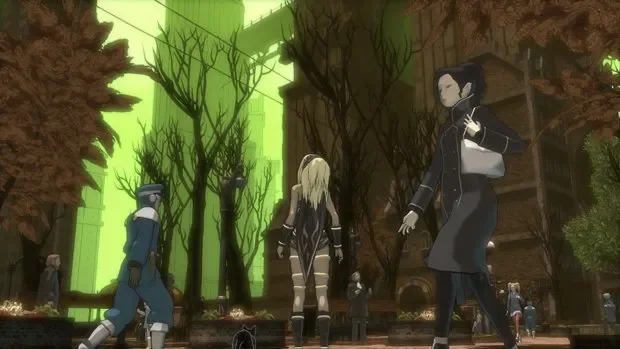
It was simply too unique. Too hard for mainstream players to pitch to friends: “It’s a game where you control gravity. It’s great, trust me.” “How does it work?” “You just have to play it.” “Never mind.”
So it became a cult classic — cherished by a small but passionate group. Even in 2025 and 2026, players are still dropping 10/10 reviews on Metacritic, calling it “the most underrated game ever.”
PS Vita Original vs. PS4 Remastered: Which One to Play?
The PS Vita is long discontinued, and its store is shut down. The original Gravity Rush is effectively unavailable through official channels. So if you want to play it today, the PS4 Remastered edition is your only real option.
Released in 2016 as Gravity Rush Remastered, it runs at 1080P/60fps on PS4 — a massive leap over the PSV’s 544P/30fps — and includes all three DLC packs (Spy Pack, Maid Pack, and Military Pack) right out of the box.
The best way to play today is on a PS5 via backward compatibility. Gravity Rush Remastered runs smoothly on PS5 with faster load times and more stable performance.
How to play it:
- If you have a PS4 or PS5: grab the digital version from the PlayStation Store (around $20 USD) or find a used disc copy.
- If you have PS Plus Premium: the game has been included in the catalog in some regions (e.g., Hong Kong, Japan) — check the current lineup.
- If you only have a PS Vita: official options are no longer available.
Who Is Gravity Rush For?
Recommended for:
- Players who love unique mechanics and are tired of formulaic open-world games
- Fans of steampunk and comic-book-style art
- Anyone who enjoys the pure pleasure of “flying freely through a city”
- Players who can look past combat flaws and appreciate the overall experience
Not recommended for:
- Players seeking deep combat systems or hardcore action
- People prone to motion sickness or sensitive to fast camera movement
- Those who demand airtight, fully resolved storytelling
- Players who prefer being guided step-by-step through missions
Is Gravity Rush Still Worth Playing in 2026?
The graphics aren’t cutting-edge anymore. The combat shows its age. But over a decade later, very few games have managed to replicate the feeling of freely moving through three-dimensional space the way Gravity Rush does.
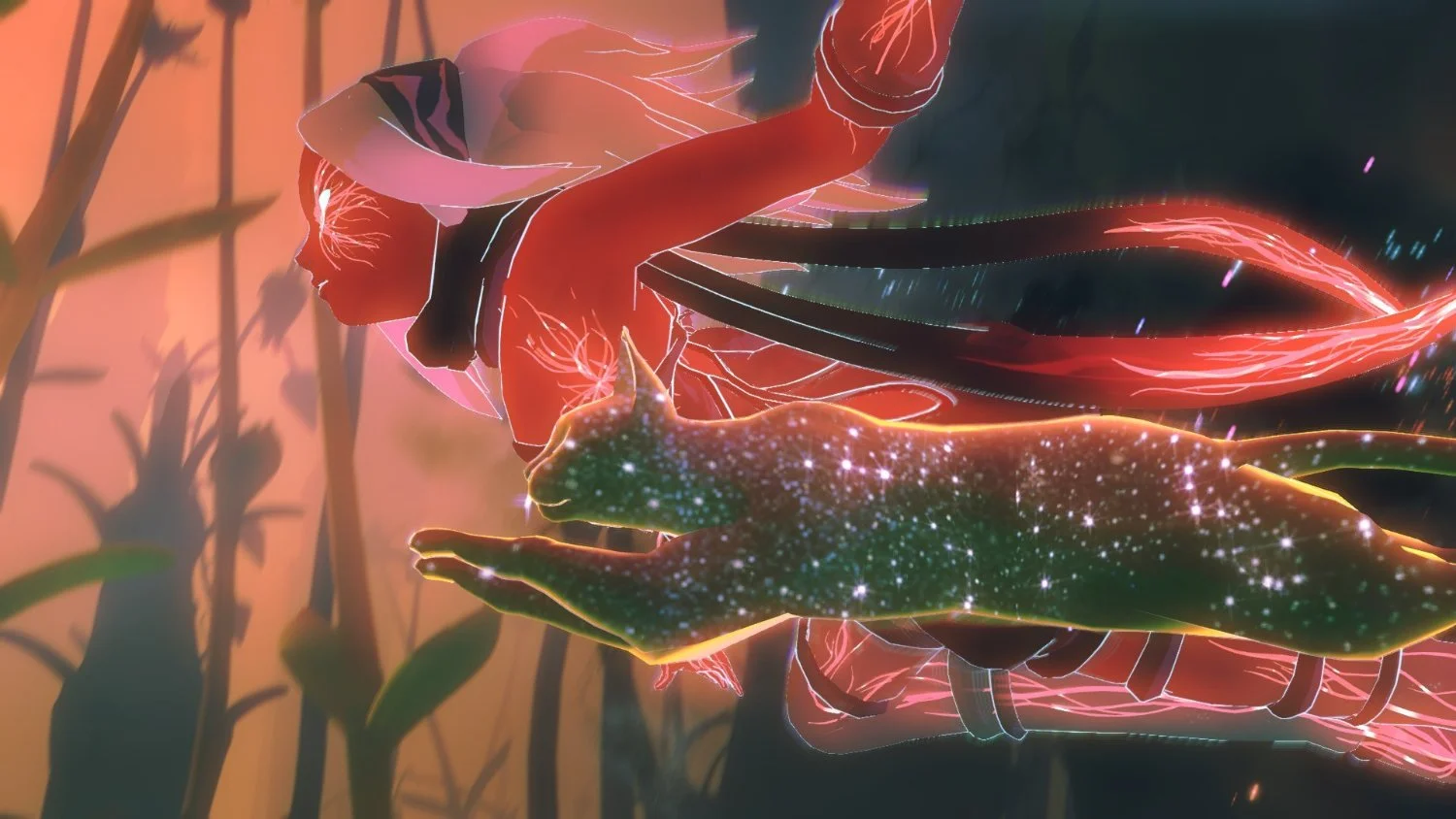
Modern games keep getting bigger — bigger maps, more tasks, more checklists. But the simple joy of “doing nothing but flying around a city because it feels amazing” is getting rarer. Gravity Rush doesn’t pressure you to clear icons off a map or grind for gear. It just puts a floating city in front of you and lets you decide how to explore it.
If you’re tired of open-world chore lists and want something different, Gravity Rush still delivers.
The Verdict: Is It Worth Playing?
Gravity Rush is a game of incredibly clear strengths and weaknesses.
Strengths: One-of-a-kind gravity mechanics, top-tier art direction, Kohei Tanaka’s score, and the sheer exhilaration of free flight.
Weaknesses: Repetitive combat, erratic camera, unresolved story threads, and a relatively short runtime.
It’s not “the greatest game ever made.” But it’s definitely one of the most unique. If you’re after tight combat, airtight storytelling, or overwhelming amounts of content — this one will let you down. But if all you want is to free-fall, soar, and dive through a steampunk floating city alongside a mysterious black cat — it’s about as close as gaming gets to a dreamlike experience.
Boot it up. Push the stick forward. Kat leaps off the edge, and the whole world turns upside down with her. Then you’ll understand why some fans waited over a decade to feel something like this again.
Copyright Notice: All game screenshots, character images, and related materials referenced in this article are the property of Sony Interactive Entertainment and their respective rights holders.
Comments (0)
No comments yet