
IRON NEST: Heavy Turret Simulator Review – Spend 30 Minutes Loading a Cannon Just to Fire One Shot

Release Date: August 6, 2026 | Developer: Nick Nieuwoudt, Dominik Latos | Publisher: Nick Nieuwoudt, Dominik Latos | Platforms: PC (Steam, GOG, Epic Games Store) | Genre: Dieselpunk Heavy Artillery Simulator | Price: $14.99 USD on Steam (25% launch discount, regular $19.99) | Languages: English, Simplified Chinese, Traditional Chinese, Japanese, Korean, and 11 more (16 languages total)

In August 2026, IRON NEST: Heavy Turret Simulator emerged as one of the most talked-about indie games on Steam. Developed by a two-person team, this dieselpunk heavy artillery simulator turns “loading, ranging, calculating trajectories, adjusting the cannon, and firing” into the core of the gameplay experience. Since its full release, the game has maintained the strong momentum it built during its demo period, and Steam player reception remains exceptionally high.
Operator, Will You Obey High Command’s Orders?
The premise is straightforward: you are an artillery operator in the fictional nation of Castilia, stationed alone inside a colossal 5,000-ton war machine. High Command sends you coordinates via teleprinter. Your task: measure distances on the map based on those coordinates, calculate trajectory and propellant charge, manually adjust the cannon’s elevation and azimuth, load the shell — and then pull the firing lever.
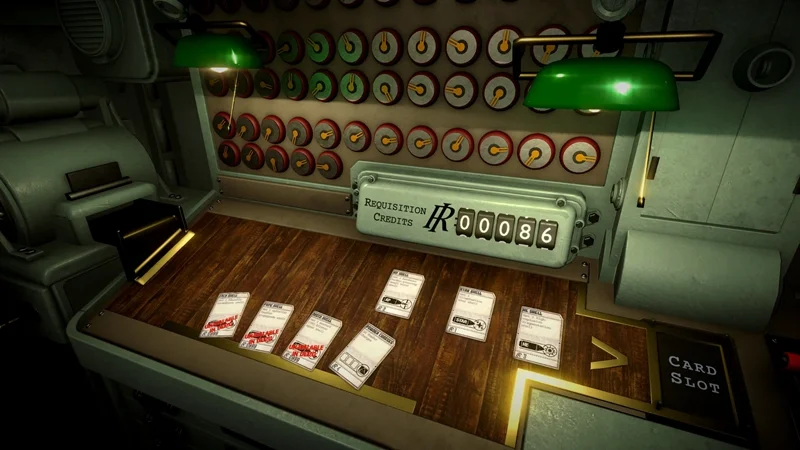
It sounds like a standard procedure, but every step requires hands-on operation. Feed the range into the differential computer to get the elevation angle. Turn the handwheels to raise the barrel to the correct angle. Select the right number of powder bags to determine how far the shell will fly. The bunker interior is packed with hydraulic gauges, mechanical counters, handwheels, and levers — you feel as though you’re trapped inside a precision machine, with every action delivering tangible mechanical feedback.
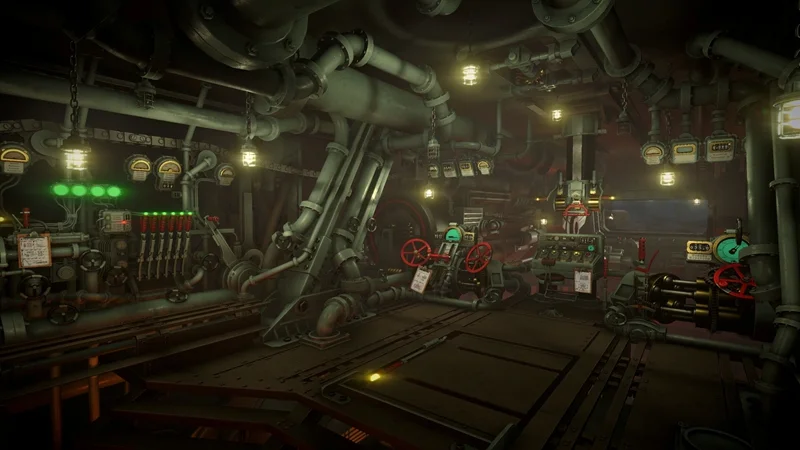
When the gun fires, the thousand-ton cannon trembles in a deafening roar, the screen shakes, and the speakers explode. Then — unlike a typical shooter, you don’t witness the shell’s impact in real time. Instead, you assess the outcome through tactical maps, reconnaissance photos, and battlefield damage reports. You only learn what you’ve hit by examining the resulting reconnaissance images.
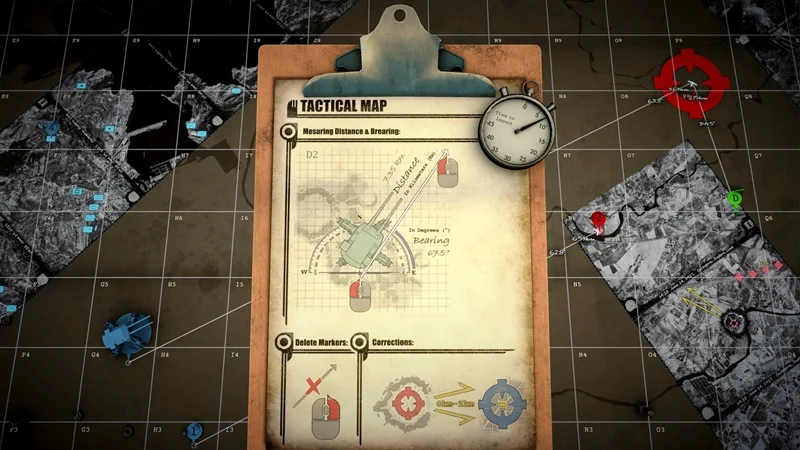
This design captures the essence of being an artillery operator: you’re not a soldier charging the front lines. You’re a lone operator trapped inside a five-thousand-ton iron shell, witnessing the consequences of your actions through maps and photographs.
Why Spend Half an Hour Preparing for a Single Shot?
The most counterintuitive thing about this game is how much time it asks you to spend preparing, without ever showing you the enemy being blown up in real time.
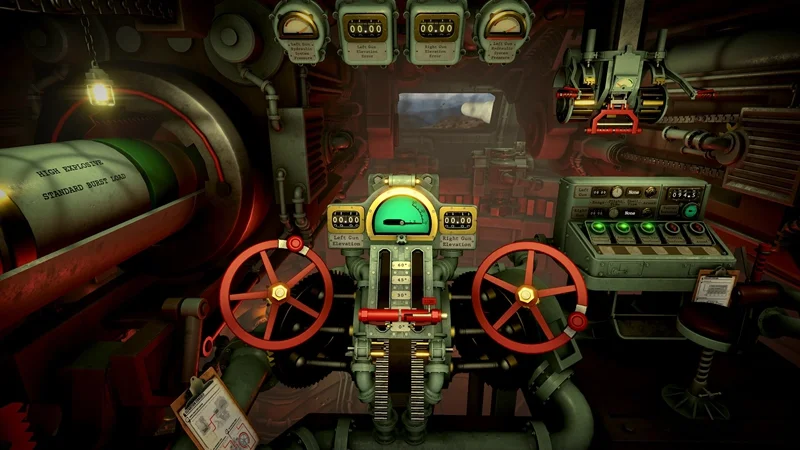
But it’s precisely this delayed gratification that makes it so addictive. As Kotaku put it: “Spend 30 minutes loading a big cannon and it’s awesome”. From marking targets on the map, ranging, and calculating, to hand-cranking the turret, loading, and firing — every step feels tactile, detailed to the point of absurdity. When you pull the firing lever, feel the turret’s recoil, and see the new crater marked on the map — that sense of accomplishment is something a “one-button fire” system could never deliver.
IGN’s review put it even more directly: “You may be the most stressed-out turret operator in gaming history.”
Two People, One Year, One Dream
Developed by Nick Nieuwoudt and Dominik Latos, the game channels their shared fascination with artillery, machinery, and dieselpunk aesthetics into a singular vision: putting the player inside a massive turret. From the very beginning, the game was never meant to be a traditional shooter — instead, it turns ranging, ballistic calculation, loading, mechanical operation, and battlefield decision-making into the game itself.
The game draws inspiration from a wide range of sources: 1990s animation, real-world artillery, battleships, and even the Schwerer Gustav railway gun.
What That 98% Positive Rating Doesn’t Tell You
IRON NEST has an exceptionally high positive rating on Steam, but the game still has some clear drawbacks that may turn certain players away.
First, the pacing is extremely slow. Five minutes of calculation for one second of firing. If you’re expecting mindless cannon-blasting action, you’ll be disappointed.
Second, the tutorial is minimal. During the demo phase, players already noted that the tutorial isn’t particularly clear — you’ll need to figure out ranging, calculation, and calibration procedures on your own.
Third, the loop is repetitive. Every mission follows a very similar sequence — receive coordinates, range, calculate, load, fire, check photos, repeat. Those who enjoy the process will become addicted; those who don’t will feel like they’re doing homework.
Who Is IRON NEST For?
Recommended for:
- Fans of hardcore simulation games
- Players interested in military history, artillery, and dieselpunk aesthetics
- Those who appreciate delayed gratification and enjoy precise mechanical operations
- Players who don’t mind working with numbers and performing repeated calculations
- Anyone looking to experience the atmosphere of a “lonely operator”
Not recommended for:
- Players seeking fast-paced, instant feedback gameplay
- Those who dislike extensive calculation and preparation
- Players hoping to see shells hit targets in real time
- Anyone who gets bored by repetitive operations
- Players who prefer short, pick-up-and-play sessions
Is It Worth Playing?
At $14.99 (launch discount price), the main campaign isn’t particularly long, but challenge modes and global leaderboards provide additional replay value.
IRON NEST is not a game that delivers easy satisfaction. It’s hardcore, slow-burn, and almost “anti-player” — spend half an hour preparing for a single shot. But if you love the feel of precision machinery, enjoy the satisfaction of getting your calculations right, and are willing to immerse yourself in a dieselpunk bunker as a lone artillery operator, it might just be the most addictive indie game you’ll play this year.
Copyright Notice: All game screenshots, character images, and related materials referenced in this article are the property of Nick Nieuwoudt and Dominik Latos, and are used for game introduction, review, and informational display purposes.
Comments (0)
No comments yet