
NieR: Automata – Is It Still Worth Buying in 2026? Pros, Cons, and Who It’s For

Quick Verdict: Is NieR: Automata still worth playing in 2026? This guide breaks down its combat, story, soundtrack, repetitive sections, ideal audience, and whether it’s still worth buying today.
In 2026, NieR: Automata has become something close to a “classic retrospective” title. Yet it still frequently appears in discussions like “must-play JRPG recommendations,” “story-driven masterpiece lists,” and “is it worth buying on Steam sale.”
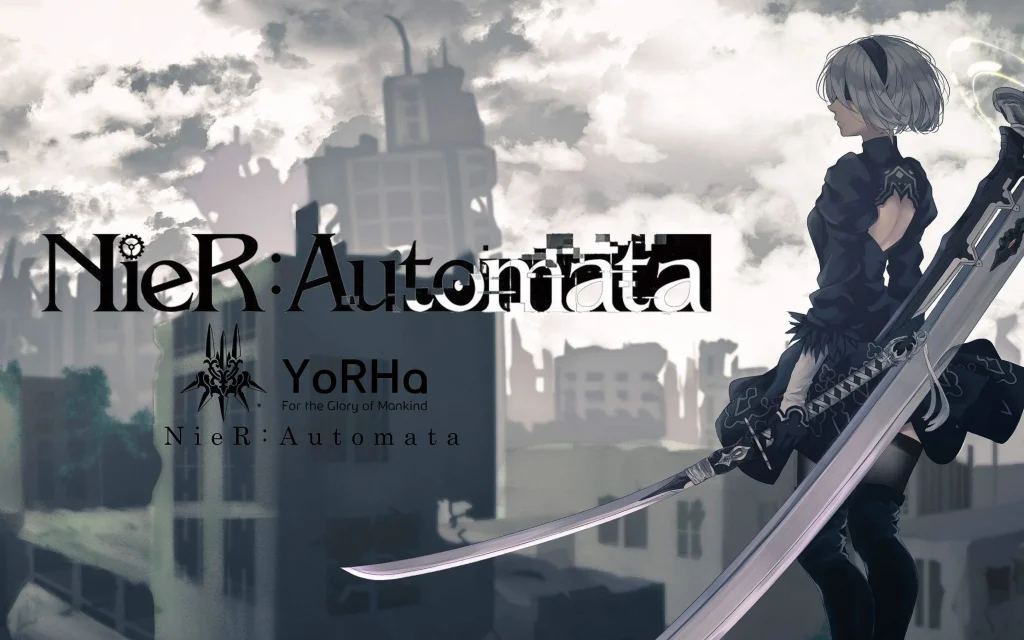
Some consider Ending E the peak of narrative-driven game design; others quit midway through Route B because of its repetitive structure. For new players considering jumping in during 2026, the most important thing to know isn’t the list of awards or sales numbers, but one core question: does this game match your personal preferences?
This article reviews NieR: Automata from six perspectives: combat, story, music, design flaws, target audience, and purchasing advice.
1. Revisiting NieR: Automata in 2026: Why Is It Still Worth Discussing?
NieR: Automata was developed by PlatinumGames and published by Square Enix, first released in 2017. According to official data released in recent years, the game has sold over 10 million copies worldwide. It won the TGA Best Score/Music award and was nominated for Best Narrative, Best RPG, and Best Action Game.
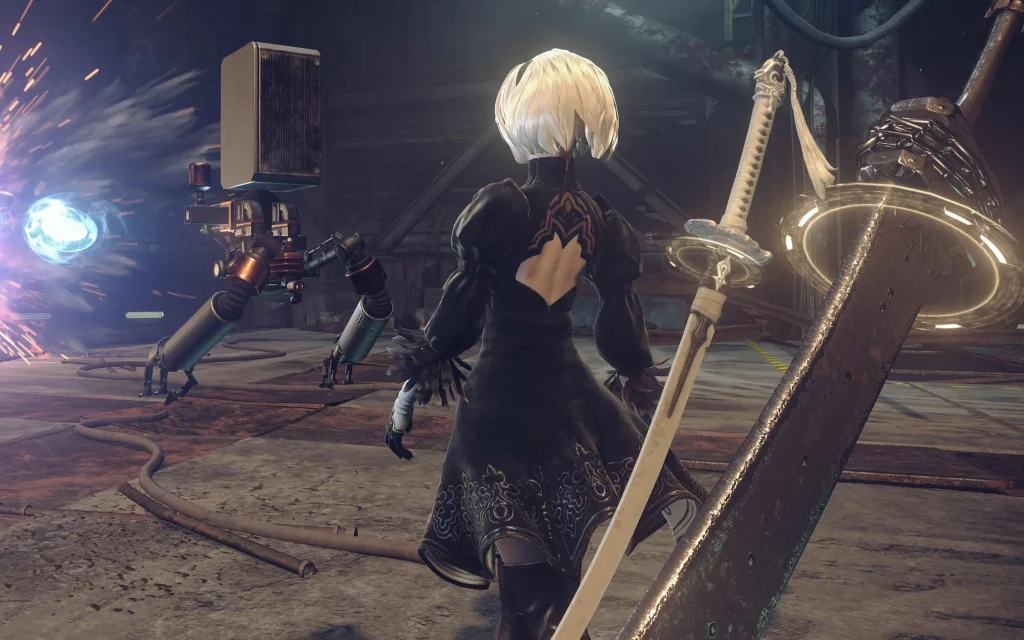
However, these accolades are not the real reason it remains relevant. What truly left a unique mark on gaming history is its iconic “Ending E” design: during the credits shooter sequence, other players’ save data appear as wingmen to help you fight; after clearing, the game asks whether you are willing to delete your own entire save data to help another stranger.
This design – embedding a multiplayer-like helping mechanic into a single‑player narrative structure – has rarely been successfully replicated in the nearly nine years since. At the same time, the game became one of the most controversial “masterpieces” due to its terrible map guidance, high repetition in Route B, and historic PC optimization issues.
2. Combat System Review: Solid Feel, Limited Depth
As a PlatinumGames action title, NieR: Automata has a solid combat foundation. Core mechanics include light/heavy attack combos, POD support fire, dodge‑triggered slow‑motion, and instant weapon switching. Weapon types cover large swords, katanas, spears, and fists – each with distinct handling and fluid combos.
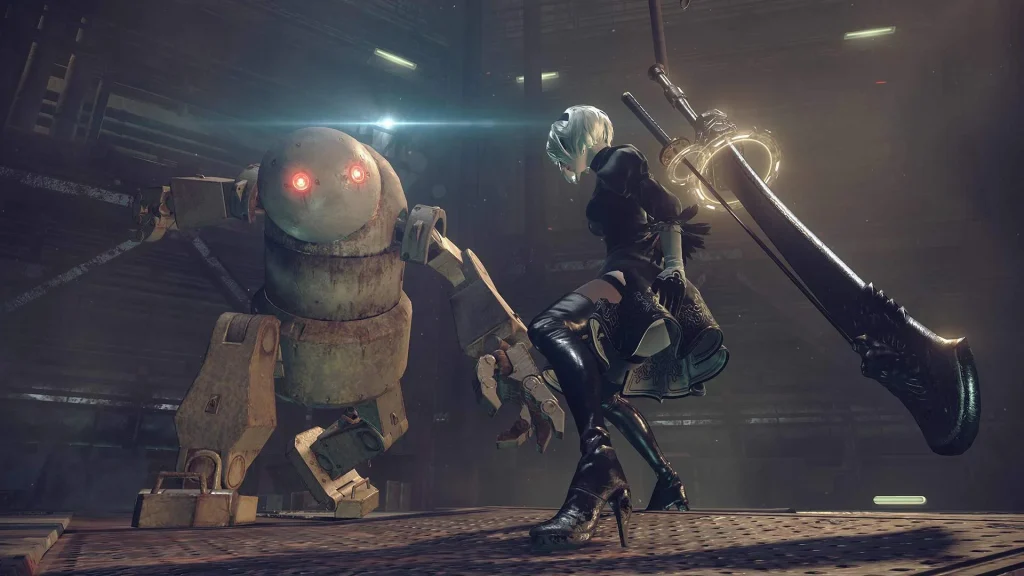
The most distinctive feature is its dynamic camera shifts. The game seamlessly switches between 3D action, side‑scrolling, overhead bullet‑hell, and mini‑shooter segments, keeping each fight fresh.
The chip system replaces traditional equipment and skill trees. Players can freely combine stat boosts, adjust HUD display, or even remove the OS chip – which instantly triggers a game over. This offers high customization and reinforces immersion.
But in the 2026 action game landscape, NieR: Automata’s combat depth no longer stands out. Compared to later titles like Stellar Blade, Black Myth: Wukong, and other modern action RPGs, this game’s Normal difficulty is too easy while Hard mode is overly punishing. Mid‑to‑late game motivation to upgrade weapons and chips is low – most players find a comfortable setup and never change it. Boss health bars tend to be overly long, making some fights feel tiresome.
Verdict: Combat still feels good, but it’s not enough to be the main driving force for long‑term play. If your main reason to buy is “fun action combos,” you may be disappointed.
3. Three Design Flaws That Truly Turn Away Newcomers
If you plan to experience this game for the first time in 2026, be aware of the following three issues.
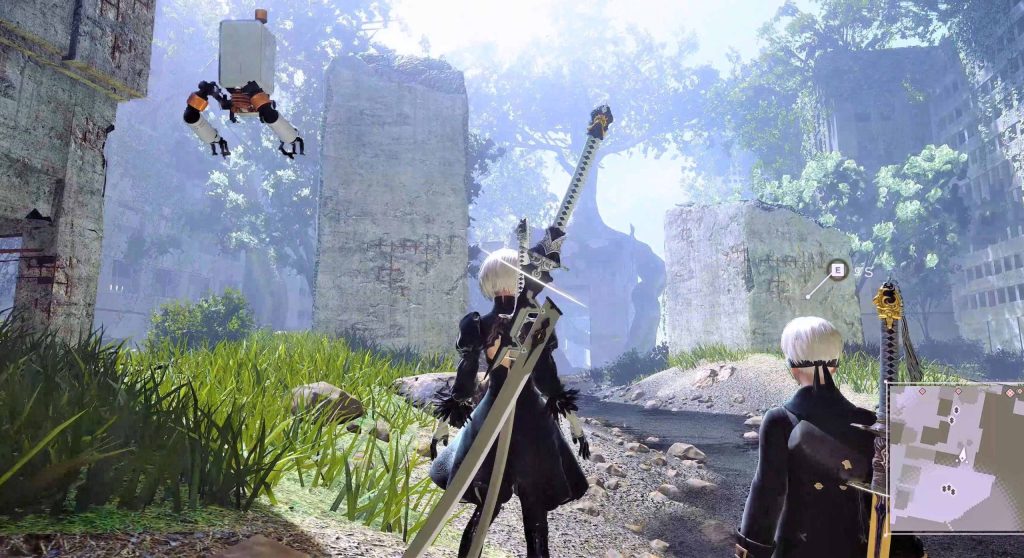
1. Confusing Map Guidance, High Frustration from Getting Lost
The game lacks a clear mini‑map guidance system. Main quest markers often don’t indicate vertical position. It’s common to wander up and down repeatedly in ruined areas. For players with low patience for navigation, this alone can cause them to quit halfway.
2. Route B’s High Repetition
The game uses a multi‑playthrough structure to unlock the true ending: Route A from 2B’s perspective, Route B from 9S’s perspective. However, about 90% of Route B is identical to Route A, with only a few hacking mini‑games and extra dialogue added. Many players drop out during Route B because of the repetitive grind. Route C (A2’s chapter) is entirely new content, but you must get through the first two routes to reach it.
3. Historic PC Optimization Issues Still Affect Some Players’ Perception
The launch version’s performance problems severely hurt the game’s reputation. Although the developer has released several patches, as of 2026 some players still encounter crashes, stuttering, resolution bugs, etc. If you choose the Steam version, check recent reviews first, or consider a console version.
4. Is the Story Worth Enduring the Repetition?
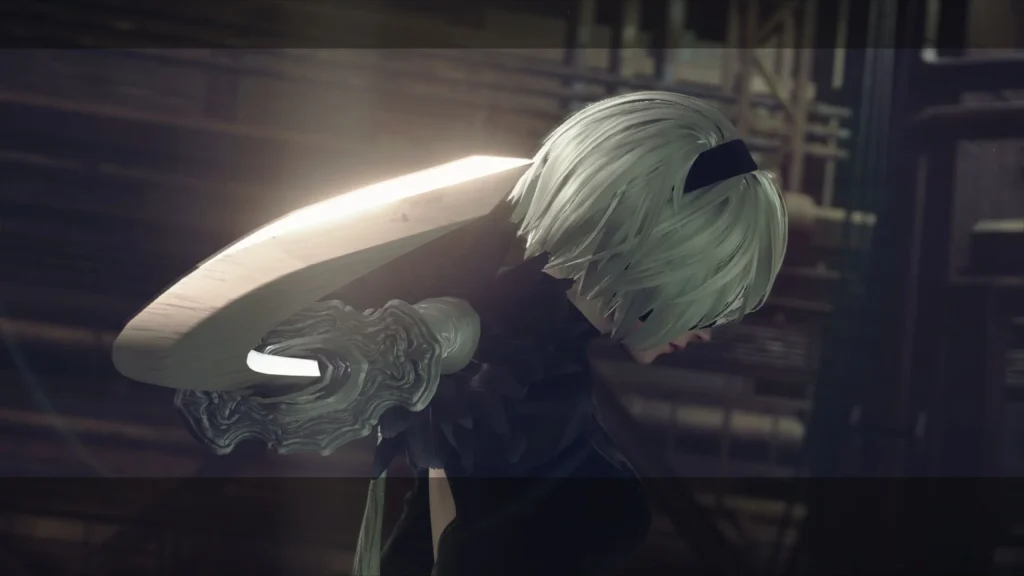
The answer is yes.
Yoko Taro’s narrative style can be summarized as: “using the most despair‑ridden world to tell the most gentle story.” Route A presents a standard robots‑fighting‑robots plot; Route B reveals that both sides are imitating long‑extinct humans; Route C completely overturns earlier assumptions, exposing the truth about the YoRHa units, the fact that humanity is already extinct, and the ultimate question “what are we fighting for.”
Side quests are filled with dark humor and memorable details: a philosopher robot, the LV99 secret boss Emil, and references to Drakengard. Out of the 48 side quests, quality varies, but the best ones are worth the time.
The game has 26 endings (A to Z). The first five are “true endings,” each with a full credits sequence; the other 21 are joke endings (like eating a fish when you shouldn’t, leaving the mission area, etc.). Ending E – the “delete your save to help a stranger” ending – is widely considered the peak of narrative and interactive design. It’s best experienced unspoiled.
Be aware: If you have no interest in philosophical dialogues about “robots discussing the meaning of life” or dislike reading large amounts of text, the story may feel pretentious.
5. Music: The Soul That Transcends the Game
Among players, the soundtrack is the least controversial part. Keiichi Okabe and the MONACA team’s music, sung in a constructed language, is widely regarded as one of the finest video game soundtracks ever.
“City Ruins” (Ruined City) conveys loneliness after humanity’s disappearance; the amusement park area’s music is mixed with broken questions from machine lifeforms; the sunken city’s piano melody gradually distorts as the water rises. Many reviewers say “the music far exceeds the game itself.” The official global concert tours have consistently high attendance. For players sensitive to game music, the soundtrack alone is worth the purchase.
6. Target Audience Analysis: Who It’s For and Who Should Skip
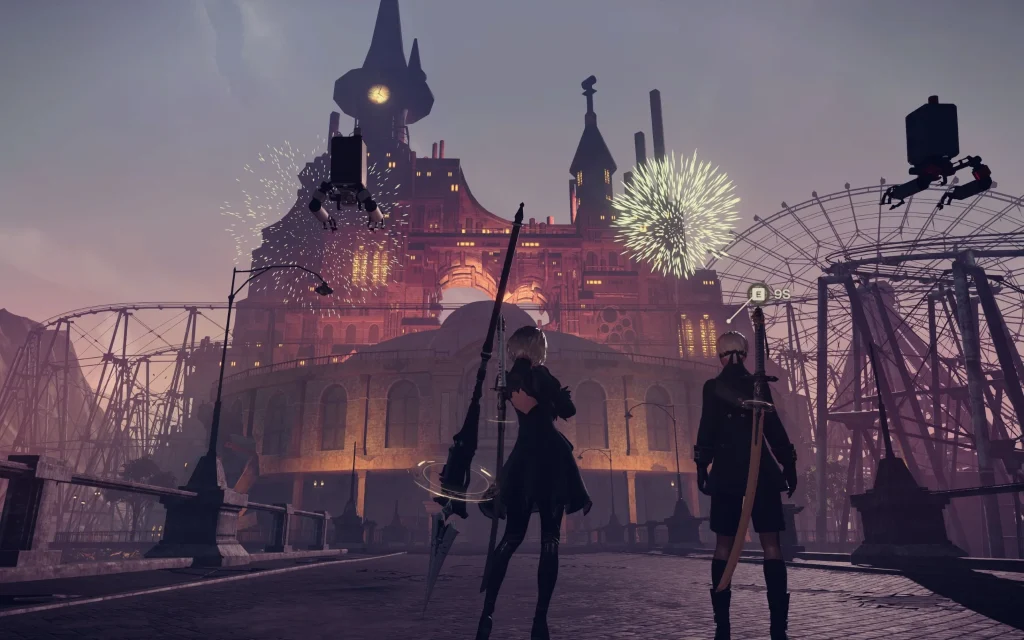
Players who will likely enjoy it
- Story‑driven players who can accept “imperfect pacing”: If you liked 13 Sentinels: Aegis Rim, Persona 5 Royal, Death Stranding, etc., and can tolerate slow early‑game pacing, this game will likely meet your expectations.
- Players who can accept repetitive playthroughs for multiple narrative perspectives: If you enjoyed Resident Evil 2’s dual‑protagonist routes, or are willing to replay levels just to see extra story bits, Route B’s 9S perspective won’t feel like too much of a burden.
- Players highly sensitive to game music: The soundtrack experience stands on its own, apart from gameplay, and is itself a collectible.
Players who should probably skip
- Players who hate getting lost, lack of guidance, and backtracking: The map design will cause continuous frustration.
- Players who just want fast‑paced action and don’t want to read lots of text: The combat isn’t deep enough to carry the entire experience – you’ll get tired midway.
- Players uninterested in philosophical themes like “robot emotions”: Yoko Taro’s scripts revolve around these elements. If you think “a game discussing this is pretentious,” you’ll likely find the whole experience boring.
7. Buying Advice (2026)
- Platform choice: Console versions (PS4/PS5/Xbox) are the most stable. If you go with PC, check Steam reviews from the last two months. If there are no major performance complaints, go ahead; otherwise wait for a deep sale to reduce risk.
- Edition: Buy the Game of the YoRHa Edition, which includes all DLC costumes and arena content. Avoid the base edition unless it’s heavily discounted.
- Price strategy: This game is on sale very often. Large seasonal sales usually bring significant discounts. Don’t buy at full price.
- Gameplay advice: If you decide to play, push through the first 10 hours. The story picks up later in Route A; in Route B you can switch to Easy mode to speed through (the hacking mini‑games can be skipped). Route C is all new content and where the narrative payoff is concentrated.
8. Conclusion
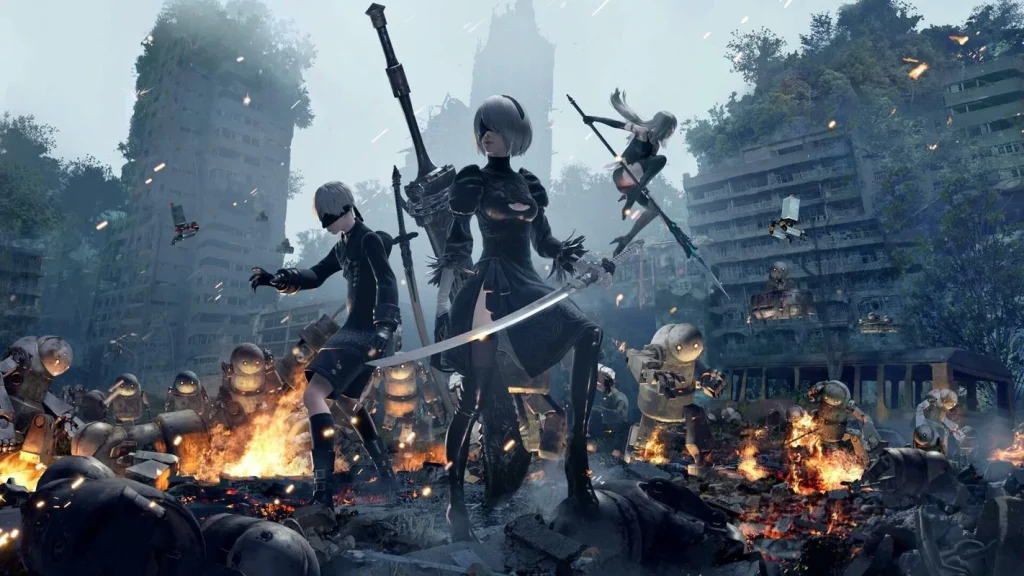
Some games are forgotten after completion. NieR: Automata often is not. It may come back to you long afterward – because of a piece of music, an image, a line of dialogue.
NieR: Automata may not be the smoothest action RPG of its era, but it remains one of the medium’s most unforgettable narrative experiences.
Purchase Decision Summary
If you value narrative expression, musical atmosphere, and unique story‑driven experiences, NieR: Automata is still worth experiencing in 2026.
If you prioritize deep action mechanics, polished map design, and tight pacing, this may not be the best choice for you.
Copyright Notice
The game screenshots, character images, and related material referenced in this article are the property of Square Enix, PlatinumGames, and their respective rights holders. This content is an original compilation. Please attribute the source when reposting. For copyright concerns, please contact [email protected].
Comments (0)
No comments yet