
Wangyue Hands-On Preview: A New Urban Open-World RPG Where Monsters Are Citizens, Not Pets

If you think of Wangyue as simply “Guangzhou’s answer to Yi Huan,” you’re only half right.
Many people see Wangyue as a direct competitor to Yi Huan. But after spending time with the playtest, the biggest takeaway is that these two games are heading in completely different directions.
After a year and a half of being rebuilt from the ground up, this urban open-world RPG’s most distinctive feature isn’t the open world itself—it’s the Yueling system. In Wangyue‘s world, Yueling—the supernatural creatures that live alongside humans—aren’t pets. They’re city residents.

On June 19, Wangyue held its first public offline playtest in Guangzhou. The line wrapped around the venue multiple times, with spectators packed on the second and third floor balconies. After the session, the main topic among players wasn’t the size of the open world—it was the Yueling system itself.
Yueling Aren’t “Caught”—They’re “Understood”
In most games with “capture” mechanics, the loop is the same: encounter, fight, throw a ball, add to the collection. Wangyue does things differently.
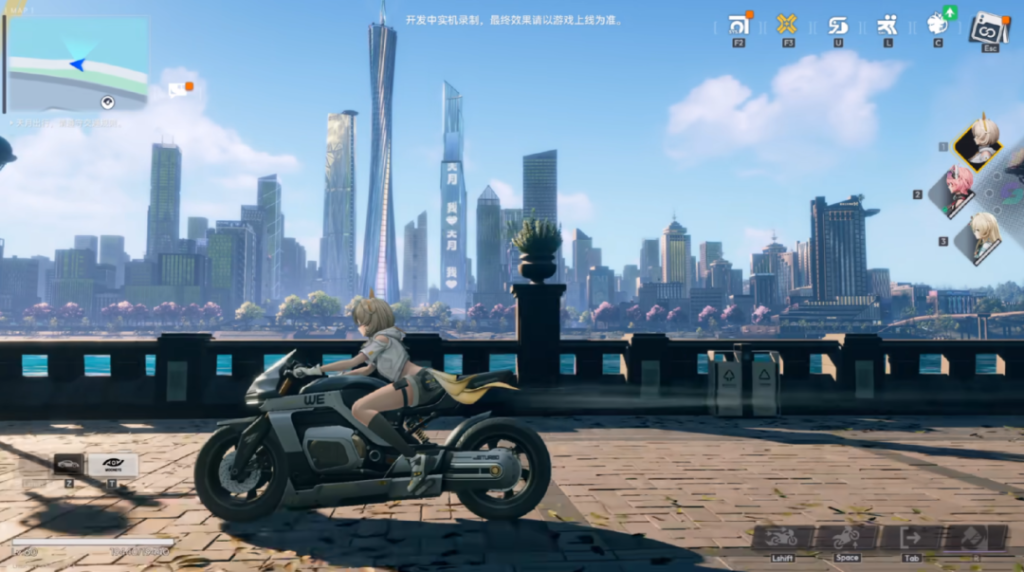
These creatures go about their day—shopping, driving, sunbathing. You walk down the street and see one casually cruising past in a car. That’s not a pet. That’s a resident. If you could just walk up and capture them, the whole worldbuilding would fall apart.
So instead of direct capture, players use the protagonist’s ability “Yuetong” to sense a Yueling’s emotions and thoughts, collecting fragments of information into a research journal and gradually piecing together a complete picture of each type. Only those corrupted by “Chaos”—the ones causing trouble in the city—enter the catchable pool.
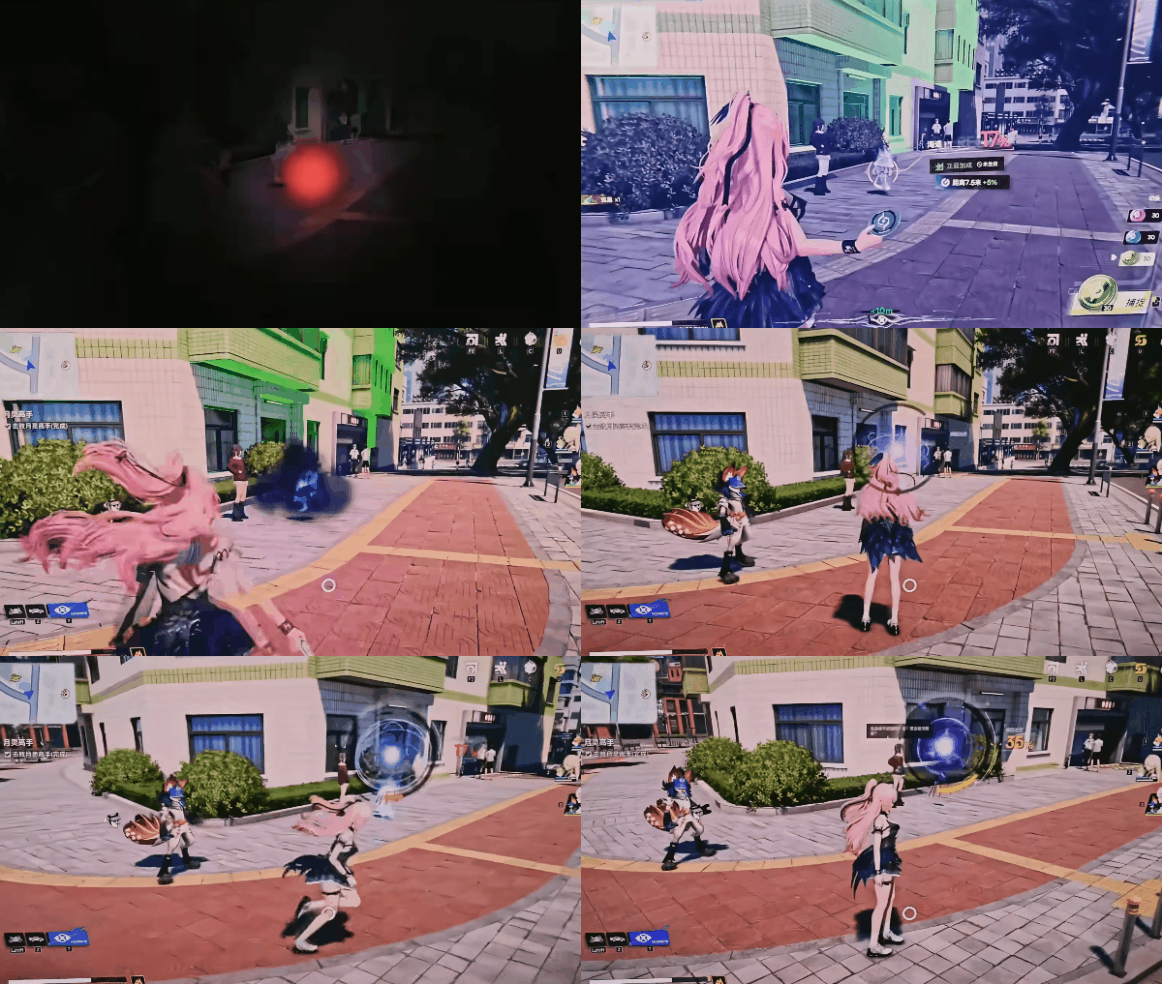
What makes this design interesting is that “researching Yueling” itself becomes playable content, not just a checklist of codex entries.
Guangzhou Is a City, Not a Backdrop
Wangyue‘s world consists of two spaces: the modern city “Tianyue City,” modeled after Guangzhou, and the twisted, mutated otherworld known as the “Moon Gate.”
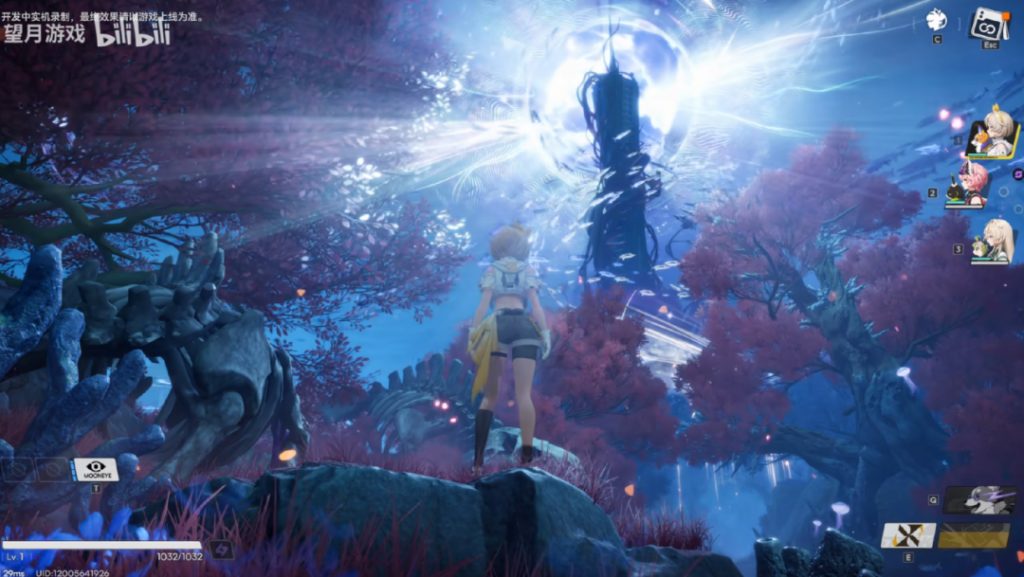
The playable area in the demo, “Nangang District,” features the texture of old Guangzhou streets—Wok-ear walls, arcade-style Qilou buildings, and other traditional Lingnan architectural elements. Even the cars on the road feel distinctly Guangzhou: both the latest EVs and the classic models etched into every local’s memory.
This sense of familiarity doesn’t come from landmark tourism. It comes from the granular texture of the streets themselves.
The choice of Guangzhou isn’t arbitrary. The city’s inherently inclusive character aligns naturally with Wangyue‘s core premise of “Yueling and humans coexisting.” This isn’t picking a city as a backdrop—it’s embedding the city’s personality into the game’s DNA.
Character Design: Profession Is Weapon
Wangyue‘s character design philosophy is refreshingly direct: urban professions as identity.
The demo featured four playable characters: the protagonist (a jack-of-all-trades fixer), a courier named Lailai, a florist named Linlong, and a tennis star named Ling Beijing.
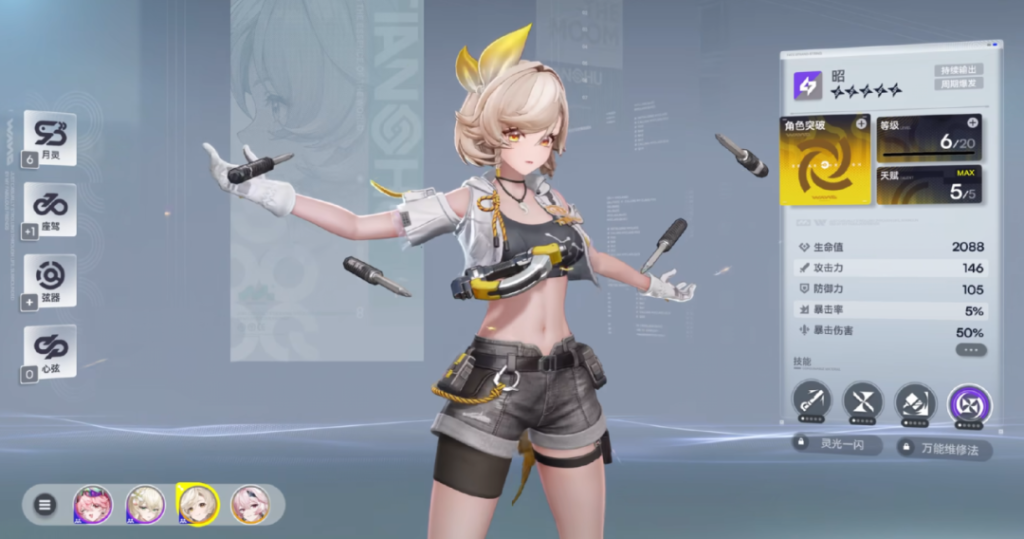
The courier’s weapon is a modified barcode scanner—looks like a gun at first glance, but it’s really a scanner with an attack head attached. The tennis star’s racket has accurately reproduced string tension counts, and her shoes are modified versions of actual pro tennis footwear. The protagonist’s ability, “Creation,” lets them turn everyday objects into weapons on the fly—screwdrivers, clubs, and a signature attack that assembles scrap parts into a massive combined weapon.
The goal is clear: players should look at a character and immediately know, “That’s a Wangyue character”—not a generic template that could fit into any game.
Yueling design follows the same logic, combining animal traits with Chinese urban cultural fragments. A corgi’s habit of wiggling its butt—nicknamed the “electric motor booty”—inspired “Jia Dian Wang,” mixing electricity with the image of a retractable charging cable. A mahjong tile—the “One Bamboo” tile known in Chinese as “Yi Tiao”—became “Yi Tiao Que,” whose attack involves throwing mahjong tiles marked with directions and shouting “Peng!”
Mix animals with familiar elements of modern urban life, and the result is instantly recognizable.
Combat: Yueling Combos Are the Core
The combat system uses a three-character, three-Yueling rotation. Different characters paired with different Yueling trigger faction bonuses. The controls feel smooth—attacks, skills, dodges, and QTE prompts are all fairly forgiving, with a low barrier to entry.
The core combat loop revolves around “Yueling Combos”: after landing a sequence of character skills, a rhythm-game-like QTE prompt triggers. Hit it correctly, and you unleash a massive burst of toughness-breaking damage. Then rinse and repeat—damage, combo, combo, break.
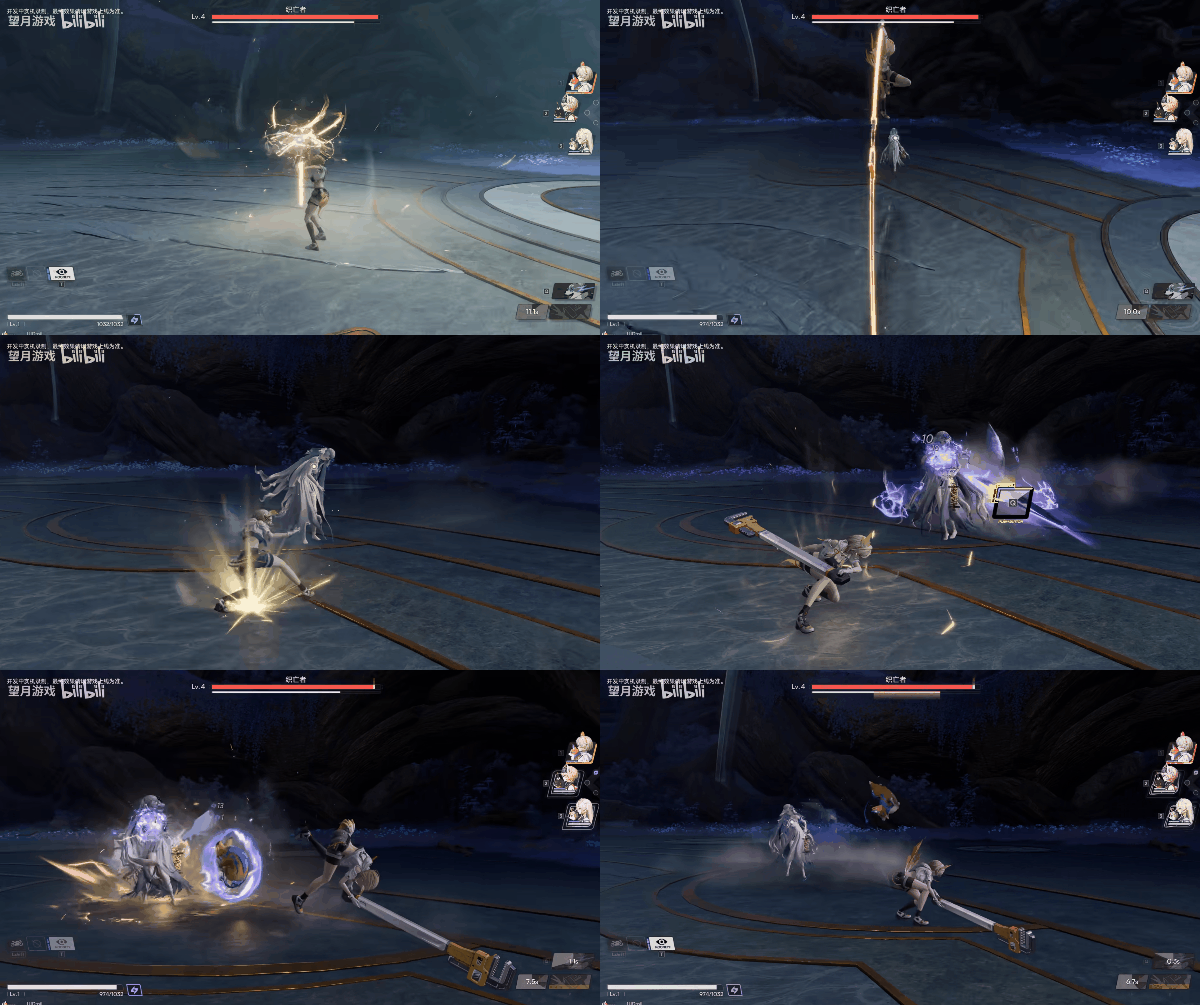
From the demo build, this loop already feels fully structured. As the roster of characters and Yueling expands, team-building depth and strategic options have plenty of room to grow.
Boss Encounters Leave a Strong Impression
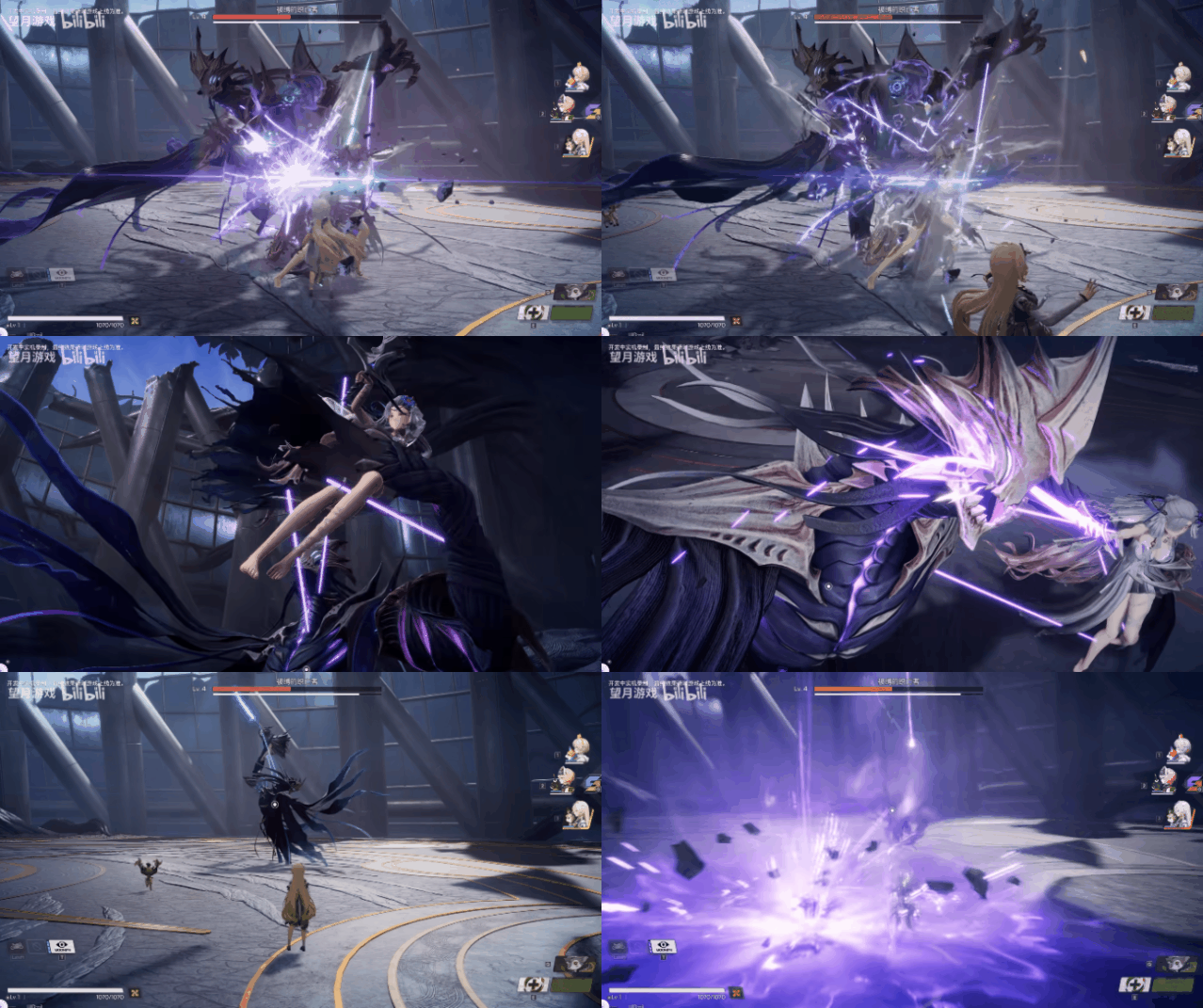
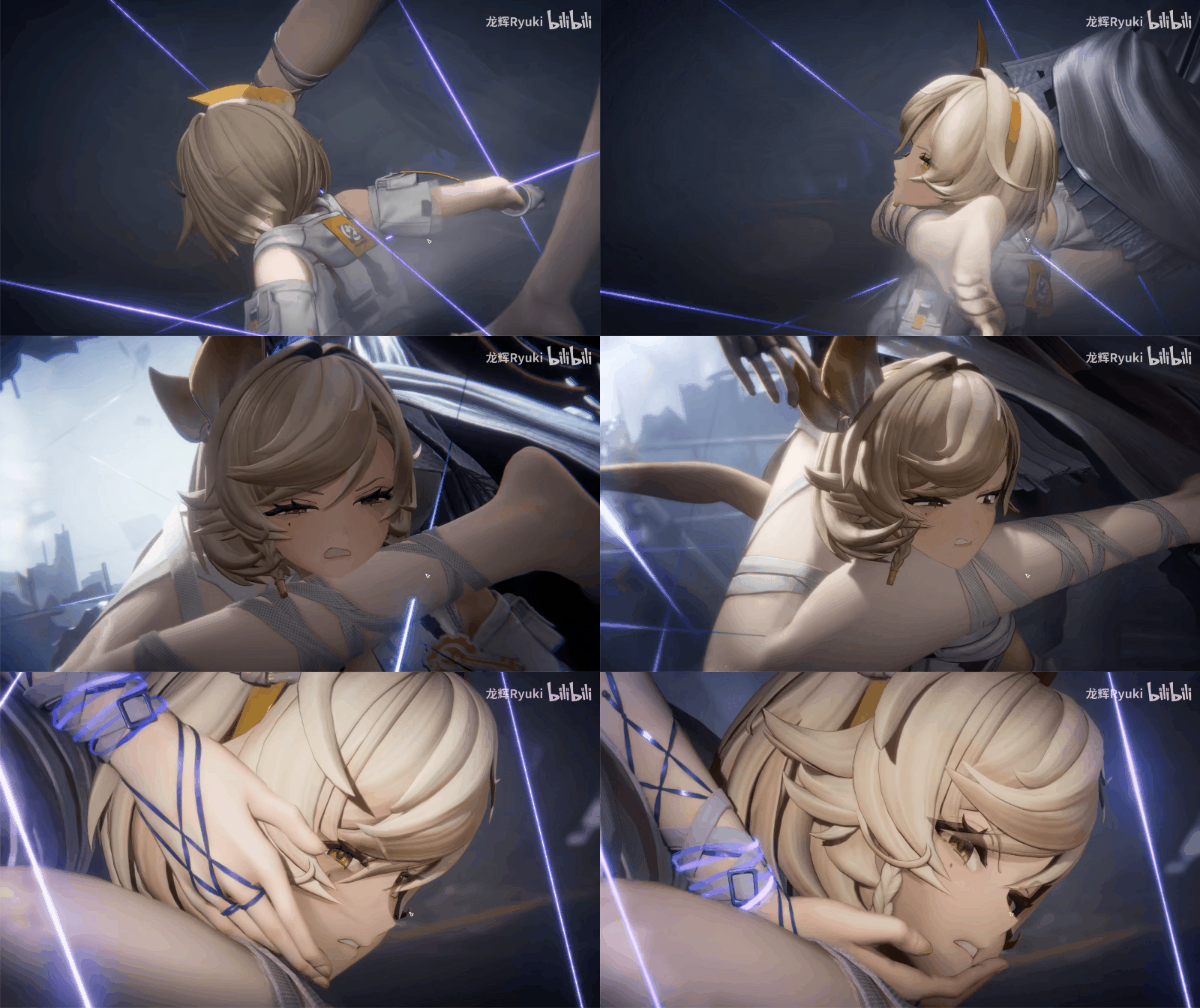
The visual impact of the action sequences is worth noting too. The first boss, the Weaver of the Dead, executes a cross-leg submission hold on the protagonist when transforming into a puppet. Even with the density of spectacle we’re used to in modern games, this particular animation lands with surprising intensity.
What’s the Difference Between Wangyue and Yi Huan?
A lot of people compare Wangyue and Yi Huan, since both are urban open-world titles and both are heavy hitters in the 2026 anime game space.
But after playing both, it’s clear they’re heading in different directions.
Yi Huan leans more toward “urban + combat”—the city is a stage, and the core experience is in combat and cinematic spectacle. Wangyue‘s differentiation is the Yueling system and the “city feel”—it’s trying to make players actually live in the city, not just run through it completing quests.
Yueling are residents, not collectibles. If this design philosophy fully lands, Wangyue and Yi Huan won’t even be the same genre of game.
The “-1.0” Rebuild
Wangyue wasn’t always what you see today.
During its first internal test in early 2025, player feedback was tough: inconsistent art direction, weak character identity, and no real connection between the city and the Yueling system. The team themselves called that version “-1.0″—a full version behind where they wanted to be.
Instead of pushing forward, Shiyue Network hit pause. Pipelines were scrapped, rendering style overhauled, character design started from scratch.
The team currently sits at around 600 people, with significantly higher talent density than during the first test. Most core pipelines were built from zero. No legacy projects to lean on, no existing solutions to copy. The fact that they got to this playtest at all suggests the direction is finally right.
Worth the Wait?
Wangyue is still iterating—not yet final. This demo only offered one district, four characters, and a small selection of Yueling. The Yueling management sim and deeper city interaction systems haven’t been fully shown yet. But the direction is clear: not a “bigger” open world, but a city with warmth and Yueling with life.
If this vision fully materializes, Wangyue will have carved out a distinct position in a crowded field.
No official release date has been announced yet.
Copyright Notice:
All game screenshots, character designs, and related materials referenced in this article are the property of Shiyue Network and their respective rights holders.
Comments (0)
No comments yet