
DinoBones: Tidy Up the Museum — When a Game Decides Not to Give You Any Skill Trees

On September 25, 2026, indie studio Indie Souls Studio released DinoBones: Tidy Up the Museum on Steam. Without a major franchise behind it, the game still attracted players quickly after launch. Within two days, it had earned a “Very Positive” rating on Steam.
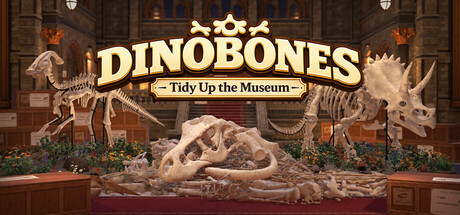
As of October 10, 2026, the game has accumulated over 1,000 user reviews on Steam, with around 94% of reviews being positive and an overall “Very Positive” rating. Many players praised the museum’s atmosphere, its environmental details, and the experience of sorting bones alongside a cat.
A Keen Eye Is Your Most Important Tool
The core loop can be summed up in three words: pick up, look, place.
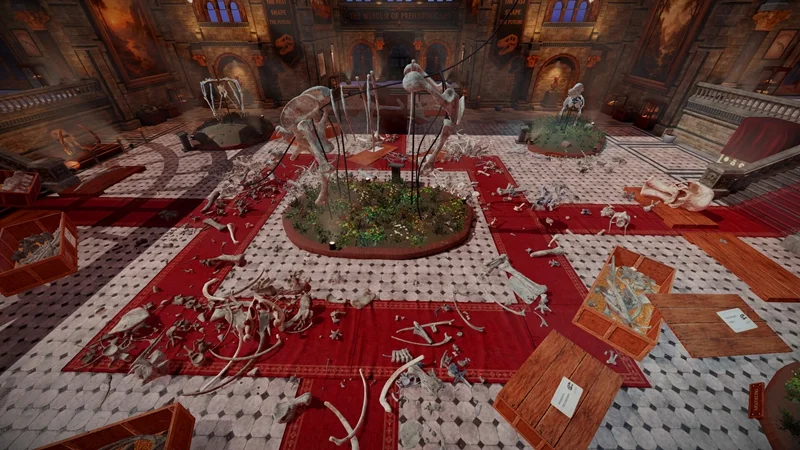
About two thousand bones are scattered across the museum hall. Crates have been knocked over, and skulls, ribs, and vertebrae cover the floor, stairs, and every corner. Your job is to pick them up, figure out which skeleton they belong to, and put them in the right place.
The game doesn’t automatically identify bones for you, and there’s no one-click sorting. Each bone is initially labeled “Unknown,” and you have to judge which skeleton it belongs to based on color, texture, shape, and wear.
As you make progress, the game gradually provides assistive tools, such as a monocle that highlights specific dinosaur bones and a handbook that helps locate remaining bones. The color hint that appears when you’re near the correct spot can also be turned off. Even so, the main work of identification and assembly still falls to you.
It Doesn’t Just Cut Skill Trees
What’s most worth discussing about DinoBones: Tidy Up the Museum isn’t what it does, but what it doesn’t do.
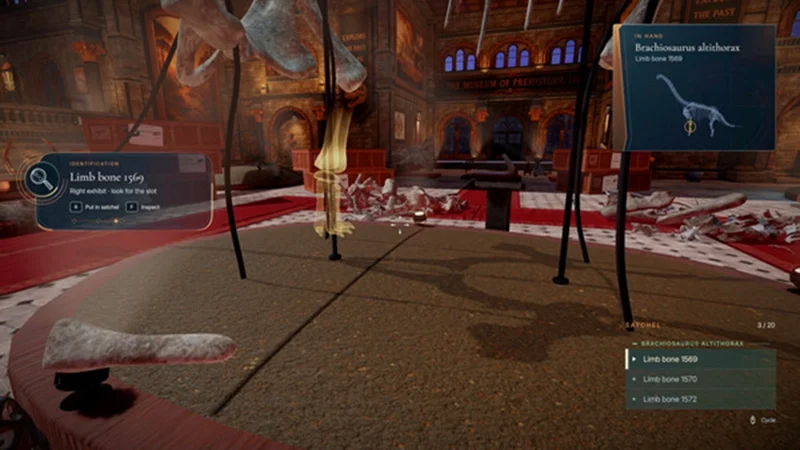
No skill trees, no character leveling, no long-term progression driven by stat growth. You open the game, face a mess, and start tidying. That’s it.
In today’s indie game landscape, that’s almost a provocation. Over the past few years, many tidy-up games have settled into a similar design pattern: tool unlocks, upgrade paths, or stat growth to keep repetitive actions going. Cleaning, organizing, repairing—many games in the genre operate within that framework.
DinoBones: Tidy Up the Museum dismantles that framework. It doesn’t rely on skill trees, character levels, or stat growth to drive the player. Instead, it puts the main sense of “growth” into the tidying process itself. When you assemble part of a skeleton, you become more and more familiar with that type of bone’s shape. The next time a bone appears, you don’t need to compare it repeatedly—your eyes have already learned.
This is a very old-school design philosophy: let the player’s skill grow inside the player, not on a character sheet.
Turning Chaos Into Order Has Its Own Power
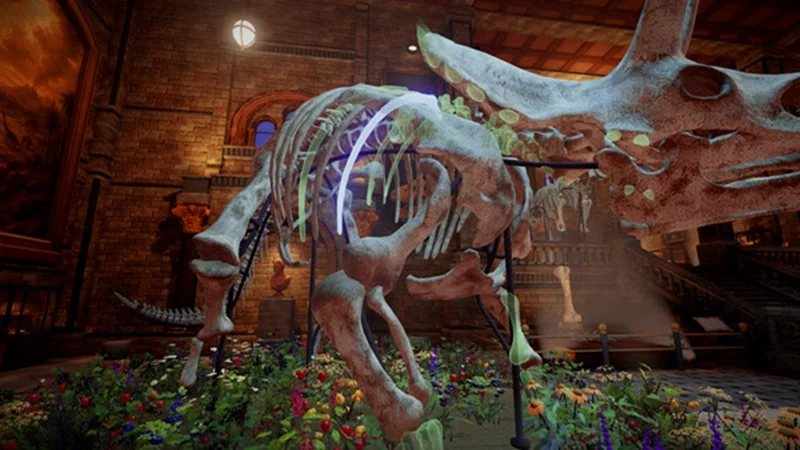
The narrative frame is simple: an accident has occurred in the museum, crates are scattered, and the bones from nine skeletons have been scattered and mixed together. You need to restore everything. Each time you complete a skeleton, a special event triggers in the museum, and after it ends, small rewards, toys, and surprises are left behind.
This setup gives the act of tidying a clear purpose. You’re not endlessly cleaning a room that never gets finished. You have goals, an endpoint, nine skeletons waiting to be awakened.
And psychologically, people often derive satisfaction from the process of chaos gradually turning into order. As a pile of hard-to-identify fragments is pieced together and the outline of a skeleton slowly emerges, that feeling of “it’s taking shape” is itself enough of a reward.
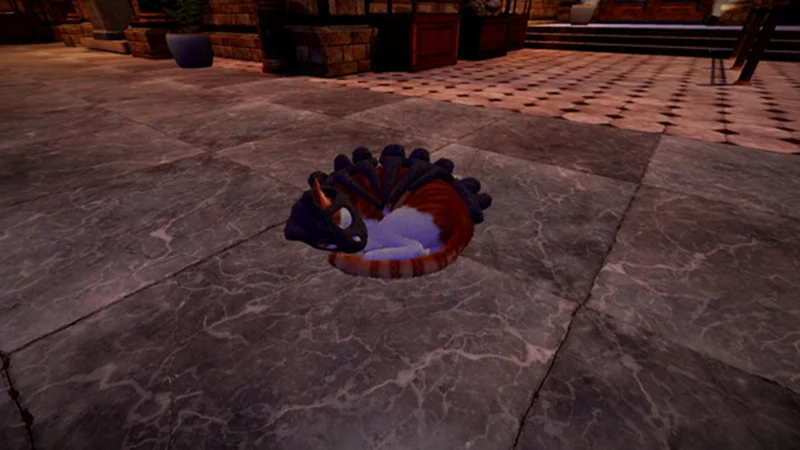
The pacing is deliberate: the game isn’t trying to excite you; it wants to draw you in. A calm background soundtrack plays throughout, and a cat in the museum keeps you company as you work.
The Problem: You Finish Tidying—Then What?
But the game has an unavoidable shortcoming: the limited amount of content.
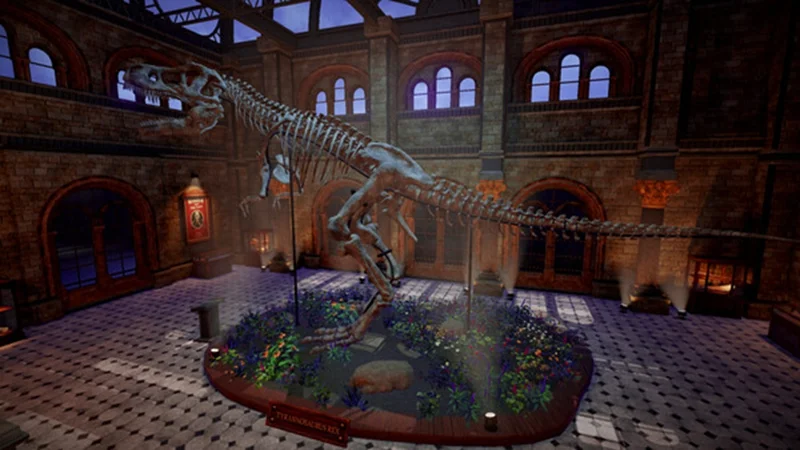
Nine skeletons and roughly 2,000 bones make up the bulk of the experience. Beyond that, the museum offers optional activities such as collecting souvenir coins, listening to cassette tapes, taking photos, and assembling a model kit. The game has 29 Steam achievements covering these activities and more. They don’t fundamentally change the core loop, but they give players a few extra things to explore after the main objectives are complete.
This may not be a design flaw so much as a trade-off in content scope. Two thousand bones sounds like a lot, but as players gradually become familiar with the shapes of different bones, identification speeds up. The game doesn’t rely on a complex progression system to extend playtime. This keeps the experience focused, but it also limits its long-term appeal.
Post-launch updates added a mode that lets players assemble skeletons in anatomical order, along with adjustable gameplay rules. These options let players choose the order and difficulty of tidying, but they change the challenge of the task rather than adding character progression. Even with more gameplay options, the core content still revolves around nine skeletons. For players who want a steady stream of new goals, there’s still limited content for long-term exploration.
What It’s Really Doing
What’s most commendable about DinoBones: Tidy Up the Museum is that it takes a small thing seriously.
It doesn’t try to be a “great game.” It has no grand narrative, no profound social commentary, no disruptive gameplay innovation. What it does is very simple: give the player a clean space, a pile of identifiable fragments, and an uninterrupted stretch of time.
In an era when every game is competing for your attention, a game that steps out of that competition and simply waits for you to settle in makes a statement in itself.
If you enjoy low-pressure, repetitive tasks and the satisfaction of gradually learning to recognize different bones, the calm music and the museum cat make this a relaxing, low-key experience. If you need a steady stream of new mechanics and increasingly difficult challenges, the game may start to feel monotonous fairly quickly.
The game was also verified for Steam Deck on October 7, making it a convenient option for handheld play.
It may only occupy a weekend. Still, it could become the kind of game you return to on a tired evening—not to “beat” it, but to hear the sound of bones settling into place one more time.
Copyright Notice: All game screenshots, character images, and related assets referenced in this article are the property of their respective rights holders, including Indie Souls Studio. This article is for game coverage, commentary, and informational purposes only.
Comments (0)
No comments yet