
Control Resonant — When Remedy Shifts Control’s Center of Gravity Toward Action

On September 24, 2026, Remedy Entertainment released Control Resonant, the sequel to Control (also known during development as Control 2). Seven years have passed since the original. This time, the protagonist shifts from Jesse Faden to her brother Dylan Faden, the setting moves from the enclosed Oldest House to a warped Manhattan, and combat shifts from a third-person shooter core to a melee-focused action RPG. Metacritic currently sits around 84, slightly above the original’s 82. GameSpot gave it a 9, and VICE awarded a perfect 10. At the same time, some critics have called it one of 2026’s more disappointing releases.
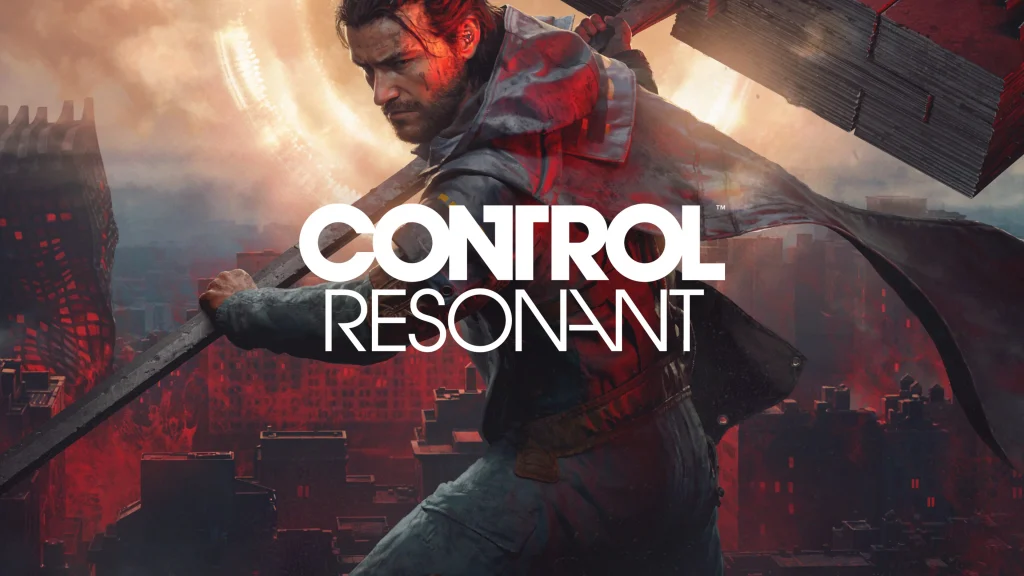
Control Resonant isn’t a bad game. But it may be one of Remedy’s rare bold pivots that ultimately makes you miss their more restrained past work.
You Swapped One Weapon — and an Entire Game Logic
The most fundamental change in Control Resonant is combat.
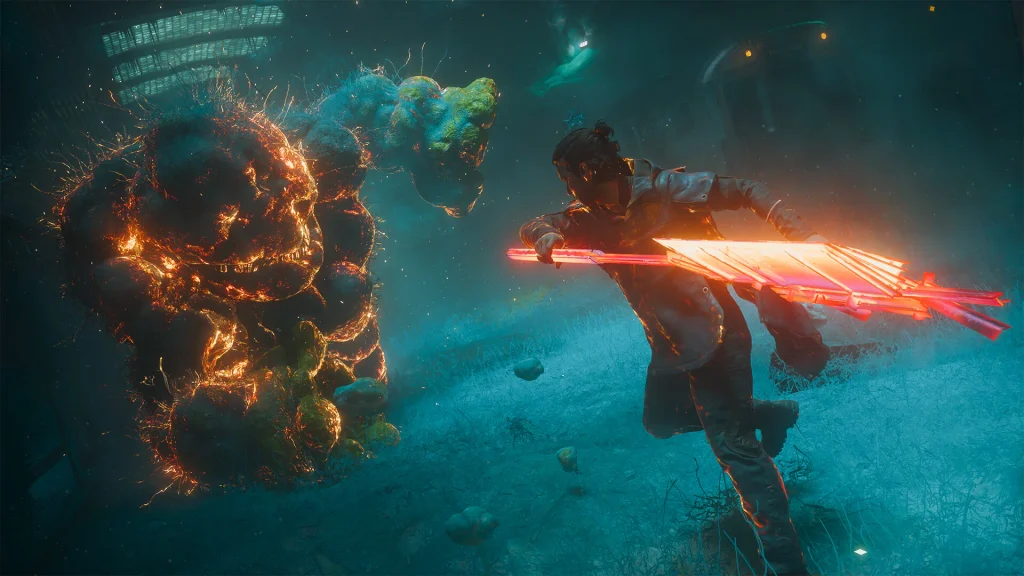
In the original, Jesse’s core weapon was a shape-shifting pistol, paired with telekinetic throws and shields, leaning toward mid-to-long-range shooting and ability combinations. Dylan wields the “Aberrant,” a melee weapon that shifts forms. Its Primary forms include dual blades, a scythe, and an axe, while Secondary forms include a hammer, drill, and chain-staff, plus a separate Combo Finisher system.
This system has no parry or block — it’s built around an aggression-first approach to defense. Remedy felt that parrying would encourage players to wait for enemy attacks, so it preferred dodging, mobility, and proactive offense to carry the defensive burden. Double jumps, air dodges, aerial combos — Dylan’s mobility gives him a Spider-Man-like fluidity as he moves between skyscrapers. One reviewer argued that, judged purely on basic combat feel, it “easily clears an eight out of ten.”
But the problem is that after a dozen hours, this combat system exposes a fundamental flaw.
Combat Has Speed, But Not Depth
Multiple reviews point to the same issue: repetitive combat.
Yahoo’s review criticized the lack of meaningful combo strings and the sponge-like enemies that stretch encounters too far. GameRant also noted that reviewers widely found combat “tedious” in the later stages.
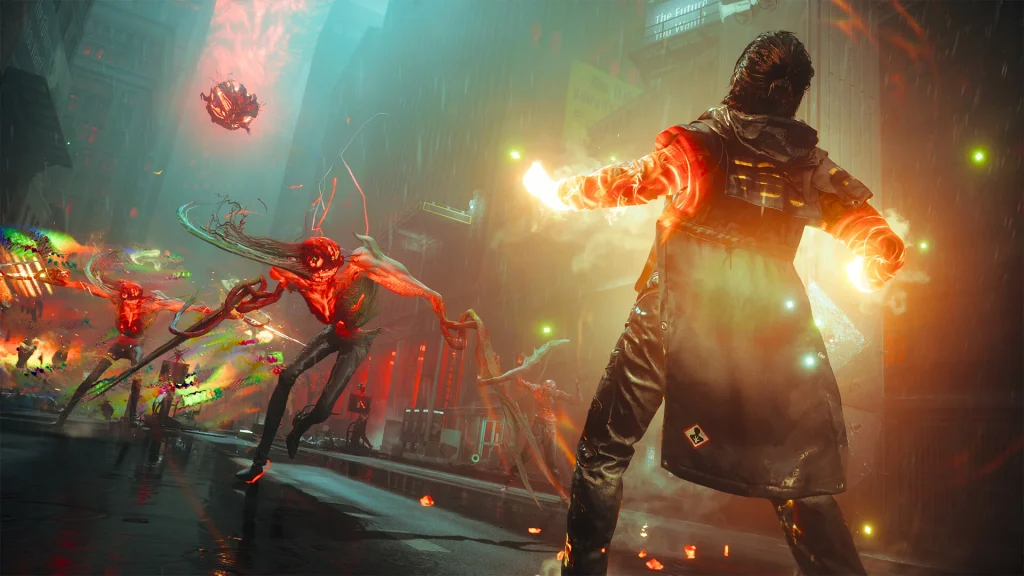
It’s worth noting that the above criticism — “enemies too tanky, Dylan too weak early on” — mainly targets the review-period build. Remedy addressed it on September 24 with the 1.3.3 hotfix, lowering most enemies’ health and stagger thresholds while boosting Dylan’s combat strength. The October 1 update (1.4.0) further reduced combat volume and intensity in Unknown Zones by roughly 10–15%, and added Build Power and other progression info to the Loadout screen. The October 2 update (1.4.1) fixed two issues introduced by 1.4.0.
But these updates mainly address numbers, pacing, and experience-level problems. They don’t automatically answer another question: once players have mastered the core combat loop, how much new variation can the melee system still offer?
More questionable is that the progression system doesn’t consistently give players a strong enough sense of “getting stronger.” PC Gamer also criticized the game’s progression mechanics as too weak to fully support its combat system. The game keeps giving you new skills, weapon forms, and build options, but those upgrades don’t always translate into equally noticeable changes in combat. The issue is that, over time, more and more encounters can still be reduced to the same core logic: dodge, attack, create distance, keep outputting damage.
This isn’t “the action game isn’t good enough.” It’s that Remedy designed a melee system with visible potential, but didn’t match it with enough depth to sustain dozens of hours of play.
Manhattan Is Big, But It Doesn’t “Control” You
The Oldest House in the original was a carefully designed Metroidvania space. Every area, every corridor, every alternate dimension constantly reshaped your understanding of the Federal Bureau of Control. The space itself was a narrative vessel.
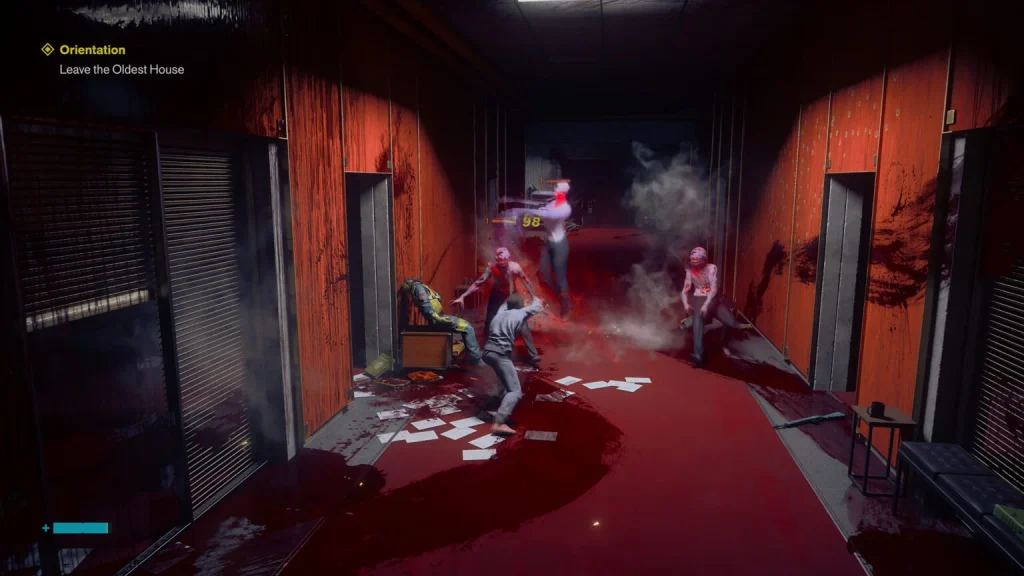
Control Resonant moves the stage to Manhattan with a zone-based semi-open-world structure. Manhattan is divided into Downtown, Central, Park, and other zones, unlocked as the main story progresses. Gravity abilities let Dylan shift gravity’s direction, turning walls and ceilings into paths forward — a spatial experience the original didn’t offer. VICE’s review even argued that the open city structure improved on the original’s map problems, calling the large-scale gravity spaces and Backrooms-like areas “some of the craziest space design I’ve ever played.”
Manhattan gave Remedy more room and did produce visual and spatial spectacles the original couldn’t. But the problem is that this “bigger” didn’t always translate into more distinctive exploration.
Yahoo’s review put it bluntly: “The game trades the interesting Metroidvania-style location for a bland semi-open-world version of New York City. You end up doing the same objectives over and over, like placing map beacons in every new zone, and it’s just not an interesting world.”
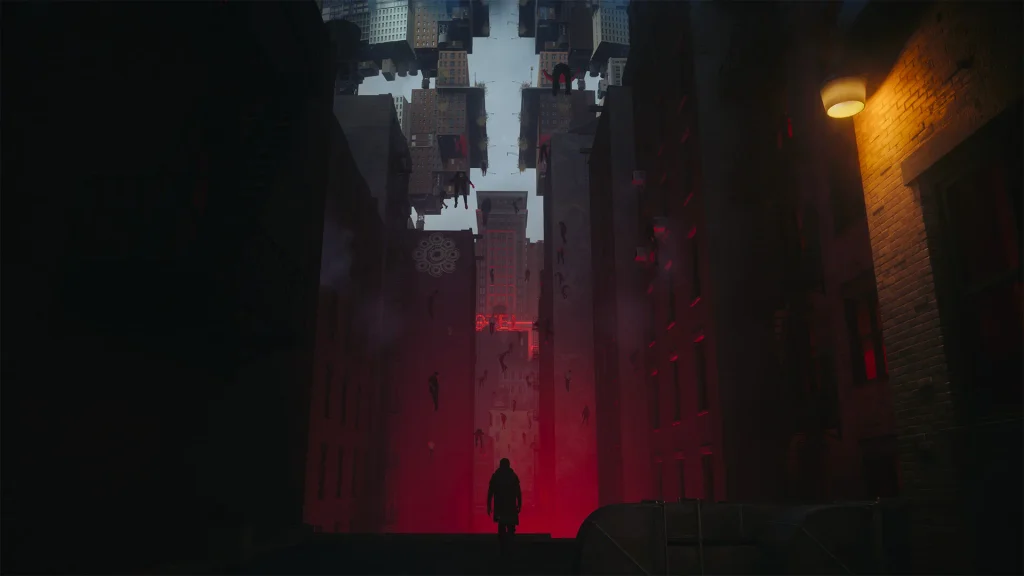
The problem isn’t that Manhattan is poorly made. The problem is that the original’s space was “designed,” while this game’s space is more “spread out.” You move from one objective marker to the next, filled in with repetitive bounty targets and map towers, rather than the original’s constant surprises of a reality-bending encounter around every corner.
Dylan Is a Good Character, But the Story Doesn’t Give Him Enough Time
In Control, Dylan was the imprisoned and psychologically unstable brother the FBC had spent years studying. Pulling him out as protagonist is itself an interesting choice.

Yahoo’s review acknowledged: “Playing as a character who isn’t trusted and is hated by most people is an interesting choice, and it leads to some strong early moments.” But the problem is that “interesting plot developments crawl forward at a snail’s pace, and you’ll hear the same dialogue exchange about soldier corpses an absurd number of times. A story that could have been tight at 15 hours gets stretched to more than double, and quickly loses momentum.”
The pacing issue is essentially a chain reaction from open-zone padding. The original let most information seep into players’ minds naturally through space, documents, broadcasts, and scene details; this game relies more heavily on long-distance travel and zone tasks to carry narrative. When you spread a story across a zone-based structure designed to support dozens of hours of play, the tension can start to dilute.
This isn’t a problem with Dylan as a character. It’s that a story about the Federal Bureau of Control has been placed in too large a container.
What It Truly Lost Isn’t the Oldest House — It’s the Unknown
Control Resonant is still Remedy in some ways.
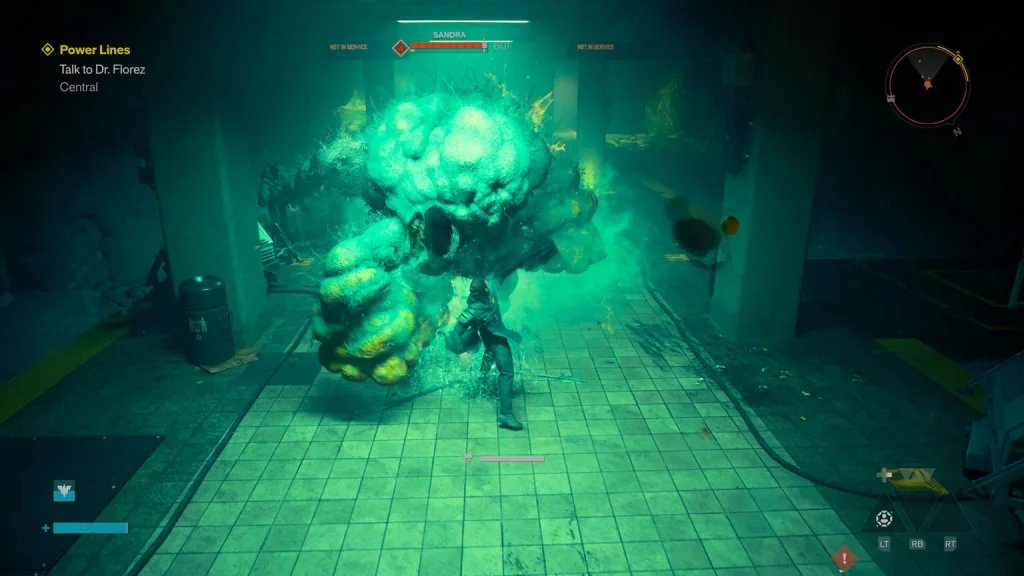
4Gamers’ review noted that gravity abilities let the game “not just show players a supernatural world, but directly let them experience how unusual that world is through changes in gravity and spatial rules.” Rock Paper Shotgun felt that traversing the “kaleidoscopic Manhattan” was “full of vivid sights and eerie atmosphere.” VICE even gave it a perfect 10/10, calling combat “absolutely thrilling, mixing levitation action, air dashes, telekinesis, and fast-paced melee attacks.”
This shows that Remedy’s visual design and world-building remain the strongest part of this game. The problem isn’t that they “can’t make good things” — it’s that they put good things into a framework that doesn’t suit them.
The original Control succeeded precisely because of its restraint — one enclosed space, one focused combat system, one tight story. The Oldest House’s horror came from “I don’t know what’s behind the next door.” Every room served the same goal: to make you confused, frightened, and eager to learn more.
Manhattan’s spectacle comes from “I know what anomaly is in this zone.” You open the map, see the icon, travel to the objective, resolve the encounter, repeat. The space got bigger, but the unknown got smaller. You’re no longer exploring a building that swallows you — you’re clearing a marked-up map.
Control‘s horror came from “I don’t know what this is.” Control Resonant‘s pleasure comes more from “I know this isn’t normal — so what can I do with it?” That’s the real shift from horror to action.
Control Resonant tried to be “bigger, more open, more action-focused,” but in doing so, it lost something. Those things are precisely why Control was Control. The problem isn’t that it’s badly made — it’s that it took what made Control most fascinating and, by expanding it, diluted it.
Remedy didn’t get the Control IP wrong. They just handed the keys to action — and action itself wasn’t ready to take over.
Copyright Notice: All game screenshots, character images, and related assets referenced in this article are the property of their respective rights holders, including Remedy Entertainment. This article is intended for game introduction, review, and informational purposes only.
Comments (0)
No comments yet