
God Eater After Six Years of Silence: Where Did Monster Hunter’s Closest Rival Go?

January 2026 saw the official release of Code Vein 2. The action RPG, developed by Shift and directed by Hiroshi Yoshimura, follows a predecessor that surpassed four million units in global sales.
As the sequel launched, one question kept surfacing in player discussions—not about Code Vein 2 itself, but about another game.
“What about God Eater?”
Developed by the same Shift team, built on the same high-speed action DNA, God Eater has gone silent since God Eater 3 in 2018. Six years without a new entry.
The co-op hunting series that once came closer to Monster Hunter than any other—where did it go?
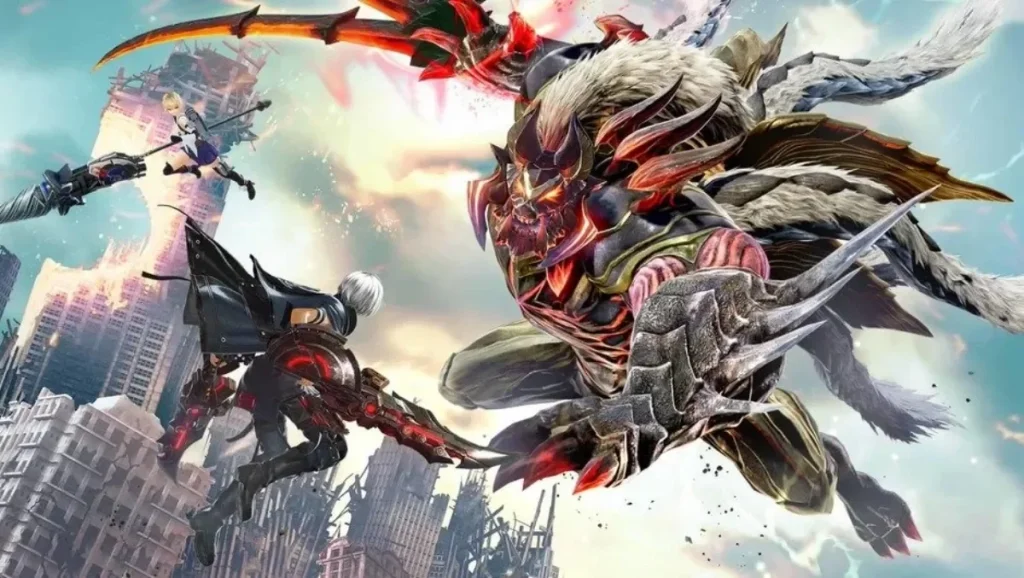
While Monster Hunter Focused on Preparation, God Eater Focused on Momentum
Before answering that question, it helps to revisit why God Eater caught fire in the first place.
The early 2010s were the golden age of handheld co-op hunting games in Japan. Capcom’s Monster Hunter had proven the viability of four-player giant-beast hunting on the PSP, and Sony quickly assembled an entire lineup of challengers on the PS Vita—Soul Sacrifice, Freedom Wars, Toukiden, Ragnarok Odyssey. These names now carry a nostalgic filter, but together they formed a brief and brilliant wave of hunting games.
Among those challengers, God Eater went the furthest. The original launched on the PSP on February 4, 2010, and the series has since surpassed 4.5 million units in cumulative sales—second only to Monster Hunter in the co-op hunting genre.
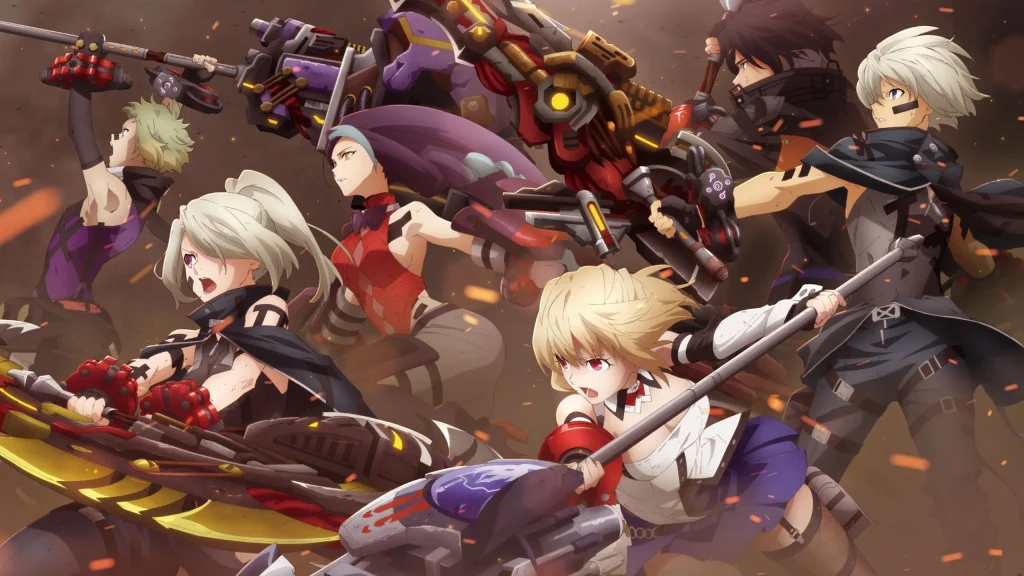
But God Eater and Monster Hunter took almost entirely different paths.
God Eater inherited the classic hunting loop—hunt monsters, gather materials, upgrade gear—but its true innovation lay in a combat system called the God Arc. In Monster Hunter, your weapon is a tool in your hand. In God Eater, the God Arc is a living weapon that freely switches between melee blade, ranged firearm, defensive shield, and a “Devour” form.
In a single fight, you could slash with a blade, instantly switch to a gun for ranged damage, and then throw up a shield to block—all within seconds. The Devour mechanic became the series’ most iconic design: bite into an Aragami, enter Burst mode, gain speed and attack bonuses, and watch the God Arc physically transform. The design turned “hunting” into something closer to vampiric violence—you weren’t just defeating monsters, you were consuming them.
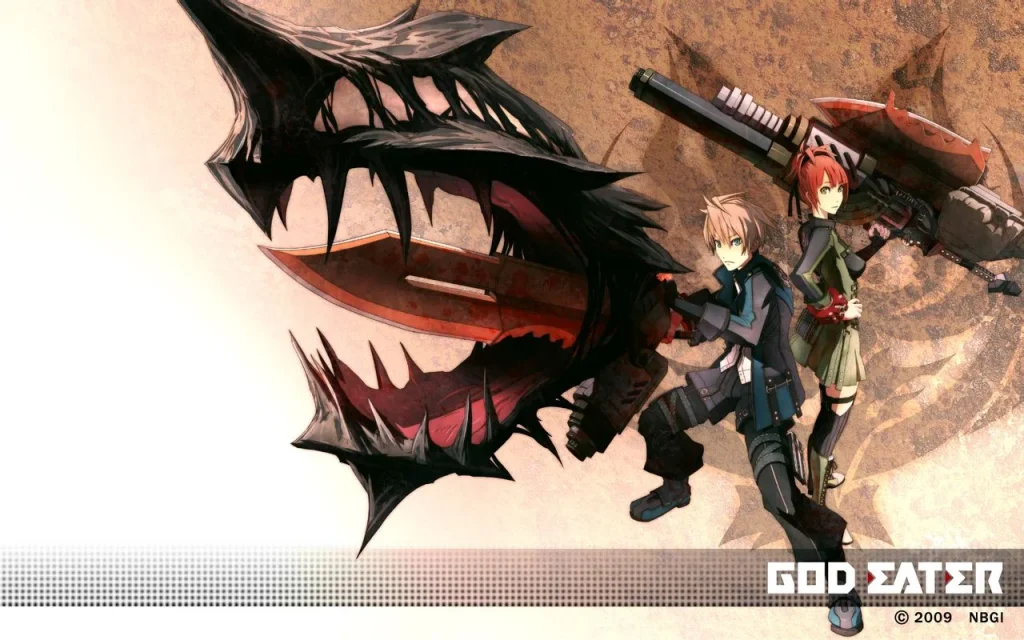
Alongside the God Arc system came a feature veteran players still rave about to this day: the Bullet Editor. In short, you could program your own bullet trajectories. Some players crafted homing rounds that tracked enemy weak points automatically. Others created dazzling spreads that scattered like fireworks. Still others engineered practical point-blank triple-burst patterns for downed monsters. A review on Gamersky called the system “near-infinite in its possibilities.” On Bilibili and YouTube, players still upload videos of themselves soloing high-difficulty Aragami in God Eater 2: Rage Burst using custom bullets—and those bullet trajectories look like alien technology.
It Wasn’t Just a Hunting Game. It Was an Anime Character RPG.
If combat innovation alone had carried God Eater, it might not have survived three generations in Monster Hunter’s shadow. What truly earned it a devoted fanbase was a genuine commitment to storytelling—something almost unheard of in the hunting genre at the time.
The world of God Eater is set in a post-apocalyptic 2071. Creatures known as Aragami appeared and rapidly consumed human civilization. Conventional weapons proved useless against them. Humanity’s last hope was a bioweapon made from Aragami cells—the God Arc—and those capable of wielding it were called God Eaters. This inherently tragic premise set a dark, brutal tone for the entire series. As the story unfolded, it kept returning to certain questions: where is the line between human and Aragami? When we use the power of monsters, are we becoming monsters ourselves?
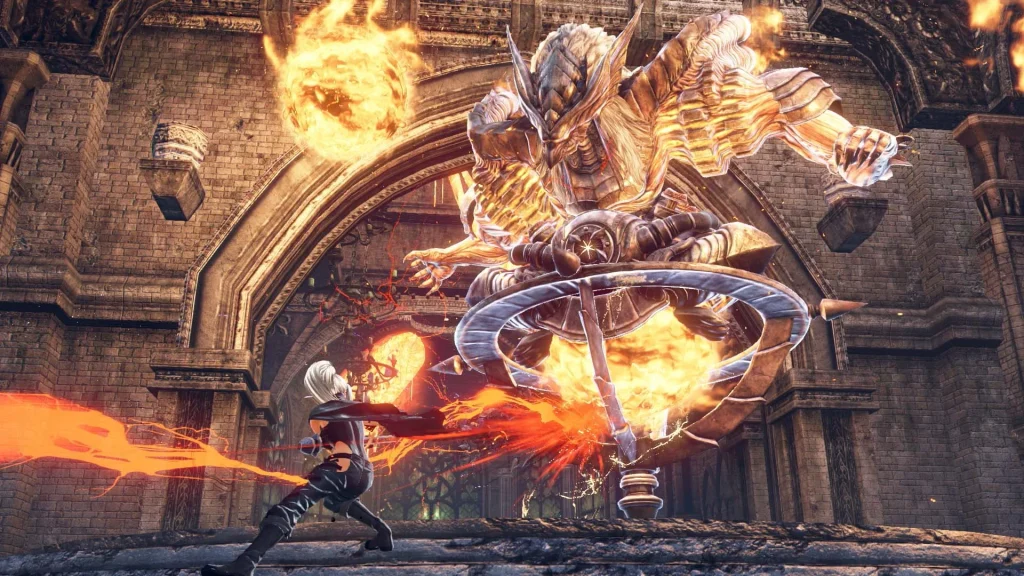
More importantly, God Eater understood “character-driven storytelling” earlier than most of its peers. God Eater 2 in 2013 deepened NPC development through character-specific chapters, making teammates feel far more present than in the first game—you were no longer just bringing three silent helpers to a hunt; you were fighting alongside people with real stories and bonds. The later enhanced edition God Eater 2: Rage Burst further expanded the narrative. In 2015, the full remake God Eater: Resurrection backported the second game’s systems into the original while bridging the storylines of both titles. Ufotable also produced a TV anime adaptation that aired in 2015, with manga, novels, and drama CDs filling out the expanded universe.
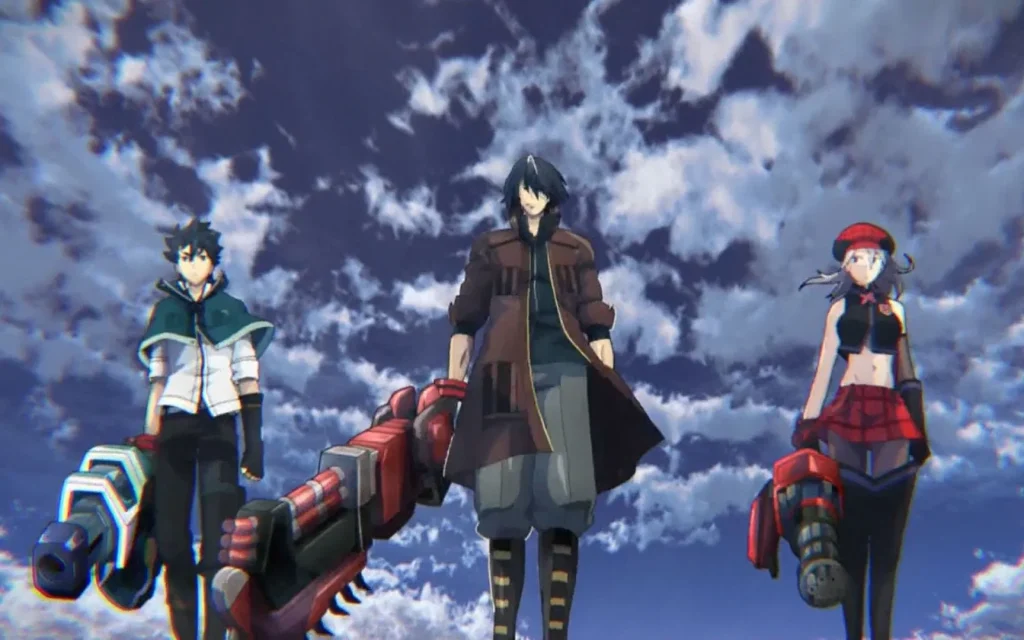
If you break down the series’ success formula, it was an early fusion of anime character RPG and high-speed co-op hunting. Players developed genuine attachment to the characters and investment in the world—and only then were they willing to spend hundreds of hours hunting in that world. This fusion would later become the foundation for Code Vein‘s success: swap out the combat system, but keep the character-driven storytelling and anime aesthetic fully intact. It is worth noting that Code Vein shares a setting-level connection with God Eater—a reason why the two fan communities still overlap heavily to this day.
Three Roads, All Blocked
So if that formula proved itself with Code Vein, why did God Eater grind to a halt?
First, Monster Hunter: World completely reset the standard for the genre.
2018 was a turning point. That year, God Eater 3 launched. That same year, Monster Hunter: World surpassed ten million units in global sales, setting a new series record and pushing the franchise past fifty million units total. Capcom used next-gen visuals, seamless open maps, and a global publishing strategy to drag co-op hunting from a niche handheld genre straight into the AAA tier.
The impact on God Eater was devastating. During the PSP and PS Vita era, the gap in combat feel between the two series had been naturally compressed by handheld hardware limitations—everyone was working with low resolution and portable controls, so innovation happened more at the system level. But Monster Hunter: World moved the battlefield to consoles and PC, redefining the ceiling of what a hunting game could be with next-gen visuals and open environments. Against that new standard, God Eater 3, even with its switch to Unreal Engine 4, could no longer compete on overall quality and scale.
Second, Shift found a direction with far more global potential.
The core development team behind God Eater is Shift (now part of Bandai Namco Studios). Series director Hiroshi Yoshimura and producer Yusuke Tomizawa are the two key figures behind the IP.
After God Eater 3 shipped in 2018, the team’s focus visibly shifted. Tomizawa was formally reassigned by Bandai Namco to head the Tales series as IP chief, with his first new Tales title being 2021’s Tales of Arise.
Yoshimura remained at Shift, but his attention also turned elsewhere—to Code Vein, released in 2019. This spin-off, which shares a setting-level connection with God Eater, chose an entirely different path: Soulslike combat plus anime aesthetics. The numbers proved the path worked: by September 2025, the first Code Vein had surpassed four million units in cumulative sales, and the sequel launched in January 2026.
A spin-off sold four million copies. Meanwhile, the latest mainline entry, God Eater 3, sits perpetually discounted on Steam, still lukewarm. If you were a Bandai Namco executive, where would you allocate the next budget?
Third, God Eater’s own positioning became awkward.
This may be the most fundamental problem. After God Eater 3 launched in 2018, it failed to establish a clear competitive advantage on any of three fronts:
In the co-op hunting dimension, Monster Hunter: World had opened a generational gap—in visuals, combat feel, ecological design, and content volume, the two were no longer in the same league. In the action game dimension, it lacked the mechanical depth and polished combat feedback of Devil May Cry or Bayonetta—the high-speed combat was flashy, but the soft hit feedback and unresponsive monster reactions that had always plagued the series persisted. In the JRPG narrative dimension, the character writing and story quality that the first two games had built up took a sharp downturn in the third. IGN’s review stated bluntly that “an uninspired story and a somewhat thin slate of content keep it from reaching its full potential.” Reviews on Bangumi were harsher, noting that “the pros and cons are both glaringly obvious. The visuals have improved markedly, and the music is excellent; but the story lacks any real highs or lows, every NPC is forgettable, and weapon balance is terrible.” DualShockers added that “the gameplay is genuinely great, but it’s covered by a layer of blandness.”
It was no longer the most thrilling hunting game, nor the most hardcore action game, nor the most emotionally resonant JRPG.
This positioning trap is the real reason God Eater has stayed dormant since 2018. Shift needed to find a modern expression for the series—and the performance of Code Vein and Code Vein 2 has, from the side, suggested that “Soulslike plus anime aesthetics” may offer far greater global potential than “high-speed co-op hunting.”
The IP Isn’t Dead. It Just Hasn’t Found Its Way Back Yet.
That said, God Eater has not been completely forgotten.
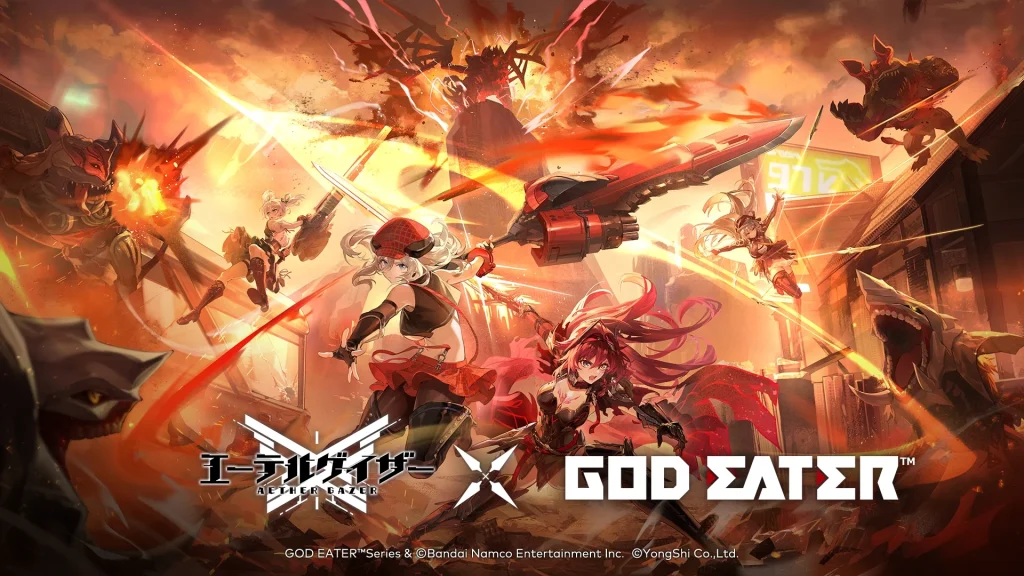
For the series’ 15th anniversary in February 2025, Bandai Namco released commemorative artwork and announced new merchandise based on the illustrations. In April of the same year, an Aether Gazer × God Eater collaboration event went live, with Alisa and Ciel appearing as playable characters, each bringing unique combat techniques and signature animation styles. In March 2026, the publisher partnered with illustrator Kengo Nishide on another batch of merchandise, including acrylic stands, keychains, badges, stickers, tapestries, and apparel. At least from an IP management standpoint, Bandai Namco has not taken the series off the shelf.


Shift itself remains active. Director Hiroshi Yoshimura mentioned in late 2025 that a long-gestating project he had been working on had entered its final development phase—a project that, as it turns out, was Code Vein 2. But even with the studio’s current focus on the Code Vein line, Yoshimura’s understanding of and emotional connection to God Eater—a series he has been with since the very first entry—is something no other producer can replicate.
Perhaps one day, when the co-op hunting genre finds a new opening—whether through technological breakthroughs or a resurgence in market demand—Shift will pick up that dust-covered God Arc once more.
If that day comes, will you return to the battlefield where Aragami roam?
All game screenshots, character designs, and related assets referenced in this article are the property of Bandai Namco Entertainment. The article itself is an original work of commentary and curation. Please credit the source if reposting. For copyright concerns, contact [email protected].
Comments (0)
No comments yet