
Silver Palace Is Still in the Works—Happy Elements’ Other Anime Gacha Just Went Down

Happy Elements is currently running two gacha game strategies simultaneously. One is the UE5 open-world title Silver Palace, whose debut trailer surpassed 6 million views on Bilibili and whose first beta test was described by media as “too polished for a first attempt.” The other is the Japanese-style card RPG ReverseBlue×Re-birthEnd—and on May 25, its Chinese server issued a shutdown notice.
Seven months. That is the full lifespan of ReverseBlue×Re-birthEnd‘s CN server, from official launch to confirmed shutdown. The JP server remains unaffected and continues to operate.
A single game shutting down is not, in itself, news. What makes this worth examining is that both projects sit under the same company—and the timing lands squarely between Silver Palace‘s first beta and its eventual full launch. In other words, one of Happy Elements’ two gacha development tracks has already been eliminated. How it got eliminated, and what that means for Silver Palace, deserves a closer look.

The JP Server Had a Strong Opening—the CN Server Didn’t Follow Through
The JP version of ReverseBlue×Re-birthEnd was developed by Grimoire, a wholly-owned Japanese subsidiary of Happy Elements, and launched in September 2024. Its opening numbers were solid: it hit No.1 on both Japan’s iOS and Google Play download charts on day one, broke into the top 20 on the revenue charts, and was the runner-up for Japan’s monthly mobile game downloads as well as the top gainer for download growth that month, according to Sensor Tower data.
Judged purely by that free-chart window, this counts as a successful content packaging effort—Grimoire’s ability to craft compelling PVs and resonate with the core otaku audience was fully validated during this surge. But once the initial wave faded, the picture darkened considerably: the JP server’s monthly revenue remained under 3 million RMB according to GameLook, meaning the long-term monetization loop never truly stabilized.
The standard playbook for a product that hasn’t yet found its footing overseas is to stabilize operations and validate the business model before pushing into additional markets. Happy Elements didn’t wait. Less than a year after the JP launch, pre-registrations for the CN and Traditional Chinese servers were announced within a single month of each other. This also came just one month after Silver Palace was first revealed.

CEO Wang Haining posted a screenshot of the JP server topping the free charts on his social media, captioned “Looking Forward.” From a business standpoint, the logic was understandable: a No.1 free-chart debut in Japan was a concrete near-term achievement, and a UE5 flagship project needs sustained market visibility to maintain momentum. ReverseBlue×Re-birthEnd was a card that could be played immediately.
But the CN server’s performance was, to put it generously, quiet. It peaked at No.54 on the free charts, No.55 on the card-game revenue charts, and its debut PV on Bilibili has only accumulated 70,000 views to date. Seven months after launch, it was done.
The Problem Wasn’t Operations—It Was the Product Itself
The CN server’s failure was not rooted in its operational strategy. It was rooted in the product’s positioning.
Grimoire’s studio head, Kōsuke Kamitani, has publicly stated that the studio’s mission is to “save chuunibyou”—to create something that is “a strange work that refuses to play by the rules,” tailored specifically for a niche otaku audience. This approach did successfully capture a core group of users in Japan—the No.1 free-chart debut proves that. But once it crossed the Sea of Japan, that heavy “otaku-centric” flavor stopped working. The more precisely you target a core audience, the harder it becomes to break out beyond that circle.
The gameplay side was also a drag. The combat system bore a strong resemblance to Merc Storia, a title Happy Elements released back in 2014, and largely followed the same early-era design framework. That framework might have been viable during the earlier years of the Japanese card-game market, but in the current gacha game landscape, player expectations around gameplay iteration and visual presentation have shifted dramatically. When the CN server launched, the market was already dominated by large-scale titles like Arknights: Endfield and Duet Night Abyss—a retro-styled Japanese card RPG had virtually no room to break through.
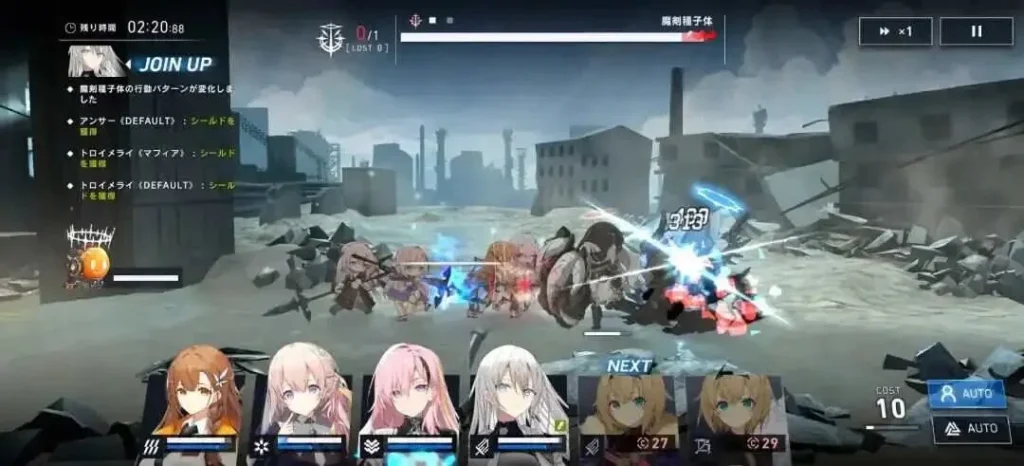
For Happy Elements, the CN shutdown is not entirely without value. Based on past experience, studios like Grimoire that possess strong content-packaging capabilities are rarely discarded outright because a single project underperforms—the JP server’s free-chart-topping run had already proven their ability to resonate with the core otaku demographic. As for how the Grimoire team will be adjusted going forward, that remains to be seen. Whether this tuition payment was worth it depends less on the shutdown itself and more on whether the lessons learned can help Silver Palace avoid some of the same pitfalls.
Two-Legged Gacha Strategy, One Leg Already Limping
When you place ReverseBlue×Re-birthEnd and Silver Palace side by side, Happy Elements’ gacha roadmap becomes very clear: they were walking on two legs. One leg uses a UE5 open-world project to capture the attention of the mainstream gacha audience; the other uses a Japanese-native studio like Grimoire to carve out niche segments within the Japanese market. The former carries significantly higher expectations; the latter shoulders more of the trial-and-error costs. The risk tolerance on each track was never the same to begin with. While the two products differ in positioning, team structure, and target audience, what they share is Happy Elements’ resource allocation and strategic decision-making framework within the gacha game space.
ReverseBlue×Re-birthEnd shutting down its CN server means one of those legs is, for now, out of commission. But Happy Elements didn’t pull the plug across the board: the JP server continues to operate, and the CN, TW, and KR servers are being adjusted in sync—a relatively graceful exit.
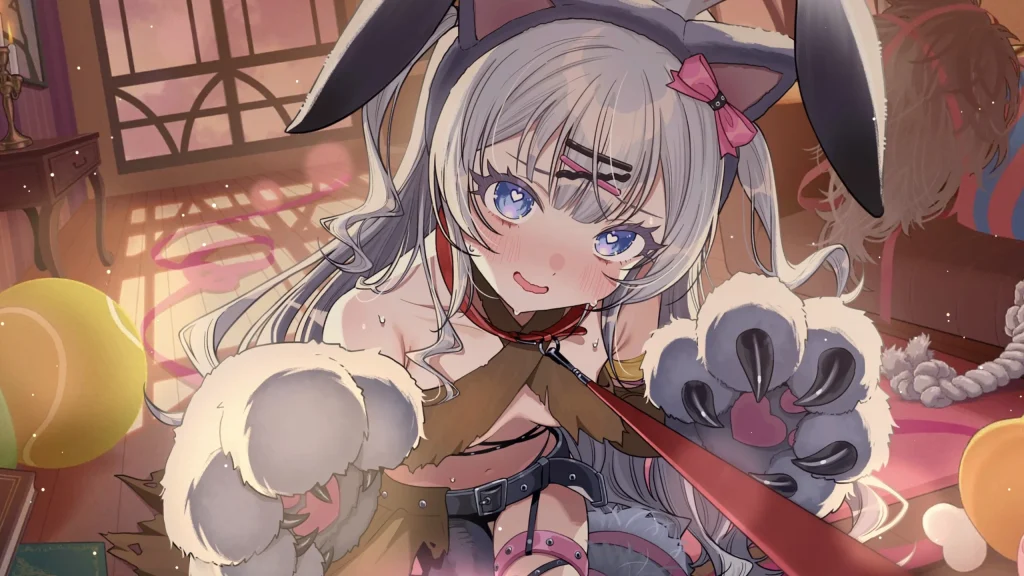
What’s worth watching now is what this tuition actually buys. Silver Palace showed a level of polish during its first beta that made people feel Happy Elements “doesn’t look like a first-time gacha developer.” But gameplay iteration, operational pacing, and cross-border coordination are not things you can brute-force with UE5—they can only be learned by stumbling through them yourself. The shutdown of ReverseBlue×Re-birthEnd is, at its core, a strategic contraction on Happy Elements’ gacha roadmap—cutting an unprofitable front to concentrate resources on a more important direction. From that angle, it’s less a “failure” and more a pragmatic stop-loss.
A company that built its foundation on casual games still has plenty of catching up to do if it wants to break into the anime gacha space with UE5 and Japanese-native creative talent. The ReverseBlue×Re-birthEnd shutdown was an early pop quiz cut short. The real exam—the one that will determine whether Happy Elements can truly establish itself in this market—is Silver Palace, and that test hasn’t even begun.
All game screenshots, character designs, and related assets referenced in this article are the property of Happy Elements. The article itself is an original work of commentary and curation. Please credit the source if reposting. For copyright concerns, contact [email protected].
Comments (0)
No comments yet