
Kyoto Xanadu: The Blooming Phantom Review – Is Falcom’s New 2D×3D RPG Worth Playing?

Release Date: July 16, 2026|Developer: Nihon Falcom|Publisher: Clouded Leopard Entertainment (Asia), Phoenix Games (Mainland China)|Platforms: Nintendo Switch, Nintendo Switch 2, PlayStation 5, PC (Steam)|Genre: Hybrid-Dimension Action RPG|Languages: Traditional Chinese, Simplified Chinese, Korean, and more
If someone told you that a new Falcom ARPG would combine side-scrolling action and 3D combat inside the same dungeon, you’d probably think they were joking.

But Kyoto Xanadu: The Blooming Phantom does exactly that. It doesn’t simply reuse Tokyo Xanadu‘s battle system — it makes significant changes to the series’ formula. The setting has shifted from Tokyo to a parallel-world Japan where “Kyoto” (spelled as “亰都” in the game’s world) serves as the capital. 2D side-scrolling and 3D combat are woven into the same dungeons, and while the rhythm of going to school by day and fighting after hours remains unchanged, the way you fight has completely transformed.
What Kind of Game Is This?
Go to school during the day, then dive into otherworldly dungeons after class — this is still the familiar rhythm of the Tokyo Xanadu series. This time, however, the story moves from Tokyo to Kyoto. You play as the protagonist, who gains the power to fight supernatural beasts after a certain incident. He transfers to Hiratsuka Academy, where he attends classes, makes friends, and builds bonds during the day, while exploring otherworldly labyrinths after school to uncover the truth.
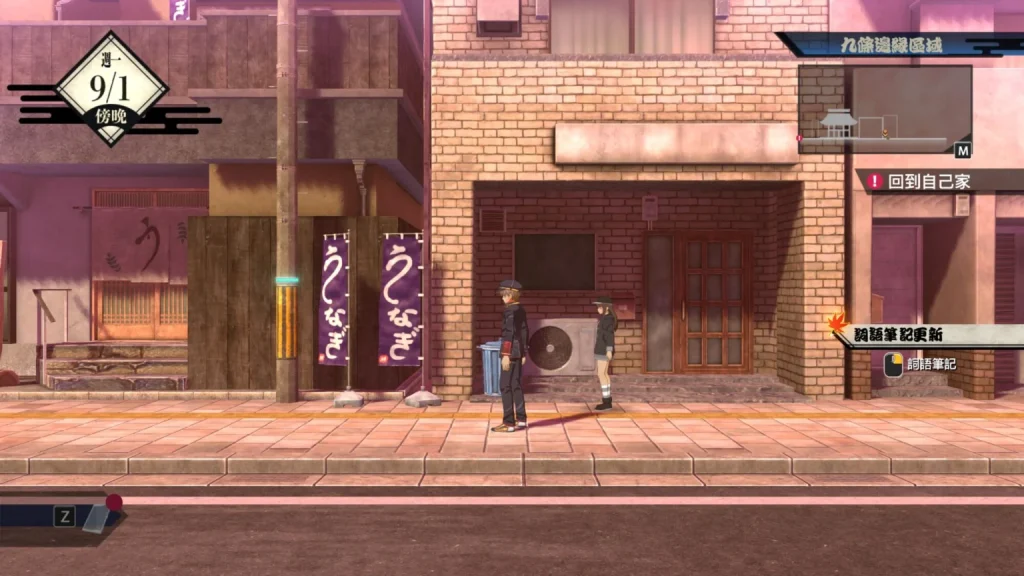
At its core, it still follows the “school life + dungeon exploration” structure that Falcom has perfected over the years. This time, however, Falcom changes one key part of that familiar formula.
Why Should You Pay Attention?
Kyoto Xanadu is Falcom’s commemorative title for the 10th anniversary of the Tokyo Xanadu series. More than a decade has passed since the previous entry, and instead of playing it safe with a simple HD remaster, Falcom decided to experiment with the entire combat system.
For longtime fans, the return of the Tokyo Xanadu series is already reason enough to pay attention. And the combat overhaul gives this entry its own distinct identity — it’s not just a “reskinned sequel,” but a genuine attempt to push the series forward.
The Biggest Change: 2D×3D Hybrid Combat
The previous Tokyo Xanadu featured fully 3D combat. Kyoto Xanadu takes a different approach. For most of your time in dungeons, you’ll explore side-scrolling maps, jumping and attacking enemies as if you were playing a 2D action game. When you encounter major battles or step into a boss room, the perspective seamlessly shifts into full 3D, allowing you to use a variety of skills and tactical maneuvers against your foes. Based on official gameplay demonstrations, the transition between modes is remarkably smooth, with almost no noticeable loading.
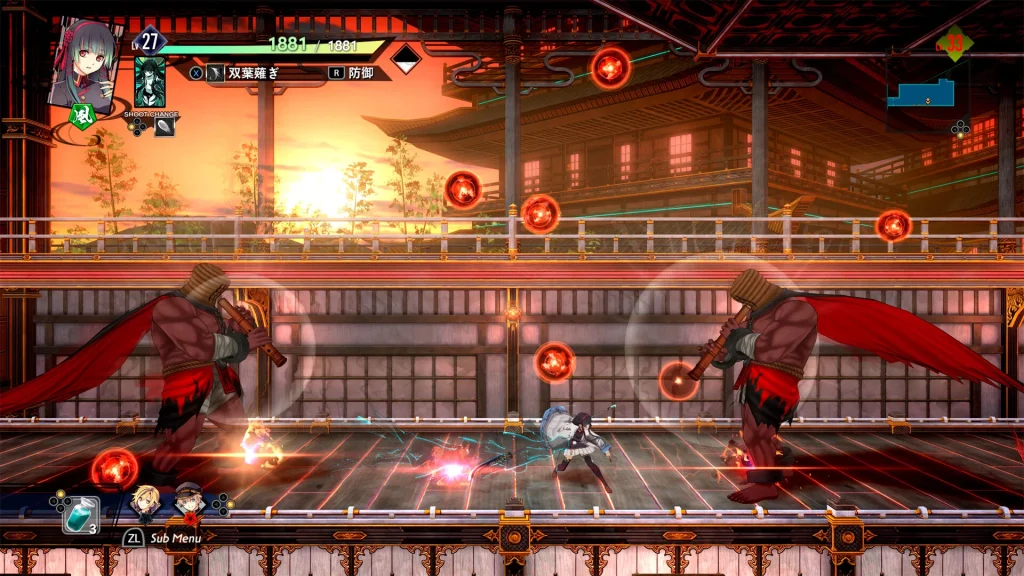
This interplay between 2D and 3D creates a sense of depth and layering that the developers call “2.5D.” It’s not quite side-scrolling, not quite 3D — but it flows naturally. Based on hands-on previews from several gaming media outlets, the hybrid design’s biggest strength is that it never gets old. Side-scrolling exploration feels light and responsive, while 3D boss battles bring strategic depth and room for skillful play. The alternation between the two keeps things fresh, offering a welcome change of pace from games that stick to a single perspective throughout.
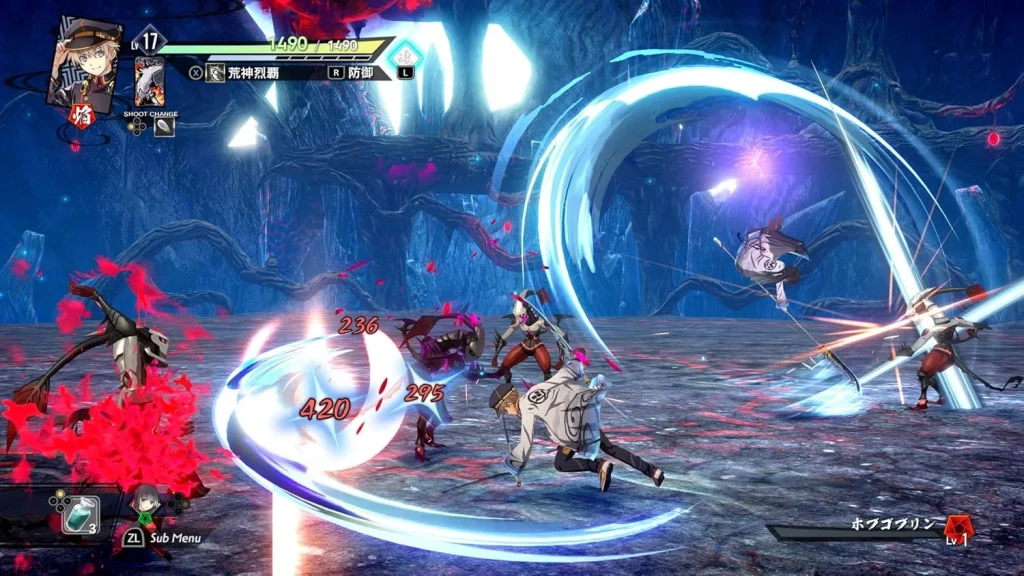
The clever part is that just as you get comfortable with the side-scrolling rhythm, a portal will suddenly pull you into a full 3D boss encounter. This shift in pacing runs throughout the dungeons, ensuring you never feel like you’re just going through the motions.
Kyoto Xanadu’s Combat System: Not Overly Complex, but Deeper Than Its Predecessor
Falcom has implemented several interconnected progression systems:
The Soul Device is the core progression path. You earn points through dungeon exploration and daily activities, which you can use to strengthen the device itself and unlock new actions and skills. Based on the current preview information, progression appears to place more emphasis on planning than repetitive grinding.

Guardian Cards function as equipment modifiers that can significantly boost your abilities — fire, ice, ranged attacks — with different cards supporting different playstyles. Shikigami Talismans are obtained by defeating elite bosses and allow you to change your elemental affinity, which is subject to a rock-paper-scissors style weakness system. It’s worth checking your matchup before taking on a tough boss.
The school life segment also has its own depth. Before classes begin, you’ll set up Action Cards, which determine which stats increase after lessons and also influence your relationships with other characters. After school, you can explore the streets of Kyoto — sightseeing, shopping, dining, and triggering side quests. If you enjoy Falcom’s signature “wandering the city and bonding with companions” pace, this system will easily absorb a good chunk of your time.
Kyoto: More Than Just a Change of Scenery
This time, Falcom has relocated the entire setting to Kyoto. You’ll see plenty of scenes inspired by real Kyoto landmarks — the red torii gates reminiscent of Fushimi Inari Taisha, the stone-paved streets of Gion, the relaxed riverside atmosphere of the Kamo River. The traditional Japanese architecture and drifting cherry blossoms create a visual tone that feels entirely distinct from its predecessor.
Beyond the combat, Kyoto Xanadu‘s exploration of Kyoto itself is a major focus. You’ll chat with companions by the Kamo River after school, hunt for hidden side quests in the shopping district, and trigger special events at iconic locations. Kyoto isn’t just a hub for dungeon entrances — it’s a city you can slowly wander through and discover at your own pace.
Who Is This For?
If you enjoyed Tokyo Xanadu but felt the combat grew repetitive toward the end — the hybrid design in this entry might offer a refreshing change of pace. Falcom has genuinely experimented with the entire battle system, and early impressions have been largely positive.

If you’re a fan of the Trails series’ school life and character interactions, Kyoto Xanadu‘s academy segments and Kyoto exploration should deliver exactly what you’d expect. Falcom has plenty of experience in this area, and that experience is reflected throughout the game.
If you were hoping for a traditional sequel that sticks to the original formula, this entry might surprise you — it’s not what you might have expected, but it at least charts a direction that’s clearly distinct from its predecessor. If you enjoy school-life RPGs and want to experience a different take on Falcom’s usual combat formula, Kyoto Xanadu: The Blooming Phantom is worth checking out for yourself.
Copyright Notice:
All game screenshots, character designs, and related materials referenced in this article are the property of Nihon Falcom Corporation, Clouded Leopard Entertainment Inc., and their respective rights holders.
Comments (0)
No comments yet