
Lumin: Echo of Spacetime — Can Side-Scrolling Action and Gacha Really Coexist?

Side-scrolling action games and gacha games don’t sound like a natural pairing.
The former wants you to study moves, practice dodges, and drill a combo until it’s muscle memory. The latter always gives you something else to worry about: Will you pull the character? Do you need their signature weapon? Do you have enough resources to build the next team? You finally land a beautiful combo, exit the battle, and then it’s back to figuring out your next banner.

Lumin: Echo of Spacetime launches on October 15. It’s taking a two-pronged approach: putting side-scrolling action combat and map exploration front and center, while trying to simplify the burden of gacha and character progression.
Those rules are worth paying attention to. But for an action game, what ultimately determines whether players stick around isn’t how generous the gacha is—it’s whether getting a new character makes you want to immediately open the training room and run another fight.
A note on sourcing: the combat and map sections below are based on my experience with an earlier test build, while the gacha and launch reward information comes from the October 9 preview livestream.
Morphy and Luxei Don’t Play the Same Way
Lumin features a three-character squad with real-time character switching. Each character has their own role and skill tree.
A common combat loop goes like this: build energy with normal attacks, time a perfect dodge just as an enemy winds up an attack, use the brief slow-motion window to switch to a teammate for crowd control or buffs, then switch back to your main damage dealer for a burst. The exact chain depends on the character’s own mechanics.
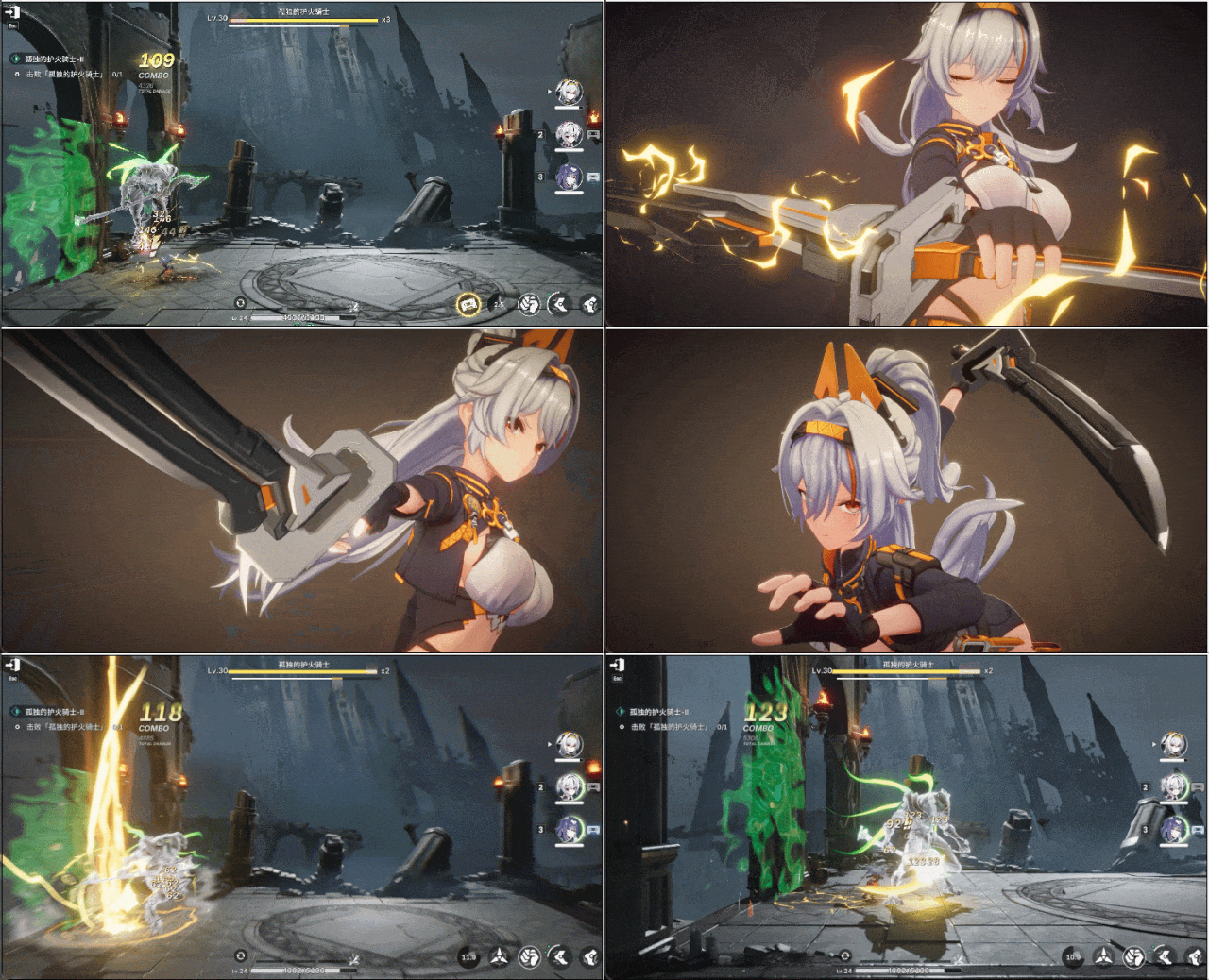
That loop doesn’t sound complicated, but each character plays quite differently.
Morphy best illustrates Lumin’s approach to action design. Her specialty isn’t just using dodges to survive—it’s turning dodges into the starting point of a combo. “Mist Step” can chain into “Mist Break,” and a perfect dodge triggers “Mist Slash,” which counters and launches light enemies for an aerial combo. For her, dodging isn’t an interruption of offense—it’s the beginning of the next attack.
Luxei represents a different approach. Her passive stacks “Thunder Mark” on successful dodges or kills, with each stack adding attack speed and skill damage. At three stacks, her next charged shot is briefly empowered. This encourages active positioning and dodge timing rather than standing still and trading hits.
These two examples are enough to make the point: switching characters means switching muscle memory. The difference isn’t just about stats; each character requires you to develop a different set of habits.
The PC version offers higher graphical settings, mouse-and-keyboard controls, and controller support. Progress carries over across mobile, PC, and tablet. For a side-scrolling action game built around dodging, switching, and aerial combos, that kind of input support matters. Whether the response feels right on each device will have to wait for the full release.
The Map Won’t Tell You Where to Go
The game features a side-scrolling, interconnected map with classic Metroidvania ingredients: ability locks, hidden paths, and environmental puzzles. Characters initially have access to only a basic slash and an impact skill, gradually unlocking double jumps, wall runs, and grapple dashes as the story progresses. These abilities serve as both combat tools and keys to hidden areas. The ruins, city, and otherworld are connected, letting players use newly acquired abilities to reach places they couldn’t before. The map also features a fog-of-war system and hides secret passages, mechanisms, and treasure chests.
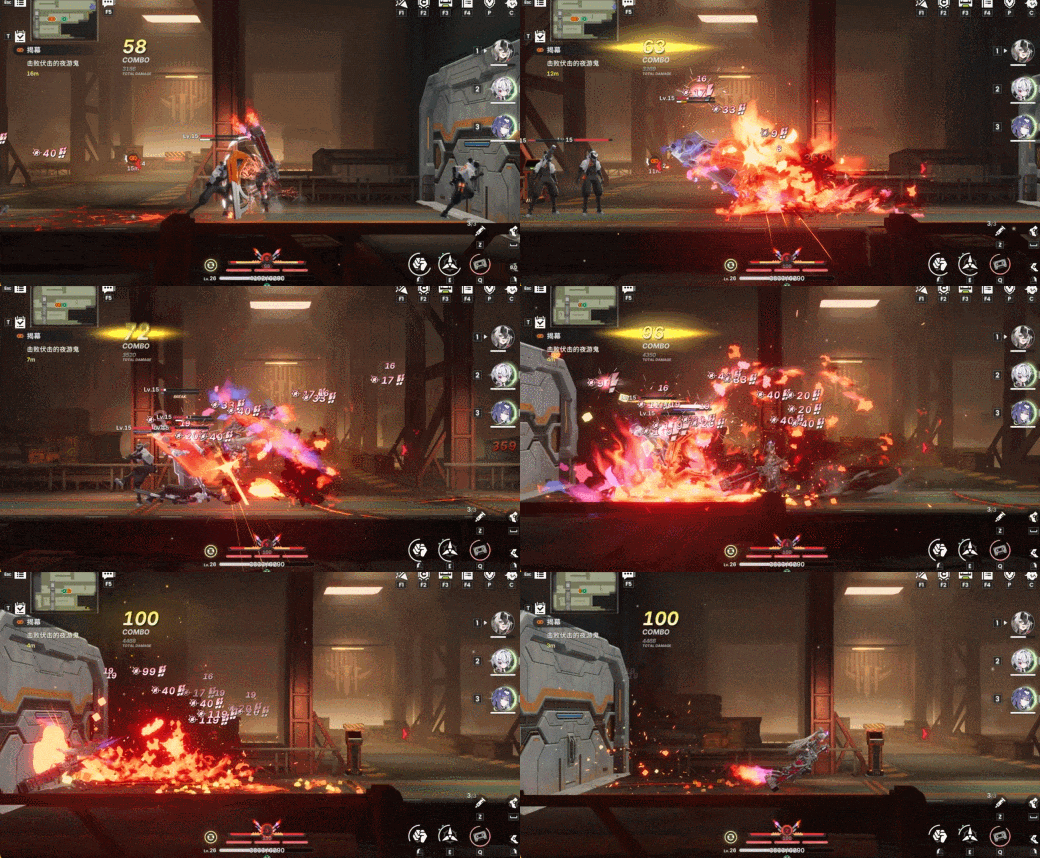
One thing that stood out during my earlier playtest was how often I stumbled across new routes or chests hidden along inconspicuous side paths. Finding something unexpected off the beaten path gives you a reason to keep exploring in a way that simply following quest markers doesn’t.
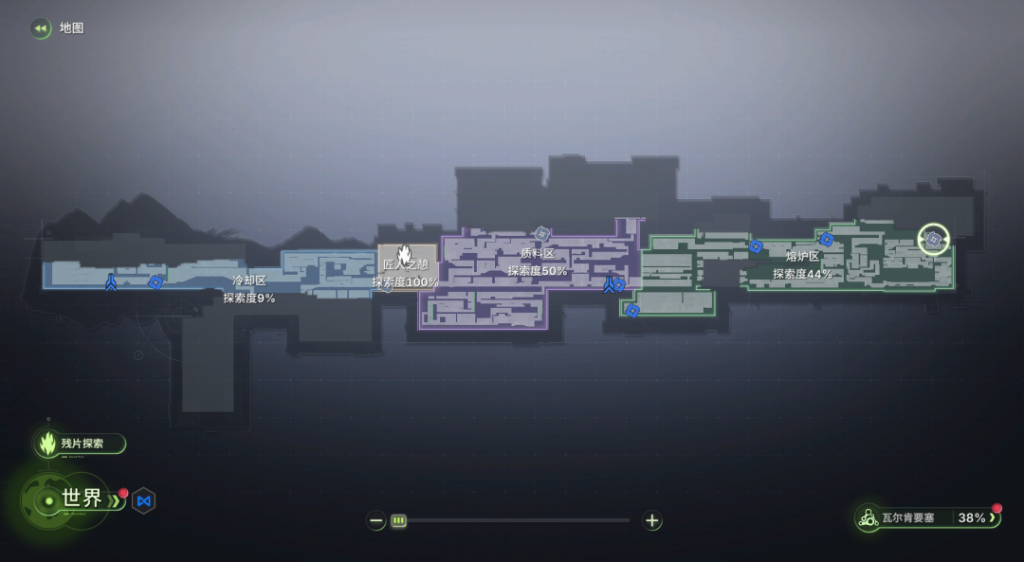
However, some players discussing the test on TapTap reported that the map guidance was unclear. Metroidvanias inherently rely on lock-and-key design: remember a path you can’t take yet, then return once you have the right ability. For players accustomed to the clear quest markers in open-world games, finding your own way can become a real barrier. This design can give veterans of the genre a sense of accomplishment, while also frustrating players used to explicit guidance.
In the preview, the developers also said some platforming sections can be skipped. That at least lowers the barrier for players who don’t enjoy platforming, though whether it affects the overall exploration experience will depend on how the full release structures its levels.
The Gacha Rules: Trying to Solve a Problem an Action Game Shouldn’t Have to Worry About
During the launch preview, the biggest talking point wasn’t a new character—it was the gacha system, whose rules were laid out plainly.
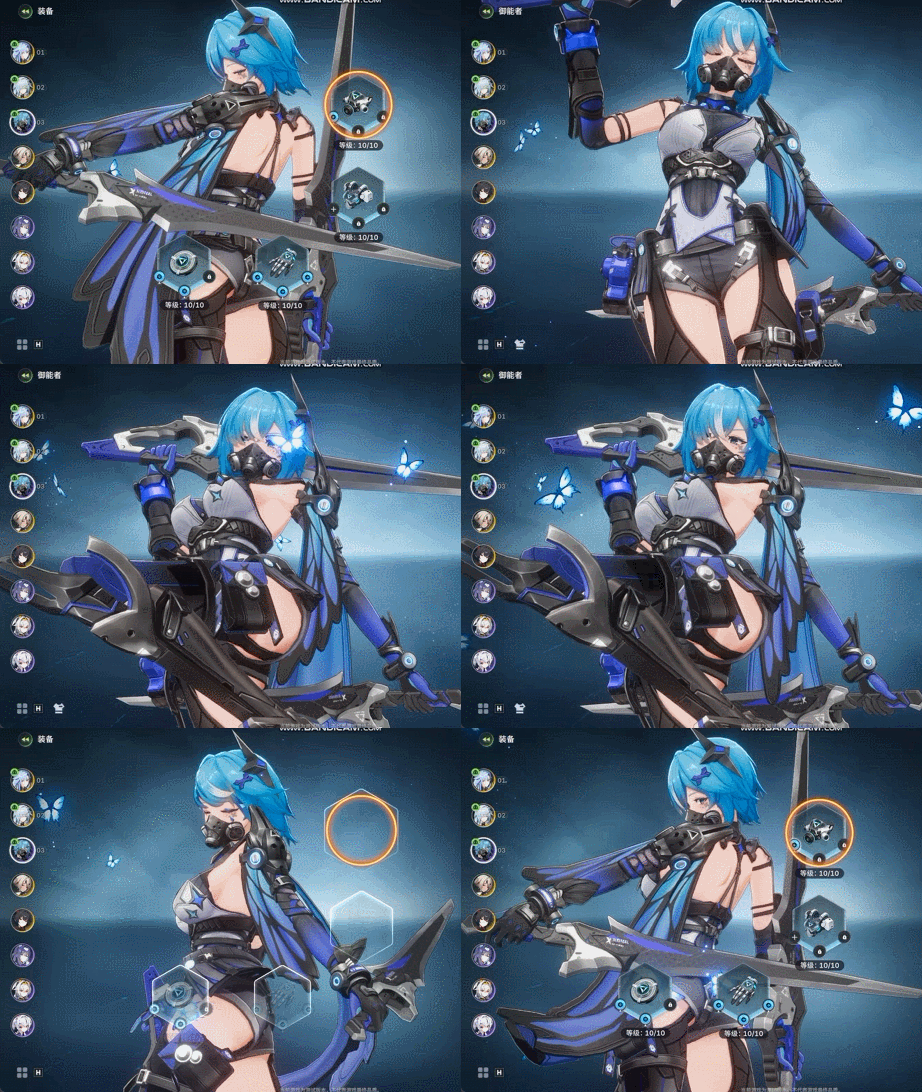
On the gacha side, it’s reducing uncertainty. S-rank Espers have a 60-pull pity, and their base drop rate is 1%. The limited banner guarantees the featured character, and there are no dual-UP banners. After 180 pulls, you also receive the featured character; if you’ve already pulled one, that’s effectively another copy. The game has no separate weapon banner, so players don’t need to set aside a separate pull budget for signature weapons.
On the progression side, it’s making characters easier to try. Core gear is crafted from materials dropped in dungeons, so you don’t have to chase a signature weapon. That means you don’t need to set aside a separate pull budget just to build a new character.
As for launch rewards, the login mail includes 20 Origin Frequency Bands, 100,000 Credits, and 50,000 Combat EXP. The A-rank Esper Taco is also available for free. Logging in on Day 2 after launch grants S-rank Esper He Yulian as well. The redemption code “LUMIN1015” gives 500 Diver Diamonds, 6,000 Melt Crystals, 6,000 Combat EXP, and 30,000 Credits.

One figure needs some context: the official “at least 300 free pulls across the version” refers to rewards accumulated through events and other means over the course of the launch version, not 300 pulls available immediately upon logging in.
The goal of these rules is clear: let players worry less about planning their pulls, try out a character first, and then decide whether to invest further.
In a game built around action combat, stat growth can make a character stronger, but it can’t replace the sense of accomplishment that comes from mastering combos, dodges, and aerial chains through practice. If a player joins because the gacha is friendly but has no interest in the mechanics of side-scrolling action—combos, dodging, and aerial chains—then no amount of gacha generosity will keep them playing beyond the first few hours. Conversely, if a player already enjoys side-scrolling action but is exhausted by the gacha and progression grind of other games, Lumin’s message is essentially: “You don’t have to worry about all that here—just jump in and play.”
Preloading begins at 11:00 on October 13, and the game launches at 10:00 on October 15. The redemption code “LUMIN1015” grants additional resources.
Copyright Notice: All game screenshots, character images, and related assets referenced in this article are the property of their respective rights holders, including Shanghai Bamboo Lumin Network Technology Co., Ltd. This article is intended for game coverage, commentary, and informational purposes only.
Comments (0)
No comments yet