
Monster Hunter Rise Review – Is It Still Worth Playing in 2026?

Release Date: March 26, 2021 (Switch) / January 13, 2022 (Steam) | Developer: CAPCOM | Publisher: CAPCOM | Platforms: Switch, PC (Steam) | Genre: Action RPG | Price: Steam Standard Edition ~$60 USD (all-time low ~$15 USD) | Languages: English, Japanese, Simplified Chinese, and more

Five years after launch, Monster Hunter Rise still has over 120,000 Steam reviews and an 83% positive rating. It’s not the newest entry in the series, but many players consider it the most fluid and fast-paced Monster Hunter experience to date. In 2026, with Monster Hunter Wilds receiving mixed post-launch feedback, a growing number of hunters — both veterans and newcomers — are returning to this Japanese-inspired title.
The Wirebug: What Makes Rise the “Most Fluid” Monster Hunter
If you’ve played Monster Hunter: World, the hunter feels like a tank — heavy, grounded, deliberate. In Rise, the hunter feels more like a ninja — agile, fluid, airborne. This shift in feel comes down to one core mechanic: the Wirebug.
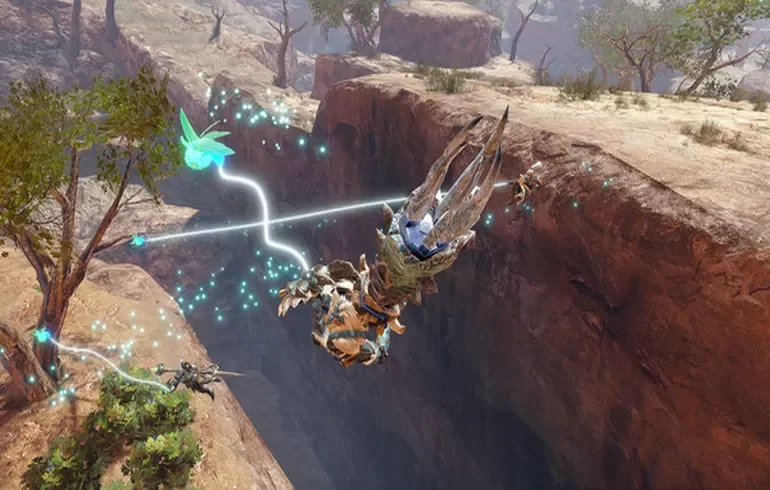
The Wirebug gives hunters unprecedented vertical mobility. You can use it to dash through the air, scale walls, and even recover mid-air after getting knocked back by a monster. It transforms combat from a methodical exchange into a much faster-paced flow. IGN’s review praised the Wirebug system for dramatically improving both movement and combat flow.
Japanese Aesthetics and the Rampage: Style and Controversy
Rise stands apart with its distinct Japanese-inspired visual identity. From the traditional architecture of Kamura Village to its bright, vivid color palette, and monsters drawn from Japanese folklore — like Aknosom and Magnamalo — it feels worlds apart from World‘s realistic ecology or Wilds‘ harsher wilderness atmosphere.
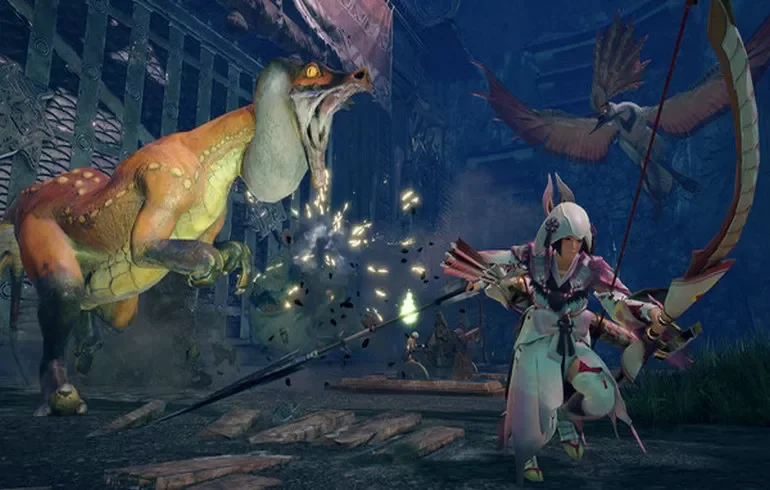
That said, Rise isn’t without its critics. The most controversial feature is the Rampage — a tower-defense-style multiplayer mode. While ambitious, it felt disconnected from the core hunting experience and never quite clicked with the player base. Fortunately, it was completely dropped in the Sunbreak expansion.
Base Game or “Incomplete”? Sunbreak Is the Real Endgame
This is the one thing you’ll hear about Rise again and again. Many players felt the base game was light on content, with an endgame that ran out of steam quickly. At launch, it featured around 30 large monsters — which felt thin for players coming off the massive roster of World.
Sunbreak is what makes Rise feel complete. Released in 2022, it added a brand-new map, the Citadel, a host of returning and new monsters, and the further evolved Switch Skill system. More importantly, it introduced a robust endgame loop. Most critics and players agree that the base game plus Sunbreak is the complete Rise experience. The expansion was a critical and commercial success in its own right.
Rise vs. World vs. Wilds: Which One Should You Play?
This is the question every new hunter asks. Here’s the breakdown:
- Monster Hunter: World: Realistic ecology, immersive world, deliberate pacing, and enormous content volume.
- Monster Hunter: Rise: Japanese fantasy, the fastest and most fluid combat, quick to pick up and play.
- Monster Hunter: Wilds: The newest entry, but post-launch reception has been mixed, with many players feeling it doesn’t live up to Rise.
If you’re chasing pure speed and fluid action, Rise is still one of the most compelling choices in the series.
Is It Still Worth Playing in 2026?
The short answer: Yes. And now might be the best time to jump in.
Five years after launch, the game feels far more complete than it did at release. Steam sales frequently drop the price — the standard edition has gone as low as ~$15 USD, offering incredible value. The multiplayer community is still active, and thanks to Wilds‘ lukewarm reception, hunters are coming back, so you won’t find a “dead game.”
Keep an eye on CAPCOM’s seasonal sales — the all-time low price is hard to beat.
Who Is Monster Hunter Rise For?
Recommended for:
- Players who enjoy fast, fluid action combat
- Fans of Japanese aesthetics and folklore-inspired monster designs
- Hunters with limited time who want quick, satisfying hunts
- Anyone who tried Wilds and wants a more polished, complete experience
Not recommended for:
- Players seeking hyper-realistic ecology and a massive open world (go with World)
- Those who plan to buy only the base game without Sunbreak (content may feel thin)
- Anyone who dislikes high-speed action and flashy visual effects
The Verdict
Monster Hunter Rise is a game with clear strengths and weaknesses.
Strengths: Top-tier action fluidity thanks to the Wirebug, a distinct Japanese-inspired visual identity, and a low barrier to entry for newcomers.
Weaknesses: The base game’s content is relatively thin, the Rampage mode is divisive, and the experience relies heavily on the Sunbreak DLC for its full potential.
It’s not the most content-rich entry in the series, but it’s widely regarded as one of the most polished and fluid action experiences Monster Hunter has ever offered. In 2026, if all you want is to pick up a weapon and dive into a satisfying hunt, Monster Hunter Rise still delivers — just make sure you grab Sunbreak while you’re at it.
Copyright Notice: All game screenshots, character images, and related materials referenced in this article are the property of CAPCOM and are used for game introduction, review, and informational display purposes.
Comments (0)
No comments yet