
Is REYNATIS Worth Playing? Why It’s Called the Spiritual Successor to Final Fantasy Versus XIII

Release Date: September 27, 2024 (PS4/PS5/PC) | July 25, 2024 (Switch JP) | Developer: FuRyu | Publisher: NIS America (NA/EU), Arc System Works (Asia) | Platforms: PS4, PS5, Nintendo Switch, PC (Steam) | Price: $59.99 USD (Steam)
If you’ve never gotten over Final Fantasy Versus XIII — the game that eventually became Final Fantasy XV, with Tetsuya Nomura’s character designs, Kazushige Nojima’s writing, and Yoko Shimomura’s music — then REYNATIS might give you a strange sense of déjà vu.
Its dark urban atmosphere, dual-protagonist structure, and Nojima’s involvement in the script have led many to draw comparisons to Final Fantasy Versus XIII. But its fate mirrors that unreleased game as well — ambitious to a fault, and deeply divisive.
What Kind of Game Is REYNATIS?
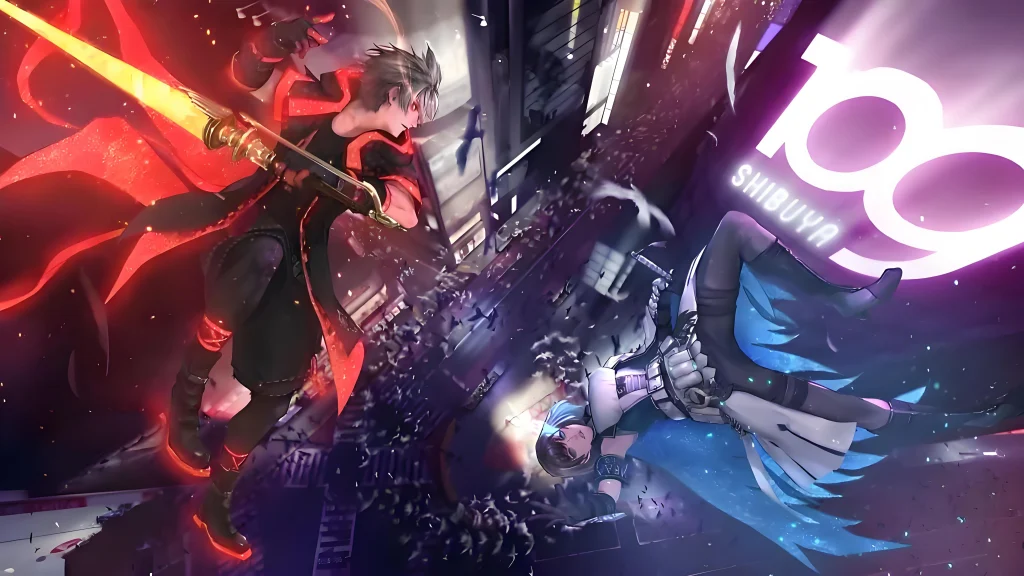
REYNATIS is an action RPG developed by Japanese studio FuRyu. Its biggest selling point is the all-star creative team behind it — the script is penned by Kazushige Nojima (Final Fantasy VII, VIII, X, X-2), the music composed by Yoko Shimomura (Kingdom Hearts series), and character design by Yasutaka Kaburagi.
Nojima is responsible for some of the most beloved Final Fantasy stories in the series’ history. Shimomura’s work on Kingdom Hearts is legendary. For a studio of FuRyu’s size, assembling a team of this caliber is highly unusual.
That said, the “spiritual successor to Final Fantasy Versus XIII” label may have raised expectations beyond what the game could realistically deliver. It borrows some of that DNA, but it isn’t trying to be Versus XIII.
Story: Two Protagonists Meet in Shibuya
The story follows two protagonists.

Marin Kirizumi — a young wizard who has been oppressed all his life because of his magical abilities. He arrives in Shibuya at night, following his late father’s final wish: “If you become the strongest, you will be freed.”
Sari Nishijima — a military officer who also possesses magic, but chooses to use her power to maintain order. She believes that controlling magic and suppressing wizards is the right way to protect Shibuya.
Marin seeks liberation; Sari believes suppressing magic users is an act of justice. When the two meet in Shibuya, a darkness descends that will change the world.
The story spans 34 chapters and takes roughly 17–25 hours to complete. The world itself has received considerable praise, but many players feel the story moves too fast, with insufficient character development and emotional buildup — ultimately failing to fully realize the potential of its premise.
Gameplay: Switching Between Two Combat Modes
REYNATIS’ gameplay revolves around a unique two-mode combat system, which is also its most distinctive — and most controversial — feature. The core mechanic is switching between two states:
- Suppressed Mode: You cannot attack, but can dodge any enemy attack with a single button press. In this mode, your identity is hidden, allowing you to walk through Shibuya like an ordinary citizen, talking to NPCs and accepting quests.
- Liberated Mode: You can attack at full power, but cannot defend — timing is everything. You can use magic for exploration and fast movement, but ordinary citizens may report you to the M.E.A. (Magical Enforcement Agency).
On paper, it sounds like a flexible combat system. But the real issue lies in the resource loop.

Attacking consumes MP, and MP is primarily restored by evading enemy attacks — meaning you have to wait for enemies to attack first, perform a perfect dodge to recover MP, and only then can you deal meaningful damage. For players used to more aggressive action games, this creates an awkward rhythm. Instead of attacking proactively, you’re often encouraged to wait for enemies to make the first move. As a result, many players feel that Suppressed Mode doesn’t create a sense of strategy — it creates a sense of waiting.
Early on, with fewer characters and limited skills, this waiting game is especially pronounced. Later, as more characters join the party, additional skills unlock, and the three-character switching mechanic opens up, the combat flow becomes somewhat smoother. However, the core reliance on evasion-based MP recovery never changes — so the combat remains divisive even through the endgame.
That said, some players appreciate this approach, arguing that it encourages observing enemy patterns rather than mindlessly mashing attack buttons, placing greater emphasis on rhythm and timing — a clear departure from the button-mashing style of most mainstream ARPGs. It’s precisely because of this fundamental design choice that the combat system remains so deeply polarizing.
The combat system allows instant switching between up to three party members, each with unique abilities. There are 6 playable characters in total.
Shibuya: A Faithful Recreation
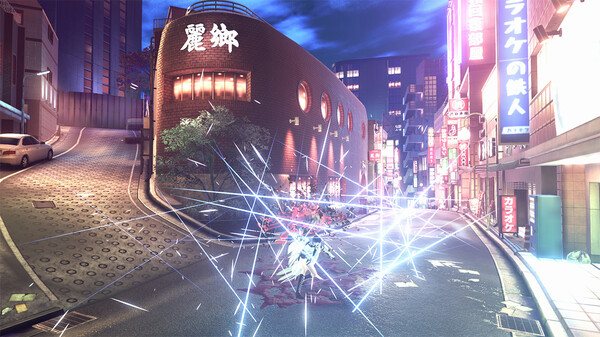
One of the game’s standout features is its faithful recreation of Tokyo’s Shibuya district.

From famous landmarks like SHIBUYA109 to hidden bars known only to locals, Shibuya has been painstakingly rebuilt. Players can wander the streets and soak in the atmosphere of Shibuya in 2024.
Throughout the city, there are also hidden “Fog Gates” — entrances to an otherworldly realm only wizards can enter. This secret domain, known as “Another,” is managed by the anti-government organization Guild and is filled with monsters, featuring diverse environments like forests, wilderness, factories, and museums.
Development Team
REYNATIS boasts a star-studded development team:
- Producer/Director: Takumi Isobe (FuRyu)
- Script: Kazushige Nojima (FFVII, FFVIII, FFX, FFX-2)
- Music: Yoko Shimomura (Kingdom Hearts series)
- Character Design: Yasutaka Kaburagi
- Key Visual: Yusuke Naora
Producer Takumi Isobe has stated that the game’s concept is “oppression and liberation,” allowing players to experience the tension of being suppressed and the exhilaration of liberation. In interviews, Yoko Shimomura mentioned that Isobe specifically requested the music “must be performed by a full orchestra” — an unusually high investment for a FuRyu title.
This combination of veteran creators and its dark urban fantasy aesthetic once again brings Final Fantasy Versus XIII to mind for many players.
Crossover: With NEO: The World Ends with You

REYNATIS also features a crossover with NEO: The World Ends with You. The crossover makes perfect sense — the two games share similarities in several system designs.
What’s the Controversy?
REYNATIS‘ controversy doesn’t lie in its world — it lies in its gameplay experience. It has great ideas, but its execution has left many players feeling that its ambition outstrips its delivery.
Strengths:
- Outstanding music — Yoko Shimomura’s score is the highlight
- Creative combat system — polarizing, but the dual-mode mechanic has its own distinct identity
- Highly detailed Shibuya map — rewarding to explore thanks to its rich street-level detail
- PS2-era RPG nostalgia
Weaknesses:
- Slow combat pacing — evasion-based MP recovery turns combat into waiting rather than acting
- Poor narrative execution — great story ideas undermined by rushed pacing and weak emotional buildup
- Dated visuals and rough character models — clashing with the top-tier music and script
- Excessive backtracking — repetitive traversal through Shibuya and monotonous dungeon design
- Performance issues on Switch — optimization problems on Nintendo’s platform
Is It Worth Playing?
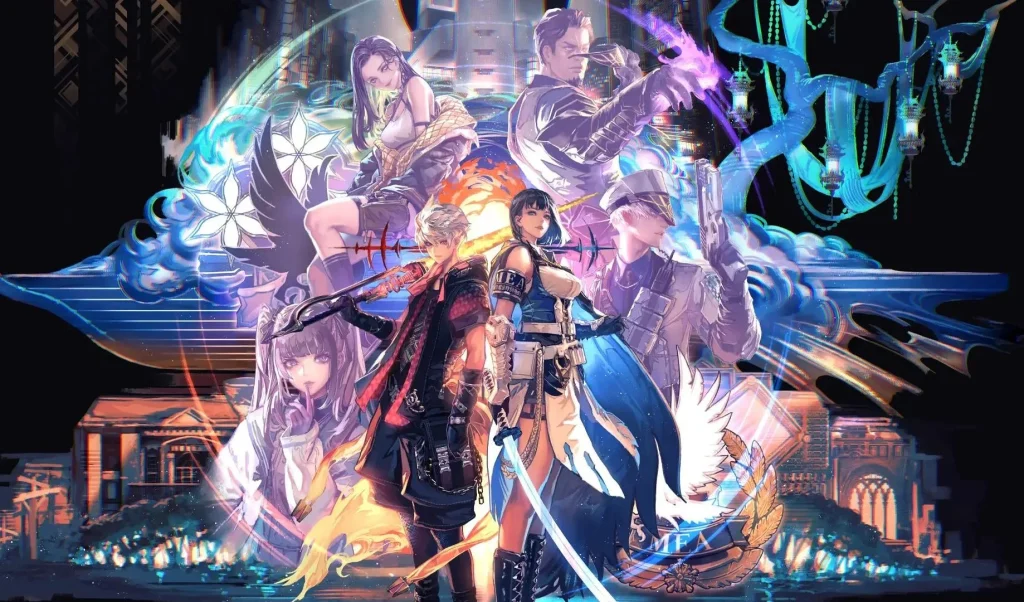
REYNATIS is far from a mediocre game. On the contrary, ambition shows in nearly every aspect — a stellar creative team, a unique combat philosophy, a faithfully recreated Shibuya. And yet, it often feels like a game that falls just short of its potential.
Consider it if:
- You’re a fan of Nojima or Shimomura and want to see what they can do together
- You’re drawn to dark urban fantasy and dual-protagonist stories
- You can appreciate a game with glaring strengths and equally glaring flaws
Think twice if:
- You can’t tolerate a combat loop that demands waiting for enemy attacks to recover resources
- You have little patience for repetitive backtracking
- You expect a polished, high-production-value experience
This is not a game for everyone. But for those who are on its wavelength, it might be exactly the kind of “flawed but fascinating” title you’ve been looking for.
Copyright Notice:
All game screenshots, character designs, and related materials referenced in this article are the property of FuRyu, NIS America, Arc System Works, and their respective rights holders.
Comments (0)
No comments yet