
Titanfall 2 Review – Why This 10-Year-Old FPS Is Still a Masterclass in Level Design

Release Date: October 28, 2016 | Developer: Respawn Entertainment | Publisher: Electronic Arts | Platforms: PC (Steam), PS4, Xbox One | Genre: First-person shooter | Price: $29.99 USD MSRP, frequently on sale for ~$4.99 USD | Languages: English, Traditional Chinese, and others (Simplified Chinese requires fan patch)
In 2016, two unexpected things happened in the FPS market. One was the Doom reboot redefining high-octane shooting with its brutal combat. The other was Titanfall 2, which delivered a single-player campaign that demonstrated what FPS level design could truly achieve.

The first became a commercial success story. Titanfall 2 became a critical darling — but its recognition came years late. Sandwiched between Battlefield 1 (October 21) and Call of Duty: Infinite Warfare (November 4) at launch, its sales never matched its quality. But a decade later, it now holds over 280,000 Steam reviews with a 95%+ positive rating, an 86 Metacritic score, and an 8.5 user score. It wasn’t the sales champion of its year. It became something rarer: a benchmark for single-player FPS campaigns.
One Moveset, Two Playstyles
Titanfall 2 did something that wasn’t exactly a safe bet at the time: it fused high-mobility game design into an FPS.
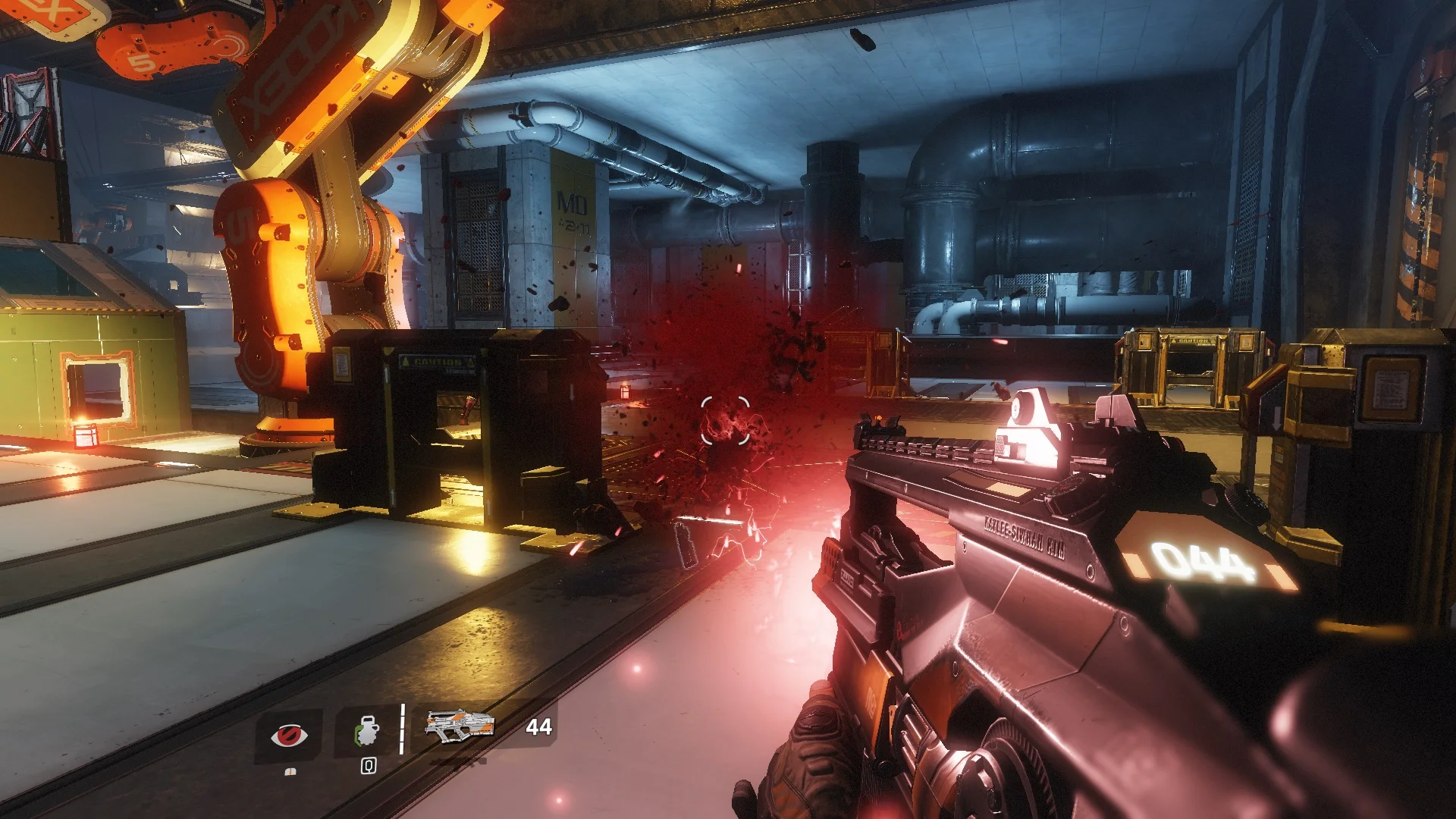
Slide-hopping, wall-running, double-jumps, grappling hooks — these aren’t gimmicks. They’re the core combat loop. Players spend more time on walls than on the ground. High-speed movement reduces the importance of traditional cover-based shooting, making aggressive positioning the key to survival. Accuracy still matters, but mobility defines your margin for error.
The designers behind this system later brought the same movement philosophy to Apex Legends, which became widely recognized as one of the highest-skill-ceiling titles in the battle royale genre. In retrospect, Titanfall 2‘s movement system wasn’t a one-off experiment — it was the foundation of the entire experience.
Then there are the Titans.
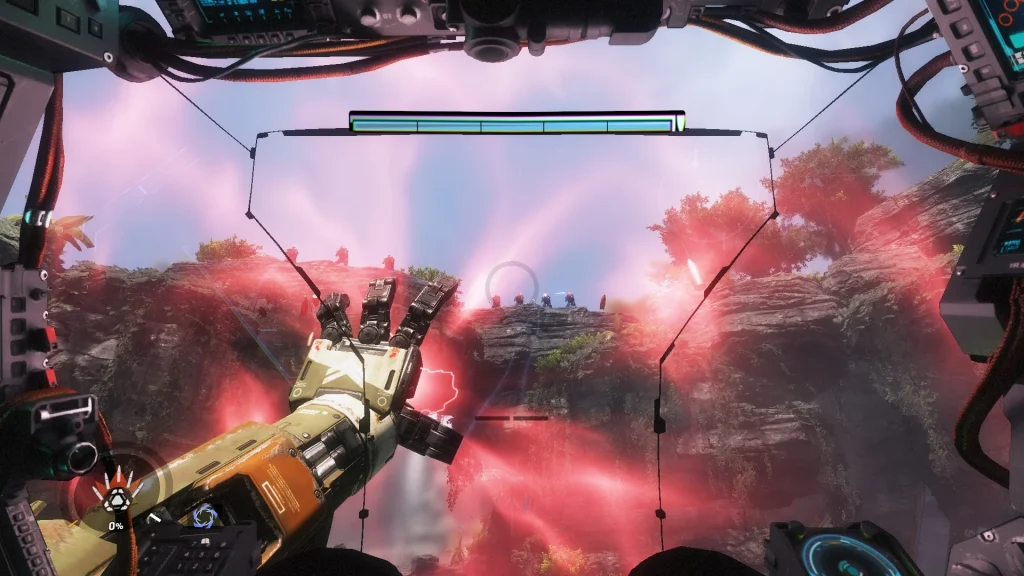
You play as a Pilot — an elite infantry unit with all the mobility described above. Build up enough energy in combat, and you can call down a Titan, a multi-ton humanoid mech that crashes onto the battlefield. Once you climb into the cockpit, the game shifts from high-speed acrobatics to heavy-weapon mech combat. The rhythm is entirely different. Most games let you stay strong or weak throughout. Respawn chose to let you switch between both — and made both sides feel fully realized.
No Level Feels Like Filler
The single-player campaign runs about 6-8 hours. Every level is built around a single core mechanic, used at its peak, then retired — never repeated.
- One level takes place on a giant assembly line, with players jumping between moving robotic arms and conveyor belts
- Another unfolds across multiple flying warships, requiring grappling hooks and aerial vehicles to cross gaps
- And then there’s “Effect and Cause”
“Effect and Cause” is widely considered Titanfall 2‘s signature level. You receive a wrist device that lets you instantly switch between two timelines — the “past” intact and the “present” in ruins. Enemies blocking your path? Switch to the past and take the intact route. Wall sealed ahead? Switch to the future and use the collapsed gap. The puzzle design, combat pacing, and dual-timeline mechanic are so tightly integrated that the level has been praised by critics as one of the greatest single levels ever designed in a shooter.
It’s not something you need to read about. It’s something you need to play.
BT-7274 and “Protocol 3”
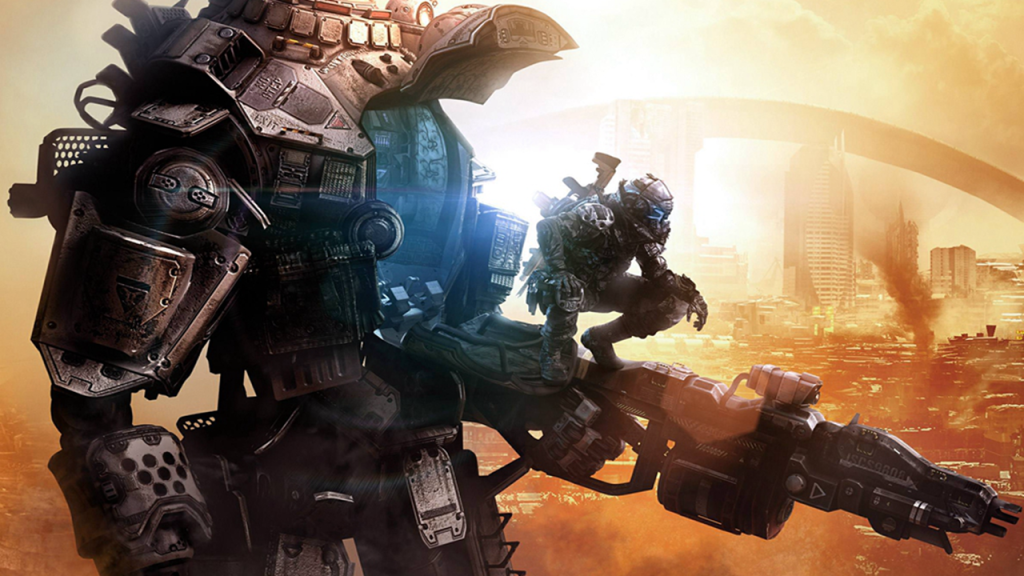
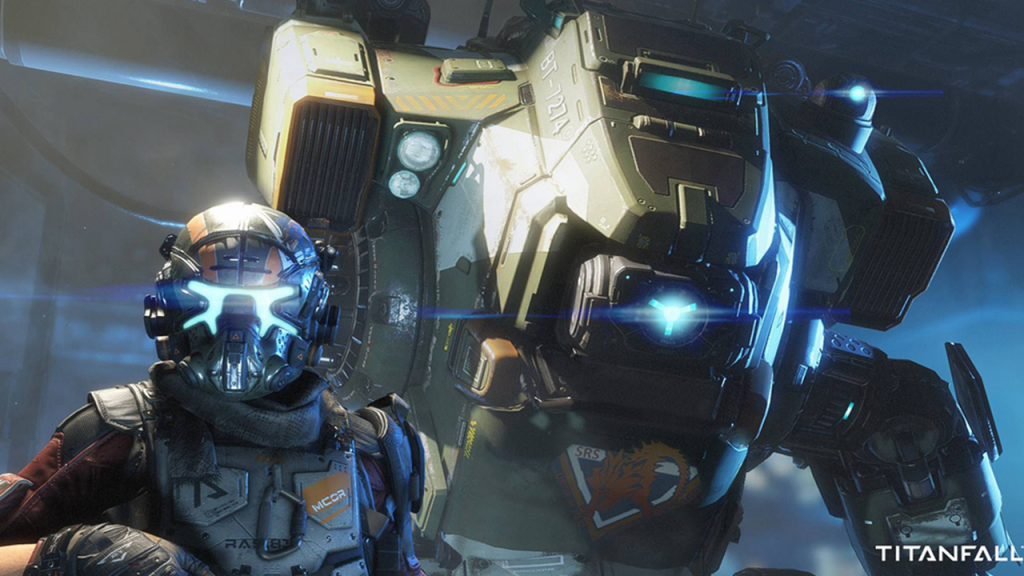
You play as Jack Cooper, a rifleman who inherits the Titan BT-7274 after his commanding officer falls in battle. A rookie who never completed Pilot training. A machine-like Vanguard-class Titan. The relationship between them is the emotional anchor of the story.
BT follows mission protocols — nothing more, nothing less. “Protocol 1: Link to Pilot. Protocol 2: Uphold the Mission. Protocol 3: Protect the Pilot.” But as the campaign unfolds, those priorities subtly shift.
No spoilers. Just know that “Protocol 3” has become a signal in the player community. Type those two words, and someone will respond.
The Missed Opportunity: Bad Timing
Titanfall 2‘s commercial underperformance had little to do with its quality.
On October 28, 2016, EA placed it between Battlefield 1 (October 21) and Call of Duty: Infinite Warfare (November 4). Two competitors from the two biggest franchises in the FPS genre, and a relatively young IP squeezed in the middle with no room to breathe.
Launch sales came in well below expectations. Good reviews and word-of-mouth didn’t convert fast enough. It took years of Steam sales, deep discounts, and slow-burn word-of-mouth for the game to find its audience.
Is It Worth Picking Up in 2026?
Price: Steam version frequently hits 90% off, dropping to around $4.99 USD (MSRP $29.99). At that price point, there’s almost no competition in terms of campaign quality.
Specs: A 2016 game with mature optimization. Runs smoothly on most gaming PCs.
Multiplayer: The community is smaller now. Matchmaking takes time, and the experience isn’t what it was at launch. The campaign is the main draw — multiplayer is a bonus, not a reason to buy.
Language: Steam version does not include Simplified Chinese. You’ll need a fan patch, or you can use the Traditional Chinese option.
Who Is This Game For?
Recommended for:
- Players who enjoy fast-paced, high-mobility FPS
- Anyone who appreciates well-crafted level design
- Those looking for a tight 6-8 hour single-player campaign
- Mech enthusiasts
- Budget-conscious players who want top-tier FPS production
Not recommended for:
- Players who mainly play multiplayer and don’t care about single-player
- Those who prefer open-world, 50+ hour epics
- Players unfamiliar with fast FPS movement who get motion sickness easily
- Those unwilling to install a fan patch for Simplified Chinese
15 Bucks, What Does It Buy?
$4.99, give or take. Six to eight hours. If you measure entertainment by cost per hour, the math is hard to beat. But that’s not really the point — and if you’ve played it, you already know why.
Copyright Notice: All game screenshots, character images, and related materials referenced in this article are the property of Respawn Entertainment and Electronic Arts, and are used solely for the purposes of game introduction, review, and commentary.
Comments (0)
No comments yet