
Tomodachi Life: Living the Dream — When Nintendo Turns “Playing House” Into a Civilization Simulator

After more than a decade away, Nintendo has finally brought the Tomodachi Life series back. On April 16, 2026, Tomodachi Life: Living the Dream launched on Switch and is playable on Switch 2. It’s the first new entry in the series since 2013. The game sold over 3.8 million copies worldwide in its first two weeks. As of August 5, 2026, lifetime sales had surpassed 8 million copies, overtaking the 3DS predecessor’s roughly 6.73 million to make it the best-selling entry in the series.
It’s Not About Gameplay — It’s About an Unscripted Show
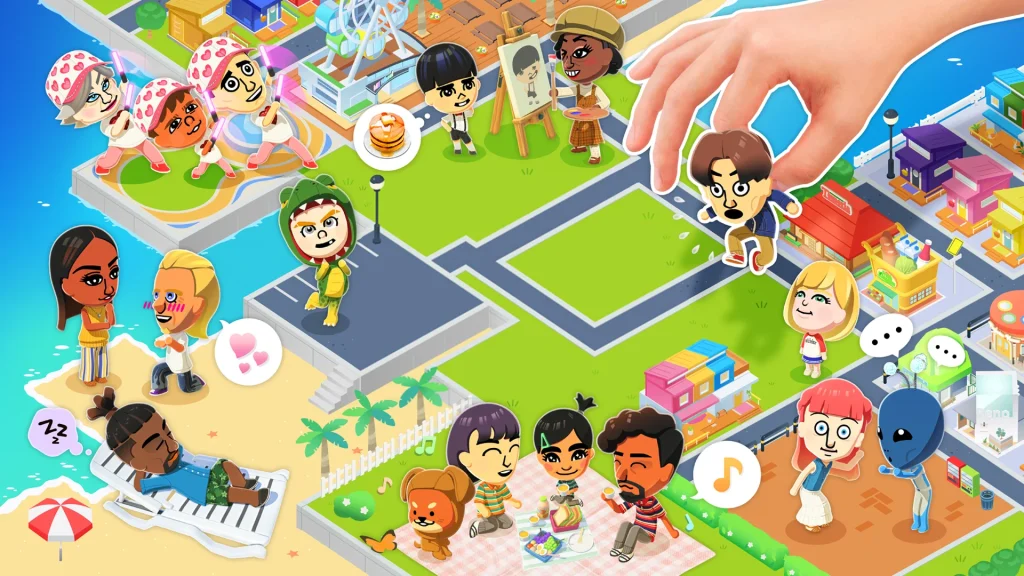
If you try to understand Tomodachi Life: Living the Dream through the lens of traditional games, you may spend the first two hours wondering what you’re supposed to be doing. It has no traditional main quest chain, but there are island development goals, daily requests from Miis, and a milestone ending marked by a “space travel” sequence — the credits roll at the end, but island life doesn’t end there; you can keep playing afterward. There’s only one thing you need to do: create Miis, build an island, and then watch the people you made put on absurd dramas you could never have predicted.
It feels more like an out-of-control reality show.
The core mechanic is turning people you know — real friends, family members, public figures, or any fictional characters you like — into Miis and dropping them all onto the same island. They’ll make friends, fall in love, argue, and develop an entire web of relationships you had no hand in designing. As the caretaker, you can feed them, give gifts, arrange seating, move Miis around, guide characters into meeting each other, and take part in some friendship and romance events to influence things. But you can never fully control what happens next.
That feeling that “I did nothing, and yet they acted out an entire season of a TV drama on their own” is one of the Tomodachi Life series’ biggest draws, and a major reason it continues to generate buzz on social media. You’re not playing a game; you’re running an absurd channel that never goes off the air.
The Problem Is, the Channel Quickly Starts Rerunning Itself
But as playtime adds up, a subtle sense of repetition may begin to creep in.
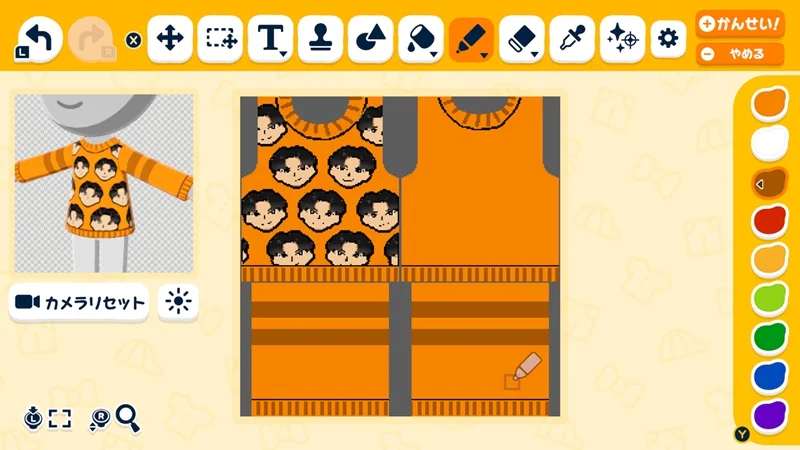
The game burns through its content faster than it creates fresh experiences. The initial novelty is exhilarating — you’ll spend a lot of time in the Mii creator, using the “face paint” feature to recreate characters in fine detail, and giving Miis little quirks as they level up, adding personality to their movements, eating habits, and other small details. The creation phase is itself a form of creative work; every minute you put in builds the stage for the “story” that follows.
The problem comes after you’ve finished creating everyone.
The Miis’ dialogue and interactions are genuinely entertaining, but the formula starts to show after you’ve played for a while. When similar friendship events start recurring, the initial excitement gives way to a growing sense of “Oh, this again?” Whether daily needs and progression systems can keep delivering new experiences is a question this kind of game has to face.
Miis level up as their happiness increases. Feeding them, giving them items, meeting their needs, and helping them solve problems all contribute to that progress. But these daily interactions aren’t complex in themselves; the long-term appeal still comes more from the ever-changing relationships between characters than from the progression system itself.
This isn’t to say the game isn’t fun. It’s that its fun depends heavily on the player’s own willingness to invest. You need to invest your creativity early on to get enough laughs out of the game later. If you expect the game to actively deliver entertaining content to you, it will disappoint you.
Why the Game Feels Less Fresh the More You Play
This is the most thought-provoking contradiction in Tomodachi Life: Living the Dream.
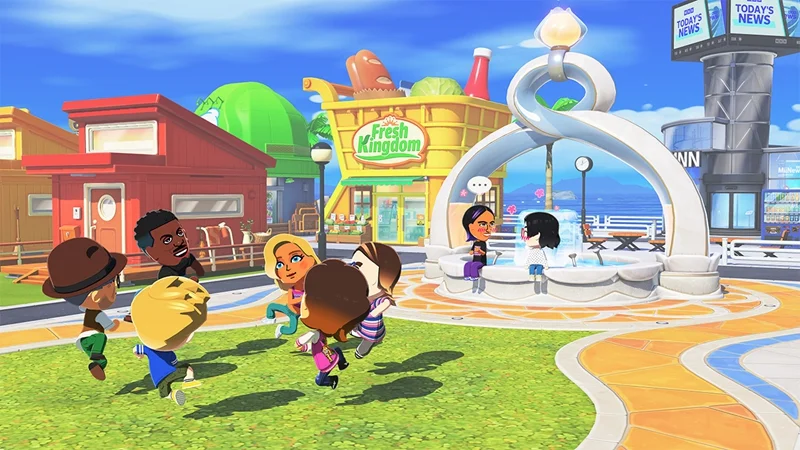
There are only so many types of interactions between Miis. They can make friends, argue, fall in love, or make up, but the range of possible scenarios is finite. Once similar arguments or friendship events repeat, seeing the same kind of scene again loses much of its freshness. The issue isn’t that the system lacks complexity. It’s that the more you play, the more you expect to be surprised, even though the range of possible events remains limited.
During the first few hours, you feel like “anything could happen” because you don’t yet know the boundaries of the game’s content. As you gradually figure out which interactions trigger which events, the island’s logic becomes transparent. You can still see entertaining stories, but you no longer feel surprised.
The core appeal of Tomodachi Life is built largely on a sense of surprise. So when that surprise fades, the drop in the game’s appeal is especially noticeable.
Sharing Restrictions Leave a Lively Island Feeling Isolated
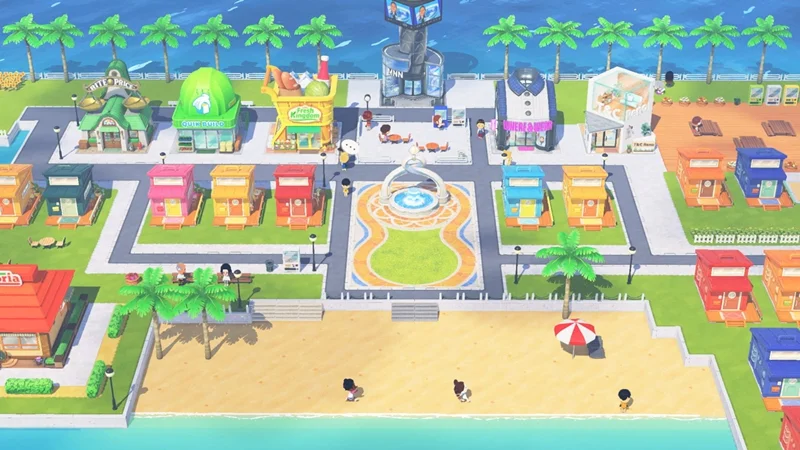
Nintendo has placed strict limits on the game’s system-level sharing features. Players cannot directly transfer in-game screenshots and videos to their phones or post them to social media through the usual system functions, and the auto-upload feature on Switch 2 is also unavailable.
That doesn’t mean sharing is impossible, though. Screenshots and videos can still be transferred to a computer via USB, and your own Miis and creations can be shared with nearby players through local wireless. The problem is that none of these methods are as convenient as sharing directly online.
The irony of this restriction is that the game itself encourages players to create absurd character relationships. A big part of the fun in making Miis comes from putting familiar faces into unexpected situations and anticipating how others will react when they see it. When built-in sharing options are limited, players have to take extra steps to share these moments, making the game less convenient for social-media sharing.
Players can accept a game that’s “not fun enough,” but it’s hard to accept a game where “the fun parts can’t easily be shown to others.”
If you’re a longtime fan of the Tomodachi Life series, or if you’re naturally drawn to the “create and observe” style of play, it’s worth picking up. Its Mii creator goes deeper than the previous game, and the little quirks and face paint allow for highly detailed character customization.
But if you’re looking for a life sim that continues to offer fresh experiences over the long term, or if sharing and social features matter a lot to you, it may leave you feeling a strange kind of loneliness after the initial excitement wears off. You’ve carefully built an island and filled it with people you’ve created. They go on living their own lives while you watch from the sidelines.
Perhaps that’s the most honest way to describe Tomodachi Life: Living the Dream. It’s an island that belongs only to you — yet sometimes, you wish you could share it with someone else.
Copyright Notice: All game screenshots, character images, and related assets referenced in this article are the property of their respective rights holders, including Nintendo. This article is intended for game coverage, commentary, and informational purposes only.
Comments (0)
No comments yet