
Wanderburg — A “Big Fish Eats Small Fish” Roguelike About a Moving Castle, and Why It Starts to Show Its Cracks

On September 8, 2026, a game called Wanderburg entered Steam Early Access. It comes from Randwerk—the studio behind ABRISS—and is published by Sidekick Publishing.
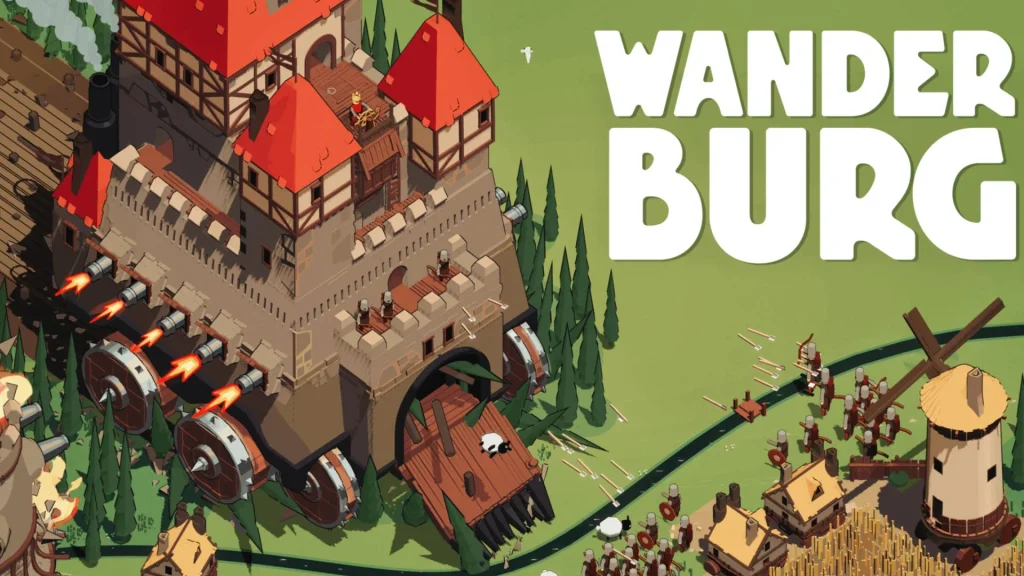
The concept hooks you immediately: you pilot a moving medieval castle, rampaging across the battlefield, devouring villages, sheep, and even smaller castles, growing ever larger until you become a towering siege beast that consumes everything.
The first line on the Steam page says it plainly: “Castles weren’t built to move. Now they do.”
The setup reminds a lot of people of the movie Mortal Engines, and plenty of players were drawn in by the demo during Steam Next Fest. Eurogamer’s editor wrote a rather extreme quote: “Pump it into my veins!” GamesRadar’s editor said it was the fastest a roguelike had hooked him all year.
But by your third or fourth run, the problems start showing.
A Stunning First Impression, Cracks by the Third Run
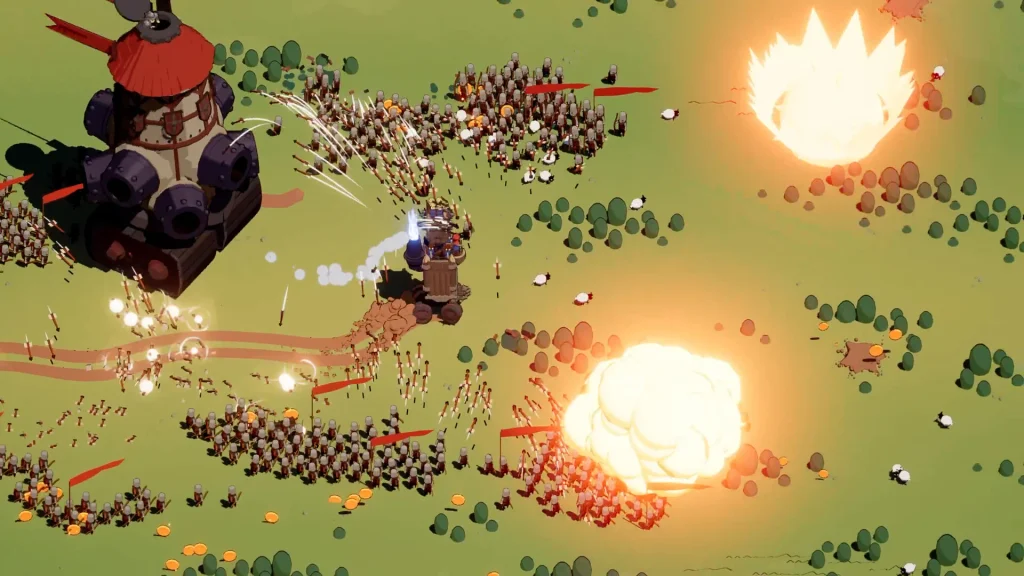
Wanderburg‘s art style is minimalist, isometric, and polygonal. Soldiers riding wooden horses, bipedal robots swinging swords wildly, mobile windmills with spinning blades—combined with the satisfying clink of gold coins scattering when your castle crushes a village—the whole thing has a goofy charm that’s hard to resist.
You start with a modest little moving fortress, eat sheep and villages, gradually evolve into a bigger bastion, and bolt on various powerful attachments. The concept itself holds up—it’s genuinely striking.
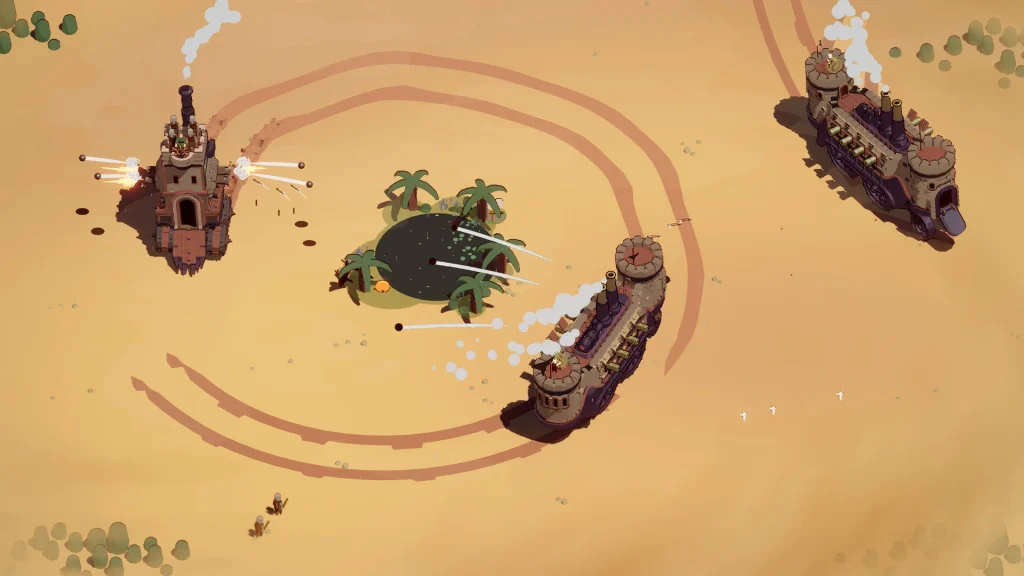
But after a few runs, the lack of content starts to become obvious.
One Steam reviewer put it bluntly, saying that when they first saw the trailer they were blown away—it felt like a mobile-castle roguelike—but in practice, there were a lot of problems: weapons were unbalanced, upgrades were all just stat boosts, the difficulty curve was off, and there was no meta progression.
VGOVER’s review was even harsher, calling it all style and no substance.
“Modular Armament” Sounds Great, But the Build Depth Isn’t There
The game’s “modular armament system” comes down to a small number of weapon slots, with a relatively limited selection of modules to fill them. More critically, weapons “barely interact with each other”—what passes for “build-crafting” is mostly stacking numbers rather than generating strategic synergy.
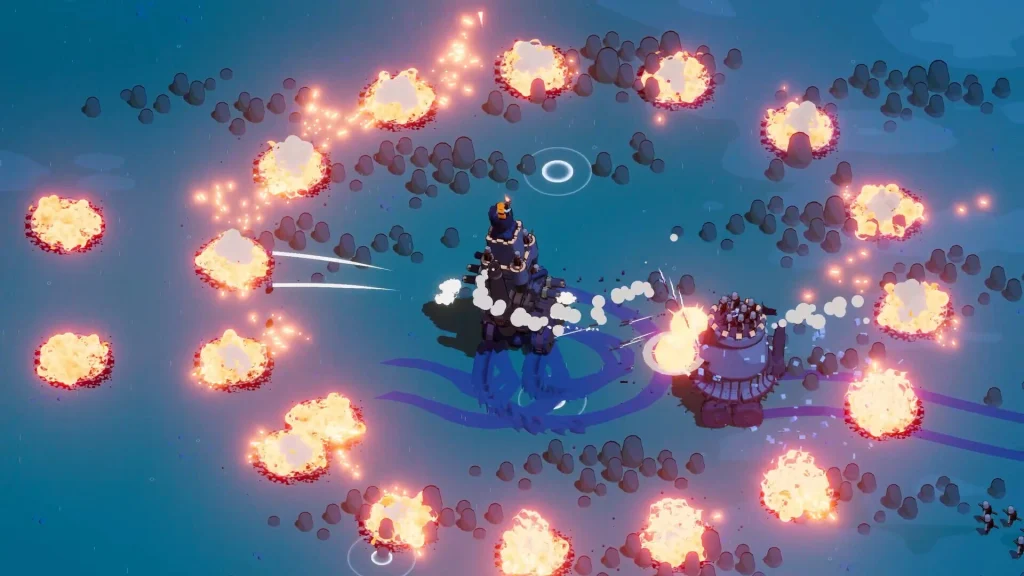
VGOVER’s review described the upgrade feedback as essentially meaningless, arguing that damage boosts produce almost no visible change on screen, and that upgrading a cannon goes from one shell exploding once to exploding four times, a difference you wouldn’t notice unless you were staring really hard.
And in early player feedback, summoning modules were clearly stronger than the alternatives. VGOVER’s review described them as “in a league of their own,” instantly deleting enemy structures, while cannons, windmills, catapults, and other parts were “all just decoration.”
This meant that, in early versions, runs tended to collapse into “stacking the same weapon” rather than genuine strategic combinations. The developers have been actively adjusting balance based on player feedback, but build depth and balance remain among the issues players bring up most often.
Meta Progression: Missing Traditional Permanent Stat Growth
Wanderburg‘s meta unlock system has also drawn criticism. VGOVER’s review said the meta progression isn’t just uninspired and bland—it also sets unlock costs absurdly high, while giving you pitiful resources per run, as if terrified you might unlock something too quickly.
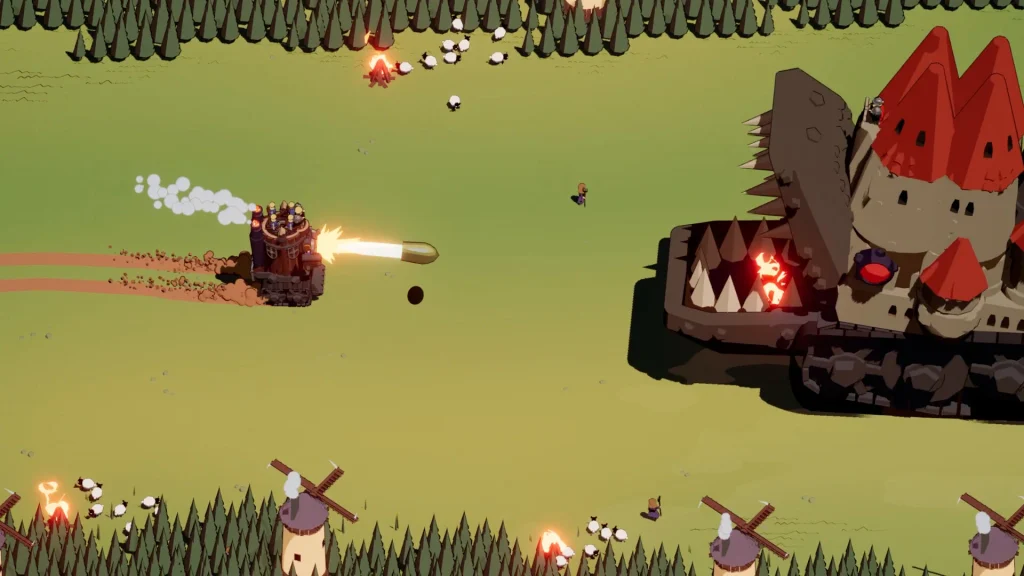
To be fair, the game does have meta progression, but it lacks the traditional kind that permanently boosts your character’s base stats—right now, meta progression is mostly about unlocking new modules, vehicles, artifacts, and commanders.
The current content scope is still on the small side, with a limited number of stages and environments available at launch. Map highlights repeat themselves, and enemy spawn order is fairly fixed. For an Early Access roguelike, that’s genuinely thin.
But It Does Have a Core Loop That’s Hard to Put Down
Despite all the above, Wanderburg‘s underlying gameplay loop works.
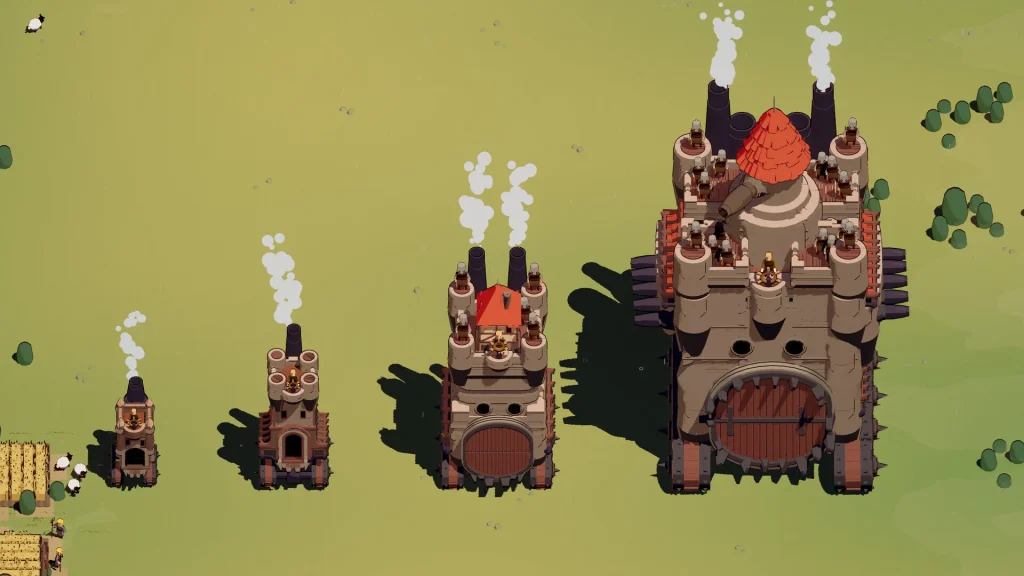
Devour resources → castle grows → unlock new modules → crush stronger enemies → keep devouring. The loop itself has strong pull. Eurogamer, GamesRadar, and GameStar all came away impressed by how hard it is to stop playing. GameStar summed it up neatly: “Just one more round, I swear.”
And at the very least, it’s not a game that leaves all its problems for “someday”—the developers have been patching at high frequency. From September 8 to September 21, the game pushed multiple hotfixes (0.9.7 through 0.9.14), adjusting balance, performance, and overall gameplay. The team has also openly admitted “performance isn’t where we want it to be yet,” and says it will continue tweaking meta progression and other content based on feedback. The catch is that patches are currently focused on balance, performance, and QoL—whether the content depth that determines long-term replayability can catch up remains to be seen.
This Castle Isn’t Finished Yet
As of September 22, 2026, Steam is running a 35% launch discount, bringing the price to $9.74 from $14.99. Chinese language support is included.
Players drawn in by the “moving castle devours everything” concept can still get very direct enjoyment from the core loop. Starting as a small fortress, swallowing resources, expanding in size, then stomping the enemies you once had to avoid—that growth feedback is still satisfying.
But the problems are just as obvious: build depth is still shallow, module synergy is lacking, and meta progression and content volume aren’t yet deep enough to sustain long-term play. More importantly, some players have reported localization and performance issues, which makes it clear this is still very much an Early Access game.
Randwerk has already pushed multiple hotfixes, adjusting balance, performance, stability, and progression. Steam’s official page currently estimates the game will remain in Early Access for about 6 to 12 months, with plans to add more content, variety, and polish.
So the most interesting thing about Wanderburg right now is also its most awkward: it’s already fun enough to make you want one more run, but not yet rich enough to make you want to keep playing forever.
Copyright Notice: All game screenshots, character images, and related assets used in this article belong to their respective rights holders, including Randwerk and Sidekick Publishing. This article is intended solely for informational, review, and commentary purposes.
Comments (0)
No comments yet