
Resident Evil 2 Remake — A Textbook “Subtractive Remake” That Turns Fear Back Into a Resource

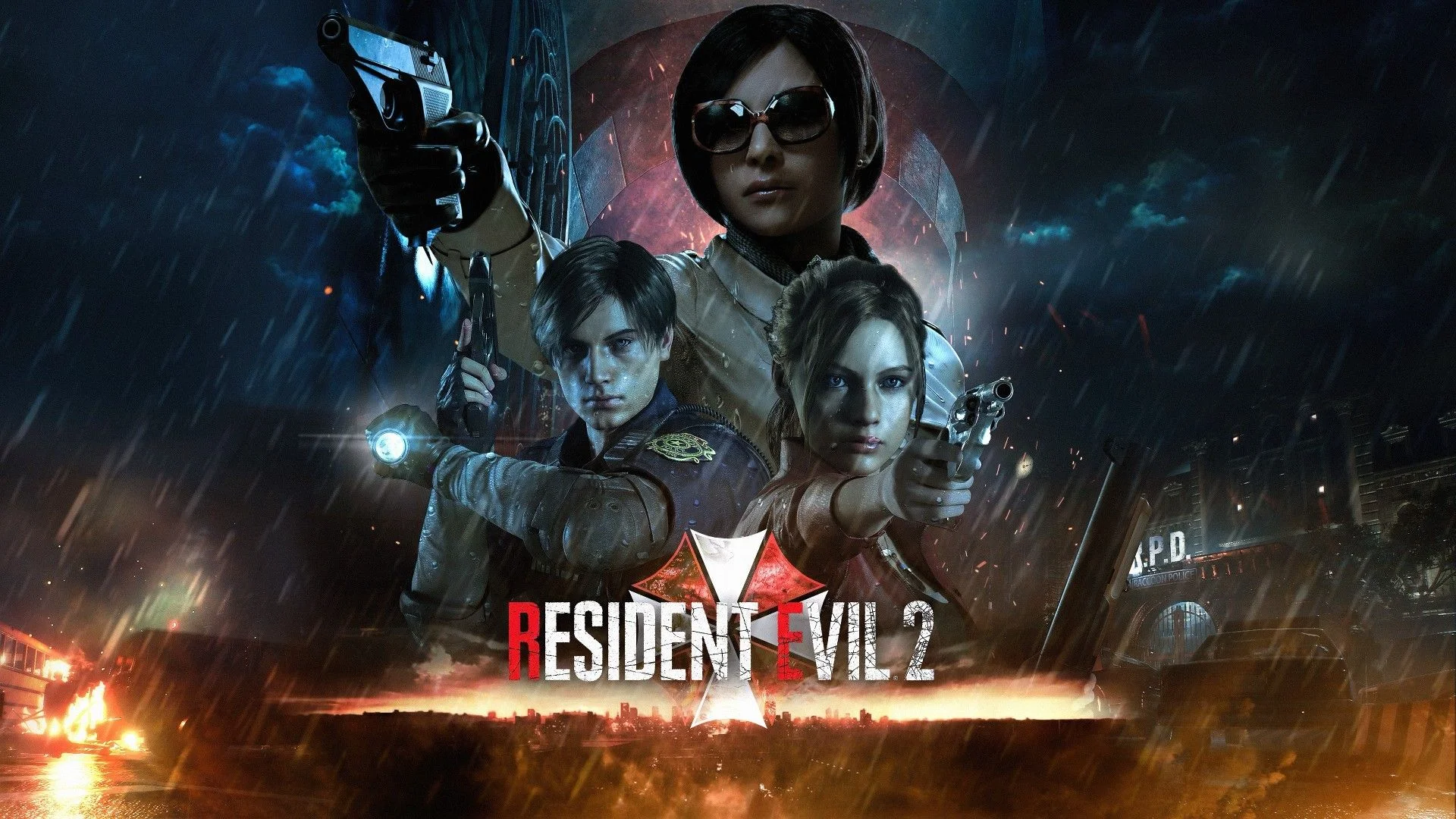
On January 25, 2019, Capcom officially released Resident Evil 2 Remake, launching on PS4, Xbox One, and PC, with PS5 and Xbox Series X|S versions following on June 14, 2022. Built on Capcom’s own RE Engine, it wasn’t a remaster—it was a ground-up remake that rethought what it meant to survive Raccoon City in 1998.
The First Thing It Gets Right: Turning Fear Back Into a Resource
The core design logic of the remake can be summed up in one sentence: every bullet you spend determines whether you walk out of the police station alive.
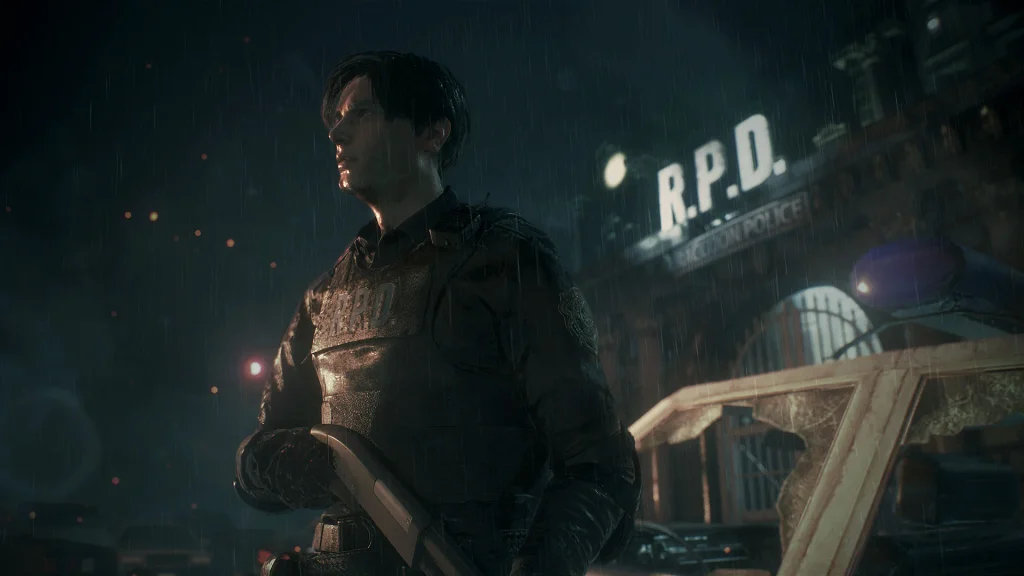
The original Resident Evil 2‘s fixed camera angles and tank controls were a technical limitation in 1998, but they were also a unique source of dread—you couldn’t see what was around the corner, and movement itself was much more cumbersome. The remake doesn’t keep those controls, but it keeps the psychological effect they created. The over-the-shoulder perspective lets you see farther, but zombies are also much harder to put down. In the original, a headshot usually meant an efficient kill; in the remake, zombies don’t go down that easily—a headshot might not even drop them. Precise aiming, staggering, leg shots, or just avoiding them entirely all become part of resource management.
This isn’t a “harder Resident Evil”—it’s a “more realistic Resident Evil.” Ammo is no longer something you can casually burn through; gunpowder adds another layer of resource management, letting you decide what kind of ammo to make next. Knives and grenades also become critical emergency resources: they can help you break free from danger, but you can’t waste them. Every shot you fire, every time you have to fight your way free, drains the limited resources you have.
One Douban user put it well (translated from Chinese): “You can fire a shot, use the stagger to get past them, or just shoot the legs…” That’s the true rhythm of the remake—combat isn’t the goal; getting through the combat is.
Mr. X: The Pursuer Who Turns the Police Station Into a “Home”
If there’s one reworked element the remake absolutely nails, it’s Mr. X.
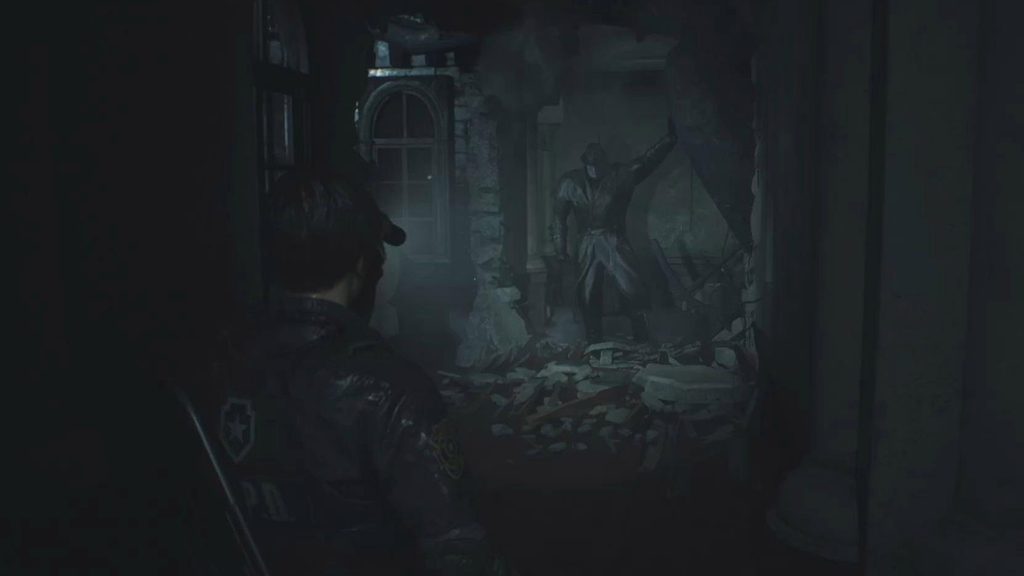
In the original, Mr. X appears mainly as a scripted pursuer in the B scenario. The remake turns him into a recurring, oppressive presence throughout much of the police station. He patrols the halls, his footsteps echo through walls, and you never know if he’ll be standing at the end of the corridor the next time you open a door.
But the truly clever part is this: Mr. X forces players to re-learn the map. You can’t slowly scavenge every room anymore—you have to plan routes, remember which doors let you circle around him, and which corridors offer shortcuts. One player described the police station’s layout as “an interlocking 3D puzzle, seemingly convoluted but actually tightly connected.” Mr. X’s presence turns that puzzle from static to dynamic—you don’t just need to know how to get somewhere, you need to know where to go when he’s closing in.
That’s the remake’s understanding of interconnected map design: the map isn’t just space—it’s pressure.
The A/B Scenarios: The Most Controversial Cut
But the remake isn’t without controversy. The biggest criticism centers on the simplification of the A/B scenario system.
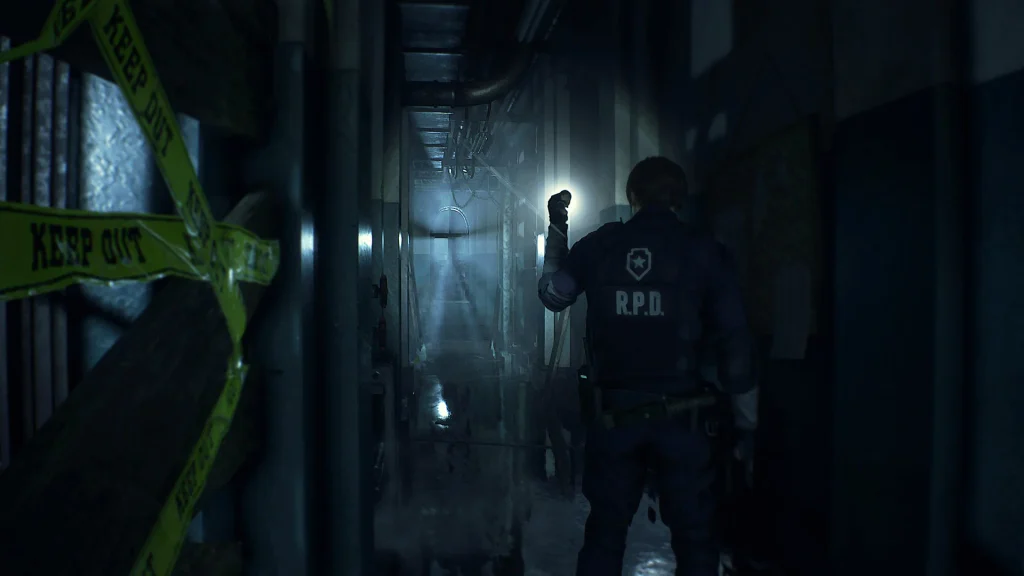
The original’s A/B scenarios were designed to complement each other narratively—events in Leon’s route would produce different outcomes in Claire’s route; choices in Claire’s route would affect what you could see in Leon’s. The remake keeps the two main routes, but they no longer complement each other nearly as closely, functioning more as different perspectives on the same events than as two halves of a larger puzzle.
One player put it bluntly: “The two routes have only minor differences, lots of repeated sections, and some parts feel like replaying with a different skin—more like parallel worlds than complementary halves.” That criticism holds up. If you were expecting the original’s tightly interlocked dual narrative, the remake doesn’t deliver that.
But looked at another way: the remake turns each route into a complete survival experience in its own right, rather than an interlocking puzzle structure. It’s a trade-off, not necessarily a step backward.
PC Version: No Denuvo Baggage, But Steam Pricing Is What Really Matters
Denuvo hasn’t been an issue for Resident Evil 2 Remake for a long time. Capcom removed Denuvo from the Steam version back in December 2019. A previously leaked Denuvo-free build was once used for a performance comparison, showing a roughly 4–12 FPS difference and faster load times under specific test hardware—but that’s a 2019 test and shouldn’t be treated as today’s performance gain.
The more practical issue now is price. The standard price on Steam is $39.99, and it has dropped as low as $9.99 during major sales. As of September 23, 2026, the game is back at its standard $39.99 price after the latest sale.
As of this writing, Steam’s overall rating sits at around 96% positive, with over 220,000 reviews and the last 30 days also holding at around 96%.
The Hardest Part Is Knowing What Not to Add Back
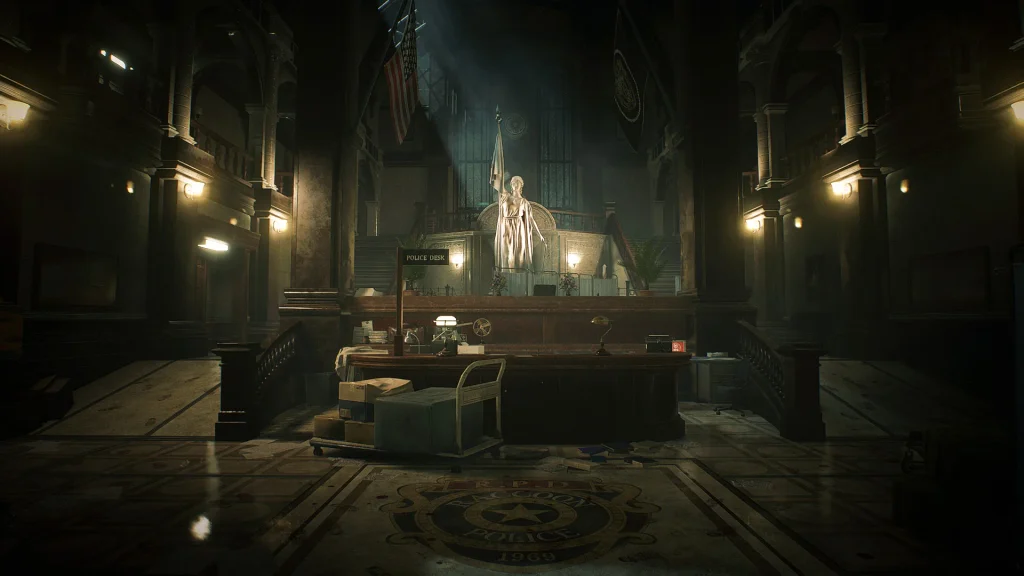
Resident Evil 2 Remake and Resident Evil 4 Remake took two different paths. RE4 Remake was about modernizing a game that was already modern. RE2 Remake, by contrast, was a “subtractive remake” of a game constrained by the technology of its time—it cut the original’s fixed camera angles, cut tank controls, cut the strong A/B narrative dependency, but it didn’t cut what mattered most: the pressure of resource scarcity, and the survival logic of “getting through fear” rather than “eliminating fear.”
It didn’t try to turn Resident Evil 2 into Resident Evil 4. It knew some things shouldn’t be changed.
The most dangerous thing a remake can do is assume everything in the original needs “optimizing.” Resident Evil 2 Remake proved that what really needs optimizing is whatever keeps modern players from getting into the game. Everything else—let it keep being scary.
Copyright Notice: All game screenshots, character images, and related assets used in this article are the property of Capcom and their respective rights holders. This article is intended solely for informational, review, and commentary purposes.
Comments (0)
No comments yet