
13 Sentinels: Aegis Rim – 13 Protagonists, 200 Years of Mystery, and One of Gaming’s Most Ambitious Stories

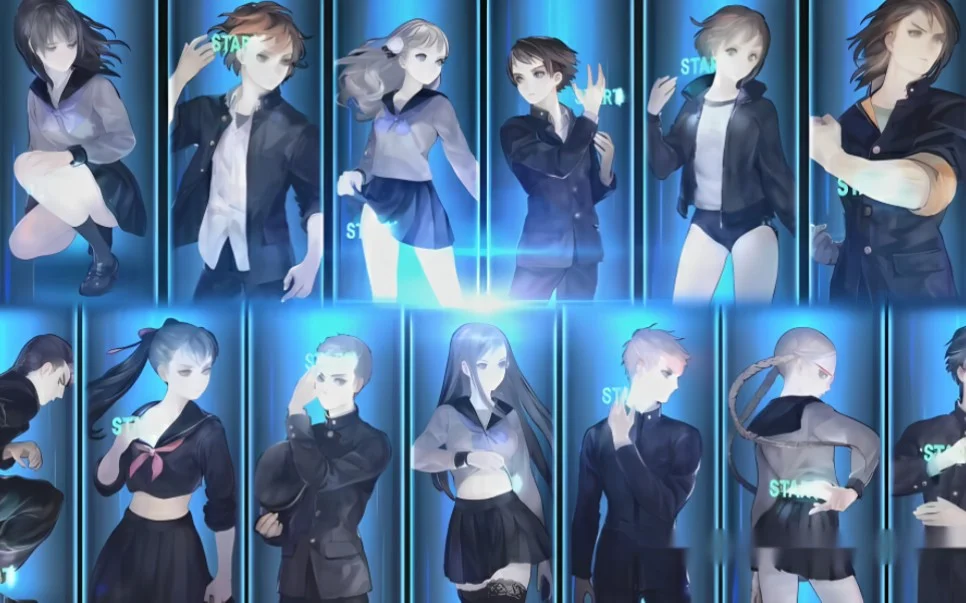
Why do people still discuss this game on forums years after its release? How does a story with 13 protagonists and over a dozen storylines advancing simultaneously manage to converge into a single, coherent answer by the end? That’s what makes 13 Sentinels: Aegis Rim so special – in the player community, what gets talked about most isn’t the combat, but the narrative structure woven around its 13 main characters.
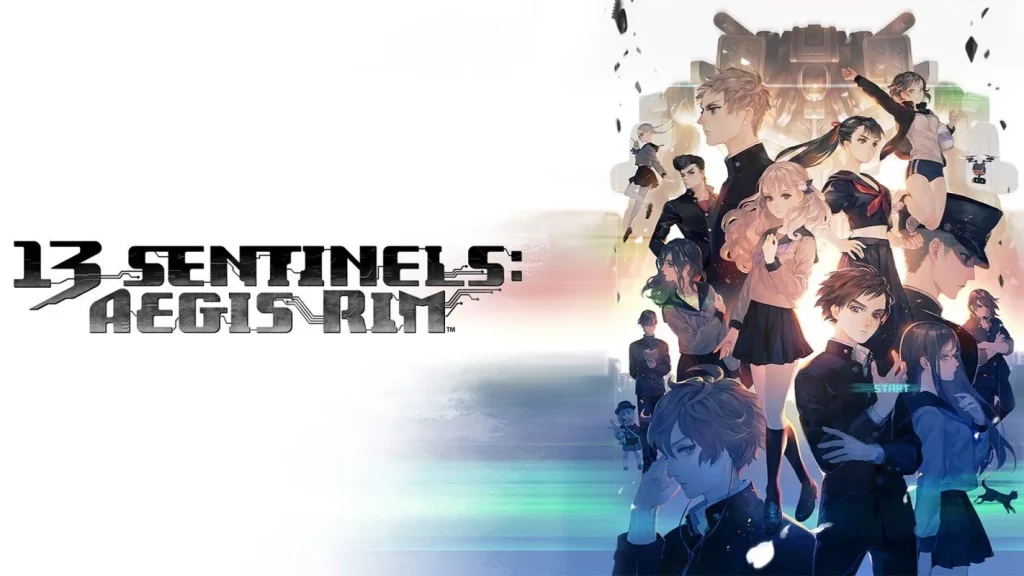
13 interwoven timelines, a mystery spanning two centuries, all eventually fitting together into a complete picture. Some call it the pinnacle of AVG storytelling, while others find the combat too simple and the plot too convoluted. In 2026, is it still worth picking up?
What Is the Story About?
On the surface, the premise is simple. In 1985 Japan, giant “kaiju” suddenly rain down from the sky, destroying cities. Thirteen teenagers pilot giant mechs called “Sentinels” to face their “doomed fate.” That’s where the story begins.
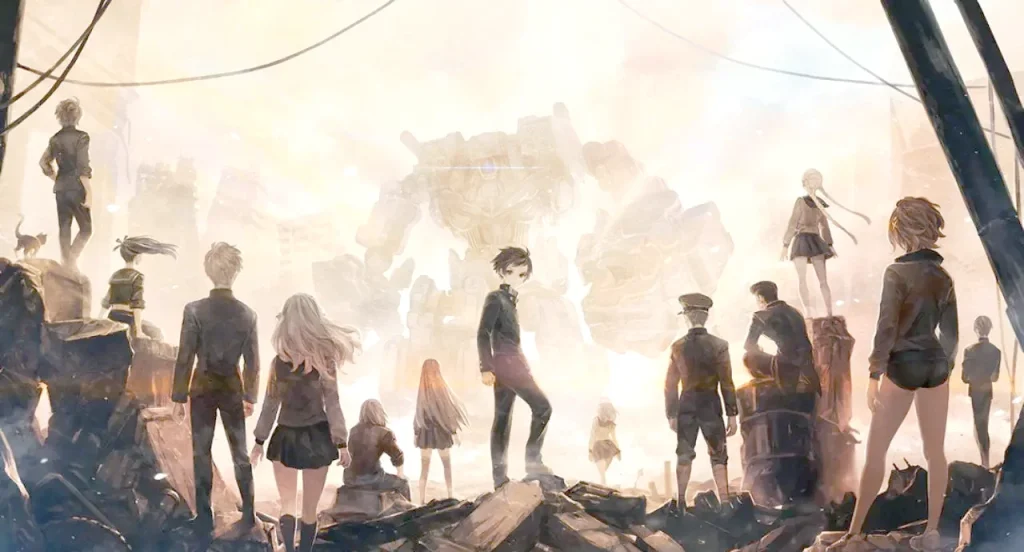
But as you progress, you realize things are far from straightforward. These protagonists come from different eras – some appear to be living in the 1980s, while others come from a far more technologically advanced era. They come together by some means, betting everything on a final battle for humanity’s survival. The game doesn’t dump all its answers at once. Instead, it makes you piece things together across its many character routes: Why does A’s memory contradict B’s testimony? Why does C’s diary mention a date that shouldn’t exist?
No major spoilers here. Suffice to say, behind the kaiju invasion and the sentinel war lies a truth far bigger than you imagine. What 13 Sentinels does best is how it takes thirteen seemingly unrelated storylines and weaves them into one satisfying, jaw‑dropping conclusion.
The structure is remarkably free. You can jump between any character’s chapter at any time. A small detail in one route might be the key to a major mystery in another. The “Event Archive” lets you revisit unlocked events and files at any time, like a built‑in lore encyclopedia. This “jigsaw puzzle” style of storytelling makes you an active participant in solving the mystery, not just a passive viewer.
Why Does It Stick With You?
What makes 13 Sentinels so memorable isn’t just the number of plotlines – it’s how the game controls the flow of information.
For the first ten hours, you might think you’re playing a time‑travel story: someone from the past, someone from the future, the kaiju invasion repeating some historical event. Twenty hours in, a certain character’s true identity is revealed, and many of your earlier assumptions begin to crumble. Near the end, the game throws yet another twist, and this new layer makes every detail – including things you once dismissed as “design flaws” – fall perfectly into place.
This isn’t your average mystery narrative. It doesn’t save all its surprises for the final half‑hour. Instead, it constantly upends your hypotheses while feeding you new pieces of the puzzle. When the last piece clicks, you realize not a single thread was wasted.
It’s rare to see a commercial game pull off multi‑threaded storytelling at this scale and complexity. For that reason, 13 Sentinels is one of those works that’s hard to “experience secondhan” – the act of piecing together the puzzle yourself is a huge part of the experience.
How Does the Combat (Destruction) Play Out?
The combat is real-time strategy combat with active pause (you can issue commands at any moment). You build a squad of up to six characters from the 13, then command their Sentinels on a grid‑based map against waves of kaiju. Sentinels come in four types: close‑combat, all‑rounder, long‑range, and aerial support, each with unique arsenals. The Switch version adds two extra weapons per character.
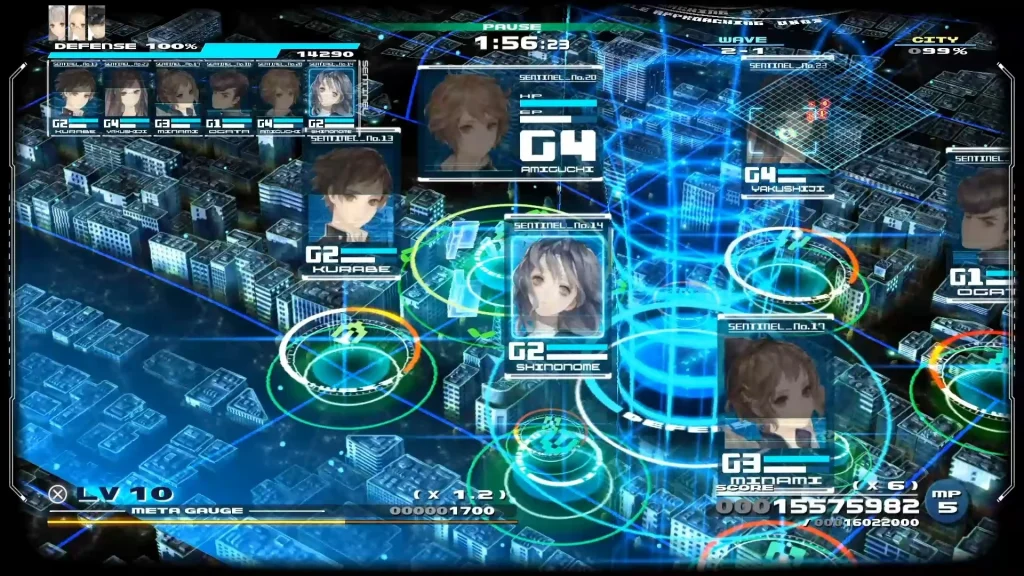
Combat depth is one of the most polarizing aspects of the game. Some players feel the late‑game hard mode requires thoughtful squad building and resource management; others think it’s merely adequate. Compared to the story, combat is clearly not the main attraction, but it’s also not a throwaway. As you unlock more sentinel types and skills, later missions still demand a degree of tactical thinking. It gets the job done, but it’s not the reason people remember the game.
Vanillaware’s Hand‑Drawn Art Meets a Narrative Ambition
Vanillaware is known for Odin Sphere, Muramasa: The Demon Blade, and Dragon’s Crown – games praised for their exquisite 2D hand‑drawn art and solid action gameplay.

Unlike those titles, 13 Sentinels shifted almost all its development focus to narrative structure, streamlining combat into a supporting role. For a studio famous for action games, this was a risky pivot, and it resulted in one of Vanillaware’s most talked‑about works.
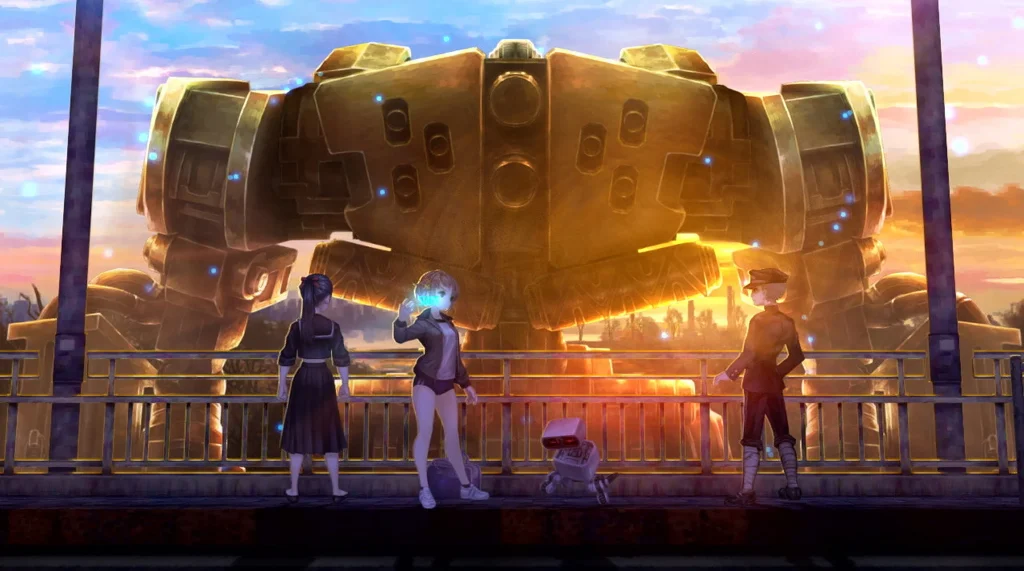
The art remains at the studio’s usual high standard – from 1985 Japanese streets to futuristic 22nd‑century facilities, every frame could be a wallpaper. The music, composed by Hitoshi Sakimoto (known for Final Fantasy Tactics and Odin Sphere), blends electronic battle tracks with orchestral story themes, all of high quality.
Version Choice
If portability matters most, the Switch version is recommended (it includes all DLC); PS4/PS5 versions have the same content, but the DLC weapons need to be purchased separately. Consider waiting for a digital sale.
Some Honest Downsides
- High story barrier: 13 storylines running in parallel, with heavy info fragmentation early on. The Event Archive helps, but it’s still demanding.
- Combat is divisive: It’s a narrative support system, not the main dish.
- Visual overload in combat: The destruction scenes have frequent bright flashes, which can strain eyes during long sessions.
- Price stubbornness: Digital discounts are rare, and used copies hold their value.
What Really Turns People Away?
Many reviews cite “combat isn’t deep enough,” but that’s not the real reason most people quit. The actual deal‑breaker is the extremely slow first 10 hours. You have to juggle over a dozen characters with very little context, each getting only short story snippets. One player described the early game as “opening the first chapters of a dozen mystery novels at once, then being told to guess which one matters.” If you lack patience, you might drop it before the story ever finds its footing. That’s the most honest turn‑off for 13 Sentinels, and what separates it from games that try to please everyone.
So, Is It Fun to Play?
The answer depends entirely on what you’re looking for.
If you love narrative‑driven games, enjoy piecing together clues, and live for those “aha!” moments, then yes – 13 Sentinels is immensely fun. The density of its plotting and the completeness of its payoff are rarely matched.
If you’re looking for intense action combat, deep tactical gameplay, or just a game to zone out with, then it might not be for you. The combat is only decent, and the huge volume of text and fragmented info will wear down anyone with low patience.
It won’t click with everyone, but for players who love piecing together mysteries and watching every clue fall into place, 13 Sentinels remains one of the most memorable sci-fi stories gaming has to offer.
Similar Game Recommendations
If you finish it and want more narrative experiences like it, try Steins;Gate, Ever17, AI: The Somnium Files, or the Zero Escape series. But even if you’ve never touched those, 13 Sentinels stands well on its own as an entry point.
Copyright Notice
All game screenshots, character images, and related assets are the property of Vanillaware, Atlus, Sega and their respective rights holders. This article is an original compilation. Please credit the source when reposting.
Comments (0)
No comments yet