
Persona 5 Royal: Is It Still Worth Playing in 2026? A Beginner’s Guide

For many players, Persona 5 Royal wasn’t their introduction to JRPGs because they were actively looking for one. They came for the stylish UI, the unforgettable soundtrack, and the fantasy of living a second life in Tokyo.
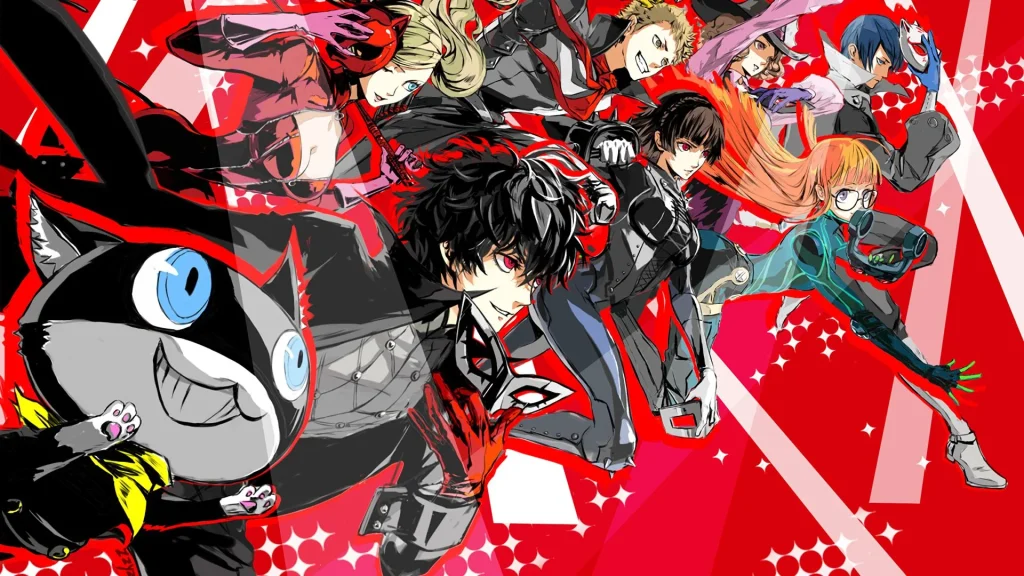
Released in 2016, Persona 5 was followed three years later by the fully expanded Persona 5 Royal. In 2022, this once PlayStation‑exclusive finally landed on PC, Xbox, and Switch, and has since sold over nine million copies worldwide. If your impression of it stops at “anime turn‑based game” or “high schoolers save the world,” you might underestimate the wave it created. It’s not only the best‑selling entry in the Persona series; for a while, it was also the face of “stylish JRPGs.”
Can I start with Persona 5 Royal if I’ve never played a Persona game?
Absolutely. Every mainline Persona entry tells a standalone story with no direct narrative ties to earlier games. Persona 5 Royal is your best starting point – no need to catch up on anything else.
The game is available on PS4, PS5, Nintendo Switch, PC (Steam / Windows Store), Xbox One, and Xbox Series X/S. It was also a former Xbox Game Pass title.
Premise: A Group of Troubled Teenagers Who Steal Hearts
The story begins in modern Tokyo. After being falsely accused of assault, the protagonist is transferred to Shujin Academy on probation and forced to live in a café attic. That spring, strange events occur across the city – powerful figures publicly confess their crimes, a phenomenon the media dubs “change of heart.”
The protagonist and a group of friends awaken to a power called “Persona.” They learn to enter “Palaces” – alternate worlds born from people’s twisted desires – and steal the “Treasure” inside, which forces the target to confess in reality. Together, they form the Phantom Thieves, a group dedicated to changing the hearts of corrupt adults.
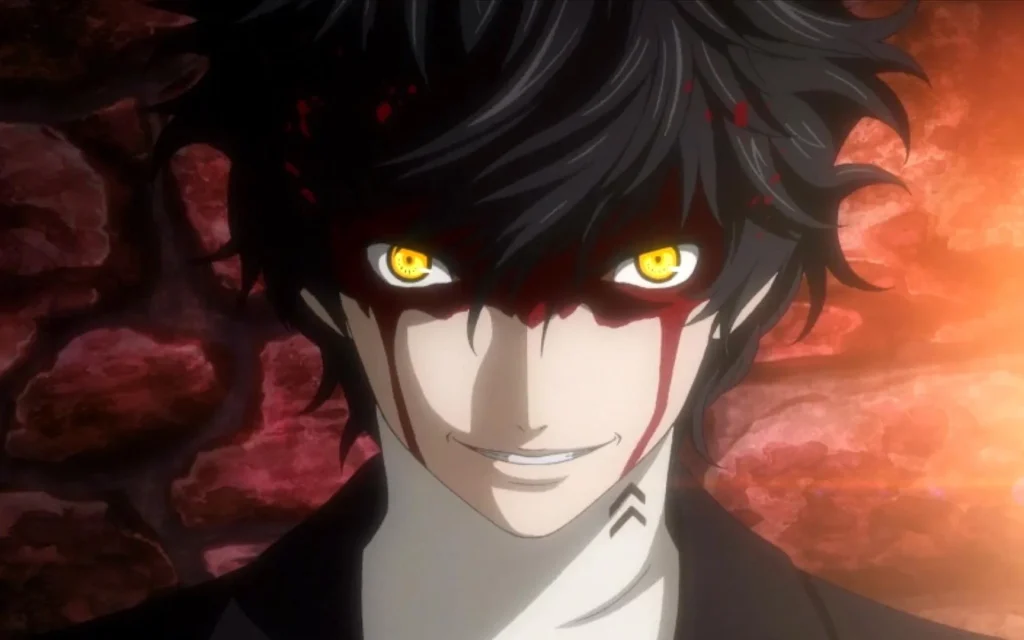
The story is more complex than simple “justice wins.” As the Phantom Thieves gain popularity, larger forces begin moving behind the scenes. The true mastermind is not what it first seems, and the ending is far more morally grey than defeating a single villain.
The protagonist’s code name is Joker. He has no default name in the game (in the manga and anime he is called Ren Amamiya, but in the game you can name him freely). The other Phantom Thieves are all distinct personalities – hot‑blooded, cool, nerdy, wealthy – each with their own reason for awakening. There’s also Morgana, a talking black cat (who insists he is not a cat) who serves as the team’s strategist and comic relief.
Daily Life: School, Jobs, Romance, and Dungeons
Persona 5 Royal’s gameplay is split into two parts: daily life (visual novel style) and dungeon crawling (turn‑based RPG).
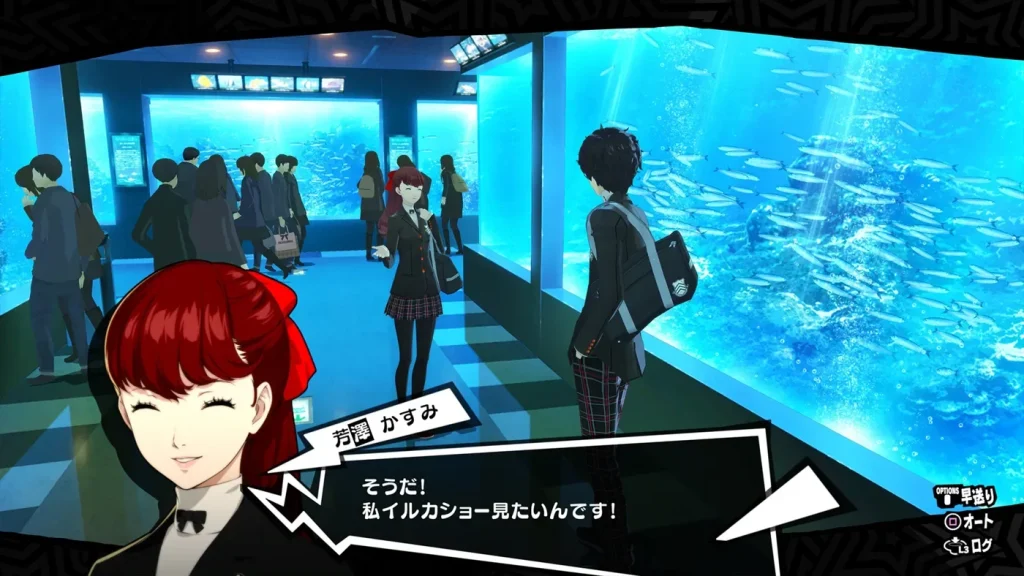
Each day is divided into “after school” and “evening.” You can freely choose how to spend your time – attend class, work part‑time jobs, hang out with friends (called “Confidants”), read books to raise your stats, or even start a romantic relationship. These activities directly affect five personal attributes: Knowledge, Guts, Proficiency, Kindness, and Charm. If your stats aren’t high enough, certain dialogue options and activities remain locked.
After certain story points, you can enter Palaces (main story dungeons) or Mementos (side dungeons). Palaces are hand‑crafted 3D levels with puzzles, stealth, and enemies. Mementos is a procedurally generated dungeon used for grinding money, completing requests, and capturing Personas.
Time management is the game’s core pressure – you cannot do everything. You have limited actions each day, so you must choose between raising stats, advancing Confidant links, or exploring dungeons. This calendar‑based system is a hallmark of the Persona series and a reason many players replay the game multiple times. For many, what truly draws them in isn’t combat, but the social simulation elements that make everyday life as compelling as dungeon crawling.
Personas and the “One More” Battle System
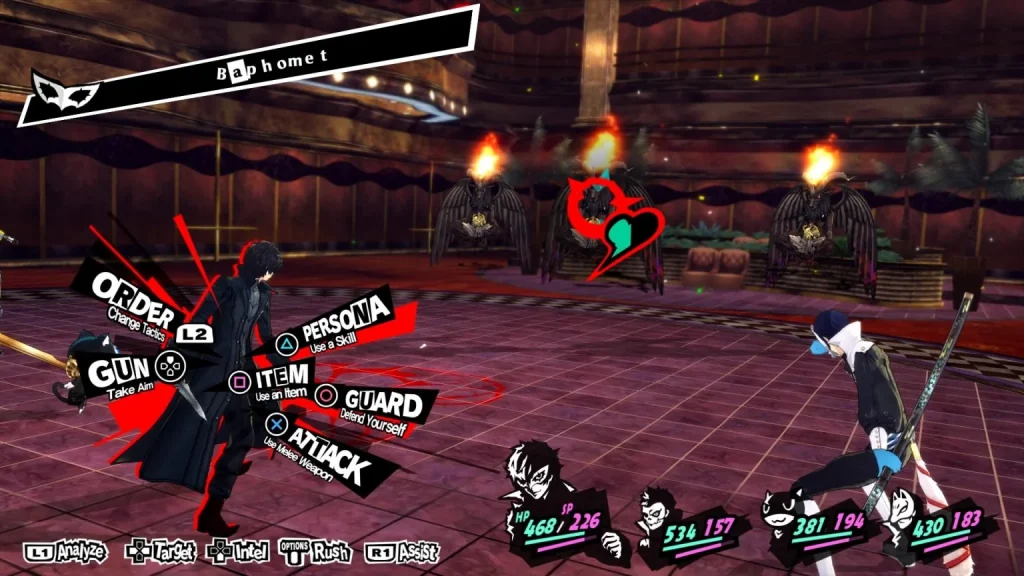
Persona 5 Royal uses turn‑based combat with a satisfying and accessible rule set:
- Weakness hits: Every enemy has elemental weaknesses (Fire, Ice, Electric, Wind, etc.). Hitting a weakness knocks the enemy down and gives you an extra action (One More).
- All‑Out Attack: When all enemies are knocked down, you can launch a flashy All‑Out Attack that deals massive damage and usually ends the fight.
- Baton Pass: After knocking down an enemy, you can pass your extra turn to a teammate, who gains a damage bonus. This is a Royal addition that makes combat much smoother.
You can negotiate with Shadows (enemies) to persuade them to become your Personas. You can also fuse two Personas to create a new one. There are over 200 Personas, drawing from mythology, history, literature, and urban legends. Only the protagonist can switch Personas in battle (party members have fixed Personas). Skill inheritance and fusion planning are key to late‑game team building.
The game offers multiple difficulty levels, from Safety (very easy, no death penalties) to Challenging (hard). You can change the difficulty at any time, even during battle. Safety mode is great for players who only care about the story; Hard mode demands serious optimization.
What Does the Royal Version Add?
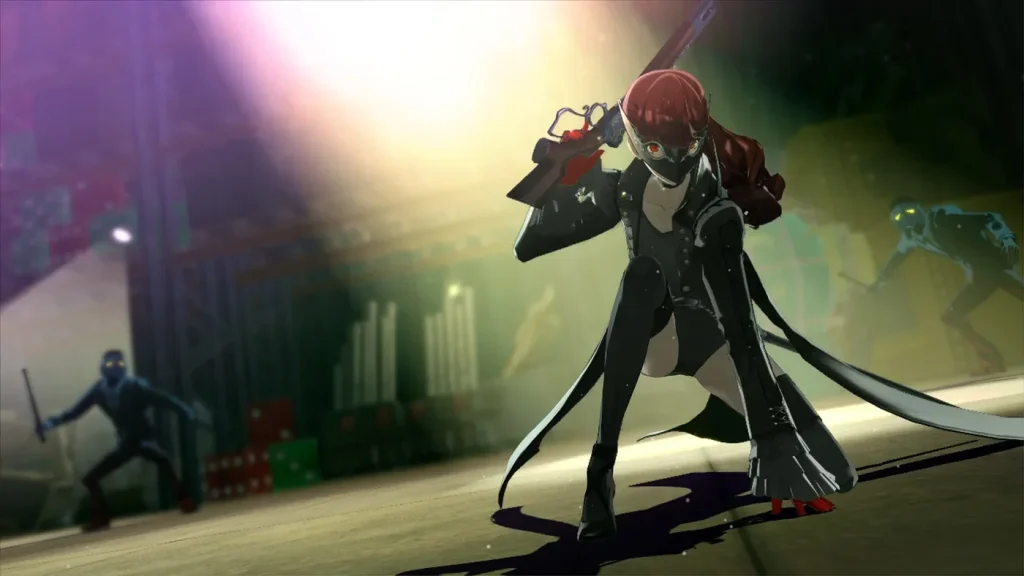
Persona 5 Royal is the definitive enhanced version of the original Persona 5. Major additions include:
- A third semester: A new story chapter of about one month after the original ending, featuring a new Palace, new bosses, and key characters Kasumi Yoshizawa and Takuto Maruki. This chapter shifts the core theme and is highly acclaimed.
- Two new characters: Kasumi Yoshizawa (Faith Confidant), an artistic gymnast and classmate, and Takuto Maruki (Councillor Confidant), the school’s counselor and a pivotal figure in the third semester. Kasumi is the face of Royal.
- Combat improvements: Baton Pass damage boost, smoother stealth, bullets that replenish after each battle (originally they didn’t until you left the dungeon), and new fusion options.
- Quality of life: Fast‑travel via TV monitors, a “Thieves Den” mode to view cutscenes, buy concept art, listen to music, etc.
- Technical attacks: Exploiting status effects (like Burn, Shock) for extra damage.
If you haven’t played the original Persona 5, just buy Royal – the original is no longer necessary. If you have played the original, the third semester and new characters alone are worth a second playthrough.
Spin‑offs
Persona 5 has several spin‑offs, but two stand out:
- Persona 5 Strikers (P5S): An action RPG set after the Royal ending. Developed by Koei Tecmo’s Omega Force, but the story is written by Atlus and it’s considered a canonical sequel. Note that it’s not a mindless musou game – it retains Persona’s elemental weaknesses, SP management, and fusion systems.
- Persona 5: Dancing in Starlight: A rhythm game for fans.
Other spin‑offs (like Persona Q2) exist, but they are far less influential.
Honest Assessment: Why It’s Loved, and Why Some Quit
Strengths:
- Distinctive art direction: Red‑and‑black contrast, pop‑art UI – still striking in 2026. Many people got into P5 not because of its JRPG mechanics, but because of its UI and music.
- Acclaimed soundtrack: Shoji Meguro’s acid jazz – tracks like Life Will Change, Last Surprise, and Beneath the Mask have reached far beyond typical JRPG fans.
- A Second Life in Tokyo: This is what truly sets P5R apart. You’re not just playing a hero’s journey; you’re living a highly stylized version of high‑school life that few RPGs attempt.
- Well‑written characters: Every Confidant has a complete story arc, not just throwaway quests.
- Massive length: One playthrough easily takes 80–120 hours.
Common criticisms (from real players):
- Extremely slow start: The tutorial and cutscenes before the first Palace (Kamoshida) take 3‑5 hours. Many players quit before ever reaching free gameplay.
- Okumura Palace: Long, repetitive puzzles, and a boss fight with counter‑intuitive mechanics – widely considered the most frustrating dungeon.
- Mementos: Late‑game grinding in Mementos is tedious, often described as “artificial length.”
- Kasumi Yoshizawa’s limited screen time: Despite being the face of Royal, she only becomes fully active in the third semester, with little presence before that.
- Haru Okumura joins too late: By the time she becomes a party member, the game is already in its final stretch, leaving little room to develop her or use her effectively.
- Akechi’s controversial writing: Some players feel his redemption arc is forced, and his motives and ending are divisive.
- Time pressure: Completionists may feel anxious about missing content. However, Royal is relatively forgiving – as long as you play normally, you’ll see most major content without a strict guide.
Port quality: The Switch version remains the weakest way to play due to visual compromises. For 4K displays, PS5 or PC is recommended.
Why Some People Can’t Get Into It
Persona 5 Royal is, at its core, a text‑heavy game. A huge portion of the playtime is taken up by story cutscenes, character dialogue, and daily life activities. If you prefer constant action, open‑world exploration, or fast‑paced gameplay – and dislike reading large amounts of text and advancing plot through conversation – then even if you acknowledge its quality, you might not have the patience to finish it. This is P5’s biggest turn‑off, even more so than the Okumura Palace.
If You’re Playing for the First Time
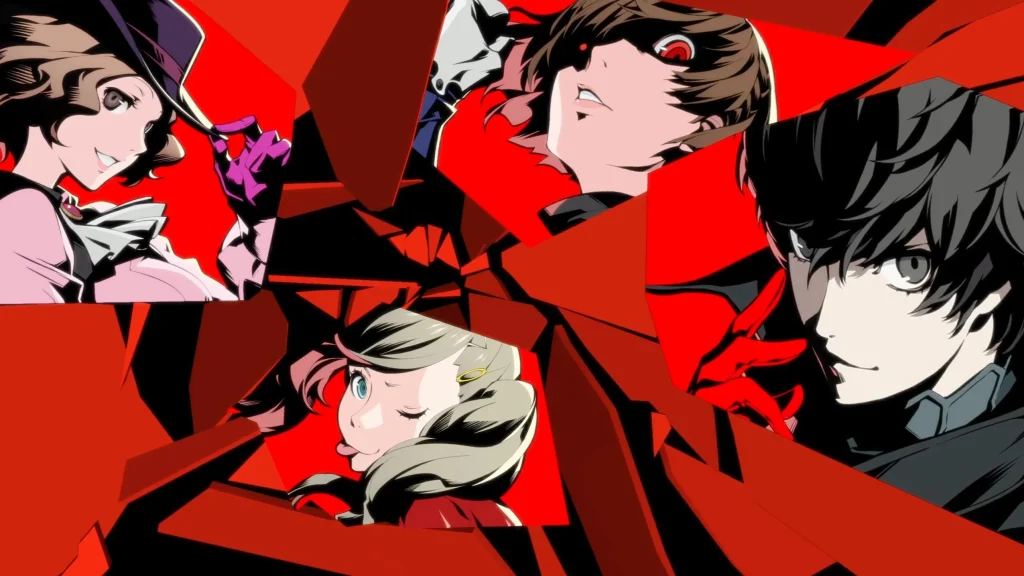
Start directly with Persona 5 Royal. I recommend not using a guide for your first playthrough – just go with your gut. Missing some content only gives you a reason for New Game+.
Persona 5 Royal may not be the most flawlessly designed JRPG, but it is arguably the one that best knows how to use style to make you overlook its flaws. If you can accept its long intro and enormous amount of text, then you’ll likely understand why so many players consider P5R their gateway into the world of JRPGs.
Copyright Notice
All game screenshots, character images, and related assets are the property of ATLUS and their respective rights holders. This article is an original compilation. Please credit the source when reposting.
Comments (0)
No comments yet