
What Is Chasing Kaleido? Gameplay, Romance, and Release Details Explained

Developed by Tencent’s Fizzglee Studio, Chasing Kaleido is a 3D heart-pounding RPG themed around motorcycles and beautiful girls, with a clear focus on “romantic exclusivity.” The story takes place in a near-future city called “Terminal,” where players take on the role of a “Navigator” who unexpectedly gains the “Kaleido Eye.” Together with a group of motorcycle-riding girls known as “Kaleido Knights,” they investigate the truth behind an anomaly called the “Convergence Phenomenon.”
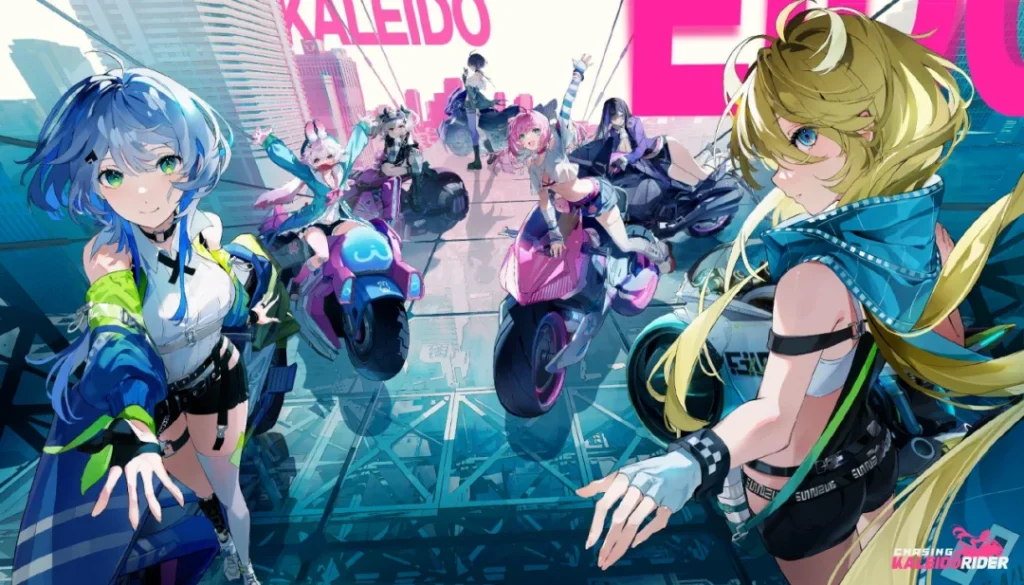
So, why should you pay attention to Chasing Kaleido? At a time when many anime RPGs deliberately keep character relationships vague in order to appeal to the widest possible audience, this game stands out by locking the protagonist’s gender to male, featuring an all-female cast, and putting romantic intimacy at the very center of its appeal. This “not for everyone, but for a specific audience” strategy is almost unique among recent domestic 3D games. This positioning is often referred to by players as “ML” (Master Love), meaning that the characters’ romantic feelings are clearly directed toward the protagonist rather than being left intentionally ambiguous.
As of June 2026, Chasing Kaleido has started its first closed beta recruitment in China, with plans to launch on PC, iOS, and Android.
To put it simply, Chasing Kaleido is more of a “dating sim + motorcycle pursuit” anime RPG than a traditional open-world game.
Setting: Terminal and the Sea of Consciousness
The game is set in a fictional near-future city called “Terminal,” which is quietly being eroded by a phenomenon known as the “Convergence.” Beyond the real world exists a separate realm of consciousness – the “Sea of Consciousness.” The Convergence is the overlapping of the Sea of Consciousness and the real world. Within the Sea of Consciousness, monsters called “Id Monsters” – born from humanity’s negative emotions – break into reality along “Convergence Points,” causing widespread disasters and crises in Terminal.

Fortunately, the city has a group of mysterious superpowered girls known as the “Kaleido Knights.” Riding customized motorcycles and wielding special weapons, these girls bravely fight Id Monsters many times their size, silently protecting the city’s peace. However, Id Monsters are products of consciousness; ordinary people cannot see them, and even the Kaleido Knights can only perceive them faintly.
Legend has it that only the “Kaleido Eye” can truly see an Id Monster’s weak points, and this special ability lies dormant within certain human “Navigators.” Players will investigate the anomalies in the city alongside the Kaleido Knights, uncovering the truth about the knights, the world, and themselves.
Core Gameplay: Semi‑Real-Time Card Combat and “Mounted Pursuit”
Chasing Kaleido uses a semi‑real-time card combat system. Players can form a squad of up to four characters, each with two unique skill cards, and energy regenerates automatically over time. During battle, you must identify enemy weakness types and use skill cards strategically to exploit them, defeating enemies more efficiently.
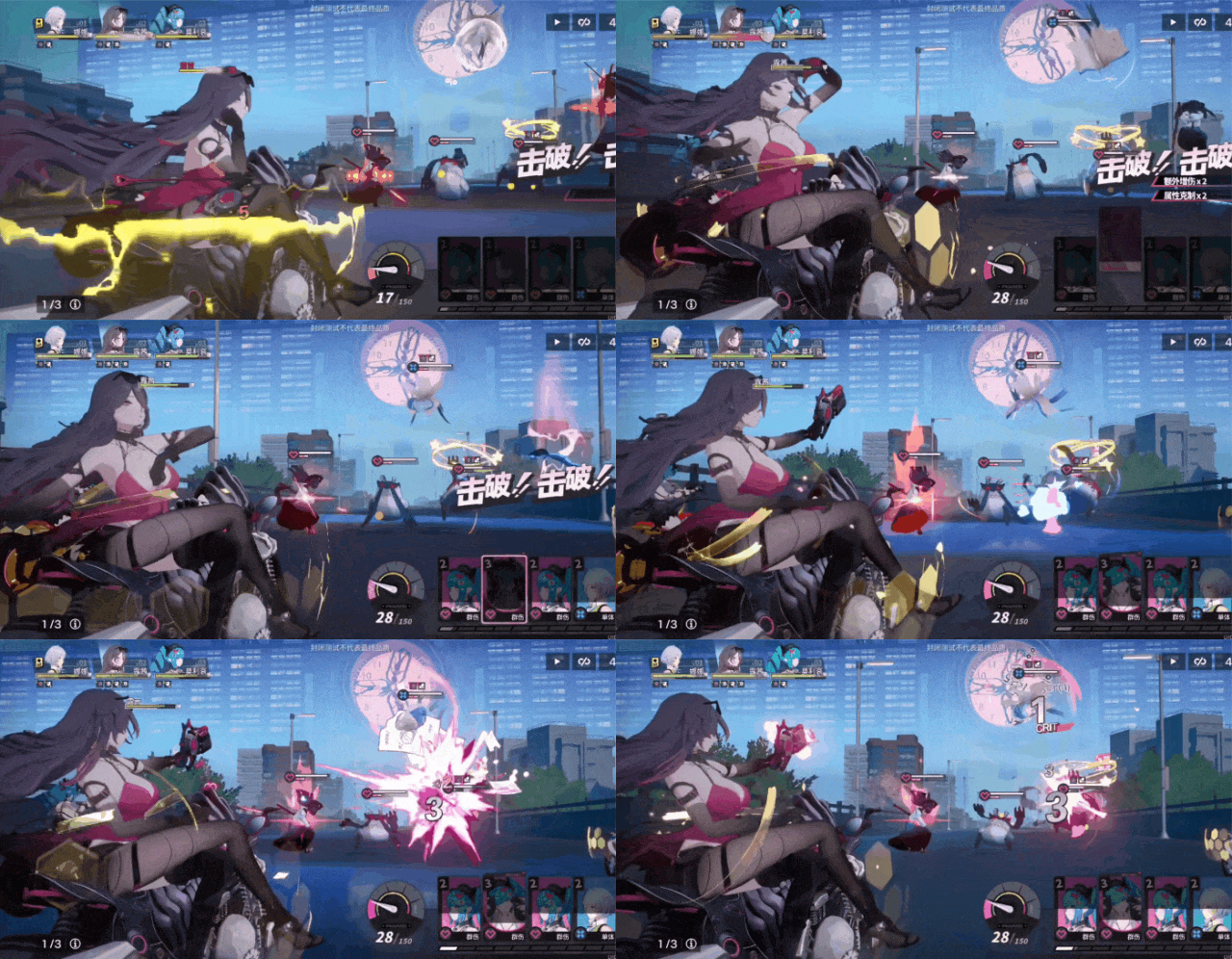
The key mechanic is break: you need to continuously attack with weakness attributes to deplete the enemy’s “break gauge,” then unleash a high-damage “all‑out attack.” Based on publicly available demos, combat focuses more on attribute matching and break mechanics rather than raw stat stacking.

The most distinctive visual element is the perspective – combat is not static, turn-based standing. Instead, it’s a 3D pursuit: the Id Monster moves ahead at high speed, and your squad chases it from behind on motorcycles. The whole battle emphasizes high-speed chasing rather than stationary turn-based fighting. The motorcycles themselves feature intricate metal chains, gear structures, and fantasy-style paint jobs.
Romance and Bonds: Player-Centric Romance as Emotional Companionship
Beyond gameplay, Chasing Kaleido invests heavily in building emotional relationships between the player and characters. From the start, the game committed to a male protagonist perspective, an all-female cast, and repeated use of the “romance RPG” label in overseas promotions. In today’s market, this clear “who we serve” stance creates stronger differentiation than the vague “general audience” approach.


To deliver a genuine dating experience, the game includes many companion-focused features. By raising affection, players can unlock each character’s personal story, date events, branching dialogue, touch responses, and intimate interactions. Small random animations on the main screen, pre- and post-battle dialogue, voice lines triggered by certain events – these seemingly minor details collectively reinforce a sense of presence and immersion.

Additionally, a keepsake album function records the date you first met each girl, and every interaction and date is logged. The item system also includes couple-themed accessories, further deepening the romantic immersion. The entire story is presented in 3D anime-style cutscenes, no traditional visual-novel talking heads, and story segments intersperse small puzzles and detective sections, making the dating/raising experience more than just reading text.
Controversies and Challenges: Player-Centric Romance Is a Double‑Edged Sword
The “Master Love” label brought Chasing Kaleido early buzz, but it also carries risks. On one hand, this direct positioning creates a clear identity among core players, precisely targeting the emotional service niche. On the other hand, it must face a highly demanding community evaluation system.
In the current landscape of romance-focused anime games, Snowbreak: Containment Zone has established itself with high‑quality 3D interactions and straightforward storylines; Goddess of Victory: NIKKE continues to attract spenders with excellent dynamic illustrations and fanservice; Azur Promilia is another upcoming title trying to blend romance with open‑world design. Compared to these, Chasing Kaleido‘s differentiation lies in its unique “motorcycle racing + dating” theme and the boldness of making kissing and dating core to its worldview. Whether it can stand out in this fierce competition depends on the actual density of romantic content and the depth of character writing seen in upcoming tests.
What It Really Sells Isn’t Motorcycles, But the Feeling of Romance
Chasing Kaleido‘s biggest selling point isn’t the motorcycles, nor the combat – it’s the attempt to put “romantic feeling” at the very center of the entire game experience. Rather than chasing every audience at once, the game makes a deliberate choice about who it wants to appeal to. In today’s domestic anime game market, this straightforward “I’m here for romance” attitude has become surprisingly rare. If you’re tired of games that keep romantic relationships deliberately vague, Chasing Kaleido may be worth keeping an eye on.
Whether it can become the next major ML success story remains to be seen. The answer isn’t on paper, but in the test server.
Copyright Notice
All game screenshots, character images, and related materials referenced in this article are the property of the developers and publishers of Chasing Kaleido.
Comments (0)
No comments yet