
Gamescom 2026 Opening Night Live: Chinese Games Are Moving From “Showing Up” to Taking Center Stage

Early this morning, Gamescom’s Opening Night Live kicked off. Two hours, over 50 games. As lively as ever.
But one shift was impossible to miss: Chinese games aren’t just “making an appearance” anymore.
By rough count, 13 Chinese-developed titles made it to the main stage. Meanwhile, in the Gamescom Awards nominations announced alongside the event, all five spots for “Best Mobile Game” went to Chinese titles — Arknights: Endfield, Genshin Impact, Silver Palace, Where Winds Meet, and Zenless Zone Zero.
Taken together, these shifts suggest that Chinese games are moving from simply showing up to taking center stage.
Major Studios Are Actively Stepping Out of Their Comfort Zones
The first game to appear at Opening Night Live was miHoYo’s Nodus Fall. The slot itself is telling — Chinese studios can now claim the opening spot at Gamescom.
But what’s more noteworthy than the placement is the game itself.
Realistic fantasy, multiplayer co-op, a focus on spacing, timing, and combat mind games — without the logo, you’d be hard-pressed to recognize this as a miHoYo title. It doesn’t lean on the visual language miHoYo has been most known for. Instead, it’s actively stepping away from the “anime + gacha” label. This might be the most interesting directional shift to watch from this year’s Gamescom: a company built on anime aesthetics is making a statement that it wants to be more than just anime characters and gacha mechanics.

If Nodus Fall represents miHoYo changing its playbook, then NetEase’s Ananta feels like proof that Chinese open-world games have moved from “can we make one” to “what else can we do with it.”
What stood out this time wasn’t just the scale of the city, but how the game weaves real-world urban spaces, vehicles, vertical traversal, and multiplayer experiences into a single open world. After three years, Ananta finally has a more concrete release window — January 15, 2027. It’s still a high-risk project, but at least from what we’re seeing now, it no longer feels like just an impressive concept trailer from years ago.
Chinese Studios Are Pushing the Boundaries of Action Games
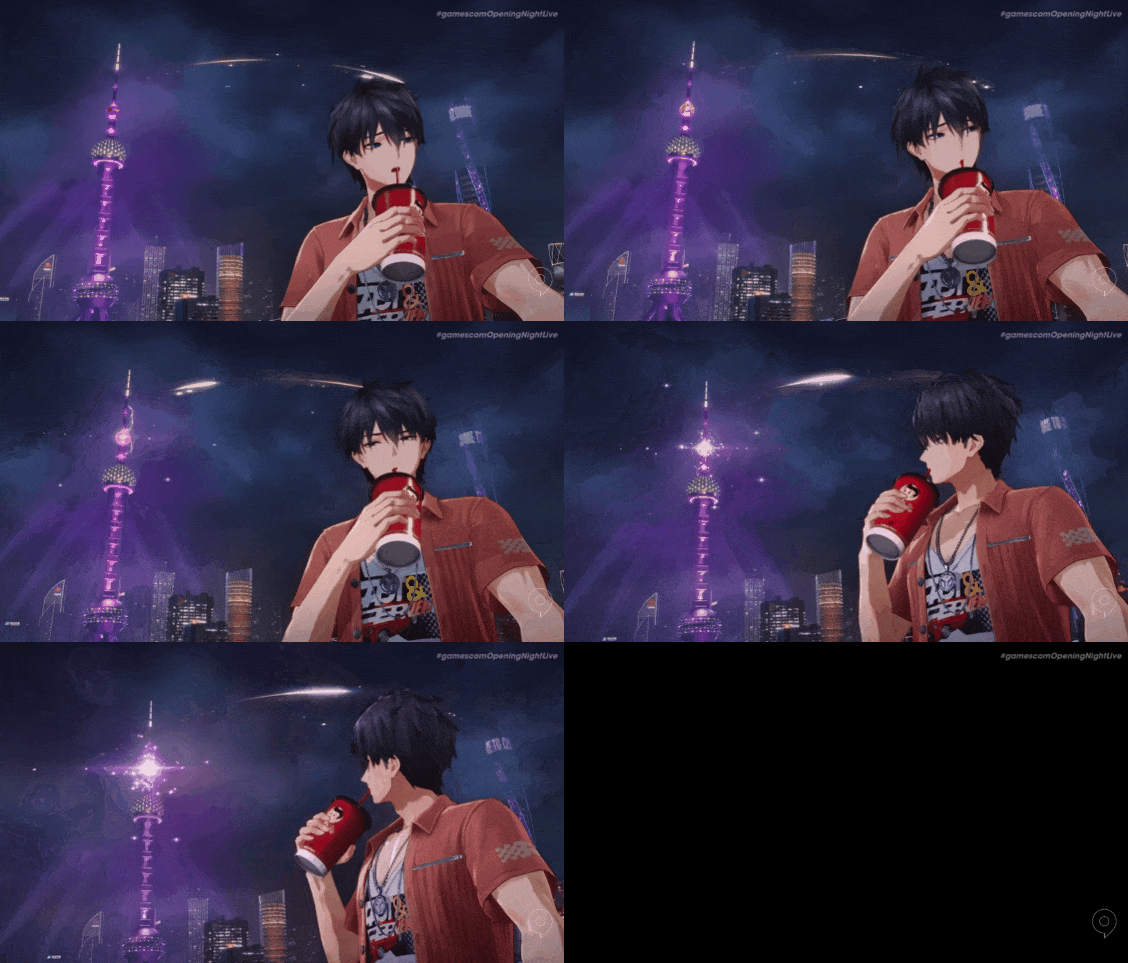
Tencent’s Ruin Tide takes a different approach. Instead of focusing on a massive map, it doubles down on fast-paced action, aerial combat, and cinematic executions. From this new trailer, it’s clear Tencent isn’t trying to build “another open-world game” — it’s aiming for an action title defined by its combat spectacle.
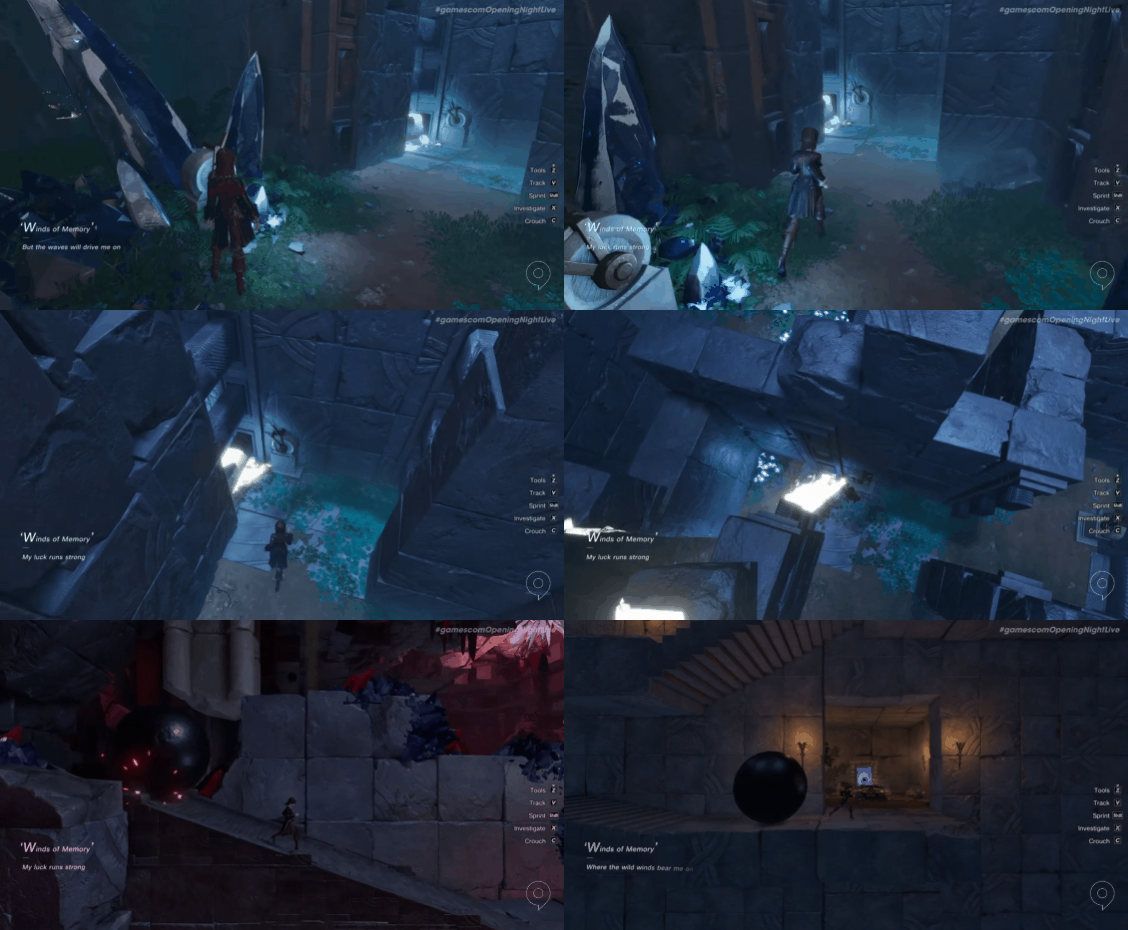
Monster Hunter Outlanders offers a counterpoint. It continues pushing the “co-op hunting” formula onto mobile platforms. The new gear and elder dragon boss reveals show that traditional console-grade co-op hunting gameplay is steadily extending its reach to mobile.

Chinese Developers Are Expanding Into Less Familiar Genres
In recent years, Chinese games that made waves overseas were most often open-world titles, action RPGs, or Souls-likes. But this year’s lineup is notably more diverse.
Silver Palace from Happy Elements is a good example. Instead of competing in the crowded open-world space, it leans into “detective action RPG.” The trailer opens with an operating room autopsy scene, then shifts to the protagonist investigating cases in a dangerous district — combat, exploration, and deduction all mixed together, with a multiplayer mode called “House of Greed” teased at the end. It’s too early to say whether this direction will pay off, but at the very least, it shows developers are starting to ask a different question: beyond replicating proven formulas, what else can we create?

Genigods: Nezha takes yet another path. Instead of following Western fantasy templates, it builds its world directly around Chinese mythology — Nuwa, Lingzhu, and a primordial world of gods and legends. The combat system is woven into the mythology, with players facing towering gods in battle. This kind of subject matter used to appear mostly in smaller indie titles; now it’s emerging in higher-budget commercial productions.

If the previous titles still operate within the action RPG space, The Resistances is the most radical departure. It’s a first-person shooter set during China’s War of Resistance, blending espionage, stealth, combat, and puzzles into a setting rarely seen in modern commercial FPS games. From the trailer, the battle scenes certainly have presence.

Animal Punks represents yet another interesting direction. It lets players generate weapons, vehicles, and skins using natural-language prompts or doodles — this kind of “generative interaction” is starting to find its way into traditional action games. It’s too early to tell if it’ll work, but the direction is worth watching.
Some Games Succeed Not by Specs, but by Instant Recognition
Showa American Story is different from all the above.
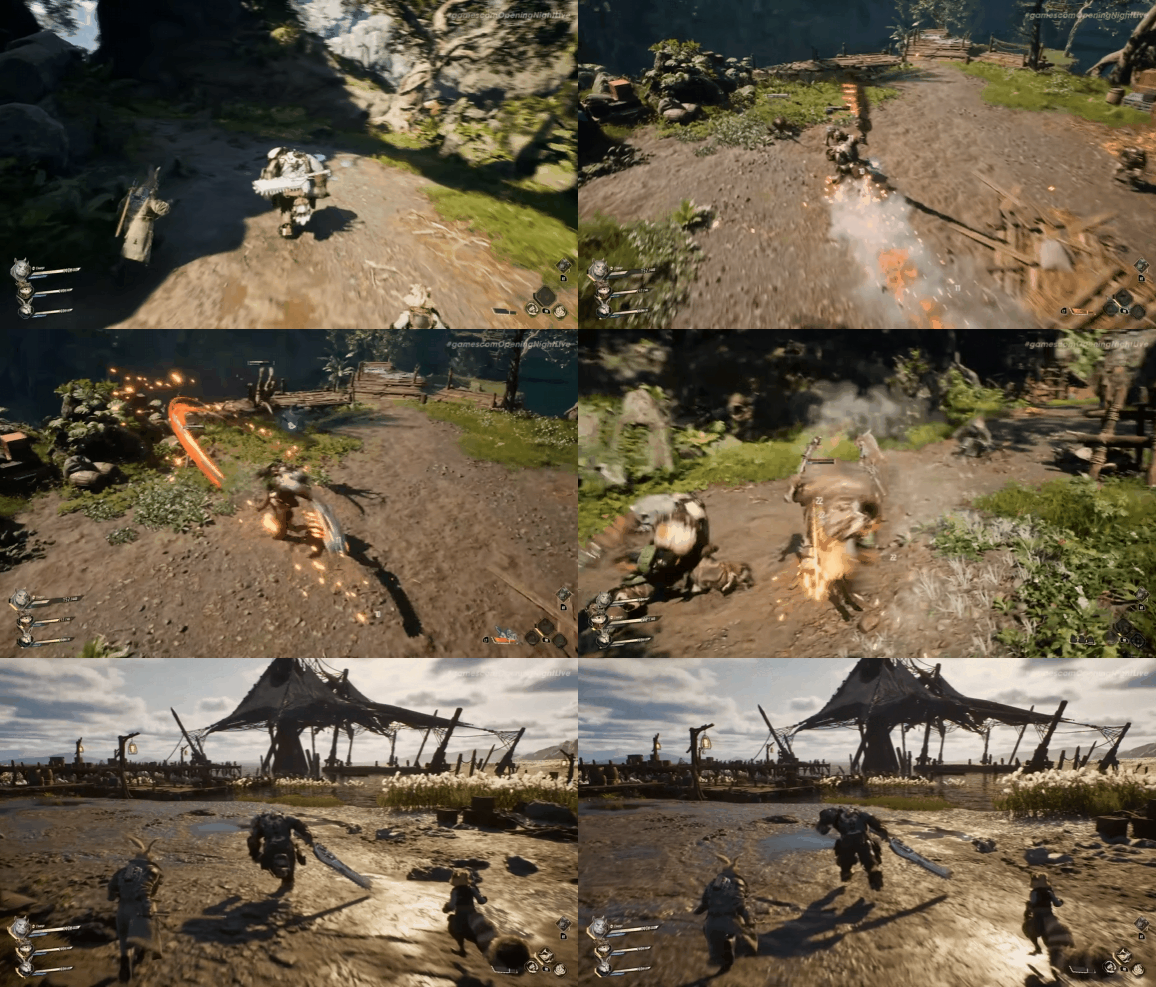
In recent years, Chinese games have loved to tout UE5, open worlds, massive maps, and hundreds of hours of content. But what makes Showa American Story special is that it doesn’t need any of that to explain itself.
Japan buys America. Showa 66. A resurrected girl. An RV road trip across the United States. A rocket shaped like the American flag. You know exactly what kind of game it is the moment you see it. In an increasingly crowded Chinese game market, that kind of instant identity is incredibly valuable. At Gamescom, the studio set up 42 demo stations, giving visitors a substantial hands-on version to play. Expected to launch on PC and PS5 within the year.

Major Western Publishers: Classic IPs Are Living Longer
Another clear trend at this year’s Gamescom: classic IPs are becoming more enduring.
The Witcher 3 is still adding content over a decade later — the new expansion Songs of the Past will deliver new story content, gear, and gameplay systems, alongside the September 29 remastered update for The Witcher 3.

Final Fantasy VII Revelation takes a different route. It’s pushing the original toward modern AAA RPG territory with a larger open world and more systems — free exploration of the entire planet via the Highwind, parachute drops, grappling hook climbing, submarine combat, plus the FITS system that lets characters switch between Final Fantasy jobs. In essence, it’s using modern tech to rebuild what we imagined FF7 could be when we were kids. Set for Spring 2027.

Control Resonant is perhaps the most interesting of the bunch. This time, players follow Jesse’s brother, Dylan Faden, on a new journey. Jesse still plays an important role in the story, but the spotlight shifts. The new game revolves around the “Resonant” phenomenon, with significantly upgraded supernatural combat and more destructible environments. Set for 2027.

Both Old and New IPs Are Competing for Instant Recognition
Established IPs have existing characters and worlds to rely on. New IPs don’t. So they have to tell players who they are at first glance.
Metro 2039 continues the series’ signature survival-horror FPS formula, and this time it’s earned five nominations at the 2026 Gamescom Awards. Set for February 2027.

Dungeons & Dragons: Warlock blends D&D spellcasting with real-time combat, with impressive terrain manipulation and time-stop evasion mechanics. Magic serves as both a combat tool and an exploration aid. Set for 2027.

1001 Threads of Mizan is a mythic ARPG that blends technology and magic, supporting 1-3 player co-op. Its setting alone makes it stand out.

Exodus comes from a new studio formed by former BioWare members — sci-fi, choice-driven narrative, companion command systems. Expected in 2027.

For new IPs today, the first competitive edge isn’t just graphics — it’s having a world and identity that players can recognize instantly.
What’s Truly Worth Noting: The Event Itself Keeps Growing
This year’s Gamescom brought together over 1,600 exhibitors from 67 countries, spanning 233,000 square meters — and for the first time, exhibition space sold out completely.
At a time when everyone is used to watching trailers, scrolling through announcements, and cloud-gaming from home, in-person game events haven’t disappeared. Because games are ultimately something you need to “get your hands on” — watching a ten-minute trailer and sitting down to play for thirty minutes are two entirely different experiences.
So perhaps what’s most worth noting about this year’s Gamescom is no longer just “how many Chinese games showed up,” but where they’re starting to appear. From exhibiting, to taking the main stage, to competing for awards — China’s game industry is moving from “coming here to show what we’ve made” to having a place of its own.
Copyright Notice: All information in this article is compiled from publicly available Gamescom conference content and on-site coverage, and is intended solely for game news introduction and commentary purposes. All related game assets are the property of their respective developers and publishers.
Comments (0)
No comments yet