
Hollow Knight in 2026: Is It Still Worth Playing? Is It Too Hard? Will New Players Quit? Should You Play Silksong First?

If you ask a veteran player, “What’s so good about Hollow Knight?” they might say, “Go fight Nightmare King Grimm.” (A late‑game boss considered a classic by countless players.)
If you ask what’s bad about it, they might add, “First, finish the White Palace.” (One of the game’s most famous platforming sections.)
That’s Hollow Knight. An action game that makes you rage‑quit, pick the controller back up, curse the designer, and then immediately recommend it to a friend. Nearly a decade later, it still holds an “Overwhelmingly Positive” rating on Steam, and its sequel, Silksong, finally launched in 2025.
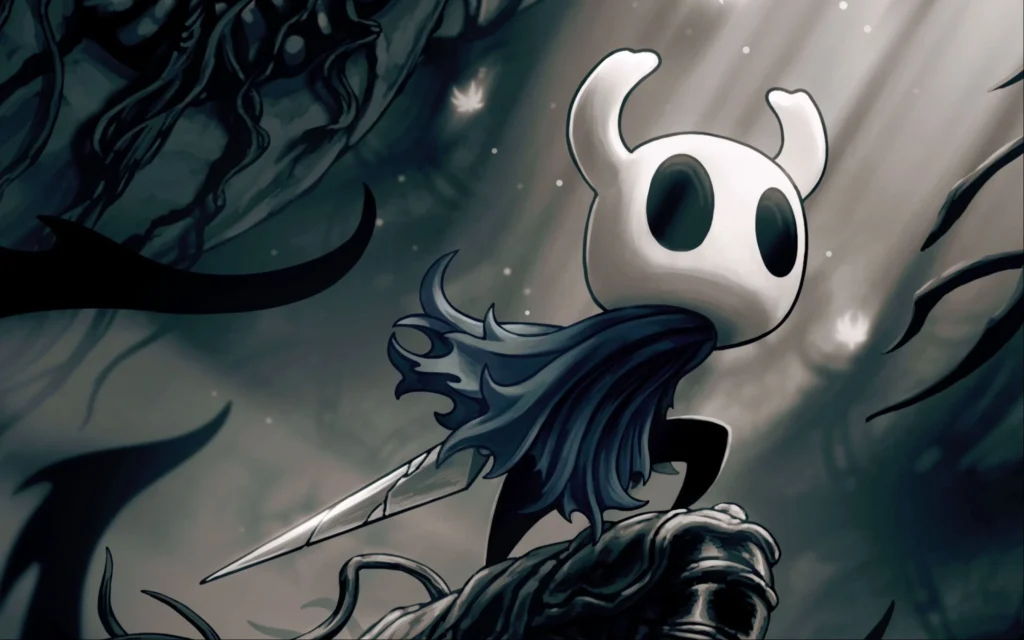
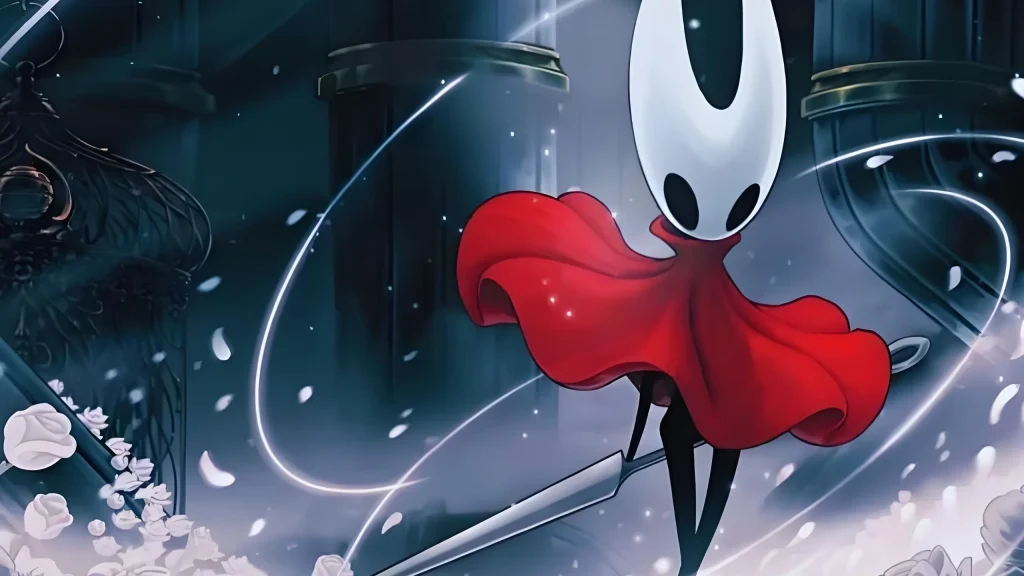
But for new players who only hear about it in 2026, the most direct questions are:
If I jump in now, will I get frustrated and quit, or will I discover a hidden gem?
This article doesn’t oversell or trash the game. It just talks about the real experience – what you’ll actually encounter, and whether the game is right for you.
How Hard Is Hollow Knight, Really?
Straight answer: It’s hard, but not because of execution difficulty – it’s because of “information asymmetry.”
In other words, you don’t get stuck because your thumbs are slow. You get stuck because the game doesn’t tell you where to go, how to fight, or what that thing is.
- No map at the start – you’re left to wander.
- Even after you get a map, you can’t see your position unless you equip a specific charm (and charm slots are tight early on).
- Boss fights don’t come with tutorials – you have to die several times just to learn their attack patterns.
- When you die, you leave a shade behind and need to run back from your last save point, with all enemies respawning along the way.
All of this makes the first 10 hours feel like a brutally punishing introduction to exploration. But once you get past the adjustment period – for example, once you learn how to pogo (striking an enemy or spike in mid‑air to bounce), find a few key charms, and memorize boss patterns – things start to click.
So the difficulty isn’t “anti‑human.” It’s “won’t hold your hand.” If you’re willing to put in the time to learn through trial and error, the game will eventually reward you. If you only have half an hour a day and don’t want to think, stay away.
Slow Early Pacing: The Real Reason New Players Quit Isn’t Bosses – It’s the First Few Hours
Many reviews focus on tough bosses and tedious corpse runs, but veteran players know: What really makes newcomers quit is the slow pace of the first 2‑3 hours.
- You start with only walk and jump, and your only attack is a short nail.
- The first area, Forgotten Crossroads, is grey, oppressive, and has few enemy types.
- No dash, no double jump, no spells – movement feels very clunky.
- You have to beat the first boss, False Knight, just to get your first real ability – and he’s not that strong, but you’ve spent half an hour fighting him with the most basic moveset.
In other words, you haven’t even experienced the thrill of “pogoing across the map on enemies’ heads” before you have to endure a pretty dull start. Many players quit right there – not because they can’t win, but because they think, “This is supposed to be a masterpiece? Really?”
The good news: once you unlock dash, double jump, and the Dream Nail, the game’s pace picks up dramatically. But the slow early hours are an unavoidable design flaw.
Getting Lost and Corpse Runs: Two Real Pain Points, and Two Sides of the Same Design
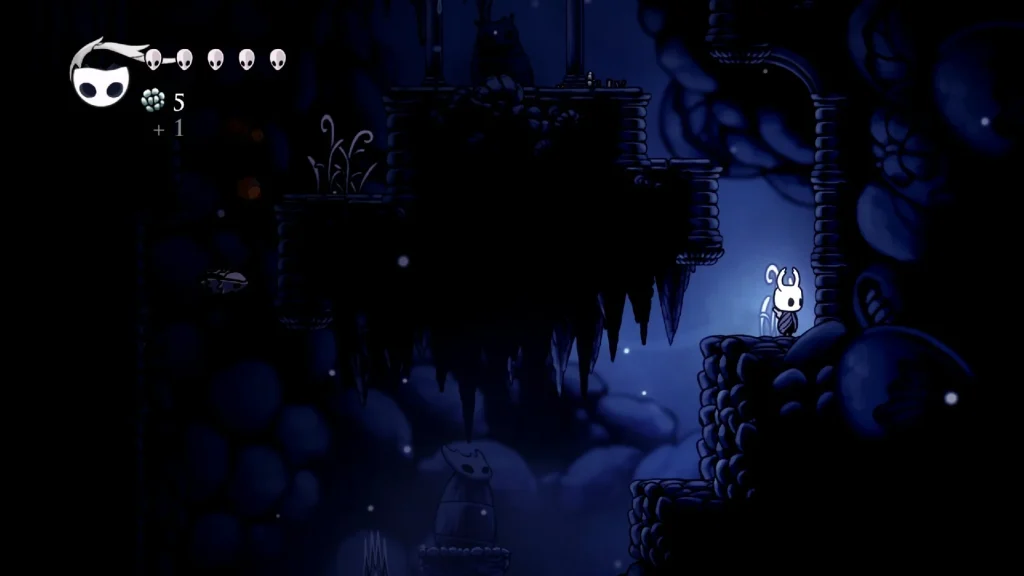
First, getting lost.
Hollow Knight’s world is a 3D network of areas connected by hidden passages, one‑way doors, and elevators. When you first enter a new area, the map is completely black. You have to find the cartographer (a bug hiding in a corner) to buy the map. Even after you buy it, you need to equip the “Wayward Compass” charm to see your position – and early charm slots are very limited.
The result: for the first 10 hours, you’ll probably ask yourself “Where did I come from?” many times.
But that’s exactly what the designers intended: to make you truly remember the world, rather than follow an arrow. Long after you finish the game, you can still recall the sound of rain in the City of Tears, the darkness of Deepnest, the pink glow of Crystal Peak. That feeling of “discovering things on your own” is something most fast‑paced games can’t give you.
Now, corpse runs.
When you die, you leave behind a shade. Your Soul gauge is halved. You have to run back from your last save point, defeat the shade to restore your Soul capacity. If you die again on the way, all your Geo (currency) from the first death is permanently lost.
That sounds scary, but it’s not as brutal as it seems. By the mid‑game, Geo has limited uses – the things you truly value (charms, abilities) are never lost. Most boss rooms have a save point close by, so the run‑back distance isn’t long. The corpse run is more a mechanic that makes every death feel weighty, not pure torture.
Hollow Knight vs. Silksong in 2026: Which One Should You Play?
Silksong, the sequel fans waited six years for, finally released in 2025. For newcomers, the most practical question is: Which one should I play first?
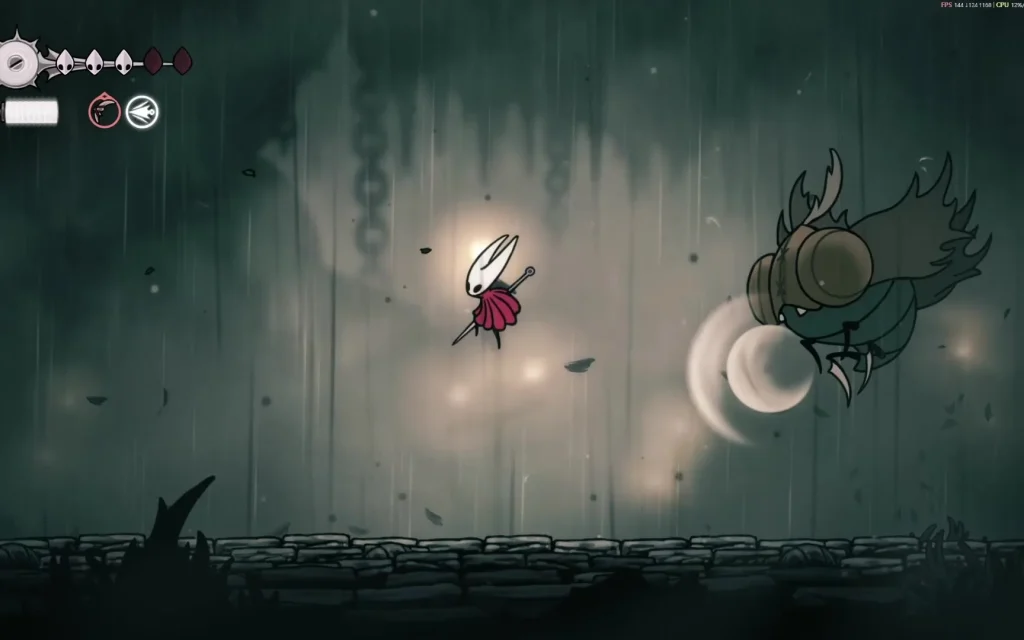
The short answer: Silksong has a faster overall pace, richer combat options, and a gentler learning curve for new players. Hollow Knight, on the other hand, still offers a more complete growth arc and a more classic Metroidvania exploration experience. For players new to the series, I still recommend starting with the original – because it will show you why this series is repeatedly called a masterpiece, and you can seamlessly go into the sequel after finishing it.
Who Is Hollow Knight For? Who Will Probably Hate It?
✅ It’s for you if:
- You enjoy exploring maps on your own and don’t mind getting lost. In fact, you get excited when you find a hidden passage by yourself.
- You can tolerate a slow start and are willing to push through the initial hours before you unlock movement abilities.
- You can handle repeated failure – fighting a boss dozens of times won’t make you rage‑quit (or if it does, you’ll pick the controller back up).
- You have patience for fragmented storytelling – you’re willing to read NPC dialogue and notice environmental details to piece together the lore.
- You can set aside at least one continuous hour per session.
❌ It’s not for you if:
- You hate getting lost and want quest markers, auto‑navigation, and map question marks.
- You have little patience – the first two hours feel “boring” and you’d quit immediately.
- You only have small pockets of half‑hour playtime – no time for exploration, trial‑and‑error, or boss memorisation.
- You dislike the idea of “run back to your corpse after death.”
- You play games purely to relax and don’t want any challenge.
Is It Worth Buying in 2026? My Honest Take
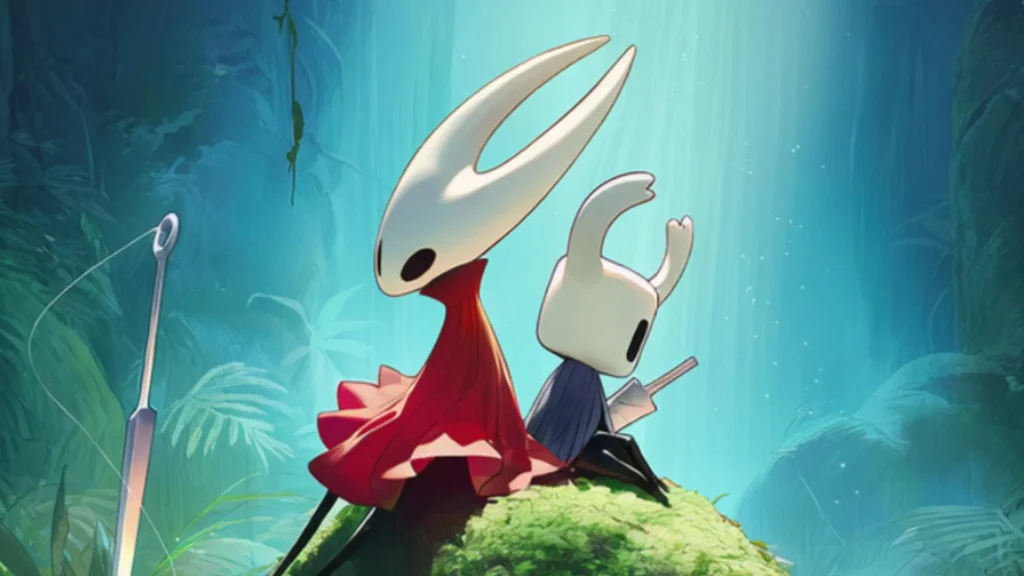
If you belong to the “for you” group, Hollow Knight is still one of the most worthwhile Metroidvanias you can buy. A few bucks for dozens of hours of solid challenge. After finishing, there are achievements, boss rush modes, Steel Soul mode, and the sequel Silksong to continue with – plenty of content.
If you belong to the “not for you” group, don’t force it. It’s not that you’re “not good enough” – you just have no reason to torture yourself. Pick up Silksong instead, or play something more relaxing.
Hollow Knight no longer needs anyone to prove whether it’s a masterpiece.
The only real question is: are you willing to accept its rules?
If you are, it will give you an adventure that few other games today can match.
If you aren’t – that’s fine, because it was never a game trying to please everyone.
The greatness of Hollow Knight was never about how hard it is.
It’s about daring to ask players to invest patience, and then repaying that patience with equal sincerity.
Games like that are getting rarer in 2026.
Copyright Notice
All game screenshots, character images, and related assets referenced in this article are the property of Team Cherry and their respective rights holders. This content is an original compilation. Please attribute the source when reposting.
Comments (0)
No comments yet