
The Sims 4 in 2026: Is It Still Worth Getting Into After 12 Years and 100+ DLC Packs?

Release Date: September 2, 2014 | Developer: Maxis | Publisher: Electronic Arts | Platforms: PC, PS4, PS5, Xbox One, Xbox Series X|S | Genre: Life Simulation | Price: Base game is free | Languages: English, Simplified Chinese, Traditional Chinese, and others

A game that’s over twelve years old, with a free base game, more than 100 paid expansions, and tens of thousands of Steam players — that’s The Sims 4 in 2026. It’s not just an aging game from the past. It’s an ongoing ecosystem of constant updates, heated debate, and genuine devotion.
From Premium to Free-to-Play: The Barrier Is Gone
In October 2022, The Sims 4 base game went free-to-play. Players can now download and play it at no cost across PC, PS4, PS5, Xbox One, and Xbox Series X|S.
That means anyone interested in “creating Sims, building homes, and living virtual lives” can jump in with zero upfront cost. EA also gave previous owners of the base game free access to the Desert Luxe Kit as a thank-you gift.
Gameplay: Create, Build, Live
The Sims 4 gameplay can be broken down into three core pillars: Create-a-Sim (CAS), Build Mode, and Live Mode.
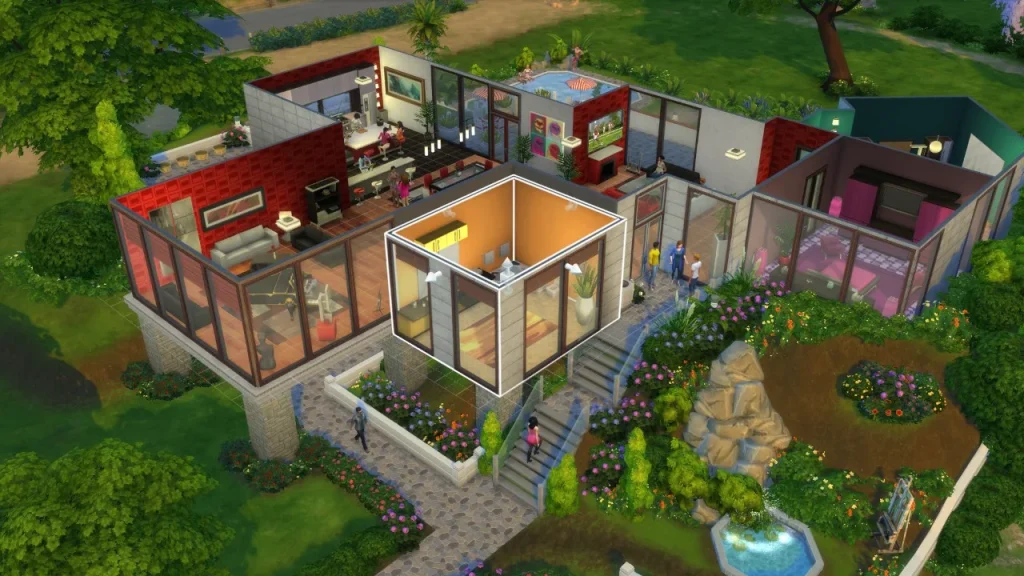
Create-a-Sim is where many players start their journey. Compared to The Sims 3, the fourth installment makes it easier to shape Sims’ bodies and faces — simply click and drag to adjust. Many players find it easier to create better-looking Sims than in previous games. Build Mode has always been one of the series’ most popular features — designing a house from scratch, placing furniture, decorating yards. Players often note that building feels easier than in The Sims 3, though it’s just as easy to lose half a day to it.
Live Mode is the main stage. You control your Sims as they work, socialize, develop skills, pursue aspirations, and live out a virtual life. The emotion system is richer than before — moods affect behavior and decision-making. The interface is clean and minimal, different from The Sims 3, though you can switch back to a more traditional control scheme in the settings.
Of course, if you’ve played The Sims 4, you’ve probably experienced something like this: you queue up a few actions — use the bathroom, take out the trash, play chess. Your Sim stands in the middle of the room for a while, then slowly walks to the bathroom. After using the toilet, “wash hands” automatically jumps to the front of the queue, overriding everything. Hands washed, another pause. Taking out the trash leads to either the outdoor bin or the floor — it’s anyone’s guess. And “play chess”? Sometimes it vanishes from the queue entirely. Sometimes it eventually happens. Sometimes not.
This isn’t an isolated issue. It’s one of The Sims 4‘s most enduring points of contention among players.
The Controversies: DLC Overload and Performance Issues
EA has released over 100 paid expansions for The Sims 4. Expansion Packs, Game Packs, Stuff Packs, Kits — the list is long, and the total cost adds up. At full retail price, buying all available content could run you several hundred dollars — possibly over $1,000.
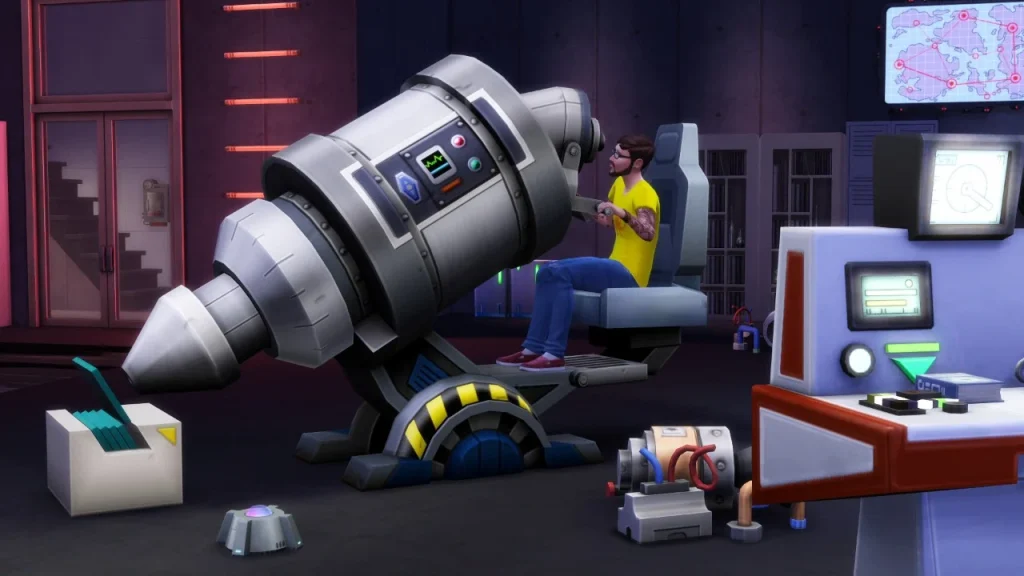
On Steam, The Sims 4 has accumulated over 100,000 user reviews and maintains a high approval rating, showing that a large number of players continue to enjoy it. At the same time, as of this writing, its Metacritic user score sits at 4.4 out of 10, with 49% of users leaving negative reviews. Common criticisms: some players feel that features present in The Sims 3 were removed in the base version of The Sims 4 and later reintroduced through updates and paid DLC; the game still suffers from bugs and performance issues years after launch; some players and community discussions have suggested that the game’s early development direction — influenced by online service models — may have affected certain system designs.
These two sets of data aren’t contradictory. They paint a clear picture of The Sims 4‘s reality: many players criticize it while continuing to play, simply because nothing else on the market quite offers what it does.
EA continues to release updates addressing performance, bugs, and system tweaks. Whether these fixes actually resolve the underlying issues remains to be seen, but at least the developer appears to be taking player feedback seriously.
Is It Still Worth Getting Into in 2026?
That depends on two questions.
First: the base game is free. Why not try it?
Free means zero risk. Download it, create a Sim, build a house, live a few days — if it’s not for you, uninstall and move on. From that perspective, The Sims 4 is always worth “trying.”
Second: how should you approach the DLC?
This is the real question. The total cost of all DLC far exceeds the base game’s price — a complete experience can run you hundreds of dollars, and not all DLC is created equal. Some expansions are widely considered essential; others are criticized as “too little content for the price.”
For new players, the recommended approach is: start with the base game, figure out what you enjoy, and only then buy DLC that matches your interests.
What DLC Should New Players Buy?
The answer depends on how you want to play. EA runs regular sales — wait for those.
If you buy just one: Seasons
Adds weather and seasonal changes, making the world feel more alive. Widely considered one of the best-value expansions.
If you buy three: Seasons + City Living + Cats & Dogs
- Seasons: Weather system, essential for world immersion
- City Living: Adds city maps and apartments — great for urban vibes
- Cats & Dogs: Pet system — perfect for animal lovers
If you have more budget: Get to Work, Growing Together, Cottage Living
- Get to Work: Follow your Sims to work — ideal for career-focused players
- Growing Together: Family and generational play — great for legacy players
- Cottage Living: Farming and simple living — for slower-paced, rural gameplay
A note on Kits: These are smaller content packs. They’re usually not worth buying at full price — wait for a sale.
Who Is The Sims 4 For?
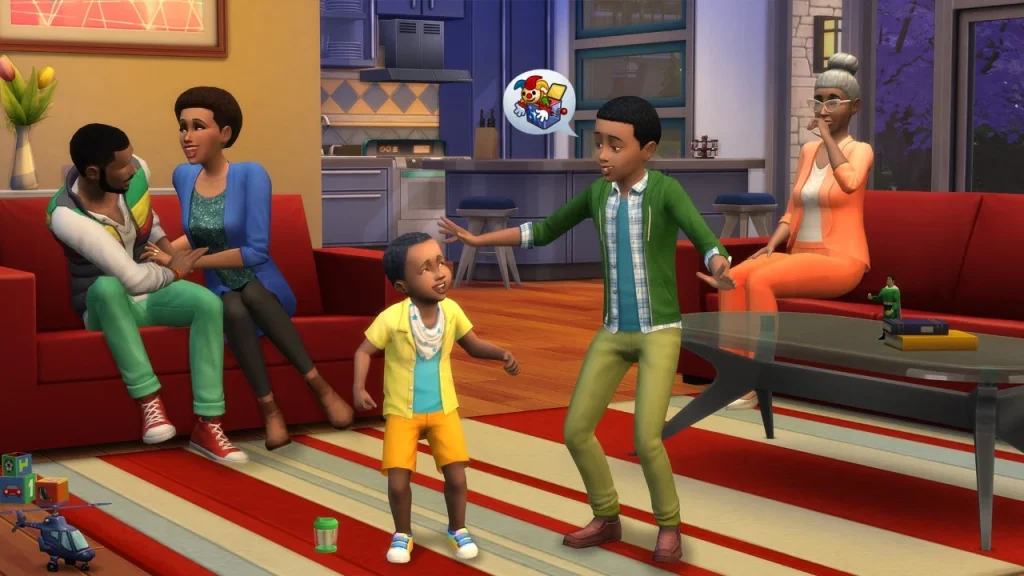
Recommended for:
- Players who enjoy casual simulation games and creative freedom
- Those who love character creation, building, and decorating
- Fans of role-playing and virtual life experiences
- Players who prefer slower-paced, “relaxing” games
- Anyone who likes to pick up and play in short bursts, with the ability to pause anytime
Not recommended for:
- Players who prefer fast-paced, goal-driven games
- Those unwilling to deal with a massive DLC ecosystem
- Anyone who expects a complete, polished experience without mods
- Players with low tolerance for bugs and quirks
The Bottom Line
The Sims 4 is hard to label as simply “good” or “bad.”
The base game is free, but the complete content package is expensive. The modding community and Steam Workshop are incredibly active, but many long-standing bugs and technical issues remain. Fans constantly compare it unfavorably to The Sims 3, yet tens of thousands still play daily.
For new players, the biggest draw is the low barrier to entry. For long-time players, it’s a game of contradictions: a massive content ecosystem on one hand, and long-standing design flaws on the other. As for the DLC — pick what fits your playstyle and wait for a sale.
Copyright Notice: All game screenshots, character images, and related materials referenced in this article are the property of Maxis and Electronic Arts, and are used solely for game review, commentary, and informational purposes.
Comments (0)
No comments yet